Perfluoroalkyl vinyl ethers (PAVEs) are used because they improve the processability and mechanical reliability of tetrafluoroethylene-based fluoropolymers without sacrificing their defining chemical and thermal resistance. Comonomers such as perfluoropropyl vinyl ether (PPVE) interrupt the highly regular PTFE chain structure, reducing excessive crystallinity and melt viscosity. This produces tougher, more flexible, and more readily fabricated materials that remain stable in the elevated temperatures, pressures, and corrosive chemical environments encountered in laboratory equipment.
PAVE modification balances manufacturability with performance: it disrupts PTFE crystallization enough to improve toughness, flex life, sintering, and melt processing while preserving thermal stability and chemical inertness close to that of unmodified PTFE.
Why Unmodified PTFE Can Be Difficult to Use
High crystallinity limits fabrication
PTFE has exceptional chemical resistance and temperature capability, but its highly crystalline structure gives it extremely high melt viscosity. It does not process like a conventional thermoplastic, which complicates the manufacture of intricate parts and complex fluid-handling geometries.
This is a significant limitation for custom laboratory components such as valves, fittings, tubing assemblies, and digestion vessels.
Rigid chains can limit toughness
The ordered PTFE structure provides excellent stability, but it can also restrict flexibility and resistance to repeated mechanical deformation. Components exposed to pressure cycling, flexing, thermal changes, or vibration may benefit from a less rigid polymer morphology.
Sintering can leave residual voids
PTFE is commonly shaped through powder processing and sintering rather than ordinary melt molding. Its high crystallinity and melt viscosity can make complete void closure more difficult, potentially affecting permeation resistance, fatigue life, and contaminant absorption.
How PAVE Comonomers Modify the Polymer
Pendant groups disrupt crystallization
PAVE molecules introduce bulky perfluoroalkoxy side groups into the TFE-derived polymer chain. These pendant groups interrupt the regular packing of the tetrafluoroethylene units and reduce the rate and extent of crystallization.
The result is a modified polymer with greater toughness, flexibility, and break elongation than a comparably rigid PTFE structure.
The comonomer level remains low
PAVEs are generally incorporated in minor concentrations. This is important because the objective is to adjust the polymer structure, not to replace the fluorinated backbone responsible for PTFE's chemical and thermal performance.
Small additions can therefore produce useful processing and mechanical changes while preserving the material's core fluoropolymer behavior.
Side-group size affects performance
The size of the PAVE pendant group influences how effectively it disrupts crystallization. Larger groups, such as those associated with PPVE and perfluoroethyl vinyl ether (PEVE), generally provide stronger improvements in high-temperature mechanical strength, elongation, and flex fatigue life than smaller groups such as perfluoromethyl vinyl ether (PMVE).
Resin selection should therefore reflect the component's mechanical demands, not merely the presence or absence of a PAVE modifier.
Why Thermal Stability Matters in Laboratory Applications
High-temperature strength must persist over time
Laboratory equipment may be exposed to elevated temperatures together with internal pressure, aggressive reagents, and repeated thermal cycling. A material that becomes brittle or loses structural integrity under these conditions can compromise containment and experimental reliability.
PAVE-modified TFE polymers retain thermal stability close to that of PTFE homopolymers, allowing the material to remain useful in demanding operating environments.
Chemical inertness remains central
The applications that benefit from PAVE modification often involve corrosive acids, fluorinated intermediates, reactive solvents, or high-purity analytical samples. The fluorinated polymer matrix remains highly resistant to chemical attack and minimizes the risk of extractables or trace contamination.
This makes PAVE-modified materials suitable for reaction vessels, microwave digestion vessels, tubing, valves, and precision fluid-transfer components.
Thermal and chemical performance work together
High-temperature laboratory service is rarely only a temperature problem. Heat can accelerate chemical attack, increase permeation, and amplify mechanical stress.
PAVE modification addresses the mechanical and manufacturing limitations of PTFE while retaining the chemical barrier and thermal resistance needed for combined heat-and-chemical exposure.
Processing and Component Benefits
Improved melt processability
PAVE comonomers reduce the rigid crystalline behavior and can slightly reduce melt viscosity. Depending on the formulation and polymer type, this supports the production of modified PTFE or melt-processable materials such as perfluoroalkoxy (PFA).
Manufacturers can then form more complex geometries through molding, extrusion, or other controlled fabrication methods.
Better toughness and flex fatigue resistance
Reduced crystallinity allows the polymer to deform more effectively without immediate fracture. This is valuable for flexible tubing, valve diaphragms, sealing features, and components subjected to repeated movement or pressure changes.
PPVE- or PEVE-modified resins are particularly relevant where elevated-temperature flex life is important.
More complete sintering and lower permeation risk
Improved flow during sintering can promote faster and more complete closure of residual voids. Dense, non-porous components are better suited to high-purity fluid handling because they reduce chemical permeation and the retention or absorption of trace contaminants.
This matters in digestion vessels and analytical systems where cross-contamination can affect results.
Understanding the Trade-offs
Modification is not a universal performance increase
PAVE addition improves selected properties, but it also changes the crystallinity, stiffness, and processing behavior of the base polymer. A resin optimized for flexibility or melt processing may not have exactly the same mechanical profile as highly crystalline virgin PTFE.
Material selection must therefore consider temperature, load, pressure, flexibility, purity, and fabrication method together.
Different PAVEs produce different results
PPVE, PEVE, and PMVE do not disrupt crystallization to the same degree. Treating all PAVEs as interchangeable can lead to an unsuitable balance of strength, elongation, flex life, and processing behavior.
The specific comonomer and concentration should be matched to the component's service conditions.
HFP is a less thermally favorable alternative
Hexafluoropropylene can also disrupt PTFE crystallization and improve flexibility or processability. However, TFE copolymers modified with HFP generally show lower thermal stability than those modified with PAVEs.
For high-temperature laboratory applications, PAVEs are preferred when maintaining thermal performance close to that of PTFE is a priority.
Thermal capability still has practical limits
PAVE modification does not make a component immune to thermal degradation, creep, pressure effects, or dimensional change. The finished part must still be evaluated against its actual temperature, stress, exposure duration, geometry, and fabrication quality.
Making the Right Choice for Your Goal
The correct choice depends on which limitation of unmodified PTFE is most important in the application.
- If your primary focus is high-temperature chemical containment: Choose a PAVE-modified TFE fluoropolymer that preserves PTFE-like thermal stability and chemical resistance under the intended exposure conditions.
- If your primary focus is complex part fabrication: Use a suitable PAVE-modified or melt-processable grade to improve molding, extrusion, machining, or sintering of intricate geometries.
- If your primary focus is repeated flexing or pressure cycling: Favor formulations using larger-pendant-group comonomers such as PPVE or PEVE, which can provide improved elongation and flex fatigue life.
- If your primary focus is high-purity fluid handling: Select a dense, well-processed fluoropolymer component whose improved sintering behavior minimizes voids, permeation, and trace contaminant absorption.
- If your primary focus is maximum thermal performance: Prefer PAVE modification over HFP modification when comparable processability is available, because PAVEs better preserve PTFE-like thermal stability.
PAVEs are valuable because they make tetrafluoroethylene-based fluoropolymers more usable without giving up the extreme chemical and thermal resistance that makes them suitable for demanding laboratory service.
Summary Table:
| Comonomer | Effect on Crystallinity | Impact on Properties |
|---|---|---|
| PPVE | Moderate disruption | Improved flex life and high-temp strength |
| PEVE | Strong disruption | Enhanced elongation and toughness |
| PMVE | Weak disruption | Minimal effect, lower thermal stability |
Upgrade your lab's high-temperature equipment with PAVE-modified PTFE components. At KINTEK, we specialize in PTFE and PFA labware, from beakers and tubing to custom CNC machined parts. Optimize your processes with materials that last. Contact us today to find the perfect solution for your application.
Related Products
- High Temperature Resistant Thickened PTFE Beaker 2000ml for Chemical Processing and Laboratory Trace Analysis
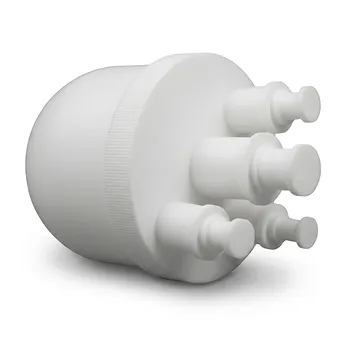
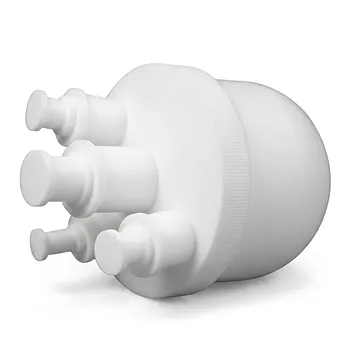
- Laboratory PTFE Three Neck Reaction Flask Corrosion Resistant 2000ml Low Background Fluoropolymer Vessel
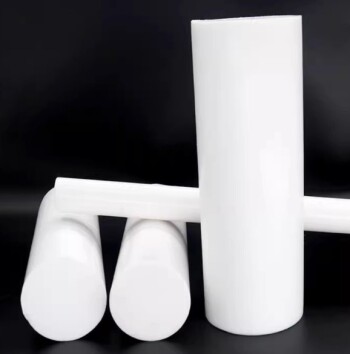
- Customizable PTFE Rods for Advanced Industrial Applications
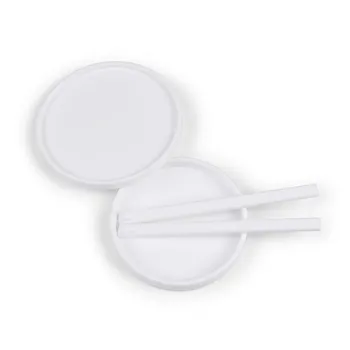
- Custom PTFE Petri Dish 30mm Corrosion Resistant Low Background Non Leaching Laboratory Ware
- High Purity PTFE Single Neck Reaction Flask Acid Resistant Customizable Fluoropolymer Laboratory Reactor
People Also Ask
- Why is the material of the reaction vessel critical for tribocatalytic degradation? Boost Your Catalytic Yield!
- What advantages do PTFE's surface properties provide for lab tools? Optimize Sample Recovery and Tool Longevity
- What structural characteristics provide PTFE fluoropolymer laboratory apparatus with high thermal stability? Strong C-F bonds, dense fluorine shielding, and rigid helical conformation ensure stability during high-temperature analysis.
- How do PTFE fluoropolymer labware's surface energy and coefficient of friction improve sample recovery and lab safety?
- What PTFE chemical properties make it safe for hydrofluoric acid? Discover inertness & high-temp stability.