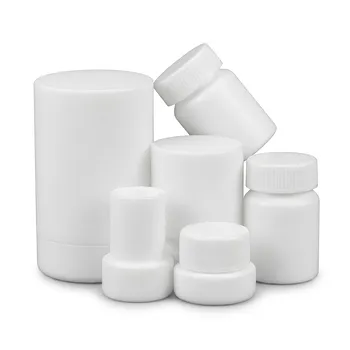
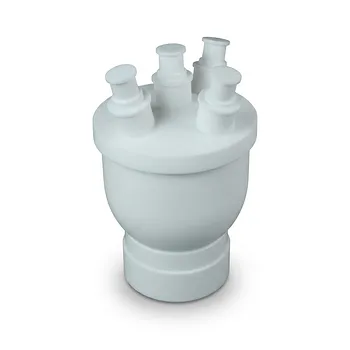
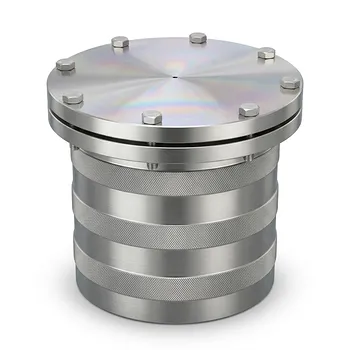
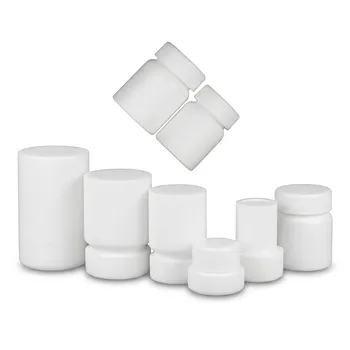
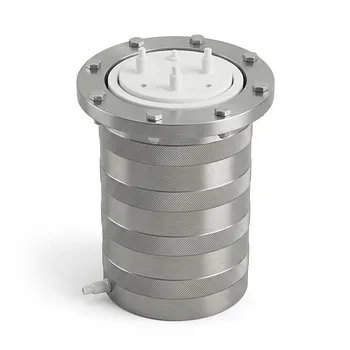
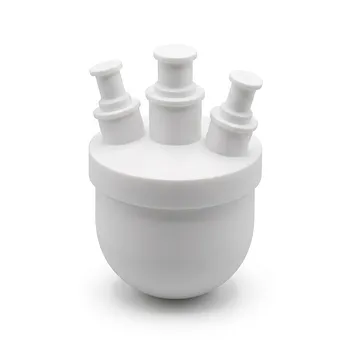
In the hydrothermal synthesis of Nickel Oxide (NiO) nanoparticles, Teflon-lined vessels act as the indispensable protective barrier and pressure chamber. These liners provide the chemical inertness required to withstand aggressive alkaline environments while maintaining the high-pressure conditions necessary for nickel salt hydrolysis. By isolating the reaction from the metal autoclave walls, they ensure the final nanoparticles reach the highest levels of structural and chemical purity.
Core Takeaway: The primary role of a Teflon-lined vessel is to create a contamination-free, high-pressure environment that allows for the stable hydrolysis and growth of NiO nanoparticles without the interference of corrosive side reactions or metal impurities.
Ensuring Chemical Inertness and Material Purity
Prevention of Metal Ion Contamination
The internal Teflon (PTFE) liner acts as a critical physical barrier between the precursor solution and the stainless steel shell of the autoclave. Without this liner, the high temperatures and corrosive reagents would leach metal ions from the vessel walls into the solution. This isolation is vital for ensuring the ultra-high purity of the synthesized NiO nanoparticles.
Resistance to Aggressive Alkaline Media
Hydrothermal synthesis of NiO often requires the use of strong bases like sodium hydroxide (NaOH) to facilitate precipitation. Teflon is exceptionally resistant to these aggressive alkaline environments, which would otherwise cause severe corrosion to standard metal containers. This chemical resistance ensures that the precursor solution remains stable and uncontaminated throughout the heating cycle.
Non-Stick Properties for Efficient Collection
The naturally low surface energy of PTFE prevents the synthesized precursor powders from adhering to the walls of the vessel. This non-stick property facilitates the efficient collection of the final product after the reaction is complete. It also simplifies the cleaning process, reducing the risk of cross-contamination between different synthesis batches.
Establishing a Stable Reaction Environment
Maintenance of Autogenous Pressure
As the vessel is heated, usually between 160°C and 200°C, it generates internal autogenous pressure. The Teflon liner, supported by the mechanical strength of the outer steel shell, maintains a constant and sealed reaction interface. This high-pressure environment is the driving force behind the hydrothermal process, enabling reactions that would not occur at atmospheric pressure.
Facilitating Complete Hydrolysis
The stable temperature and pressure environment created by the Teflon-lined vessel are necessary for the complete hydrolysis of nickel salts. This stability allows for precise control over the nucleation and growth phases of the nanoparticles. Consistency in these physical parameters is what leads to uniform particle size and crystal structure in the final Nickel Oxide product.
Understanding the Trade-offs
Thermal Limitations
While Teflon is highly versatile, it has a strict upper temperature limit, typically around 220°C to 250°C. Exceeding these temperatures can cause the liner to soften or undergo thermal decomposition, potentially releasing toxic fumes and compromising the seal. For reactions requiring extreme heat, alternative liners like PPL or specialized metallic alloys must be considered.
Mechanical Sensitivity and Thermal Expansion
Teflon has a significantly higher coefficient of thermal expansion than the stainless steel shell surrounding it. If the vessel is heated or cooled too rapidly, the liner can deform, leading to leaks or "creep" that ruins the seal. Users must follow strict ramping and cooling protocols to preserve the integrity of the vessel and the safety of the experiment.
How to Apply This to Your Project
Selecting the Right Configuration
- If your primary focus is maximum purity: Use a high-quality PTFE or PFA liner to ensure zero metal ion interference from the autoclave body.
- If your primary focus is high-temperature synthesis (above 220°C): Replace the standard Teflon liner with a PPL (polyphenylene polymers) liner to maintain structural integrity at higher thermal loads.
- If your primary focus is yield and recovery: Prioritize liners with a high-polish internal finish to leverage Teflon’s non-stick properties for easier powder collection.
By carefully managing the thermal limits and sealing integrity of the Teflon liner, researchers can reliably produce high-purity NiO nanoparticles with consistent structural characteristics.
Summary Table:
| Key Feature | Role in NiO Synthesis | Primary Benefit |
|---|---|---|
| Chemical Inertness | Prevents metal ion leaching from autoclave walls | Ensures ultra-high purity of nanoparticles |
| Alkaline Resistance | Withstands aggressive bases like NaOH | Maintains stability in corrosive media |
| Non-Stick Surface | Prevents precursor powder adhesion | Maximizes yield and simplifies cleaning |
| Pressure Stability | Maintains autogenous pressure (160°C-200°C) | Facilitates complete nickel salt hydrolysis |
| Thermal Control | Regulates nucleation and growth phases | Achieves uniform particle size and structure |
Elevate Your Material Synthesis with KINTEK’s High-Performance Fluoropolymers
Precision in NiO nanoparticle synthesis demands equipment that never compromises on purity. At KINTEK, we maintain an exclusive focus on high-performance fluoropolymer materials to ensure your research reaches the highest standards of structural and chemical integrity.
We manufacture virtually all imaginable laboratory supplies crafted from PTFE and PFA. Our extensive range includes:
- Everyday Essentials: Beakers, measuring cylinders, crucibles, reagent/wash bottles, and centrifuge/digestion tubes.
- Fluid Transfer & Filtration: Tubing, fittings, valves, separatory funnels, filters, and pipettes.
- Advanced Apparatus: Hydrothermal synthesis liners, microwave digestion vessels, microchannel reactors, and custom electrochemical cells.
- Bespoke Engineering: Backed by end-to-end custom CNC fabrication, we deliver everything from complex non-standard machined parts to high-volume bespoke laboratory setups.
Whether you are conducting trace analysis or high-pressure hydrothermal reactions, KINTEK provides the chemical resistance and precision your project requires.
Ready to optimize your lab with custom-engineered fluoropolymer solutions? Contact us today to discuss your requirements!
References
- Margarita Chatzichristidi, Eleni Makarona. Facile and Rapid Microwave Synthesis of Nickel Oxide Nanoparticles towards Cost‐Efficient Functional Nanocomposite Photoresists. DOI: 10.1002/slct.202405657
This article is also based on technical information from Kintek Knowledge Base .
Related Products
- PTFE Lined High Pressure Digestion Vessel 50ml High Temperature Hydrothermal Synthesis Tank
- High Purity PTFE Reaction Vessel with Electric Stirring System and Customizable 5L Tank including Buchner Funnel Filtration Assembly
- High Performance Customizable PTFE Reaction Vessel and Corrosion Resistant Polytetrafluoroethylene Flask for Chemical Laboratory Use
- High Purity Large Capacity PTFE Flask Custom Multi Neck Chemical Reaction Vessel for Corrosive Laboratory Synthesis and Industrial Processing
- Customizable PTFE Reaction Vessel with Electric Stirring Paddle and Buchner Funnel Vacuum Filtration System
People Also Ask
- What are the benefits of using a PTFE-lined vessel for carbon-sulfur cathode treatment? Maximize Purity & Performance
- Why are PTFE-lined pressure digestion vessels required for the preparation of Ag/CeO2 catalysts? Purity & Performance
- What safety features are typically incorporated into high-pressure PTFE digestion vessel designs? Ensure Lab Safety
- What is the function of PTFE lined high-pressure vessels in g-C3N4 synthesis? Achieve High-Purity Material Growth
- Role of High-Pressure Digestion Tanks in Perovskite Synthesis: Achieve Superior Stability and Latent Heat