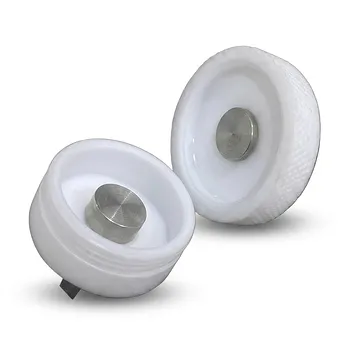
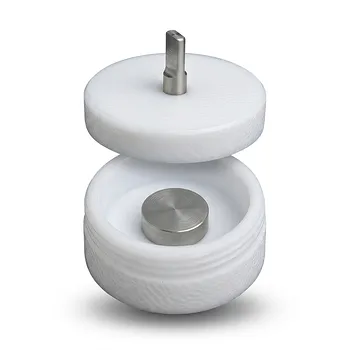
The primary purpose of using a high-pressure stainless steel battery testing fixture is to ensure electrochemical data accuracy by minimizing contact resistance and maintaining structural integrity. Under pressures as high as 180 MPa, these fixtures provide the mechanical force necessary to keep electrodes in intimate contact with current collectors, especially when using harsh electrolytes or solid-state materials. This setup allows researchers to capture the true electrochemical activity of a material rather than measuring the parasitic losses of a poorly assembled cell.
A high-pressure fixture transforms an experimental assembly from a variable manual setup into a controlled environment that simulates realistic stack compression. By maintaining constant physical contact and hermetic sealing, it ensures that recorded performance reflects the material’s intrinsic properties rather than assembly-induced artifacts.
Optimizing Signal Integrity and Accuracy
Minimizing Internal Contact Resistance
The application of high pressure ensures that the electrode material and the current collector are pressed together with maximum surface area contact. This reduces ohmic resistance, which prevents the "masking" of electrochemical signals during high-rate testing.
Ensuring Data Repeatability
By using a rigid stainless steel frame, the fixture eliminates the variability associated with manual cell assembly. Constant, uniform pressure ensures that cyclic voltammetry (CV) and galvanostatic charge-discharge (GCD) curves are consistent across different batches and testing cycles.
Reflecting True Material Activity
When contact resistance is minimized, the voltage drops and thermal effects that typically plague battery tests are significantly reduced. This allows the collected data to accurately represent the energy storage characteristics and kinetic behavior of the active material itself.
Maintaining Integrity in Harsh Environments
Structural Stability Under High Loads
Stainless steel is selected for its high modulus and yield strength, allowing the fixture to withstand pressures up to 180 MPa without deforming. This rigidity is essential for maintaining a constant volume and pressure environment during the entire duration of an electrochemical experiment.
Chemical Resistance to Corrosive Electrolytes
In systems using aggressive liquids, such as 7 M KOH, the fixture must provide an absolute seal to prevent electrolyte leakage and atmospheric contamination. Stainless steel provides the necessary chemical durability to resist corrosion while maintaining a high-pressure hermetic seal.
Simulation of Real-World Stack Compression
In industrial battery packs, cells are often held under significant mechanical compression to optimize performance. A high-pressure fixture allows researchers to simulate these "stack" conditions in a laboratory setting, providing a more realistic preview of how a material will perform in a commercial device.
Managing Mechanical and Interface Dynamics
Addressing Volume Changes During Cycling
Active materials often expand and contract as they intercalate ions, which can lead to "delamination" or loss of physical contact. Continuous external pressure acts as a restorative force, keeping the internal components tightly packed even as the material undergoes these physical shifts.
Facilitating Solid-State Interfaces
In solid-state batteries, where no liquid electrolyte exists to "wet" the surfaces, mechanical pressure is the only way to ensure ionic conductivity. The fixture forces the solid electrolyte and the electrodes into a tight physical bond, which is critical for evaluating interface stability.
Preventing Localized High Current Densities
Uniform pressure distribution across the electrode surface prevents "hot spots" where current might otherwise concentrate. This uniformity protects the interface layer, particularly at the lithium metal anode, and prevents premature cell failure due to dendrite growth or interface delamination.
Understanding the Trade-offs
The Risk of Internal Short Circuits
While high pressure optimizes contact, it also increases the risk of the separator being pierced or crushed by the electrode materials. If the pressure is too high for a specific separator material, it can lead to an internal short circuit and a failed experiment.
Insulation and Signal Interference
Because stainless steel is electrically conductive, the fixture must be precisely designed with insulating components, such as PTFE sleeves. Any failure in these insulating layers will cause the fixture itself to become part of the circuit, leading to "parasitic" signals and invalid data.
Material Weight and Complexity
High-pressure fixtures are significantly heavier and more complex than standard coin cells or pouch cells. This complexity requires more rigorous cleaning protocols and careful assembly to ensure that the high-pressure seals are properly seated every time.
How to Apply This to Your Project
To maximize the effectiveness of your battery testing, select your fixture and pressure settings based on your specific material system:
- If your primary focus is solid-state battery development: Use a high-pressure fixture (10–100+ MPa) to overcome the absence of liquid wetting and maintain a stable solid-solid interface.
- If your primary focus is testing in corrosive liquid electrolytes: Prioritize a stainless steel fixture with high-grade chemical sealing to ensure structural stability and prevent leakage over long cycle lives.
- If your primary focus is high-rate performance characterization: Apply consistent, monitored pressure to minimize contact resistance, ensuring that voltage drops are caused by material kinetics rather than poor physical connections.
By treating mechanical pressure as a controlled experimental variable, you ensure that your electrochemical results are both precise and representative of real-world performance.
Summary Table:
| Key Benefit | Impact on Electrochemical Testing |
|---|---|
| Reduced Contact Resistance | Minimizes ohmic loss and prevents masking of high-rate signals. |
| Structural Integrity | Withstands up to 180 MPa for constant volume/pressure environments. |
| Data Repeatability | Eliminates manual assembly variables for consistent CV and GCD curves. |
| Solid-State Optimization | Ensures critical ionic conductivity at solid-solid interfaces. |
| Real-World Simulation | Replicates industrial stack compression for commercial scalability. |
| Chemical Durability | Resists corrosion from harsh electrolytes like 7 M KOH. |
Elevate Your Research with Precision-Engineered Solutions from KINTEK
At KINTEK, we understand that the integrity of your electrochemical data depends on the quality of your equipment. Whether you are developing next-generation solid-state batteries or conducting high-rate performance characterization, our absolute focus on high-performance fluoropolymer materials and precision engineering ensures your lab achieves superior results.
From everyday basic labware (beakers, measuring cylinders, crucibles, dishes, reagent/wash bottles, centrifuge and digestion tubes), high-purity trace analysis instruments, and cleaning/storage tanks, to comprehensive fluid transfer components (tubing, fittings, valves), sample prep and filtration tools (separatory funnels, burettes, filters, pipettes, tweezers, spatulas), and general consumables (stirring bars, O-rings, gaskets, seal tapes, caps, septa), KINTEK manufactures virtually all imaginable laboratory supplies.
Our expertise extends to advanced derivative and reaction apparatus like standard or custom electrochemical cells, battery testing fixtures, electrode accessories, hydrothermal synthesis liners, microwave digestion vessels, microchannel reactors, and condensation/reflux devices. Backed by end-to-end custom CNC fabrication, we are uniquely equipped to deliver everything from complex non-standard machined parts and bespoke laboratory setups to high-volume orders.
Ready to optimize your lab's performance? Contact us today to discuss your specific requirements and discover how KINTEK’s high-performance PTFE and PFA solutions can bring unmatched precision to your project.
References
- Yue Li, Xiaojuan Jin. Hydrothermal fabrication of reduced graphene oxide/activated carbon/MnO<sub>2</sub> hybrids with excellent electrochemical performance for supercapacitors. DOI: 10.1039/c7ra07056j
This article is also based on technical information from Kintek Knowledge Base .
Related Products
- Corrosion Resistant PTFE Coin Cell Battery Testing Clamps and Acid Proof Custom Fluoropolymer Battery Fixtures
- Acid Resistant PTFE Button Cell Battery Test Fixture Customizable Machining High Purity Electrochemical Testing Clamp
- Custom PTFE Acid Resistant Support Rack for PFA Hydrogen Absorption Systems Multi Hole Configurations
- Customizable 22ml PTFE Cup Deep Layer Sampler and Corrosion Resistant Cylinder with Handle
- Custom PTFE Teflon Parts Manufacturer PTFE Cleaning Rack
People Also Ask
- What is the thermal operating range for PTFE battery clamps in electrochemical research? Stability from -200°C to +260°C
- What are the primary functions and material compositions of PTFE battery clamps? Ensure Precision & Chemical Resistance
- What are the electrical insulation and signal integrity advantages of using PTFE battery clamps? Ensure Data Accuracy
- How does the chemical inertness of PTFE benefit laboratory-scale battery testing? Ensure high-purity research results.
- In what ways do PTFE battery testing fixtures enhance laboratory throughput and reliability? Maximize Research Efficiency