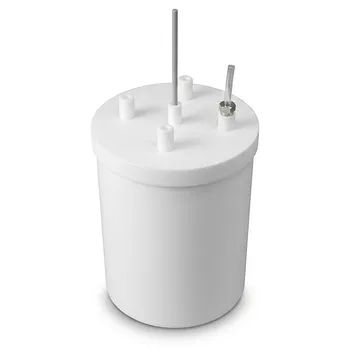
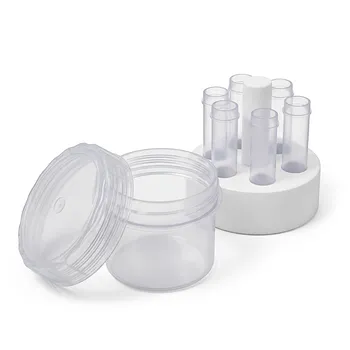
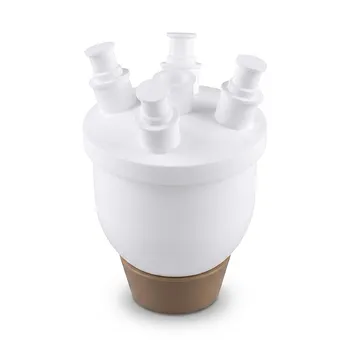
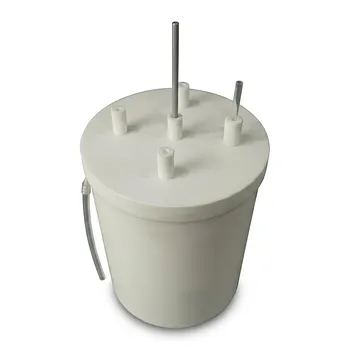
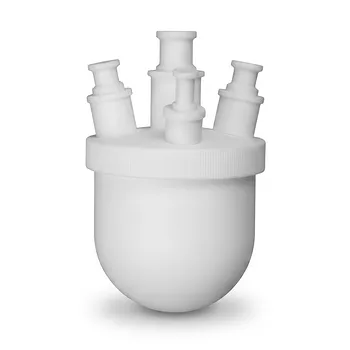
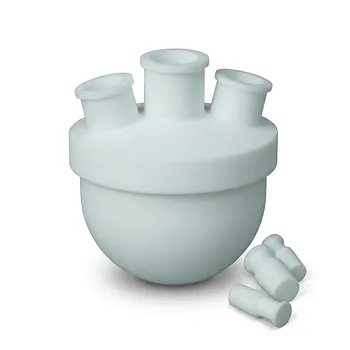
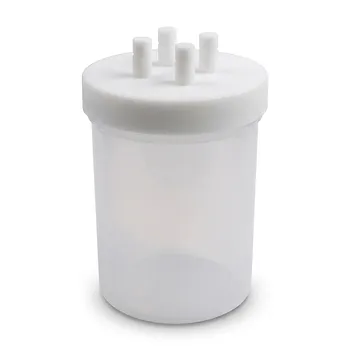
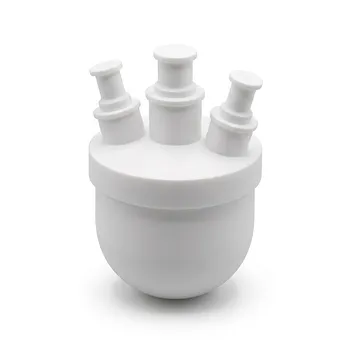
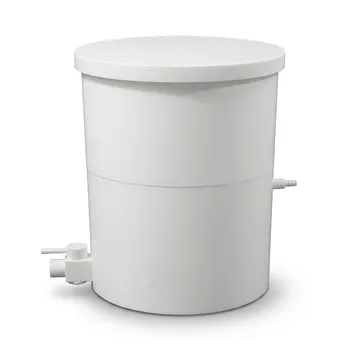
A high-pressure reaction vessel is the critical engine for the quaternization reaction required to synthesize organic co-cations like TDMA. It provides a sealed, super-ambient environment that allows a mixture of tris[2-(2-methoxyethoxy)ethyl]amine, dimethyl carbonate, and methanol to reach temperatures of 120°C—well above the standard boiling point of the solvents involved. This pressurized state ensures optimal reactant contact and efficient conversion that would be impossible in an open system.
The primary function of a high-pressure vessel is to transcend atmospheric physical limits, allowing for high-temperature solvothermal reactions that accelerate chemical kinetics while maintaining the liquid phase of volatile reactants.
Facilitating the Quaternization of TDMA
Enabling Super-Ambient Temperatures
In the synthesis of TDMA, the reaction must occur at approximately 120°C to ensure efficient conversion. Because the primary solvent, methanol, has a boiling point of only 64.7°C at atmospheric pressure, a sealed vessel is required to prevent evaporation and reach the target temperature.
Optimizing Reactant Conversion
The vessel maintains a sealed environment that facilitates continuous heating and constant stirring. This combination ensures that the tris[2-(2-methoxyethoxy)ethyl]amine and dimethyl carbonate remain in intimate contact under high pressure, serving as the core physical basis for the quaternization reaction.
Managing Autogenous Pressure
As the mixture is heated within the closed system, it generates autogenous pressure. This internal pressure is essential for driving the chemical reaction forward and ensuring the structural integrity of the resulting organic co-cations.
The Mechanics of High-Pressure Environments
Enhanced Solvent Penetration
Under high-pressure conditions, the penetration capability of solvents is significantly enhanced. This allows for better dissolution of precursors and facilitates the coordination between complex organic ligands and metal ions in related synthesis processes.
Promoting Crystal Growth and Phase Purity
High-pressure environments are vital for achieving high crystallinity and regular structures. By allowing reactions to occur in a controlled, near-critical or supercritical state, the vessel ensures that elements are incorporated uniformly into the molecular or crystal lattice.
Chemical Inertness and Contamination Control
Many high-pressure vessels utilize PTFE (Polytetrafluoroethylene) or PPL (Para-polyphenylene) liners. These liners protect the outer metal vessel from corrosive reagents like strong bases or acids and prevent metal ions from leaching into the reaction, which ensures the phase purity of the final product.
Understanding the Trade-offs
Safety and Operational Complexity
Operating at high temperatures and pressures introduces significant safety risks, including the potential for vessel failure or "venting." This requires precise monitoring of temperature limits and the use of specialized equipment that can withstand the calculated autogenous pressure.
Scalability and Cost
High-pressure reactors are more expensive and harder to scale than open-air stirred-tank reactors. The need for specialized alloys or thick-walled vessels increases capital expenditure, and batch processing limits are often dictated by the internal volume of the pressure liner.
Maintenance and Cleaning
The use of liners and sealed gaskets requires rigorous maintenance to ensure a perfect seal. Any degradation in the liner or the O-rings can lead to pressure loss, resulting in incomplete reactions or the contamination of the synthesis environment.
Applying Vessel Technology to Your Project
How to Apply This to Your Project
Choosing the right high-pressure environment depends on the specific chemical requirements of your synthesis and the volatility of your solvents.
- If your primary focus is maximizing TDMA yield: Ensure the vessel is rated for at least 150°C to safely maintain a 120°C reaction temperature without approaching the equipment's mechanical limits.
- If your primary focus is preventing product contamination: Utilize a vessel with a high-performance PTFE or PPL liner to isolate the reaction from the metal walls of the reactor.
- If your primary focus is accelerating reaction kinetics: Focus on a vessel design that supports high-speed magnetic or mechanical stirring under pressure to maximize reactant contact.
By mastering the high-pressure environment, you can effectively manipulate thermodynamic barriers to synthesize complex organic structures with high precision and purity.
Summary Table:
| Key Function | Operational Benefit | Supporting Technology |
|---|---|---|
| Super-Ambient Heating | Reaches 120°C (exceeding solvent boiling points) | Sealed vessel design |
| Quaternization Support | Ensures efficient conversion of reactants | Autogenous pressure management |
| Contamination Control | Maintains high phase purity and chemical inertness | PTFE or PPL liners |
| Kinetics Enhancement | Optimizes reactant contact and solvent penetration | Integrated stirring systems |
Elevate Your Chemical Synthesis with KINTEK’s High-Performance Labware
Are you looking to optimize your quaternization reactions or achieve superior phase purity in organic synthesis? KINTEK is your premier partner for high-performance fluoropolymer solutions.
We manufacture a comprehensive range of laboratory supplies, including:
- Everyday Essentials: Beakers, measuring cylinders, crucibles, dishes, reagent bottles, and centrifuge tubes.
- Fluid & Filtration: Tubing, fittings, valves, separatory funnels, burettes, and high-purity filters.
- Advanced Reaction Apparatus: Custom hydrothermal synthesis liners, microwave digestion vessels, electrochemical cells, and battery testing fixtures.
- General Consumables: Stirring bars, O-rings, gaskets, and specialized seals.
Backed by end-to-end custom CNC fabrication, we deliver everything from complex, non-standard machined parts to high-volume orders, maintaining an absolute focus on high-performance PTFE and PFA materials. Whether you need a bespoke laboratory setup or standard high-purity components, our engineering expertise ensures your research meets the highest standards of precision and safety.
Ready to upgrade your lab's capabilities? Contact us today to discuss your custom requirements!
References
- Glenn Pastel, Kang Xu. Designing interphases for highly reversible aqueous zinc batteries. DOI: 10.1016/j.joule.2024.02.002
This article is also based on technical information from Kintek Knowledge Base .
Related Products
- PTFE Lined High Pressure Digestion Vessel 50ml High Temperature Hydrothermal Synthesis Tank
- Custom TFM Reaction Vessel with Stainless Steel Jacket and PTFE Inner Cup for High Corrosion Resistance
- High Pressure Custom TFM Reactor Stainless Steel Outer Vessel PTFE Inner Cup for Corrosive Synthesis
- High Purity PFA Constant Pressure Condensation Reaction System Acid Resistant High Temperature Customizable Teflon Labware
- High Purity PFA Reaction Vessel for Biopharmaceutical Synthesis and Corrosive Chemical Fluid Handling with Customizable Tube Fittings
People Also Ask
- What are the benefits of using a PTFE-lined vessel for carbon-sulfur cathode treatment? Maximize Purity & Performance
- Why are PTFE-lined pressure digestion vessels required for the preparation of Ag/CeO2 catalysts? Purity & Performance
- What safety features are typically incorporated into high-pressure PTFE digestion vessel designs? Ensure Lab Safety
- What is the function of high-pressure PTFE digestion vessels in mineral analysis? Optimize Sample Mineralization
- What is the function of PTFE lined high-pressure vessels in g-C3N4 synthesis? Achieve High-Purity Material Growth