PTFE is a low-loss, essentially nonpolar dielectric, whereas ferroelectric fluoropolymers such as PVDF can retain and switch molecular polarization. PTFE has a low relative dielectric constant, typically about 2–5, and responds to an applied electric field approximately linearly with negligible hysteresis. PVDF contains polar molecular units that can organize into ferroelectric crystalline regions, producing nonlinear polarization, remanence, and field-dependent energy storage.
The fundamental distinction is switchable polarization. PTFE does not have a practical ferroelectric domain structure, so it remains electrically stable and dissipates very little energy. That combination makes it especially suitable for low-loss insulating labware, fittings, fixtures, and electrochemical components.
How Molecular Structure Determines Dielectric Behavior
PTFE Has No Switchable Macroscopic Dipole
PTFE is built from highly fluorinated chains whose molecular symmetry largely cancels the local polarity of individual carbon-fluorine bonds. It therefore has no permanent macroscopic dipole system that can readily align and reverse under an electric field.
Its polarization mainly comes from electronic and atomic displacement, which follows the applied field rapidly and reversibly. This produces an approximately linear relationship between electric displacement and electric field.
PVDF Supports Ferroelectric Polarization
PVDF contains strongly polar carbon-fluorine bonds and can crystallize into conformations with a net molecular dipole. In suitable crystalline phases, these dipoles organize into ferroelectric domains.
An applied field can reorient those domains. When the field is removed, some polarization remains, and reversing the field requires overcoming a coercive field. This behavior creates the characteristic polarization-electric-field hysteresis loop, often called a D-E or P-E loop.
Relative Permittivity Is Only Part of the Difference
PTFE commonly has a relative dielectric constant near 2–5, with values around 2.1 at 1 MHz reported for perfluorinated materials. PVDF is substantially higher, with a typical value near 8, depending on phase, frequency, temperature, processing, and measurement method.
A higher dielectric constant is not automatically undesirable. It can be useful in capacitors, actuators, sensors, and memory devices. The important distinction is that ferroelectric polarization is nonlinear and history-dependent, while PTFE's response is comparatively small, reversible, and predictable.
Why PTFE Has Low Dielectric Loss
Minimal Dipole Rotation Reduces Dissipation
Dielectric loss occurs when polarization mechanisms lag behind the applied field and convert electrical energy into heat. Strongly rotating dipoles and moving ferroelectric domain walls can contribute significantly to that loss.
PTFE lacks an easily switchable dipole or ferroelectric domain structure. Its polarization therefore involves relatively fast, limited mechanisms, resulting in a very low dissipation factor, reported at approximately less than 0.0004 for PTFE under specified conditions.
Linear Response Improves Signal Stability
Because PTFE does not exhibit meaningful ferroelectric hysteresis, its electrical response does not depend strongly on the material's previous field history. This helps reduce memory effects, distortion, and field-induced changes in sensitive measurements.
That stability is valuable in electrochemical instruments, high-frequency laboratory systems, insulating fixtures, and components placed near measurement electrodes or signal paths.
Low Permittivity Limits Capacitive Coupling
A low dielectric constant reduces the capacitance formed between adjacent conductors or between a conductor and the surrounding insulation. This helps limit signal attenuation, parasitic loading, and crosstalk, particularly in high-frequency environments.
The benefit is not that PTFE blocks every electromagnetic interaction. Rather, its low permittivity and low loss reduce the amount of energy stored and dissipated in the insulating material.
Why PTFE Is Well Suited to Laboratory Ware
Chemical Inertness Protects Samples
PTFE provides near-universal resistance to concentrated acids, strong bases, and many organic solvents. This chemical stability prevents the insulating component from degrading, swelling, or releasing contaminants into a sample under demanding laboratory conditions.
For vessels, fittings, gaskets, and custom electrochemical hardware, chemical compatibility is as important as dielectric performance.
Thermal Stability Supports Aggressive Processing
PTFE can support continuous service temperatures up to approximately 260 °C, depending on the grade, design, and operating conditions. This makes it suitable for heated reaction systems, digestion work, and other laboratory processes where lower-temperature polymers may be unsuitable.
Its dielectric behavior also remains more stable than that of a material designed to undergo field-induced phase or domain changes.
Non-Wetting Surfaces Improve Cleanability
PTFE has very low surface energy, strong hydrophobicity, and extremely low friction. Samples are less likely to adhere to its surfaces, which helps reduce carryover, scaling, and cross-contamination.
These properties complement its dielectric advantages: the same material can provide electrical isolation, chemical containment, and a cleanable fluid-contact surface.
Machining Enables Custom Insulating Components
PTFE is not conventionally melt-processible because of its extremely high melt viscosity. It is generally formed by pressing and sintering, then machined into custom shapes.
That manufacturing route is useful for one-off or low-volume laboratory hardware such as reaction vessels, microwave digestion components, electrode holders, insulating spacers, and custom cell bodies.
PTFE Compared With PFA
Both Are Low-Loss Perfluoropolymers
PFA, like PTFE, is a perfluorinated polymer with a low dielectric constant and very low dissipation factor. Reported PFA dissipation factors can be approximately 0.0002, although values depend on frequency, temperature, grade, and test method.
For dielectric performance alone, both materials can provide excellent electrical isolation and low signal loss.
PFA Offers Processing Advantages
PFA is a melt-processible copolymer containing perfluoroalkyl vinyl ether comonomers. It can therefore be injection-molded or extruded into complex, smooth-walled, translucent components.
PFA is often the better choice for intricate tubing, valves, fittings, molded vessels, and sealed geometries. PTFE remains especially useful where custom machining, high compressive performance, or established solid stock shapes are more important.
Material Selection Is Not Only an Electrical Decision
PTFE is selected for many laboratory applications because its low-loss dielectric behavior is combined with chemical inertness, thermal stability, low friction, and low contamination risk. PFA may be preferable when transparency, weldability, low micro-porosity, or complex molded geometry is the priority.
Understanding the Trade-offs
Ferroelectric Behavior Is Useful in the Right Application
PVDF's higher permittivity and hysteresis are not defects when the goal is actuation, sensing, electrostriction, energy storage, or nonvolatile memory. Its field-responsive domains provide functionality that PTFE intentionally does not provide.
Using PVDF where stable, low-loss insulation is required can introduce unwanted nonlinear capacitance, polarization history effects, and increased dissipation.
“Low Loss” Is Frequency and Temperature Dependent
Dielectric constant and dissipation factor are not universal fixed values. They vary with frequency, temperature, crystallinity, impurities, moisture, mechanical stress, and the exact material grade.
Therefore, a material datasheet value should be treated as a test-condition-specific reference. High-frequency or high-temperature designs should be evaluated under conditions that represent the actual laboratory environment.
PTFE Is Difficult to Process
PTFE's processing limitations can increase manufacturing cost and restrict available geometries. It generally cannot be handled like a conventional injection-molding resin.
For complex molded parts, PFA can deliver better dimensional and manufacturing efficiency while preserving much of the chemical, thermal, and dielectric performance required for laboratory use.
Composites and Voids Change the Effective Dielectric Response
Fillers, reinforcement, porosity, surface contamination, and air-filled cellular structures can change the effective dielectric constant and loss. Foamed fluoropolymers can approach the dielectric constant of air, but their mechanical strength, breakdown behavior, and reliability must be assessed as part of the complete design.
Making the Right Choice for Your Goal
Choose based on the electrical behavior required as well as the chemical, thermal, and manufacturing constraints.
- If your primary focus is low-loss, stable electrical insulation: Choose PTFE when negligible hysteresis, low permittivity, minimal dissipation, and predictable field response are central requirements.
- If your primary focus is field-driven actuation or memory: Consider a ferroelectric fluoropolymer such as PVDF, whose switchable domains provide nonlinear and remanent polarization.
- If your primary focus is complex molded or transparent fluid-handling hardware: Consider PFA, which combines low-loss dielectric behavior with conventional melt processing.
- If your primary focus is custom-machined, chemically inert laboratory hardware: Choose PTFE when stock-shape machining, extreme chemical resistance, low friction, and electrical isolation outweigh processing convenience.
PTFE is selected for low-loss insulating labware because it combines a non-ferroelectric, low-permittivity dielectric response with the chemical, thermal, surface, and fabrication characteristics demanded by laboratory systems.
Summary Table:
| Property | PTFE | PVDF |
|---|---|---|
| Dielectric constant | ~2-5 (typically 2.1 at 1 MHz) | ~8 or higher |
| Polarization response | Linear, reversible | Nonlinear, with hysteresis |
| Switchable dipole domains | None | Yes (ferroelectric) |
| Dielectric loss | Very low (dissipation factor <0.0004) | Higher |
| Applications | Insulating labware, low-loss components | Sensors, actuators, capacitors, memory |
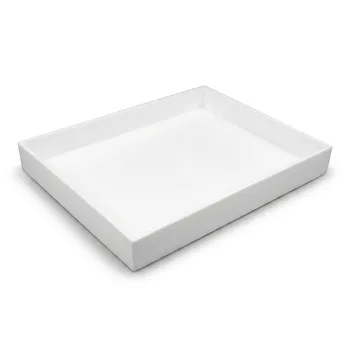
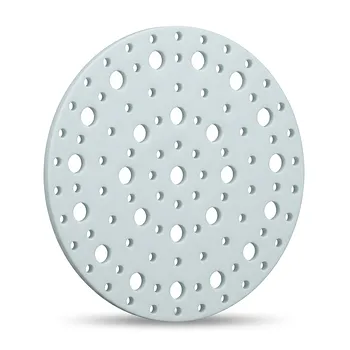
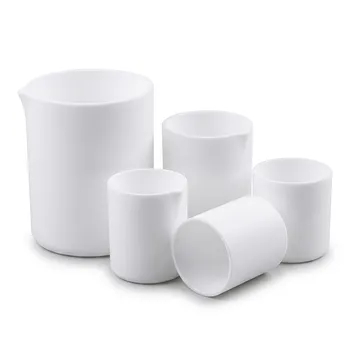
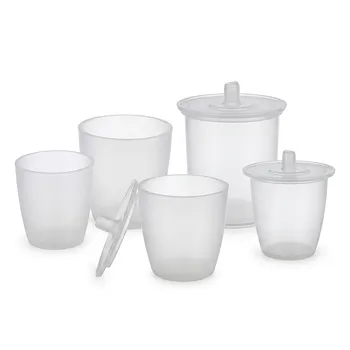
Looking for high-quality PTFE labware that ensures minimal dielectric loss and maximum chemical resistance? At KINTEK, we specialize in manufacturing precision PTFE and PFA laboratory supplies, from basic beakers to custom electrochemical cells. Our advanced CNC machining capabilities allow us to create bespoke components tailored to your exact specifications. Contact us today to discuss your requirements and discover how our products can enhance your laboratory's performance and reliability. Get in touch with our experts now.
Related Products
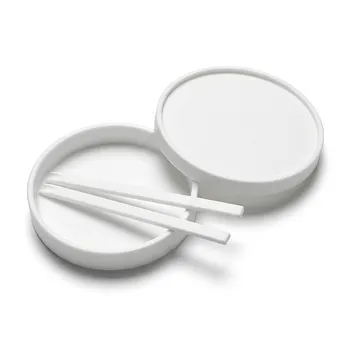
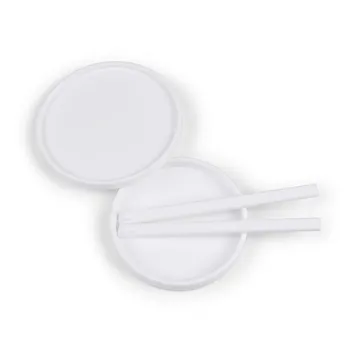
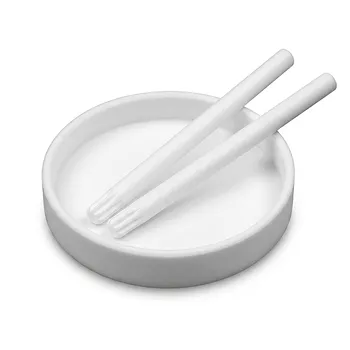
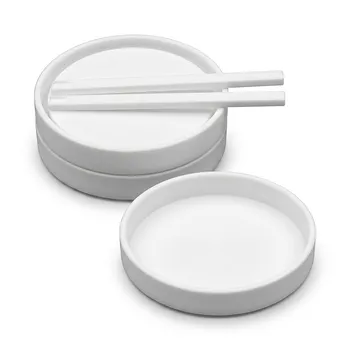
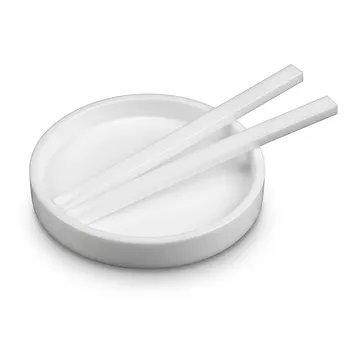
- Custom Polytetrafluoroethylene PTFE Petri Dishes 60mm Corrosion Resistant Low Background Labware
- Custom PTFE Petri Dish 30mm Corrosion Resistant Low Background Non Leaching Laboratory Ware
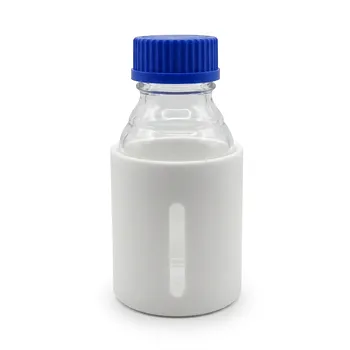
- Custom PTFE Thermal Insulation Sleeves Laboratory Vessel Condensation Jackets Virgin Fluoropolymer Machined Components
- Custom PTFE Petri Dishes Corrosion Resistant High Purity Low Background Labware
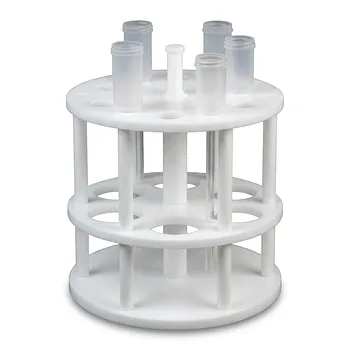
- Custom PTFE Test Tubes Corrosion Resistant Low Background Fluoropolymer Labware 50ml 30ml
People Also Ask
- Why are PTFE or PFA Petri dishes preferred for membrane casting? Ensure Damage-Free Recovery & Chemical Purity
- What types of labware or tools are commonly made from PTFE? Essential Chemically-Resistant Equipment for Your Lab
- What are the considerations for choosing PTFE or glass for Bi2O3/CeO2 synthesis? Ensure Purity and Precision.
- What are the key properties of PTFE that make it suitable for labware applications? Ensure Lab Integrity with Superior Material
- What types of PTFE labware are commonly available? Find the Right Tools for Your Lab