Thermal crosslinking turns a fluoropolymer from a melt-processable chain material into a tightly connected network. Heating first promotes cyclopolymerization of fluorinated precursors at approximately 210 °C, forming linear perfluorocyclobutyl structures. Further heating above approximately 325 °C activates internal fluoroolefin groups, creating covalent links between chains; the resulting network is insoluble, highly shape-stable, and resistant to thermal and chemical stress.
The key benefit is network locking: covalent crosslinks prevent polymer chains from flowing, dissolving, or being extracted, allowing custom-machined fluoropolymer components to retain their dimensions, strength, and purity in harsh solvents and at elevated temperatures.
How Thermal Crosslinking Changes Fluoropolymer Behavior
From linear chains to a three-dimensional network
In a linear fluoropolymer, chains can move relative to one another when heated and may dissolve in suitable solvents. Thermal crosslinking connects those chains through covalent bonds, producing a continuous three-dimensional network.
This changes the material from a conventional thermoplastic into a network-like thermoset or highly crosslinked fluoropolymer. Tri- or tetrafunctional precursors promote this transition more effectively than bifunctional precursors, which generally produce soluble linear polymers.
Internal fluoroolefin groups provide latent reactivity
The fluoropolymer structure can contain internal fluoroolefin groups that remain available after the initial polymerization step. Heating above the crosslinking threshold causes these groups to react and connect neighboring polymer segments.
The result is not simply additional chain growth. It is network formation, which restricts molecular movement and greatly reduces the ability of the material to soften, flow, or reorganize under service conditions.
Why Crosslinking Improves Thermal Stability
Restricted chain motion preserves component geometry
Crosslinks act like permanent molecular restraints. They limit the chain mobility responsible for deformation, creep, and softening when a component is exposed to heat.
For custom-machined parts, this helps preserve critical dimensions, sealing surfaces, holes, channels, and alignment features during high-temperature fluid handling or thermal cycling.
High-temperature endurance increases
Thermally crosslinked fluoropolymer networks can show exceptional endurance, with no glass-transition event observed below approximately 350 °C in the referenced perfluorocyclobutyl network materials.
Other fluorinated network systems report decomposition temperatures above 500 °C, depending on composition, atmosphere, crosslink density, and the specific thermal measurement method. These values describe material limits, not automatically recommended continuous operating temperatures.
Fluorinated chemistry stabilizes the backbone
Fluorinated groups, including perfluoroalkyl, trifluoromethyl, and other highly fluorinated linkages, strengthen resistance to thermal and oxidative attack. Fluorinated monomer units generally resist degradation better than comparable unfluorinated vinyl ether segments.
This chemical stability complements crosslinking: the fluorinated backbone resists decomposition, while the network prevents large-scale flow and dimensional loss.
Why Crosslinking Improves Solvent Resistance
Solvents cannot separate network chains
A solvent can dissolve a linear polymer by penetrating between chains and pulling them into solution. In a crosslinked fluoropolymer, the chains are covalently joined, so solvent molecules may cause limited swelling but cannot separate the network into individual molecules.
Consequently, highly crosslinked systems can become completely insoluble in solvents such as THF, DMF, chloroform, acetone, alcohols, and DMSO, depending on the formulation.
Reduced extractables protect high-purity processes
The network structure also limits the release of low-molecular-weight polymer fractions, additives, or unreacted species. This supports applications where zero or near-zero solvent extractables and low contamination are important.
That characteristic is particularly valuable for custom fluid-transfer parts, electrochemical cell bodies, digestion vessels, reaction tubes, and other components exposed directly to analytical or corrosive fluids.
Chemical resistance supports repeated cleaning
Crosslinked fluoropolymers can tolerate aggressive solvent washing and post-treatment without dissolving or losing their basic geometry. This makes them suitable for reusable laboratory components that must be cleaned without introducing polymer-derived contamination into subsequent samples.
What This Means for Custom-Machined Components
Dimensional stability is often the practical advantage
For a machined component, chemical resistance alone is insufficient. A part must also maintain its shape, fit, pressure boundary, and sealing performance.
Crosslinking helps prevent the dimensional changes that can occur when linear thermoplastics soften, creep, or swell during prolonged exposure to heat and solvent.
Machining and crosslinking must be planned together
Highly crosslinked fluoropolymer networks are generally not solution-processable and may be difficult to remelt or reshape. Therefore, the material is commonly crosslinked during controlled manufacture and then machined from a stable stock shape, or shaped before the final thermal cure when the process allows.
The design must account for shrinkage, residual stress, tool wear, tolerances, and post-cure dimensional change. Crosslinking is not a substitute for process control.
Mechanical strength is retained under combined stress
When heat and solvent exposure occur simultaneously, linear polymer chains may become more mobile or may swell. A crosslinked network resists both effects, helping the component retain mechanical integrity under combined thermal, chemical, and pressure loading.
The exact performance still depends on crosslink density, fluoropolymer composition, wall thickness, machining geometry, and the applied service conditions.
Understanding the Trade-offs
Insolubility limits repair and recycling options
The same covalent network that provides solvent resistance also prevents conventional dissolution, remolding, and solution reprocessing. Damaged parts generally cannot be repaired by dissolving and fusing the material in the way a linear thermoplastic might be processed.
This makes accurate initial design and qualification especially important for custom components.
Higher crosslink density can reduce toughness
Increasing the number of network junctions generally improves resistance to flow and solvent attack, but excessive crosslinking can reduce ductility and increase brittleness. A part designed for impact, flexing, or repeated thermal cycling may require a balance rather than maximum network density.
Thermal stability is formulation-dependent
A high decomposition temperature does not mean that every fluoropolymer grade can operate continuously at that temperature. Bulky fluorinated side groups, for example, can provide excellent solvent resistance while introducing lower-temperature side-chain degradation or rearrangement.
Engineers should distinguish among glass transition temperature, decomposition temperature, dimensional-service temperature, and chemical-service temperature.
Crosslinking is not the only source of stability
PTFE, PFA, and other fluoropolymers can already provide strong chemical resistance without being densely crosslinked. Crosslinking is most valuable when the application requires additional resistance to creep, extraction, dissolution, or dimensional change under severe combined conditions.
How to Apply This to Your Project
Material selection should begin with the actual combination of solvent, temperature, pressure, mechanical load, cleanliness requirement, and machining tolerance—not with a single headline thermal rating.
- If your primary focus is dimensional stability: Select a suitably crosslinked fluoropolymer network and qualify its post-cure shrinkage, creep, thermal cycling, and machining tolerances.
- If your primary focus is solvent resistance: Favor a network-forming formulation with sufficient crosslink density to prevent dissolution and minimize swelling or extractables.
- If your primary focus is high-purity fluid handling: Verify extractables, cleaning compatibility, and contamination performance in the exact solvents and temperatures used in service.
- If your primary focus is maximum temperature capability: Compare the complete formulation and atmosphere-specific decomposition data rather than relying only on the presence of crosslinks.
- If your primary focus is manufacturability: Plan whether the part will be machined from cured stock or shaped before final thermal crosslinking, because the network cannot ordinarily be remelted or solution-processed afterward.
Thermal crosslinking gives custom-machined fluoropolymer components their strongest combination of shape retention, solvent resistance, and low extractables when the network chemistry and manufacturing process are matched to the service environment.
Summary Table:
| Mechanism | Effect on Thermal Stability | Effect on Solvent Resistance |
|---|---|---|
| Network formation | Restricts chain movement, preserves dimensions at high temperatures | Prevents chain separation, rendering the material insoluble |
| Internal fluoroolefin crosslinking | Increases decomposition temperature, no Tg up to 350°C | Minimizes swelling and extractables |
| Fluorinated backbone | Enhances resistance to thermal and oxidative degradation | Improves chemical compatibility with aggressive solvents |
Leverage KINTEK's expertise in PTFE/PFA custom machining to create components that withstand extreme thermal and chemical conditions. Our advanced crosslinked fluoropolymers offer superior dimensional stability, solvent resistance, and low extractables for your most demanding applications. Contact us today to discuss your project and discover how our solutions can enhance your lab's performance. Get in touch!
Related Products
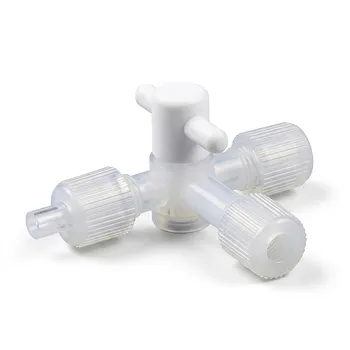
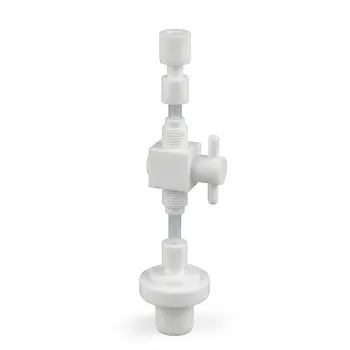
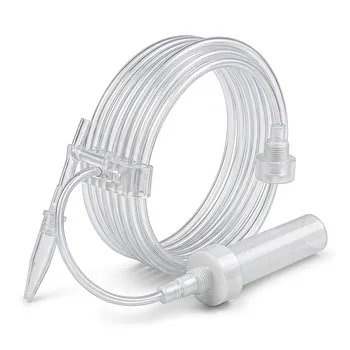
- Corrosion Resistant High Purity PFA Valve and Weldable Transparent Tubing for Semiconductor Fluid Transfer
- Custom PTFE Insulating Gaskets and Corrosion Resistant Fluoropolymer Seals for Industrial Electrical Applications
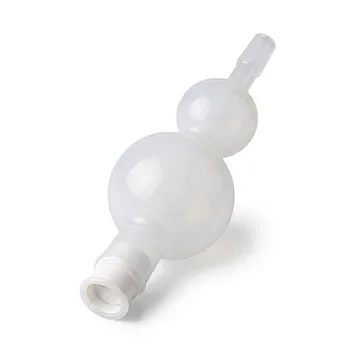
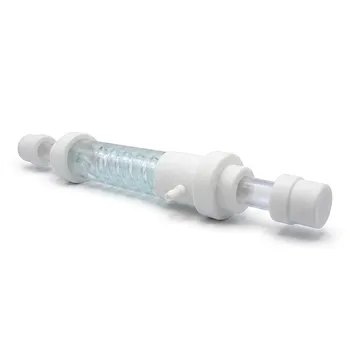
- High Purity PFA Chromatography Columns and Collection Bottles Corrosion Resistant Fluoropolymer Filtration Systems for Trace Analysis
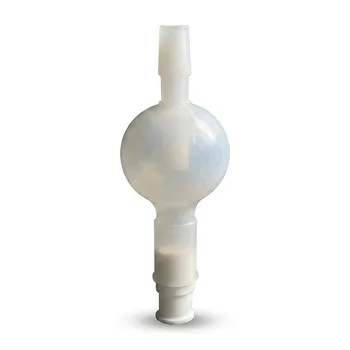
- High Purity PFA Chromatography Column with Collection Bottle Corrosion Resistant Fluoropolymer Filtration System for Trace Analysis
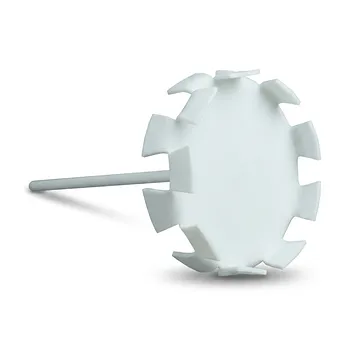
- High Purity PTFE Dispersion Disk for Food and Cosmetic Processing Non Stick Corrosion Resistant Large Stirring Paddle Customizable Fluoropolymer Impeller
People Also Ask
- Why are high-purity PFA fluid transfer components preferred for battery electrolytes? Ensure Purity & Data Accuracy
- How do high-precision PFA fluid transfer components, such as tubing and fittings, affect the results of continuous-flow synthesis?
- How do PFA fluid transfer components contribute to chemical research precision? Achieve high-purity results today.
- What role do PFA tubing and valves play in high-precision laboratory fluid transfer systems? Ensure Ultra-Pure Results
- What advantages do PTFE and PFA tubing offer for organic solvents? Superior chemical resistance, purity, and high-temperature stability.