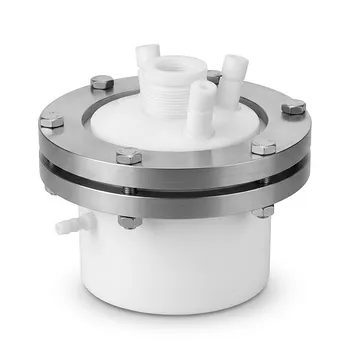
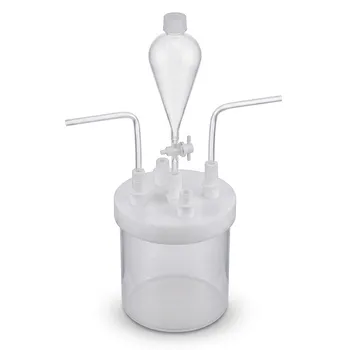
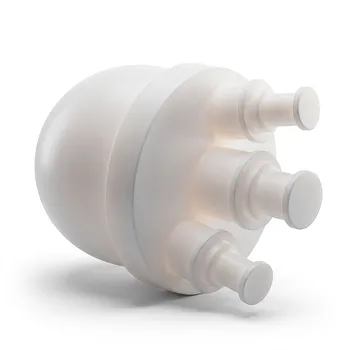
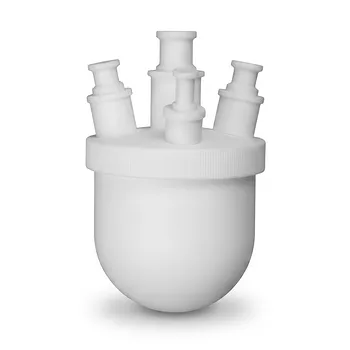
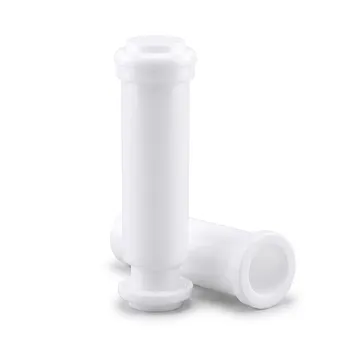
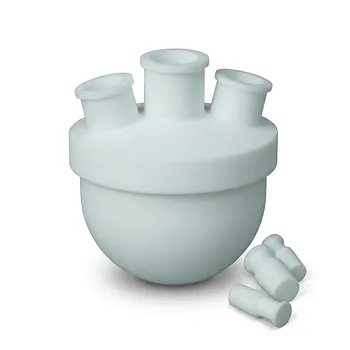
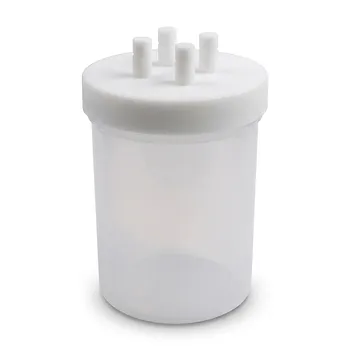
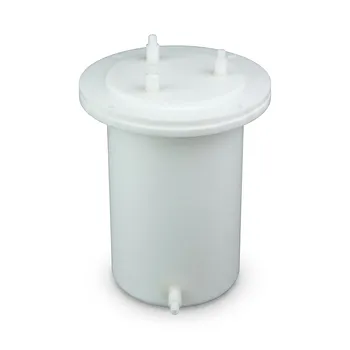
High-pressure and sealed reaction vessels are essential for overcoming the mass-transport limitations inherent in carbon dioxide (CO2) reduction. These specialized environments facilitate experiments by increasing the solubility of CO2 within the electrolyte and ensuring the catalytic system remains isolated from atmospheric contaminants. By maintaining elevated pressures, these vessels optimize the interaction between the CO2 substrate and the active centers of pyrene-labeled complexes anchored to carbon supports.
High-pressure vessels act as force multipliers for catalytic efficiency by maximizing reactant concentration at the catalyst surface and ensuring a leak-proof environment for precise kinetic control.
The Role of Pressure in Enhancing Reactant Availability
Increasing Solubility and Local Concentration
Carbon dioxide has limited solubility in many standard electrolytes under ambient conditions. High-pressure vessels counteract this by forcing a higher density of CO2 into the liquid phase, creating a concentrated reservoir of reactants.
This increased concentration ensures that the pyrene-labeled complexes are never "starved" for substrate. A steady supply of CO2 at the catalytic interface is necessary to maintain high reaction rates and prevent the system from idling.
Optimizing the Catalytic Interface
In systems using pyrene-labeled complexes, the catalyst is often anchored to a carbon support via pi-stacking. Elevated pressure helps the gaseous substrate penetrate the boundary layer surrounding these carbon supports more effectively.
By improving this contact, the vessel ensures that the active centers are fully utilized. This leads to a measurable increase in kinetic efficiency, as the frequency of successful collisions between the CO2 and the catalyst rises.
Maintaining System Integrity and Atmospheric Control
Preventing Gas Leakage and Contamination
A secure seal is the first line of defense in maintaining the purity of the reaction environment. Sealed vessels prevent the leakage of CO2, which is critical for calculating accurate Faradaic efficiency and product yields.
Furthermore, these vessels block the ingress of ambient oxygen or moisture. For sensitive pyrene-labeled organometallic complexes, preventing atmospheric contamination is vital to avoid catalyst degradation or unwanted side reactions.
Stabilizing the Reaction Environment
Controlled atmospheric environments allow researchers to pinpoint the exact pressure at which product selectivity is optimized. Small fluctuations in pressure can shift the chemical equilibrium, making a stable, sealed environment a requirement for reproducible science.
The vessel's ability to maintain a constant pressure ensures that the mechanical and chemical stresses on the pyrene-carbon interface remain predictable. This stability is key to assessing the long-term durability of the catalytic system.
Understanding the Trade-offs and Challenges
Mechanical Complexity and Safety
Operating at high pressures requires specialized hardware that is more expensive and complex to maintain than standard glassware. Material fatigue and seal degradation are constant concerns that require rigorous safety protocols and frequent inspections.
Potential for Mass-Transport Overload
While high pressure generally aids the reaction, it can sometimes lead to an over-saturation of the electrolyte. This might cause bubble formation at the electrode surface, which can physically detach pyrene-labeled complexes from their carbon supports and reduce the effective surface area.
How to Apply This to Your Research
Selecting the right vessel configuration depends heavily on your specific experimental targets and the sensitivity of your complexes.
- If your primary focus is Maximizing Yield: Utilize a high-pressure vessel to push CO2 solubility to its limit, ensuring the active centers on your carbon support are saturated.
- If your primary focus is Kinetic Analysis: Use a sealed vessel with precise pressure monitoring to calculate exact turnover frequencies without the interference of gas leaks.
- If your primary focus is Catalyst Stability: Prioritize a vessel with high-grade inert seals to prevent oxygen ingress that could degrade your pyrene-labeled complexes.
By mastering the pressurized environment, you transform the reaction vessel from a simple container into a precision tool for driving efficient carbon dioxide reduction.
Summary Table:
| Feature | Primary Benefit | Impact on CO2 Reduction Research |
|---|---|---|
| High Pressure | Increases CO2 solubility & local concentration | Overcomes mass-transport limits for higher reaction rates |
| Sealed Integrity | Prevents gas leakage & atmospheric ingress | Ensures accurate Faradaic efficiency & catalyst purity |
| Pressure Stability | Maintains predictable chemical equilibrium | Optimizes product selectivity and experiment reproducibility |
| Inert Environment | Blocks oxygen/moisture contamination | Extends the life of sensitive pyrene-labeled complexes |
Elevate Your Research with Precision Fluoropolymer Engineering
Advanced carbon dioxide reduction requires a contamination-free, high-pressure environment that standard materials simply can't provide. KINTEK specializes in manufacturing high-performance laboratory supplies crafted exclusively from PTFE and PFA to ensure your catalytic systems remain stable and efficient.
From everyday essentials like beakers, measuring cylinders, crucibles, and reagent bottles to specialized electrochemical cells, battery testing fixtures, and hydrothermal synthesis liners, we offer everything your lab needs. Whether you require high-purity trace analysis instruments, complex fluid transfer components (tubing, fittings, valves), or custom CNC-machined reaction vessels, KINTEK delivers end-to-end solutions for both high-volume orders and bespoke laboratory setups.
Ready to optimize your catalytic interface? Contact us today to discuss how our custom fluoropolymer fabrication can support your next breakthrough in CO2 reduction.
References
- Elham Sanaei, Gholamhossein Mohammadnezhad. Immobilization of pyrene-tagged metal complexes onto solid supports by π-stacking interactions: syntheses and applications. DOI: 10.1039/d5ma00598a
This article is also based on technical information from Kintek Knowledge Base .
Related Products
- Custom TFM Reaction Vessel with Stainless Steel Jacket and PTFE Inner Cup for High Corrosion Resistance
- PTFE Lined High Pressure Digestion Vessel 50ml High Temperature Hydrothermal Synthesis Tank
- High Purity PFA Constant Pressure Condensation Reaction System Acid Resistant High Temperature Customizable Teflon Labware
- High Pressure Custom TFM Reactor Stainless Steel Outer Vessel PTFE Inner Cup for Corrosive Synthesis
- Custom PTFE Reaction Apparatus Flange Sealed Corrosion Resistant Jacketed Vessel with Stirring Bar and Thermometer Ports
People Also Ask
- Why is a Polytetrafluoroethylene (PTFE) lined reaction vessel an ideal choice for preparing PtNPs/FeSAC tandem catalysts?
- Why are high-performance pressure-resistant reaction vessels required for oxygen-assisted hydrothermal conversion at 150 °C?
- Why are PTFE-lined reaction vessels necessary for forced degradation studies? Ensure high-purity results and accuracy.
- Why are high-quality fluoropolymer-lined reaction vessels required for alk-Ti3C2Tx MXene? Ensure Purity & HF Resistance
- How do magnetic stirring and reaction vessels impact MOF-derived carbon quality? Optimize Your Composite Performance