Tailor the polymer for segmental mobility without sacrificing fluorine-rich chemistry. A fluoropolymer elastomer can remain flexible at extreme low temperatures by incorporating multiple fluoroalkoxy side groups, such as trifluoroethoxy units combined with longer-chain telomer fluoroalkoxy substituents. These irregular, flexible side chains disrupt crystallinity and create an amorphous structure with a glass transition temperature near -60°C, while the fluorinated composition preserves strong resistance to oils, hydrocarbons, and solvents.
The key is to balance low chain-segment rigidity with high fluorine content. Flexible fluoroalkoxy side groups lower the glass transition temperature, while the chemically inert fluorinated backbone and side groups provide resistance to aggressive fluids without relying on extractable plasticizers.
How Molecular Structure Controls Low-Temperature Flexibility
Glass transition temperature determines usable flexibility
An elastomer remains rubbery only while it operates above its glass transition temperature, or Tg. Below Tg, polymer segments lose mobility, causing the material to stiffen, lose elastic recovery, and potentially leak when used as a seal.
Conventional VDF/HFP fluoroelastomers can have Tg values around -20°C, which may be insufficient for reliable sealing in colder environments. Lowering Tg through molecular design extends the temperature range in which the material can deform and recover elastically.
Flexible side groups increase chain mobility
Fluoroalkoxy side groups introduce flexible chemical segments into the polymer structure. Perfluoroalkoxy vinyl ether units, including structures based on perfluoromethyl vinyl ether, are commonly used to increase mobility and improve low-temperature behavior.
The side groups act like internal flexibility modifiers. Unlike conventional plasticizers, they are covalently incorporated into the polymer and therefore do not readily migrate or extract into the contacted fluid.
Multiple side-group types disrupt crystallinity
Using two or more different fluoroalkoxy substituents creates an irregular distribution of side-chain lengths and shapes. Combining trifluoroethoxy groups with longer-chain telomer fluoroalkoxy groups prevents polymer chains from packing into a regular crystalline arrangement.
The resulting amorphous fluoroelastomer has fewer rigid crystalline regions that could initiate stiffening or brittle failure at low temperature. The primary reference identifies this structural approach as capable of producing a Tg of approximately -60°C.
How Fluorination Preserves Oil and Solvent Resistance
Fluorinated chemistry reduces fluid attack
High fluorine content gives the polymer a chemically stable structure with low susceptibility to many oils, hydrocarbons, and aggressive organic fluids. This allows the material to retain its function in environments where non-fluorinated elastomers may swell, soften, or degrade.
The objective is not simply to make the polymer flexible. The molecular design must preserve sufficient fluorinated character to maintain chemical resistance after the side groups have been modified for mobility.
Side-chain length affects the balance of properties
The length and structure of fluoroalkoxy side chains influence both flexibility and thermal behavior. Longer fluorinated side chains can help maintain chemical stability and low Tg, but their concentration and distribution must be controlled so they do not introduce undesirable phase behavior or reduce mechanical strength.
Copolymer ratio, backbone flexibility, and side-chain architecture should therefore be treated as a combined design problem rather than optimized independently.
Amorphous structure supports consistent sealing
A predominantly amorphous morphology helps the elastomer deform uniformly around a sealing surface. This supports conformability, impact absorption, and recovery during thermal cycling.
For seals and gaskets, that behavior is important because chemical resistance alone does not prevent leakage if the material loses contact pressure after cooling.
How Crosslinking Complements the Polymer Design
Covalent networks retain the tailored morphology
After the flexible, fluorinated polymer structure is created, crosslinking provides the dimensional stability required for practical elastomer components. Covalent crosslinks limit permanent flow while allowing the amorphous chains to move enough to preserve elasticity.
In systems using allyl functionality, crosslinking can help lock in the amorphous structure and reduce the risk of microcrystalline ordering during service.
Cure chemistry affects compression set
Low Tg does not automatically guarantee long-term sealing performance. The curing system has a major influence on compression set, which measures how much a seal fails to recover after being compressed.
Bisphenol AF/phosphonium chloride systems generally provide lower compression set than peroxide systems, although peroxide formulations can be improved with coagents such as triallyl isocyanurate. The cure system must therefore be selected alongside the polymer composition.
Mechanical strength must remain sufficient
Increasing chain mobility can reduce stiffness or strength if taken too far. The formulation must retain enough crosslink density and structural integrity to withstand pressure, installation forces, vibration, and repeated deformation.
The appropriate design is a flexible amorphous network, not an under-crosslinked material that achieves low Tg at the expense of seal durability.
Understanding the Trade-offs
Lower Tg does not define the complete service limit
A low glass transition temperature indicates that the polymer can remain mobile at low temperature, but it does not establish the entire operating range. Compression set, tensile retention, thermal aging, fluid swelling, and dynamic fatigue also affect performance.
A material with a low Tg may still be unsuitable if it loses compression force or undergoes excessive volume change in the target fluid.
Plasticizers are a poor long-term solution
Conventional plasticizers can lower apparent stiffness, but they may migrate or be extracted by oils and solvents. Their loss can cause the elastomer to harden, shrink, or change dimensions during service.
Embedding flexibility through fluoroalkoxy comonomers is more stable because the mobility-enhancing groups are part of the polymer architecture.
More fluorine is not always the only answer
Fluorine content generally supports chemical resistance, but low-temperature performance depends strongly on comonomer structure and backbone mobility. Some high-fluorine FKM grades can remain relatively stiff at low temperatures, while PMVE-containing grades are designed to improve flexibility.
Material selection should therefore consider the specific fluoroelastomer type, not fluorine percentage alone.
Testing must match the application
The TR 10 test, performed under ASTM D1329 or ISO 2921, is a standard method for evaluating low-temperature retraction. It provides a practical indication of the temperature at which the material loses a defined level of elastic recovery.
Testing should also include the actual oil or solvent, compression set at the intended temperature, and thermal cycling. These conditions reveal interactions that a Tg value alone cannot capture.
Making the Right Choice for Your Goal
The molecular design should be matched to the dominant failure risk in the application.
- If your primary focus is extreme low-temperature flexibility: Select an amorphous fluoroelastomer incorporating flexible fluoroalkoxy comonomers, such as PMVE-related units or combinations of trifluoroethoxy and longer-chain fluoroalkoxy groups, and verify the result with Tg and TR 10 testing.
- If your primary focus is oil and solvent resistance: Maintain a high fluorinated content and evaluate swelling, strength retention, and chemical exposure using the actual service fluids.
- If your primary focus is long-term sealing reliability: Optimize the cure system and compression-set performance in addition to achieving a low Tg.
- If your primary focus is thermal cycling: Use an irregular, non-crystalline structure with covalent crosslinking to preserve flexibility, dimensional stability, and elastic recovery through repeated temperature changes.
The most reliable fluoropolymer elastomer combines flexible fluorinated side groups, an amorphous morphology, and a carefully selected crosslinking system to deliver both low-temperature elasticity and durable chemical resistance.
Summary Table:
| Key Parameter | Role in Performance | Optimal Strategy |
|---|---|---|
| Glass Transition Temperature (Tg) | Determines low-temperature flexibility; material stiffens below Tg | Target Tg ~ -60°C using flexible fluoroalkoxy side groups |
| Side-Chain Architecture | Increases chain mobility and disrupts crystallinity | Use multiple fluoroalkoxy substituents (e.g., trifluoroethoxy + longer-chain telomer groups) |
| Fluorine Content | Provides chemical resistance to oils and solvents | Maintain high fluorination without compromising flexibility |
| Crosslinking System | Ensures dimensional stability and low compression set | Select appropriate cure system (e.g., bisphenol AF for lower compression set) |
| Morphology | Affects uniform deformation and sealing | Achieve amorphous structure to avoid stiffening |
| Testing | Verifies real-world performance | Conduct TR 10, compression set, and fluid resistance tests |
This table summarizes the critical factors for tailoring fluoropolymer elastomers for extreme low-temperature flexibility and chemical resistance. Each element must be carefully balanced to achieve the desired performance.
Ready to Optimize Your Fluoropolymer Elastomer Seals?
At KINTEK, we specialize in high-performance fluoropolymers (PTFE and PFA) and custom machining to solve your most demanding sealing challenges. Our expertise in polymer design and manufacturing ensures that your components meet exacting low-temperature and chemical resistance requirements. From custom elastomer formulations to precision-machined parts, we deliver solutions that enhance reliability and performance.
Why choose KINTEK?
- Bespoke polymer solutions tailored to your application (e.g., low-temperature seals, chemical-resistant gaskets).
- End-to-end custom CNC machining for complex non-standard parts.
- Comprehensive labware and fluid handling components for all your testing and production needs.
Contact us today to discuss your project — let us help you achieve durable, high-performance sealing solutions. Get in touch with our experts now!
Related Products
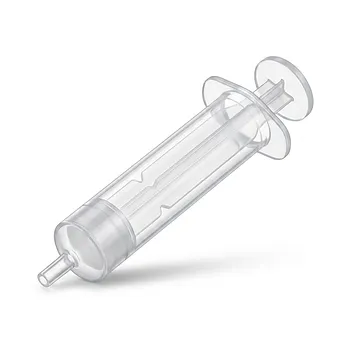
- Corrosion Resistant PFA Syringe Translucent Visual Fluoropolymer Labware 10ml Chemical Handling Tool
- High Purity PFA Chromatography Column with Collection Bottle Corrosion Resistant Fluoropolymer Filtration System for Trace Analysis
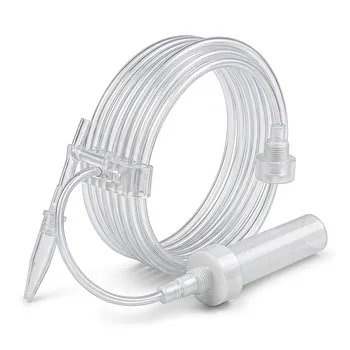
- Custom PFA Tubing 1/4 Inch High Purity Corrosion Resistant Fluoropolymer Tube with Welding and Machining Services
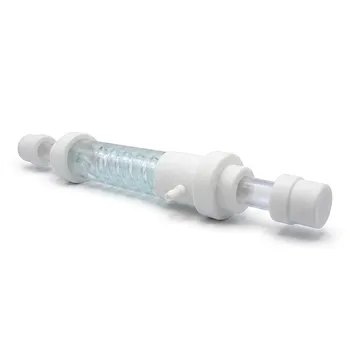
- Custom PTFE Condenser Tube 100ml Serpentine and Straight Fluoropolymer Laboratory Heat Exchanger with Flask Adapters
- Custom PTFE Flask 250ml High Purity Fluoropolymer Laboratory Vessel for Chemical Research
People Also Ask
- Why do PFA fluoropolymer laboratory products offer different melt-processability and structural toughness compared to standard PTFE labware?
- Which material characteristics make fluoropolymers suitable for lithium-ion battery separators, and how do fluoropolymer laboratory supplies support separator performance testing?
- Why use PTFE/PFA for pH adjustment in dye studies? Ensure chemical purity and reliable adsorption data accuracy.
- How do the chemical properties of fluorinated materials support specialized processing requirements in semiconductor cleanrooms and analytical labs? Discover high-purity PTFE/PFA solutions.
- Why might incorporating fluorine into a fluoropolymer backbone not always lead to a noticeable increase in surface hydrophobicity or water contact angle?