Adding fluorine to a polymer backbone does not guarantee a higher water contact angle. The key factor is whether fluorine atoms are actually exposed at the material surface, rather than simply how much fluorine the polymer contains overall. If backbone fluorine is shielded by phenyl rings or other rigid aromatic groups, the water-facing interface may change very little, leaving the contact angle near 88°–90° even when fluorine content reaches approximately 7.5 wt%.
Fluorine improves surface hydrophobicity only when its low-energy chemistry is presented at the interface. Bulk fluorine content is therefore an incomplete predictor of water repellency; molecular arrangement, surface exposure, and roughness determine the measured contact angle.
Why Backbone Fluorine May Have Limited Surface Effect
Fluorine Content Is Not the Same as Surface Fluorine
Water contact angle is governed primarily by the outermost molecular layers of a material, not by its average bulk composition. Fluorine buried inside the polymer contributes little to the interaction between water and the surface.
A polymer can therefore have a higher fluorine weight percentage while presenting nearly the same chemical groups to water as an otherwise less-fluorinated polymer.
Aromatic Groups Can Shield Fluorinated Backbone Segments
Rigid phenyl rings and other aromatic structures can surround or cover fluorinated backbone groups. This steric shielding prevents those fluorine atoms from becoming the dominant chemical feature at the interface.
In that situation, the surface energy does not decrease as strongly as it would for a structure with densely exposed fluorocarbon groups. The resulting water contact angle may remain moderate rather than increasing substantially.
Surface Organization Controls the Measurement
Polymer chains can reorganize during film formation, but not every fluorinated structure produces the same surface enrichment. Fluorinated side chains, particularly longer fluoroalkyl groups, are more likely to concentrate near the air-material interface than fluorine constrained within a rigid backbone.
This distinction explains why two polymers with similar fluorine contents can show very different wetting behavior.
What Produces Stronger Hydrophobicity
Exposed Fluorinated Side Chains
Fluorinated side chains can create a fluorine-rich outer surface, sometimes within only the top several nanometers of the film. This lowers solid surface tension and can raise advancing water contact angles beyond 120°, depending on chain length and processing.
The surface effect is stronger because the water encounters fluoroalkyl groups directly rather than shielded backbone atoms.
Fully Perfluorinated Structures
Traditional fluoropolymers such as PTFE and PFA derive their strong non-wetting behavior from dense, exposed fluorinated surfaces. Their structure presents fluorine more consistently at the interface than many partially fluorinated aromatic polymers.
For applications requiring maximum liquid repellency and chemical resistance, the degree and arrangement of fluorination matter more than fluorine percentage alone.
Surface Roughness
Chemical composition is only one part of contact-angle behavior. A fluorinated surface with micro- or nanoscale roughness can exhibit much higher apparent hydrophobicity because roughness amplifies the effect of low surface energy.
Standard cast fluoropolymer films may show contact angles around 104°, while high-surface-area structures such as electrospun nanofiber mats can reach approximately 155°–160°. Those values reflect the combined influence of fluorinated chemistry and surface morphology.
Why Contact Angle Is an Imperfect Predictor
The Measurement Reflects the Interface
A static or advancing water contact angle measures how a particular liquid interacts with a particular surface under specific conditions. It does not directly measure total fluorine content or establish where fluorine resides throughout the polymer.
Surface contamination, film history, roughness, defects, and measurement method can all affect the result.
Similar Contact Angles Can Hide Different Structures
A contact angle near 90° does not prove that fluorine is absent or ineffective. It may indicate that fluorine is present but buried, that aromatic groups dominate the interface, or that the surface lacks the roughness needed to amplify hydrophobicity.
Chemical analysis of the surface, rather than bulk composition alone, is needed to distinguish these cases.
Surface Enrichment Depends on Processing
Film formation can cause fluorinated groups to migrate toward the air interface because this reduces interfacial energy. However, the extent of that enrichment depends on polymer architecture, side-chain mobility, curing conditions, substrate interactions, and thermal history.
Consequently, the same nominal polymer composition can produce different surface properties under different processing conditions.
Understanding the Trade-offs
Maximum Repellency Can Reduce Bonding
Highly fluorinated surfaces resist water, oils, and other liquids, but that same low surface energy makes adhesives, inks, and coatings difficult to apply. Bonding or printing may require treatments such as oxygen plasma to temporarily increase wettability.
Such treatments can improve processing while altering the original surface state, so their durability must be evaluated for the intended application.
Roughness Can Improve Hydrophobicity but Add Variability
Micro- and nanoscale roughness can substantially increase the apparent contact angle, but it may also make measurements more sensitive to defects, contamination, and direction of droplet movement. Rough surfaces can additionally complicate cleaning or introduce unwanted fluid-retention sites.
The most hydrophobic surface is therefore not automatically the best surface for every laboratory workflow.
Bulk Fluorination May Add Cost Without Solving the Interface Problem
Increasing fluorine content can raise material or processing costs without producing a meaningful wetting improvement if the added fluorine remains buried. Selecting a polymer based only on fluorine percentage can lead to poor performance in surface-critical applications.
The molecular placement of fluorine should be evaluated before assuming that more fluorine will provide more repellency.
Making the Right Choice for Your Goal
Surface performance should be selected from the polymer architecture and finished morphology, not from fluorine content alone.
- If your primary focus is maximum water and oil repellency: Choose a structure with surface-exposed fluoroalkyl groups or a fully perfluorinated architecture, and verify the result through contact-angle testing.
- If your primary focus is low-adsorption fluid transfer: Evaluate the finished tubing or component surface, including roughness and processing history, because buried backbone fluorine may provide little additional benefit.
- If your primary focus is non-stick laboratory supplies: Prefer fluoropolymers known to expose fluorine at the interface, while checking whether the required surface roughness supports cleaning and fluid release.
- If your primary focus is bonding, printing, or coating: Account for the low surface energy of fluorinated materials and plan for an appropriate surface-treatment and durability assessment.
Effective hydrophobicity comes from fluorine being available where water interacts with the polymer, not merely from fluorine being present somewhere in its backbone.
Summary Table:
| Factor | Impact on Hydrophobicity |
|---|---|
| Fluorine content | Not directly correlated; surface fluorine matters |
| Aromatic shielding | Can hide fluorine, reducing effect |
| Surface organization | Side chains better than backbone fluorine |
| Surface roughness | Amplifies hydrophobicity |
| Processing conditions | Affect surface enrichment |
Optimize your fluoropolymer surfaces for true hydrophobicity. Contact KINTEK today to explore our precision PTFE/PFA custom solutions for labware, fluid handling, and more. Our expertise ensures you get the surface performance you need. Contact us now to discuss your application.
Related Products
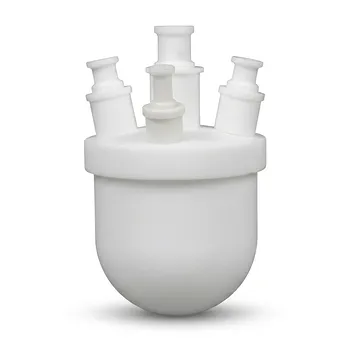
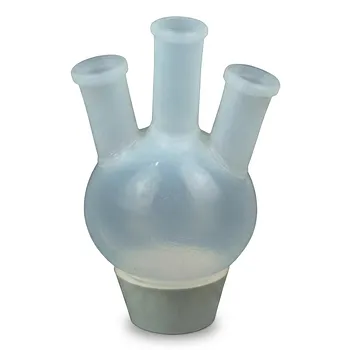
- Custom PTFE Flask 250ml High Purity Fluoropolymer Laboratory Vessel for Chemical Research
- High Purity PFA Chromatography Column with Collection Bottle Corrosion Resistant Fluoropolymer Filtration System for Trace Analysis
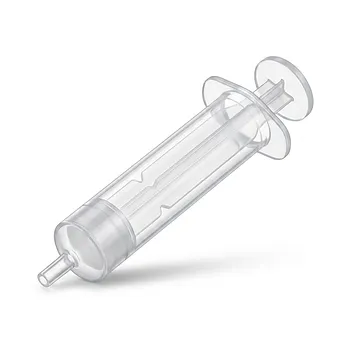
- Corrosion Resistant PFA Syringe Translucent Visual Fluoropolymer Labware 10ml Chemical Handling Tool
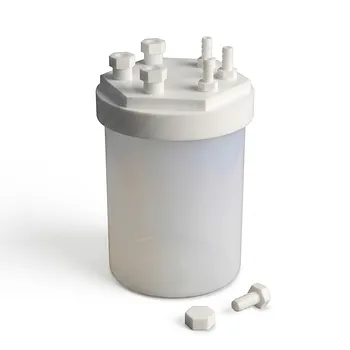
- Custom PTFE Reaction Tank Corrosion Resistant Fluoropolymer Chemical Processing Barrel 10L 20L 30L
- Custom PFA Tubing 1/4 Inch High Purity Corrosion Resistant Fluoropolymer Tube with Welding and Machining Services
People Also Ask
- What are the key steps for structural integrity in molded PTFE lab reaction vessels? Master fine powder processing.
- When synthesizing TFVE monomers involving reactive organometallic reagents and aggressive polar solvents, what material performance characteristics are required? Ensure purity with PTFE/PFA.
- Why Are High-Purity Fluoropolymer Vessels and Tubing Critical for Trace Analysis? Prevent Contamination Reliably
- Why do PTFE fluoropolymer laboratory vessels and containers exhibit superior chemical resistance against harsh solvents and corrosive acids compared to standard plastic labware? Discover the molecular secrets
- How do choice of solvent and chain transfer activity affect molecular weight during vinylidene fluoride (VDF) radical polymerization? Learn Key Factors for High-MW PVDF