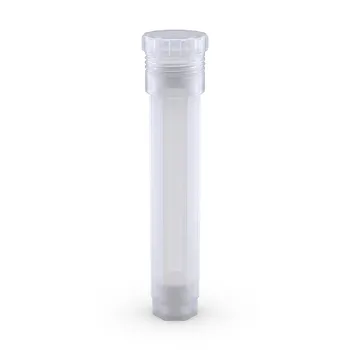
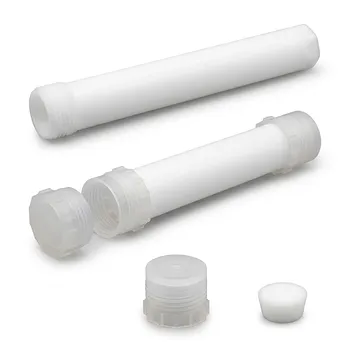
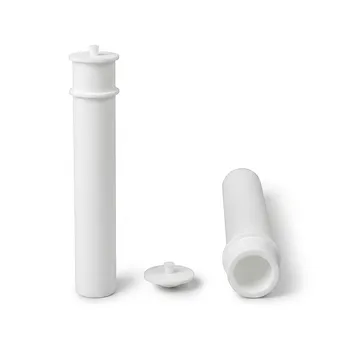
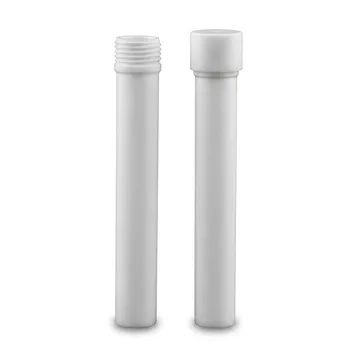
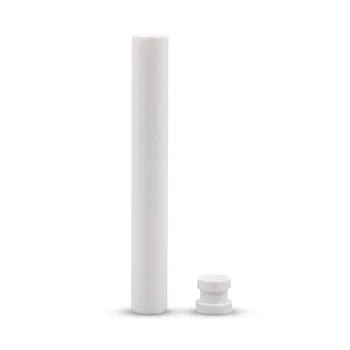
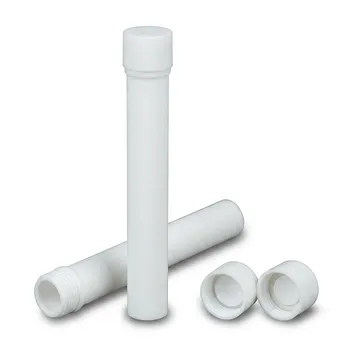
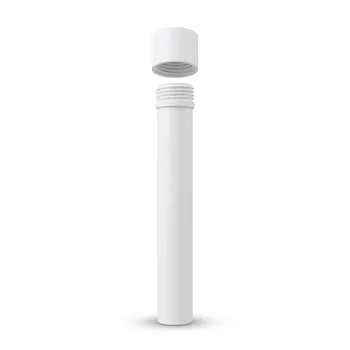
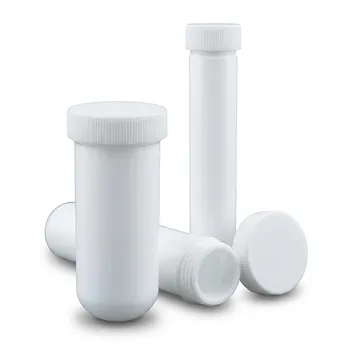
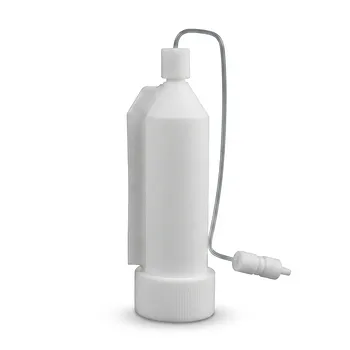
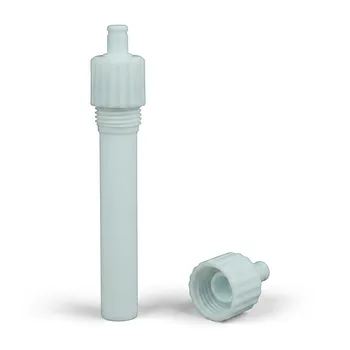
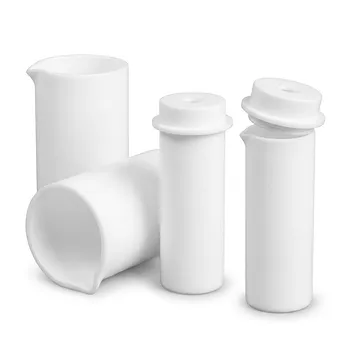
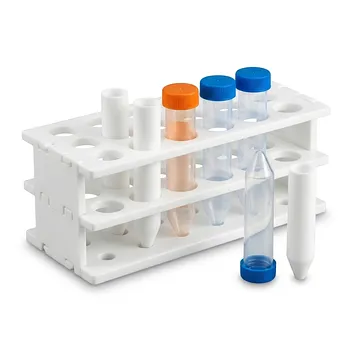
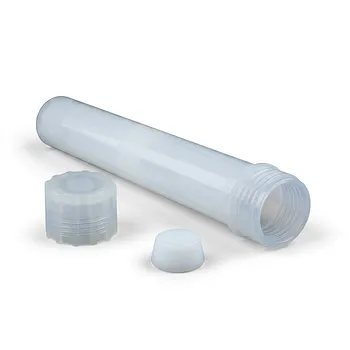
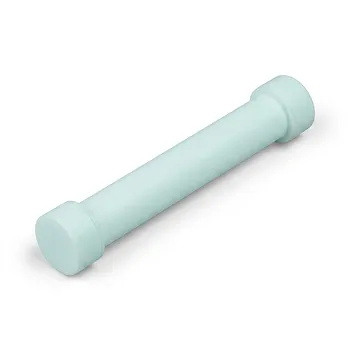
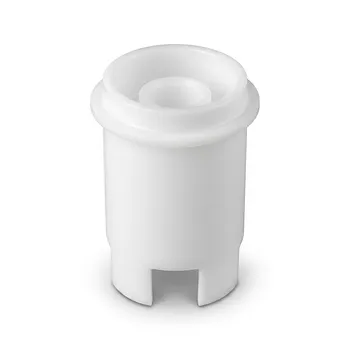
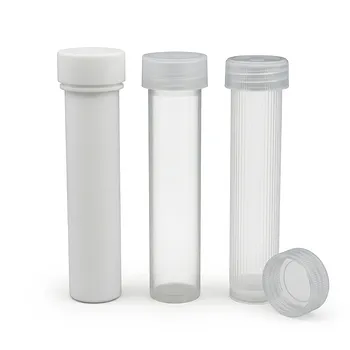
The use of PFA or PTFE digestion vessels is mandatory because the chemical digestion of copper tungstate ($CuWO_4$) requires hydrofluoric acid (HF), which rapidly etches and destroys standard glass or quartz labware. Beyond acid resistance, these fluoropolymers provide the extreme chemical inertness necessary to prevent the leaching of trace impurities, such as iron, which would otherwise compromise the accuracy of the ICP-OES analysis.
Core Takeaway: To accurately analyze $CuWO_4$, samples must be fully mineralized using an aggressive $HF$ acid mixture that is incompatible with glass; PFA and PTFE vessels are the only materials that offer both the required chemical resistance and the ultra-low background levels needed for trace-level detection.
The Critical Role of HF Compatibility
The Chemical Vulnerability of Glass
Preparing $CuWO_4$ for ICP-OES requires a potent mixture of hydrofluoric (HF), hydrochloric, and nitric acids to achieve complete dissolution.
Standard laboratory glassware is composed of silica, which reacts violently with hydrofluoric acid, leading to the physical degradation of the vessel and the failure of the experiment.
PFA (Perfluoroalkoxy) and PTFE (Polytetrafluoroethylene) are perfluorinated polymers that are fundamentally non-reactive with HF, ensuring the sample remains safely contained during the aggressive digestion process.
Ensuring Complete Sample Mineralization
Complete mineralization is necessary to transform the solid $CuWO_4$ sample into a clear, ionic-state solution suitable for the ICP-OES plasma.
Fluoropolymer vessels allow for high-temperature and high-pressure conditions, often within microwave digestion systems, which accelerate the decomposition of stable mineral structures.
Without the ability to use these high-performance materials, the digestion would be incomplete, leading to clogged nebulizers or inaccurate quantitative results.
Preventing Analytical Contamination
Eliminating Background Interference
ICP-OES is highly sensitive and can detect ultra-trace elements like iron (Fe) that may be present in the sample or the environment.
Glass vessels are a known source of secondary contamination, leaching elements such as sodium, calcium, and iron into the acidic sample solution.
PFA and PTFE have exceptionally low trace element backgrounds, ensuring that any detected metals originate solely from the $CuWO_4$ sample and not the container walls.
Minimizing Analyte Loss
Trace analysis requires that every atom of the target element reaches the detector without being "lost" along the way.
Fluoropolymer surfaces exhibit minimal adsorption, meaning target ions are less likely to stick to the sides of the vessel compared to glass or lower-grade plastics.
This chemical "slickness" ensures that the true proportions of dopants or trace elements are preserved throughout the preparation workflow.
Understanding the Trade-offs
Material Limitations and Temperature Caps
While PTFE is exceptionally resistant to chemicals, it has a thermal threshold (typically around 250°C to 260°C) beyond which it can deform or release toxic fumes.
PTFE is also slightly porous compared to PFA; over time, it may "remember" previous samples if not cleaned with rigorous acid-leaching protocols.
PFA is generally translucent, allowing chemists to monitor the progress of the digestion visually, but it is often more expensive than PTFE.
Mechanical Integrity under Pressure
In closed-vessel microwave digestion, these materials must withstand high internal pressures generated by the heating of concentrated acids.
If the vessels are not properly maintained or are used beyond their rated pressure cycles, they risk mechanical failure or "venting," which can lead to sample loss and equipment damage.
How to Apply This to Your Project
Selecting the Right Vessel for Your Analysis
- If your primary focus is extreme chemical purity for trace metals: Use PFA vessels, as they offer the smoothest surface finish and the lowest leaching rates for ultra-trace analysis.
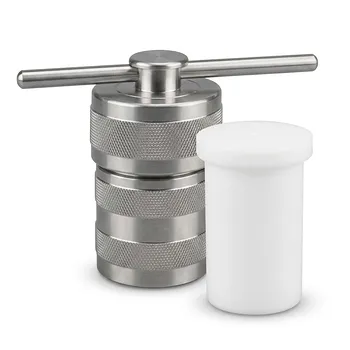
- If your primary focus is routine digestion at high pressures: Use thick-walled PTFE liners within a reinforced digestion bomb to safely manage the expansion of gases.
- If your primary focus is preventing the loss of volatile elements: Ensure you use a closed-system microwave digestion setup with fluoropolymer vessels to trap volatile species like arsenic or mercury.
By matching the superior chemical resistance of fluoropolymers with the specific aggressive acid requirements of copper tungstate, you ensure both the safety of your laboratory and the integrity of your analytical data.
Summary Table:
| Feature | PFA (Perfluoroalkoxy) | PTFE (Polytetrafluoroethylene) | Impact on CuWO4 Analysis |
|---|---|---|---|
| HF Acid Resistance | Excellent (Non-reactive) | Excellent (Non-reactive) | Prevents vessel etching and silica contamination. |
| Trace Metal Background | Ultra-Low (Highest Purity) | Very Low | Ensures accurate detection of trace elements like Iron. |
| Transparency | Translucent (Visible) | Opaque | PFA allows visual monitoring of the mineralization process. |
| Thermal Limit | Approx. 260°C | Approx. 250-260°C | Safe for high-pressure microwave digestion cycles. |
| Surface Texture | Extremely Smooth | Slightly Porous | PFA reduces analyte adsorption and "memory effects." |
Precision Fluoropolymer Solutions for Your Lab
Ensure the integrity of your trace analysis with KINTEK’s high-performance labware. From everyday essentials like PFA beakers, reagent bottles, and centrifuge tubes to advanced microwave digestion vessels and custom-machined reaction apparatus, we provide the chemical inertness your research demands.
Why Choose KINTEK?
- Comprehensive Range: We manufacture everything from basic labware (crucibles, dishes, pipettes) and fluid transfer components (tubing, valves) to specialized battery testing fixtures and electrochemical cells.
- Custom Fabrication: Backed by end-to-end CNC machining, we deliver bespoke, non-standard parts tailored to your specific digestion workflows.
- Unmatched Purity: Our absolute focus on high-performance PTFE and PFA eliminates secondary contamination and analyte loss.
Don't let vessel leaching compromise your ICP-OES results. Contact KINTEK today to secure high-volume orders or custom-engineered fluoropolymer solutions for your laboratory.
References
- Pietro Ostellari, Francesco Lamberti. Fe(III)‐Mediated Formation of Cu Nanoinclusions and Local Heterojunctions in CuWO<sub>4</sub> Photoanodes. DOI: 10.1002/admi.202500610
This article is also based on technical information from Kintek Knowledge Base .
Related Products
- High Purity PTFE PFA Microwave Digestion Vessels Custom Acid Digestion Tanks for Laboratory Sample Preparation
- High Purity Laboratory Microwave Digestion Vessel Customizable PFA PTFE Digestion Tank for Analytical Sample Preparation Trace Metal Analysis
- Custom 100ml PTFE Digestion Tube for Heavy Metal Trace Analysis and High Temperature Acid Digestion
- Custom High Purity PTFE Microwave Digestion Vessels and Graphite Block Compatible Acid Evaporation Tanks for Trace Metal Analysis
- 15 Position Customizable Microwave Digestion Vessel Rack High Purity PTFE PFA Non Stick Laboratory Sample Preparation System
People Also Ask
- What safety features are commonly integrated into microwave digestion vessels? Ensuring High-Pressure Laboratory Safety
- What are the advantages of using microwave digestion vessels for environmental analysis? Boost speed and sample accuracy.
- What are the advantages of using microwave digestion vessels? Optimize EG@MO synthesis with superior thermal control.
- Why are high-strength PFA microwave digestion vessels ideal for complex samples? Ensure Pure & Precise Trace Analysis
- How do microwave digestion vessels support pharmaceutical elemental impurity testing? Achieve Precise USP Compliance