High monomer purity is critical because trace impurities can change the polymer’s molecular structure, contaminate the material, and compromise the low-background performance required in trace analysis and high-purity labware. During fluoropolymerization, hydrogen- or chlorine-bearing impurities may terminate growing chains or act as chain-transfer agents, reducing molecular weight and altering polymer end groups. Other by-products and residual metals can create extractables, leachables, discoloration, structural defects, and inconsistent chemical resistance.
The purity of the monomer sets the foundation for the purity and performance of the finished fluoropolymer. Refined monomer synthesis and rigorous purification reduce polymerization defects and contamination, helping PTFE, PFA, and related materials maintain low leachables, high chemical inertness, strong mechanical properties, and reliable barrier performance.
How Monomer Impurities Affect Polymerization
They interrupt molecular weight growth
High-molecular-weight fluoropolymers require polymer chains to grow without premature termination. Trace telogenic impurities containing hydrogen or chlorine can interrupt this process and alter the molecular weight distribution.
Trifluoroethylene is one particularly important example because it can act as a powerful chain-transfer agent. Even very small concentrations can affect the resulting polymer, which is why TFE feedstocks used for demanding fluoropolymer grades may require exceptionally high purity.
They alter polymer end groups
When an impurity terminates or transfers a growing chain, it can change the chemical groups at the polymer chain ends. These altered end groups may affect thermal stability, chemical behavior, processing characteristics, and extractable content.
The issue is not simply whether the impurity remains physically trapped in the resin. It can become incorporated into the polymer’s molecular architecture.
They reduce consistency between batches
A contaminated or variable monomer feed can produce changes in molecular weight, crystallinity, morphology, and mechanical performance. Such variation is especially problematic when labware must deliver repeatable results across many analytical cycles.
For trace-analysis components, predictable material behavior is part of measurement reliability—not merely a manufacturing preference.
Why the Monomer Synthesis Route Matters
Direct fluorination can create unwanted by-products
Direct fluorination methods may generate side-products such as tetrafluoroethylphenyl ethers. If these compounds are not completely removed, they can contaminate the monomer batch and carry uncertainty into subsequent polymerization.
Those contaminants may affect both chemical purity and the physical properties of the final polymer.
Refined multi-step routes improve selectivity
More controlled synthesis pathways, such as fluoroalkylation followed by metal-mediated dehalogenation, can provide a cleaner route to fluorinated monomers. The goal is to improve reaction selectivity and make unwanted species easier to separate before polymerization.
This upstream control is essential because polymerization does not reliably correct a chemically impure monomer feed.
Purification must address more than organic by-products
High-purity polymer production also requires control of residual inorganic contaminants, metal ions, initiator fragments, and reaction-medium impurities. Species such as iron can contribute to discoloration or unwanted extractables.
Using highly purified process water and carefully controlled reagents helps prevent contamination from entering the polymer matrix during synthesis.
How Purity Protects Trace-Analysis Performance
It minimizes background contamination
Trace analysis can be limited by contamination from the sample container, tubing, fitting, or processing vessel. A fluoropolymer made from impure monomer may contribute organic residues, metal ions, or other extractable species to the sample.
Even when these contaminants are present at very low levels, they can raise analytical background or create false signals.
It reduces leaching into aggressive chemicals
PFA and PTFE are selected for demanding laboratory applications because of their broad chemical resistance and low extractables and leachables. These benefits depend on the quality of the resin as well as the intrinsic chemistry of the fluoropolymer.
A chemically compromised or poorly controlled material may release contaminants during acid digestion, reagent storage, heating, or prolonged contact with solvents.
It supports reproducible results
In trace workflows, contamination can appear as poor blank values, unexplained carryover, or inconsistent recovery. High-purity fluoropolymer components help ensure that observed results originate from the sample and procedure rather than from the equipment.
This is particularly important for digestion vessels, trace-analysis containers, reagent bottles, tubing, and custom fluid-handling parts.
How Purity Influences Physical Properties
High molecular weight supports mechanical durability
Premature chain termination generally works against the development of the high molecular weight needed for robust fluoropolymer performance. Lower or inconsistent molecular weight can affect strength, toughness, wear resistance, and processing behavior.
For machined labware and fittings, these properties help prevent cracking, deformation, and premature failure during repeated chemical and thermal use.
Polymer structure affects barrier performance
Fluoropolymers contain both crystalline and amorphous regions. The tightly packed crystalline phase provides low free volume, while the more disordered amorphous phase provides greater space for chemical diffusion.
Processing and polymer structure therefore influence how effectively a component limits vapor transmission, fluid loss, and contaminant migration.
Structural defects can create contamination pathways
Impurities and poor control of polymer formation can contribute to defects or inconsistencies that become more significant after machining or fabrication. Defects may increase surface area, trap residues, or provide pathways for diffusion and leaching.
For fluid-transfer components, dimensional and structural integrity are directly connected to cleanliness and containment reliability.
Why Virgin Resin Is Often Required
Reprocessed material is not equivalent to pristine resin
Reprocessed fluoropolymers are made from manufacturing scrap that undergoes purification and regrinding. Although this can recover useful material, acid and heat treatment may degrade important physical or chemical properties.
The resulting resin may not provide the same consistency, chemical inertness, or low-background performance as virgin material.
Sensitive applications cannot assume contamination is acceptable
For routine industrial service, reprocessed material may be appropriate when its properties meet the application requirements. Trace analysis and high-purity chemical containment impose a stricter standard because even minor leaching or variation can compromise the result.
Virgin, tightly controlled fluoropolymer is therefore preferred when pristine chemical behavior and structural integrity are essential.
Understanding the Trade-offs
Purity increases manufacturing complexity
Achieving ultra-high monomer purity requires selective synthesis, multiple purification stages, contaminant control, and analytical verification. These steps increase manufacturing time, process complexity, and cost.
That cost is justified when the material is part of a measurement system where contamination can invalidate an entire experiment or batch of samples.
Purity alone does not guarantee performance
Even an exceptionally pure monomer cannot compensate for poor polymerization control, contaminated equipment, unsuitable water or reagents, inadequate fabrication, or dirty handling procedures. Purity must be maintained throughout synthesis, processing, machining, cleaning, packaging, and use.
The complete contamination-control chain matters.
Crystallinity and processing also require control
Higher crystallinity can improve barrier behavior, but the final structure depends on processing conditions as well as feedstock purity. A high-purity resin can still perform poorly if molding, annealing, machining, or cleaning introduces defects or residues.
Material selection should therefore consider resin grade, manufacturing history, fabrication method, and application conditions together.
Making the Right Choice for Your Goal
The practical decision is to treat monomer purity as the starting point of a complete materials-control strategy.
- If your primary focus is trace-analysis accuracy: Specify fluoropolymer components made from highly purified monomers and verify low extractables, leachables, and blank contribution.
- If your primary focus is chemical containment: Prioritize virgin PTFE or PFA with controlled molecular weight, sound structure, and processing that supports low permeability and minimal diffusion.
- If your primary focus is mechanical reliability: Confirm that the resin and polymerization process support high molecular weight and consistent physical properties, rather than evaluating chemical resistance alone.
- If your primary focus is cost reduction: Consider reprocessed material only after application-specific testing demonstrates that its contamination, strength, and chemical-performance limits are acceptable.
- If your primary focus is process control: Evaluate the full chain from monomer synthesis and purification through polymerization, fabrication, cleaning, and packaging.
For the most demanding laboratory applications, high monomer purity is not an isolated specification—it is the foundation for trustworthy measurements and dependable fluoropolymer performance.
Summary Table:
| Aspect | Impact of High Monomer Purity | Impact of Impurities |
|---|---|---|
| Polymerization | Achieves high molecular weight, consistent structure | Premature chain termination, altered end groups, batch variability |
| Trace Analysis | Low background, minimal extractables/leachables | Elevated blanks, false signals, poor reproducibility |
| Chemical Resistance | Optimal inertness, low leaching | Compromised resistance, potential contamination |
| Mechanical Properties | Robust strength, durability, barrier performance | Reduced toughness, structural defects, failure risk |
| Manufacturing Reliability | Consistent quality, predictable behavior | Inconsistent products, increased rejects |
Ensure your fluoropolymer labware meets the highest purity standards. Contact KINTEK today to explore our virgin PTFE/PFA products and custom solutions—engineered for contaminant-free trace analysis and robust performance in your lab. Get in touch with our experts to discuss your requirements!
Related Products
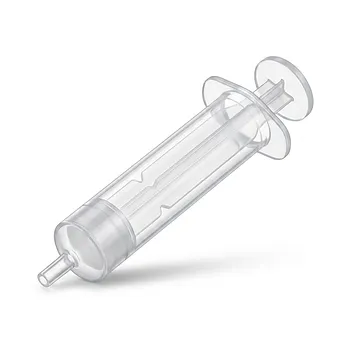
- Corrosion Resistant PFA Syringe Translucent Visual Fluoropolymer Labware 10ml Chemical Handling Tool
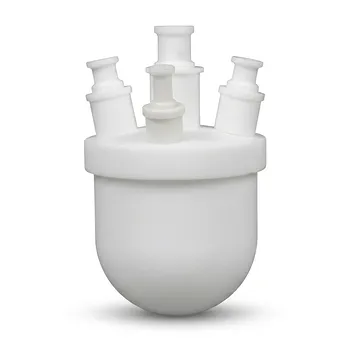
- Custom PTFE Flask 250ml High Purity Fluoropolymer Laboratory Vessel for Chemical Research
- High Purity PFA Chromatography Column with Collection Bottle Corrosion Resistant Fluoropolymer Filtration System for Trace Analysis
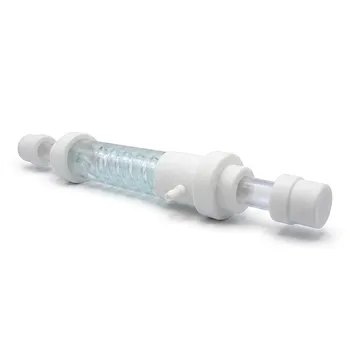
- Custom PTFE Condenser Tube 100ml Serpentine and Straight Fluoropolymer Laboratory Heat Exchanger with Flask Adapters
- High Purity PTFE Single Neck Reaction Flask Acid Resistant Customizable Fluoropolymer Laboratory Reactor
People Also Ask
- How does the incorporation of comonomers such as perfluoropropyl vinyl ether (PPVE) alter the molecular structure and processing characteristics of TFE-based fluoropolymers like PFA compared to standard PTFE?
- Why do PFA fluoropolymer laboratory products offer different melt-processability and structural toughness compared to standard PTFE labware?
- Which material characteristics make fluoropolymers suitable for lithium-ion battery separators, and how do fluoropolymer laboratory supplies support separator performance testing?
- Why use PTFE/PFA for pH adjustment in dye studies? Ensure chemical purity and reliable adsorption data accuracy.
- How do the chemical properties of fluorinated materials support specialized processing requirements in semiconductor cleanrooms and analytical labs? Discover high-purity PTFE/PFA solutions.