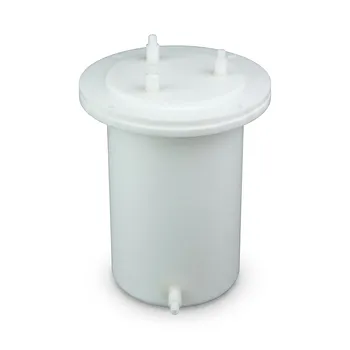
The hydrothermal synthesis of $\text{Cu}_3\text{P/SnS}_2$ composites requires a precise balance of extreme pressure and chemical purity. To achieve the specific flower-like morphology of $\text{SnS}_2$ and the uniform loading of $\text{Cu}_3\text{P}$ on the catalyst surface, the reaction must occur at 180°C in a sealed, pressurized environment. The polytetrafluoroethylene (PTFE) liner acts as both a facilitator for these subcritical conditions and a critical shield against metallic contamination.
The PTFE liner is essential because it creates a chemically inert, high-pressure environment that enables the subcritical solvent reactivity required for directional crystal growth. It simultaneously protects the reactor’s structural integrity from corrosion while preventing metal ion leaching, ensuring the high purity and structural morphology of the $\text{Cu}_3\text{P/SnS}_2$ composite.
Facilitating Subcritical Solvent Reactivity
Achieving Necessary Temperature and Pressure
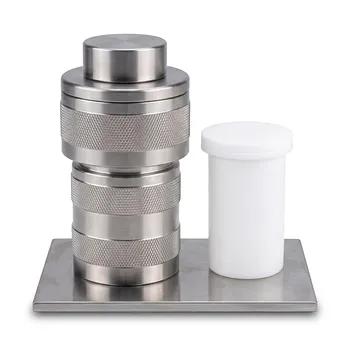
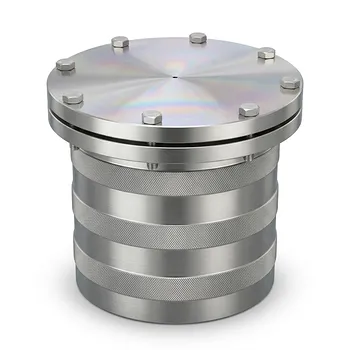
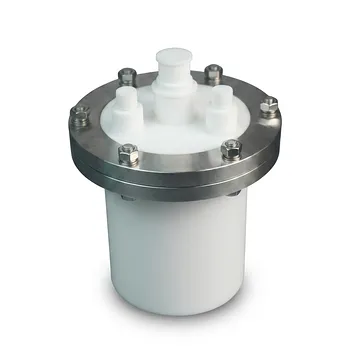
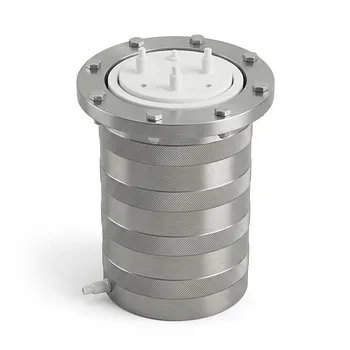
The synthesis of $\text{Cu}_3\text{P/SnS}_2$ requires a temperature of 180°C, which is well above the boiling point of most standard solvents at atmospheric pressure. The PTFE liner, housed within a stainless steel autoclave, creates a sealed environment that allows the solvent to reach subcritical conditions. Under these conditions, the internal autogenous pressure rises significantly, fundamentally altering the solvent's behavior.
Promoting Directional Crystal Growth
Subcritical conditions significantly enhance the reactivity of the precursors, allowing for controlled chemical reactions that are impossible at lower temperatures. This environment is the primary driver for the directional growth of specific crystalline morphologies. Specifically, it enables the formation of the flower-like structure of $\text{SnS}_2$, which provides the necessary surface area for the uniform loading of $\text{Cu}_3\text{P}$.
Ensuring Material Purity and Structural Integrity
Corrosion Resistance and Ion Isolation
Hydrothermal reactions often involve aggressive precursor solutions that can be highly acidic or alkaline. The PTFE liner acts as a chemical barrier, isolating the reaction medium from the stainless steel outer shell of the kettle. This prevents the metal walls from corroding and, more importantly, prevents metal ions from leaching into the solution and contaminating the $\text{Cu}_3\text{P/SnS}_2$ composite.
Non-Stick Properties and Product Recovery
PTFE is known for its extremely low surface energy and non-stick characteristics. During the synthesis of nanoparticles and composites, this prevents the materials from scaling or adhering to the reactor walls. This property ensures a higher product yield and makes it easier to recover the synthesized powder without loss or contamination from residual "burnt-on" materials.
Understanding the Trade-offs
Temperature Limitations
While PTFE is highly versatile, it has a definitive thermal ceiling, typically around 220°C to 250°C. Exceeding these temperatures can cause the liner to soften or deform, potentially leading to a seal failure or "creeping" of the plastic. For the 180°C requirement of $\text{Cu}_3\text{P/SnS}_2$, PTFE is ideal, but it cannot be used for ultra-high-temperature hydrothermal processes.
Thermal Expansion Mismatch
PTFE has a different coefficient of thermal expansion than the stainless steel jacket surrounding it. If the reactor is heated or cooled too rapidly, the liner can develop mechanical stress, leading to cracks or permanent deformation. Technical advisors recommend gradual heating and cooling cycles to maintain the structural integrity of the liner over multiple uses.
Applying This to Your Synthesis Goals
Strategic Implementation
To successfully synthesize high-quality $\text{Cu}_3\text{P/SnS}_2$ composites, the equipment choice must align with your specific research or production priorities.
- If your primary focus is phase purity: Utilize a high-purity PTFE liner to ensure zero migration of chromium or nickel ions from the autoclave shell into your catalyst.
- If your primary focus is morphology control: Ensure the reaction is held at 180°C for the full duration to maintain the subcritical pressure required for the $\text{SnS}_2$ "flower" formation.
- If your primary focus is high yield: Leverage the non-stick surface of the PTFE liner by using ultrasonic cleaning after recovery to ensure all nanoparticles are harvested from the vessel.
The PTFE-lined hydrothermal reactor remains the industry standard for composite synthesis because it transforms a standard chemical mixture into a high-performance material through controlled, pressurized reactivity.
Summary Table:
| Feature | Benefit for Cu3P/SnS2 Synthesis | Technical Significance |
|---|---|---|
| Chemical Inertness | Prevents metal ion leaching | Protects catalyst purity from metallic contamination. |
| Subcritical Pressure | Facilitates directional growth | Enables the formation of flower-like SnS2 structures. |
| Non-stick Surface | Ensures high product yield | Facilitates easy recovery of synthesized nanoparticles. |
| Thermal Barrier | Protects reactor integrity | Safely handles the required 180°C reaction temperature. |
| Corrosion Resistance | Longevity & Safety | Withstands aggressive acidic or alkaline precursors. |
Optimize Your Advanced Material Synthesis with KINTEK
Achieving the perfect morphology and phase purity in composites like Cu3P/SnS2 requires equipment that never compromises on chemical integrity. KINTEK specializes in high-performance fluoropolymer solutions designed for the most demanding laboratory environments.
From everyday basic labware—including PTFE and PFA beakers, crucibles, reagent bottles, and digestion tubes—to specialized tools like high-purity trace analysis instruments and filtration tools, we offer a comprehensive catalog to support your research. Our expertise extends to complex fluid transfer components, sample prep tools, and advanced derivative apparatus such as custom electrochemical cells, battery testing fixtures, and microwave digestion vessels.
Why choose KINTEK?
- Unmatched Material Focus: Absolute focus on high-performance PTFE and PFA for zero-contamination results.
- Custom Fabrication: Backed by end-to-end custom CNC machining, we deliver everything from standard consumables to bespoke, non-standard laboratory setups.
- Scalable Solutions: We support both specialized research needs and high-volume industrial orders with equal precision.
Don't let equipment limitations hinder your scientific breakthroughs. Contact us today to discuss your custom requirements and request a quote—let KINTEK provide the high-performance tools your innovation deserves.
References
- Haoyan Wei, Jing Jin. Development of Cu3P/SnS2 Composite and Its High Efficiency Electrocatalytic Reduction of Carbon Dioxide. DOI: 10.3390/catal15060552
This article is also based on technical information from Kintek Knowledge Base .
Related Products
- PTFE Lined High Pressure Digestion Vessel 50ml High Temperature Hydrothermal Synthesis Tank
- Custom TFM Reaction Vessel with Stainless Steel Jacket and PTFE Inner Cup for High Corrosion Resistance
- Custom PTFE Reaction Kettle 2L Flanged Fluoropolymer Reactor Tank Acid and Alkali Resistant Polytetrafluoroethylene Vessel
- High Temperature PTFE Reaction Flask 1000ml Single Neck Round and Flat Bottom Laboratory Bottle
- High Purity TFM Microwave Digestion Vessels PTFE Acid Evaporation Liners Domestic GT-400 Equivalent Laboratory Reaction Containers
People Also Ask
- What are the benefits of using a PTFE-lined vessel for carbon-sulfur cathode treatment? Maximize Purity & Performance
- Why are PTFE-lined pressure digestion vessels required for the preparation of Ag/CeO2 catalysts? Purity & Performance
- What safety features are typically incorporated into high-pressure PTFE digestion vessel designs? Ensure Lab Safety
- What is the function of PTFE lined high-pressure vessels in g-C3N4 synthesis? Achieve High-Purity Material Growth
- Role of High-Pressure Digestion Tanks in Perovskite Synthesis: Achieve Superior Stability and Latent Heat