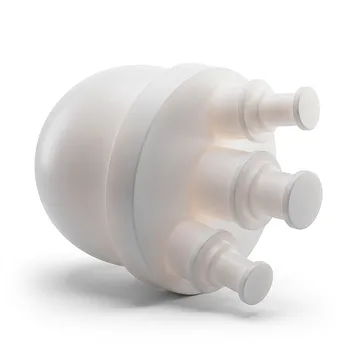
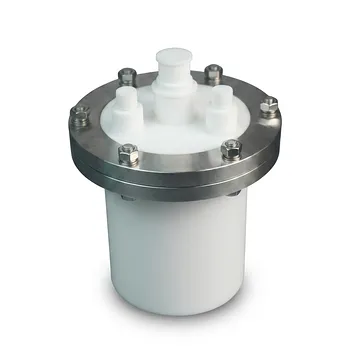
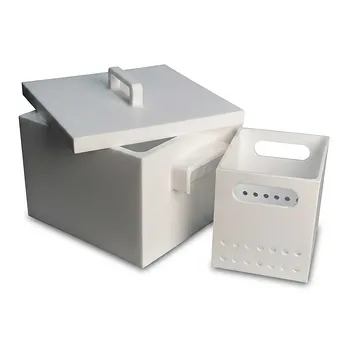
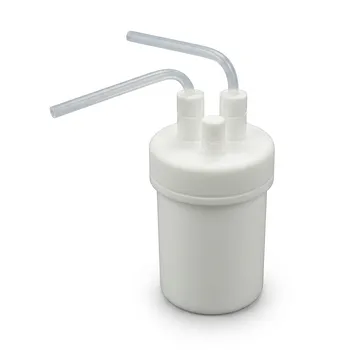
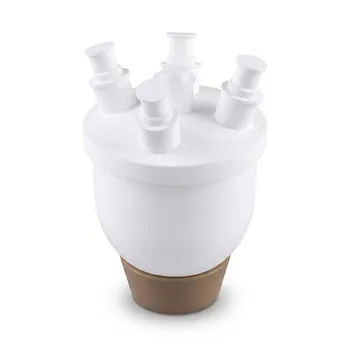
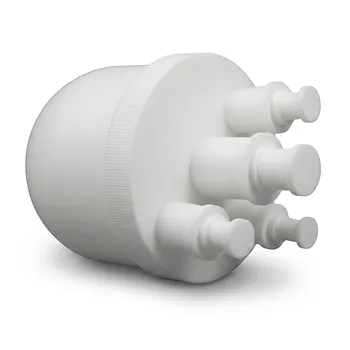
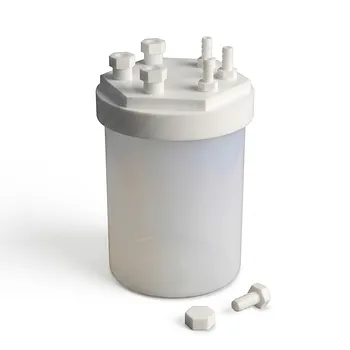
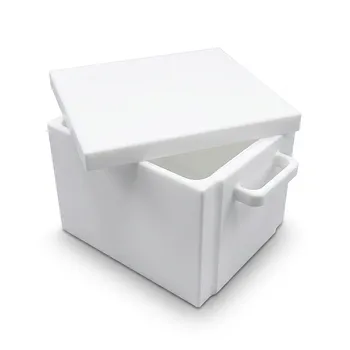
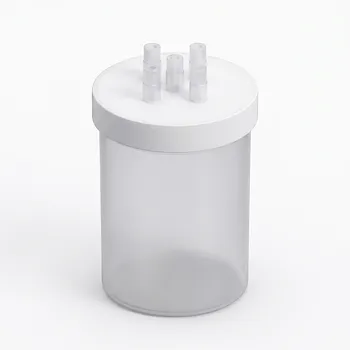
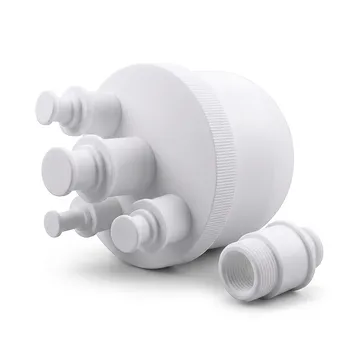
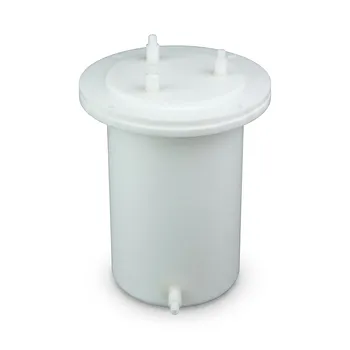
PFA and PTFE fluoropolymer vessels are preferred over glass because they resist corrosive fluorinated reagents, tolerate microwave digestion conditions, and contribute far less contamination to high-purity samples. Hydrofluoric acid and many fluorinated compounds attack the silicate structure of glass, causing etching, vessel damage, and potential sample contamination. By contrast, high-purity PTFE and PFA provide chemically inert, low-adsorption surfaces that support reliable trace-element analysis.
For microwave digestion involving hydrofluoric acid or other aggressive reagents, PTFE and PFA protect both the vessel and the sample. Their chemical resistance, thermal capability, smooth surfaces, and low trace-metal background make them better suited than glass for high-purity preparation.
Why Glass Is Unsuitable for Fluorinated Reagents
Hydrofluoric Acid Attacks Silicate Glass
Glass is primarily a silicate material, and hydrofluoric acid reacts with silicate structures. This reaction can etch the vessel surface, weaken the material, and introduce dissolved or particulate components into the sample.
This is a fundamental materials-compatibility issue, not simply a question of whether the glass appears visually intact after digestion.
Etching Can Affect Sample Quality
A chemically attacked glass surface can release matrix components and create roughened areas where residues accumulate. These effects increase the risk of cross-contamination and poor recovery, particularly when samples are analyzed for trace elements.
Glass is therefore a poor choice when digestion chemistry includes HF or other reagents that aggressively attack silicate materials.
Why PTFE and PFA Perform Better
Strong Chemical Inertness
PTFE and PFA are fluoropolymers with exceptional resistance to many concentrated acids and oxidizing mixtures, including commonly used combinations of nitric acid and hydrogen peroxide. They are also far more compatible with HF-containing digestion methods than glass.
This resistance helps the vessel maintain its integrity while the reagents break down the sample matrix.
Stability During Microwave Digestion
Microwave digestion produces elevated temperatures and pressures inside a sealed vessel. Properly designed PTFE and PFA vessels or liners can retain their structural and chemical performance under these conditions.
The vessel’s overall pressure rating still depends on its complete design, including the liner, closure, relief system, and operating procedure. Material resistance alone does not make every fluoropolymer vessel suitable for every pressure or temperature.
Low Metal Background
High-purity fluoropolymers have very low trace-metal impurity and leaching levels. This is critical for ICP-MS and other trace-element methods, where even small contributions from the vessel can distort results.
Using a low-background material improves the distinction between metals present in the sample and metals introduced during preparation.
Smooth, Non-Porous Surfaces
PTFE and PFA have smooth, non-porous, and low-adhesion surfaces. These characteristics reduce the tendency of digested material or heavy-metal ions to remain attached to the vessel wall.
Reduced adsorption supports better analyte recovery and makes cleaning more effective, lowering the risk of carryover between samples.
How the Material Protects the Analytical Process
Complete Mineralization
Microwave digestion is intended to convert the sample into a suitable dissolved form for analysis. The vessel must withstand the reagents long enough for the sample matrix to be fully decomposed.
Because PTFE and PFA resist strong acid attack, they allow aggressive digestion chemistry to work without the vessel becoming a competing source of reaction products.
More Reliable Trace Analysis
In trace heavy-metal analysis, accuracy depends on controlling every source of background contamination. A chemically resistant, low-background vessel reduces the chance that the preparation system will add or remove measurable quantities of analytes.
This is especially important for ICP-MS, where instrumental sensitivity makes contamination from reagents, vessels, and handling procedures significant.
Reduced Cross-Contamination
A smooth fluoropolymer surface is less likely to retain residues than an etched or porous surface. With suitable cleaning and handling, this helps maintain lower carryover between digestion cycles.
The benefit is greatest when the laboratory processes samples with widely different analyte concentrations.
Understanding the Trade-offs
PTFE and PFA Are Not Interchangeable in Every Use
PTFE and PFA share strong chemical resistance, but their mechanical, thermal, fabrication, and handling characteristics can differ. The appropriate choice depends on the vessel design, digestion temperature, pressure, reagent mixture, and whether visual observation or specialized geometry is required.
The manufacturer’s compatibility and operating limits should govern the final selection.
Pressure Safety Depends on the Complete Vessel
Microwave digestion vessels are pressure systems, not merely containers. A fluoropolymer liner must be used within the limits of its outer support, sealing mechanism, pressure-control features, and microwave system.
Overfilling, unsuitable reagent combinations, excessive temperature, or damaged seals can create hazards even when the liner material itself is chemically compatible.
Contamination Is Reduced, Not Eliminated
PTFE and PFA can provide extremely low background levels, but they do not eliminate contamination from reagents, laboratory air, tools, seals, or inadequate cleaning. High-purity preparation requires clean handling, reagent blanks, validated washing procedures, and appropriate storage.
Material selection is one part of contamination control rather than a substitute for it.
Making the Right Choice for Your Goal
Select the vessel material according to the chemistry and detection limits of the method.
- If your primary focus is HF or fluorinated-reagent compatibility: Choose a properly rated PTFE or PFA vessel or liner because glass can be etched and damaged by silicate-reactive chemistry.
- If your primary focus is ICP-MS trace-metal accuracy: Use high-purity PTFE or PFA with verified low metal background, supported by reagent blanks and validated cleaning.
- If your primary focus is complete microwave digestion: Confirm the complete vessel system is rated for the required temperature, pressure, fill volume, and acid mixture.
- If your primary focus is minimizing carryover: Prefer smooth, low-adsorption fluoropolymer surfaces and establish cleaning procedures appropriate to the sample matrix.
The right PTFE or PFA vessel preserves chemical compatibility, pressure integrity, and analytical cleanliness at the same time.
Summary Table:
| Feature | Glass Vessels | PTFE/PFA Vessels |
|---|---|---|
| HF Compatibility | Poor (etched by HF) | Excellent (inert to HF) |
| Trace-metal background | Higher (can leach) | Very low (high-purity) |
| Thermal stability | Good but may crack | Excellent (suitable for microwave) |
| Surface adsorption | High (roughened by etching) | Low (smooth, non-porous) |
| Chemical resistance | Limited to non-fluorinated acids | Resists most strong acids and oxidizers |
| Sample recovery | Lower (adsorption/contamination) | Higher (low adsorption, clean surfaces) |
Upgrade your lab's sample preparation with high-purity PTFE and PFA vessels from KINTEK. Our fluoropolymer products are designed for superior chemical resistance, minimal contamination, and reliable microwave digestion, ensuring accurate trace analysis. Whether you need standard digestion vessels or custom solutions, our OEM/ODM support and robust supply chain meet your exact requirements. Contact us today to enhance your lab's efficiency and data quality — Get in touch!
Related Products
- Custom PFA Reaction Bottles High Purity PTFE Reaction Vessels Corrosion Resistant Petrochemical Containers
- Custom PTFE Dissolution Bottle 50ml with PFA Ultra Fine Tubing Corrosion Resistant No Leaching
- Custom PTFE Flask 250ml High Purity Fluoropolymer Laboratory Vessel for Chemical Research
- Custom PTFE Flask Large Volume 18L Corrosion Resistant Low Background High Purity Chemical Vessel
- High Purity Custom PTFE Large Volume 15L Flask Corrosion Resistant Low Trace Background Fluoropolymer Reaction Vessel
People Also Ask
- Why are well-sealed reaction vessels necessary for superacid-promoted Friedel-Crafts polycondensation? Optimize Synthesis
- Role of reaction vessels in alkali treatment for oil palm waste: Achieve High-Purity Cellulose with PTFE Vessels
- How do the material choice and sealing integrity of the reaction vessel affect the growth of NiFe-LDH? Optimize Synthesis
- What is the role of high chemical inertness reaction vessels in the organic synthesis of acylhydrazone ligands? | Guide
- Why are high-purity PFA reaction bottles superior to glass for boride synthesis? Ensure Ultra-Pure Yield & No Leaching