Modifying comonomers are added to ETFE to prevent high-temperature embrittlement. Small amounts of comonomers such as hexafluoropropylene (HFP) or perfluorobutylethylene disrupt the highly regular structure of the ethylene-tetrafluoroethylene chain. This limits excessive crystallization and improves chain flexibility, allowing ETFE to retain mechanical strength and chemical resistance during prolonged exposure to elevated temperatures.
The key effect is improved long-term mechanical reliability, not an unlimited increase in temperature resistance. Modifying comonomers reduce the structural changes that make pure alternating ETFE brittle, while ETFE still has an upper thermal limit at which chain degradation and loss of properties occur.
Why Pure ETFE Can Embrittle
Highly regular chain structure
A pure alternating ETFE copolymer has a relatively regular molecular arrangement. That regularity promotes crystalline packing, which contributes to strength but can also make the material increasingly rigid and brittle during thermal aging.
At elevated operating temperatures, this structural change can occur rapidly enough to reduce elongation and fracture resistance. The problem is especially important in tubing, fittings, seals, and structural components that must tolerate repeated or sustained mechanical stress.
Thermal aging is a mechanical problem
High-temperature exposure does not only threaten ETFE through chemical decomposition. Long-term heat can also change the balance between crystalline and amorphous regions, causing the material to lose the flexibility needed to absorb stress.
This is why an ETFE component may remain chemically intact yet become unreliable in service: it can crack or fracture before its chemical resistance has been meaningfully compromised.
How Modifying Comonomers Change the Polymer
Bulky groups disrupt crystal packing
Manufacturers introduce approximately 1 to 10 mol% of a modifying comonomer during free-radical copolymerization. The additional units introduce structural irregularity and, depending on their size, act as defects within the crystal structure or remain largely in less-ordered amorphous regions.
This disruption reduces tight chain packing and limits the formation of excessively large or rigid crystalline domains. The polymer therefore retains useful crystallinity and strength without developing the same tendency toward rapid embrittlement.
Chain flexibility is preserved
Comonomers with bulky or flexible fluorinated groups give the molecular structure more freedom to deform under load. That flexibility helps ETFE accommodate thermal expansion, residual stress, and mechanical movement during high-temperature service.
The practical result is better retention of elongation, toughness, and crack resistance after heat exposure.
The modification is built into the resin
Because the comonomer is incorporated during polymerization, the improvement comes from the polymer's molecular architecture rather than from a surface treatment or a temporary processing aid. The resulting properties are distributed throughout the material.
This is particularly valuable for fluid-transfer components and machined or formed parts, where the entire cross-section must maintain reliable mechanical behavior.
Impact on High-Temperature Performance
Better retention of mechanical strength
Modified ETFE can maintain high mechanical strength while resisting the rapid embrittlement associated with unmodified alternating ETFE. This supports longer service life in demanding thermal environments.
The benefit is most relevant when a component must remain flexible or load-bearing after extended heat exposure, rather than merely survive a brief temperature excursion.
Improved resistance to thermal stress cracking
Reduced crystallization and greater chain flexibility lower the tendency for thermal stress to concentrate in brittle regions. As a result, modified ETFE is better suited to applications involving sustained heat, pressure, vibration, or dimensional constraint.
This makes the modification important for components such as tubing, fittings, valves, and structural insulation.
High temperature capability remains bounded
Modifying comonomers improve aging behavior, but they do not eliminate the fundamental thermal limits of ETFE. ETFE grades commonly melt in the approximate range of 218-280 °C and are processed around 280-340 °C, depending on composition and grade.
At temperatures above the processing range, especially in oxygenated environments, main-chain cleavage can produce oligomers and cause discoloration, embrittlement, foaming, and loss of elongation. Comonomer modification should therefore be understood as improving thermal endurance under load, not as preventing all forms of thermal decomposition.
Stabilizers address a different problem
Thermal stabilizers, such as small amounts of cuprous halides in suitable formulations, can slow degradation during severe heat aging. They protect against chemical degradation mechanisms, whereas modifying comonomers primarily adjust crystallinity, chain flexibility, and mechanical aging behavior.
These approaches may be complementary, but they should not be treated as interchangeable. A resin can require both an appropriate molecular structure and formulation-level stabilization for especially severe thermal exposure.
Why Processability Also Improves
Lower and more controlled crystallinity
Side groups from modifying comonomers interfere with the tight packing characteristic of highly crystalline fluoropolymers. This can reduce lamellar thickness and overall crystallinity.
The same molecular disruption that improves toughness can also make the resin easier to melt-process into complex shapes.
More practical fabrication
Modified fluoropolymers are better suited to manufacturing operations such as extrusion, molding, welding, and the production of complex fluid-transfer fittings. This expands the range of geometries that can be produced while preserving ETFE's chemical resistance.
The processing benefit is important because high-temperature performance depends on the quality of the finished component, including its welds, walls, corners, and stress-concentrating features.
Understanding the Trade-offs
Modification can alter thermal transitions
Disrupting crystal packing generally changes crystallinity, melting behavior, and the balance between stiffness and flexibility. The exact effect depends on the comonomer type, concentration, molecular weight, and processing history.
A modified grade should therefore be selected using its actual datasheet and aging data, rather than assuming that every ETFE formulation has identical temperature performance.
Higher toughness does not mean unlimited creep resistance
Greater chain flexibility can improve toughness and resistance to brittle cracking, but flexible molecular regions may also affect stiffness and long-term deformation under sustained load. Temperature, stress level, part geometry, and exposure time must all be considered.
For a highly loaded component, creep data and dimensional stability may be as important as tensile strength.
Not every failure is caused by crystallization
If ETFE is exposed beyond its processing or decomposition limits, chain scission and oxidation can dominate the failure mechanism. In that situation, a modifying comonomer cannot substitute for appropriate temperature control, material stabilization, and oxygen management.
Material selection must distinguish between thermal aging, thermal stress cracking, creep, and chemical decomposition.
Making the Right Choice for Your Goal
The appropriate ETFE formulation depends on whether the main requirement is long-term mechanical reliability, processing flexibility, or survival under extreme thermal exposure.
- If your primary focus is long-term high-temperature durability: Choose a modified ETFE grade with documented heat-aging and elongation-retention performance for the intended temperature and service duration.
- If your primary focus is complex fabrication: Select a grade whose comonomer modification provides the required melt-processability, welding behavior, and dimensional stability.
- If your primary focus is chemical resistance under thermal stress: Verify both the ETFE grade's chemical compatibility and its mechanical retention after heat aging, because chemical inertness alone does not prevent embrittlement.
- If your primary focus is exposure near or above processing temperatures: Evaluate the need for thermal stabilization and strict temperature control, since comonomer modification does not prevent high-temperature chain degradation.
Modifying comonomers make ETFE more reliable at high temperature by controlling crystallinity and preserving flexibility, while careful grade selection remains essential because the material still has finite thermal limits.
Summary Table:
| Aspect | Without Modifying Comonomers | With Modifying Comonomers |
|---|---|---|
| Chain Structure | Highly regular, promotes crystallization | Irregular, disrupts crystal packing |
| Crystallinity | High, leads to brittleness over time | Reduced, retains flexibility |
| Thermal Aging | Rapid embrittlement, loss of elongation | Improved retention of mechanical properties |
| Processability | More difficult to melt-process | Easier extrusion and molding |
| High-Temperature Use | Limited by embrittlement risk | Better long-term reliability under load |
Maximize the durability and performance of your high-temperature applications with our expertly formulated PTFE and PFA products. KINTEK specializes in high-performance fluoropolymers, offering a comprehensive range of labware, fluid transfer components, and custom CNC-machined parts designed to withstand extreme conditions. Our materials are engineered to deliver superior thermal stability and mechanical integrity, ensuring your operations run smoothly without unexpected failures. Contact us today to discuss your specific requirements and discover how KINTEK can provide the reliable solution you need. Get in touch with our experts.
Related Products
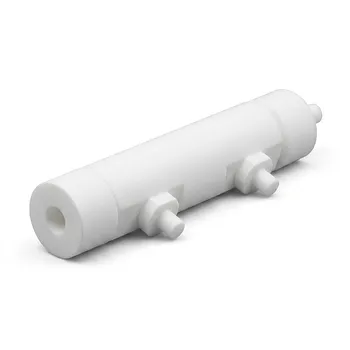
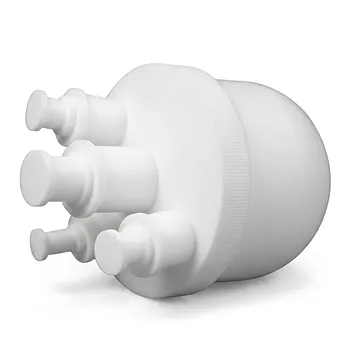
- Custom PTFE Electrolytic Cell Corrosion Resistant Low Background Reaction Vessel with Inlet Outlet Ports
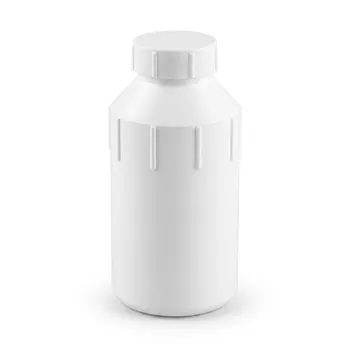
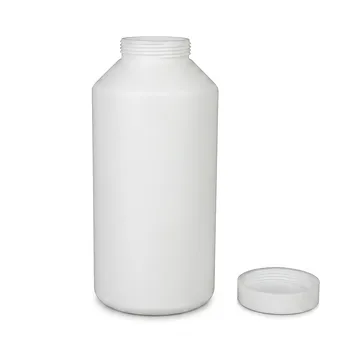
- Custom PTFE Wide Mouth Reagent Reaction Bottle Corrosion Resistant High Temperature Large Capacity Straight Body Laboratory Vessel
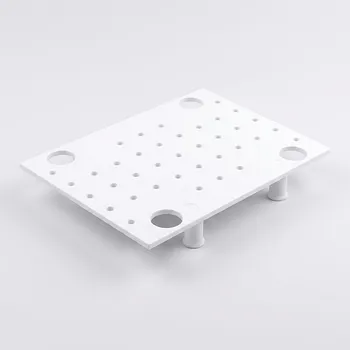
- High Temperature Resistant PTFE Thermal Insulation Board Corrosion Resistant Metal Free Fluoropolymer Stand for Ultra Clean Laboratories
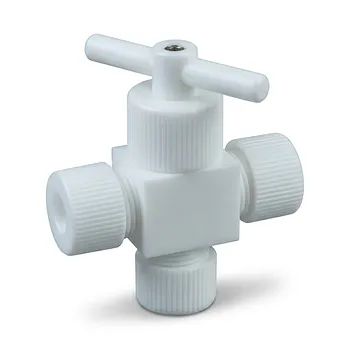
- Custom PTFE Valve 2-Way 3-Way Corrosion Resistant Low Background Virgin Fluoropolymer Industrial Fluid Control
- High Purity PTFE Single Neck Reaction Flask Acid Resistant Customizable Fluoropolymer Laboratory Reactor
People Also Ask
- Why are high-purity PTFE or PFA reaction vessels recommended for the synthesis of PANI-TiC hybrid materials? - Guide
- Ion Activation Reaction Vessel Requirements: Why PTFE is Critical for Membrane Performance
- Why is a PTFE reaction vessel required for Ti3C2Tx MXene synthesis? Ensure Safe HF Etching & High Purity
- Why is a high-quality PTFE reaction vessel required for the etching preparation of Ti3C2Tx MXene? Ensure Pure Synthesis.
- Why are fluoroplastic (PTFE) reaction vessels recommended for Methylene Blue (MB) adsorption kinetic experiments?