Low dielectric constants and high thermal resistance are important because they preserve electrical signal integrity and physical accuracy under demanding operating conditions. In custom-machined electrical and analytical apparatus, fluoropolymers with dielectric constants as low as approximately 2.31–2.53 at 1 MHz reduce capacitive loading, signal loss, and electrical interference. Their high glass-transition temperatures, reaching roughly 230–361°C in specialized materials, help parts retain their dimensions and insulation performance when exposed to elevated temperatures.
The central value of these fluoropolymers is stability: low dielectric behavior protects the quality of electrical measurements, while high thermal resistance helps machined components remain reliable, precise, and chemically inert throughout operation.
Why Low Dielectric Constants Matter
Reducing Signal Loss and Distortion
A material's dielectric constant indicates how strongly it becomes electrically polarized in an applied electric field. A lower value generally means the material stores less electrical energy, which helps reduce unwanted capacitive effects in high-frequency and sensitive measurement systems.
This is important in sensor housings, electrical test fixtures, and analytical instruments where even small parasitic effects can alter the measured signal. Fluoropolymer insulation can help preserve the signal generated by the system rather than absorbing or redistributing a significant portion of it.
Limiting Electrical Interference
Fluorinated polymers also exhibit low dielectric dissipation and very high volume resistivity. Together, these properties reduce leakage paths and limit the conversion of electrical energy into unwanted losses or interference.
That makes them useful for precision electrochemical cells and analytical apparatus, where electrical noise can obscure small changes in current, voltage, impedance, or sensor output.
Maintaining Insulation in Conductive Environments
Low dielectric constant is only one part of electrical performance. Dielectric strength determines how much voltage a material can withstand before electrical breakdown, while volume resistivity describes its resistance to current flowing through its bulk.
Fluoropolymers can combine low dielectric behavior with high dielectric strength and volume resistivity. This combination helps isolate electrodes and conductors, prevent current leakage, and reduce the risk of breakdown when components contact conductive or corrosive electrolyte solutions.
Why Fluoropolymers Have Low Dielectric Constants
Low Molecular Polarizability
The carbon-fluorine bond has relatively low polarizability compared with many bonds found in conventional engineering polymers. As a result, the polymer chains respond less strongly to an applied electric field.
Bulky fluorinated groups, such as trifluoromethyl groups, further reduce the material's effective polarizability. This contributes to the low dielectric constants observed in specialty fluorinated polymers.
Increased Free Volume
Bulky fluorinated groups disrupt tight molecular packing and create more free volume within the polymer matrix. Rigid backbone structures can reinforce this effect by limiting chain movement and preventing the chains from packing efficiently.
More free volume generally reduces the amount of polarizable material occupying a given volume. The result is a lower dielectric constant without sacrificing the chemical resistance expected from a fluoropolymer.
Low Moisture Uptake
Moisture can increase dielectric response and create variability in electrical behavior. Fluorinated polymers are hydrophobic and typically absorb very little water, so their dielectric properties are less sensitive to changes in humidity.
For trace-analysis equipment and precision laboratory components, this helps maintain more consistent insulation, dimensions, and measurement conditions.
Why High Thermal Resistance Matters
Preserving Machined Dimensions
Custom-machined apparatus often depends on tight clearances, accurate electrode spacing, flat sealing surfaces, and stable alignment. If the material softens or expands excessively during operation, those relationships can change.
A high glass-transition temperature provides a useful indication of when an amorphous polymer begins to lose stiffness significantly. Fluoropolymers with elevated Tg values can retain useful mechanical rigidity over a broader operating-temperature range, supporting dimensional stability in precision parts.
Maintaining Electrical Performance at Temperature
Electrical properties can change as a polymer approaches its softening or glass-transition range. Excessive molecular movement may increase dielectric losses, reduce mechanical support, or compromise insulation geometry.
High thermal resistance helps the fluoropolymer maintain its low-loss electrical behavior and stable isolation while the apparatus is heated or exposed to thermal cycling.
Withstanding Aggressive Laboratory Conditions
Thermal resistance is especially valuable when heat is combined with corrosive chemicals, reactive solvents, or electrolyte solutions. Specialty fluoropolymers benefit from strong carbon-fluorine bonds and chemically resistant molecular structures.
This allows machined cell bodies, sensor housings, and isolation components to retain structural integrity and purity under conditions that would degrade many other plastics.
Supporting Cleaner Measurements
Analytical systems often operate under conditions where contamination, outgassing, or chemical reaction can compromise results. Fluoropolymers are chemically inert and resistant to many aggressive reagents, which helps prevent the apparatus from contributing unwanted contaminants to a sample or reaction.
Thermal stability strengthens this advantage by reducing the likelihood of deformation or material breakdown during heated operation.
How the Properties Work Together
Electrical Stability and Mechanical Stability Are Linked
A component may have excellent electrical insulation when new but still be unsuitable if heat causes it to deform. Changes in geometry can alter electrode spacing, capacitance, fluid volume, sealing pressure, or sensor positioning.
Low dielectric constant addresses the electrical behavior of the material, while high thermal resistance helps preserve the physical configuration that the electrical design depends on. For custom-machined parts, both properties are necessary.
Precision Electrochemical Cells
In an electrochemical cell, the polymer body may need to isolate electrodes while remaining exposed to conductive liquids and chemical reagents. Low dielectric loss and high resistivity help protect the measurement from leakage and interference.
Thermal and chemical stability help preserve the cell's dimensions, seals, and alignment during heated reactions or repeated laboratory use.
High-Frequency Analytical Instrumentation
At higher frequencies, parasitic capacitance and dielectric loss become increasingly important. A low-k fluoropolymer can reduce the electrical loading introduced by insulating housings, fixtures, and supports.
Its low moisture uptake also helps make that behavior more predictable across changing laboratory humidity conditions.
Understanding the Trade-offs
Low Dielectric Constant Does Not Mean Complete Electrical Isolation
A low dielectric constant does not by itself guarantee that a component will withstand a particular voltage. Designers must also evaluate dielectric strength, volume resistivity, geometry, wall thickness, temperature, and the surrounding environment.
The correct material must be selected against the actual voltage and insulation requirements rather than by dielectric constant alone.
Glass Transition Is Not the Maximum Service Temperature
Tg is a useful indicator of stiffness loss in amorphous polymers, but it is not a universal maximum operating temperature. Long-term service limits also depend on load, exposure time, thermal cycling, chemical environment, crystallinity, and the specific grade.
A material with a high Tg may still require separate validation under the application's actual temperature and stress conditions.
Machining and Design Still Affect Reliability
Even a high-performance fluoropolymer can fail if the part is poorly designed or machined. Thin sections, sharp internal corners, uneven wall thickness, unsupported spans, and excessive clamping can contribute to distortion or stress concentration.
Material selection should therefore be reviewed together with tolerances, machining strategy, sealing method, thermal expansion, and expected load.
Performance Values Are Frequency- and Grade-Dependent
Published dielectric constants are commonly reported at a specified frequency, such as 1 MHz. The value may differ at the operating frequency of the apparatus, and it can also vary with temperature, moisture, processing history, and material formulation.
The selected grade should be tested or documented under conditions that represent the final application.
Making the Right Choice for Your Goal
The most reliable selection process evaluates electrical, thermal, chemical, and machining requirements together.
- If your primary focus is signal integrity: Choose a fluoropolymer with a low dielectric constant and low dielectric loss at the system's actual operating frequency.
- If your primary focus is high-voltage insulation: Evaluate dielectric strength, volume resistivity, wall thickness, and the risk of leakage or breakdown in the real environment.
- If your primary focus is dimensional precision: Select a grade with sufficient thermal stability and validate thermal expansion, creep, tolerances, and machining behavior.
- If your primary focus is heated chemical or electrochemical operation: Prioritize a fluoropolymer that combines thermal resistance, chemical inertness, low moisture uptake, and adequate mechanical stiffness.
- If your primary focus is trace analysis purity: Confirm that the material maintains low contamination, low moisture retention, and structural stability throughout cleaning and operating cycles.
The right fluoropolymer is the one that keeps both the electrical signal and the machined geometry stable under the complete operating environment.
Summary Table:
| Property | Importance | Key Values |
|---|---|---|
| Low dielectric constant | Reduces signal loss, capacitive loading, and electrical interference | ~2.31–2.53 at 1 MHz |
| High thermal resistance | Maintains dimensional stability and electrical performance at elevated temperatures | Tg up to 230–361°C |
| Low moisture uptake | Ensures consistent electrical properties and dimensional stability in humid conditions | Hydrophobic |
| Chemical inertness | Prevents contamination and degradation in aggressive environments | High resistance to chemicals |
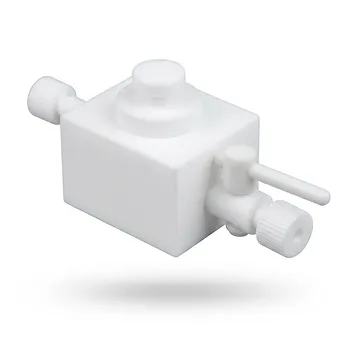
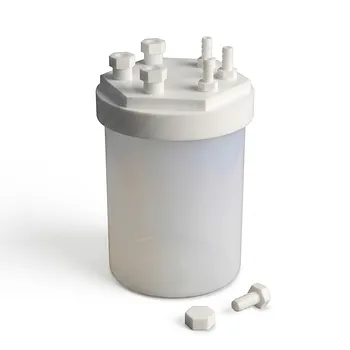
For high-performance fluoropolymer components that ensure signal integrity and thermal stability, trust KINTEK's expertise. We manufacture custom PTFE and PFA parts for electrical and analytical apparatus, from precision sensor housings to complete electrochemical cells. Our end-to-end CNC machining delivers exact tolerances and reliable performance. Contact us today to discuss your specific requirements and benefit from our tailored solutions.
Related Products
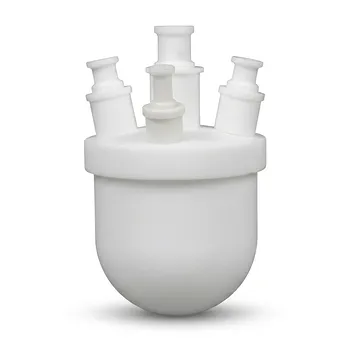
- Custom PTFE Flask 250ml High Purity Fluoropolymer Laboratory Vessel for Chemical Research
- Custom PTFE Insulating Gaskets and Corrosion Resistant Fluoropolymer Seals for Industrial Electrical Applications
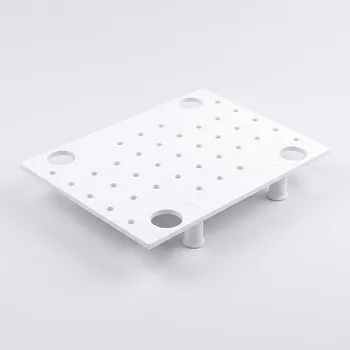
- High Temperature Resistant PTFE Thermal Insulation Board Corrosion Resistant Metal Free Fluoropolymer Stand for Ultra Clean Laboratories
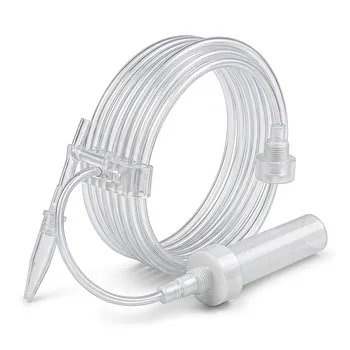
- Custom PFA Tubing 1/4 Inch High Purity Corrosion Resistant Fluoropolymer Tube with Welding and Machining Services
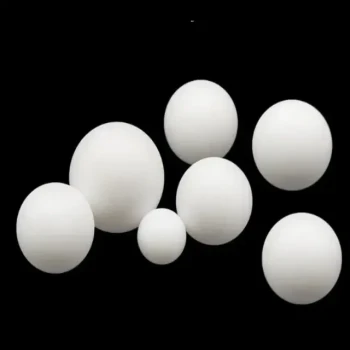
- Custom PTFE Teflon Balls for Advanced Industrial Applications
People Also Ask
- What are the key steps for structural integrity in molded PTFE lab reaction vessels? Master fine powder processing.
- When synthesizing TFVE monomers involving reactive organometallic reagents and aggressive polar solvents, what material performance characteristics are required? Ensure purity with PTFE/PFA.
- Why Are High-Purity Fluoropolymer Vessels and Tubing Critical for Trace Analysis? Prevent Contamination Reliably
- Why do PTFE fluoropolymer laboratory vessels and containers exhibit superior chemical resistance against harsh solvents and corrosive acids compared to standard plastic labware? Discover the molecular secrets
- How do choice of solvent and chain transfer activity affect molecular weight during vinylidene fluoride (VDF) radical polymerization? Learn Key Factors for High-MW PVDF