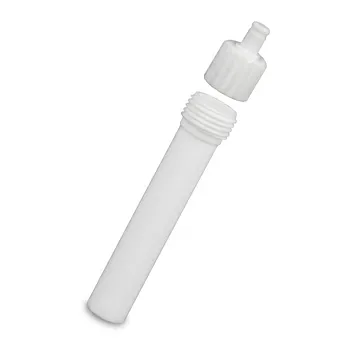
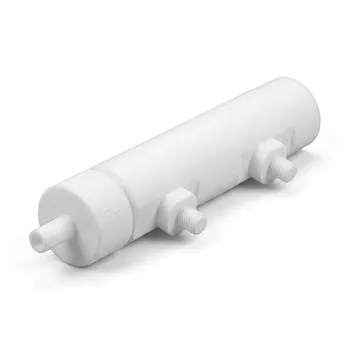
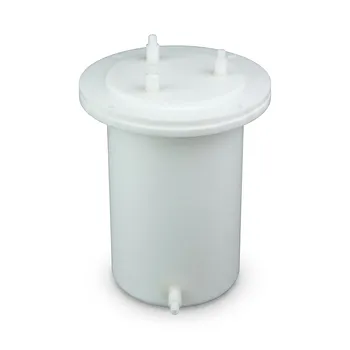
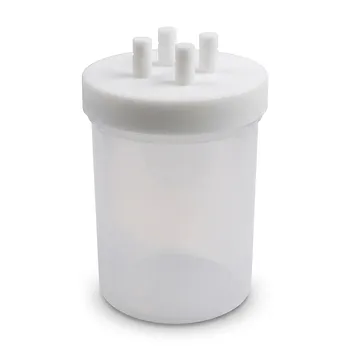
The selection of high-purity PTFE or PFA liners is critical for maintaining the chemical integrity of the reaction environment. These liners provide essential corrosion resistance against the caustic alkaline precursors required for sodium tantalate synthesis while physically isolating the mixture from the reactor's metal shell. This isolation prevents metal ion leaching, ensuring that the final catalyst lattice remains free of impurities that would otherwise degrade its catalytic performance.
High-purity PTFE/PFA liners act as a chemical barrier that ensures the synthesized catalyst's purity by preventing the infiltration of transition metals from the reactor vessel. Without this isolation, the strong alkaline conditions of sodium tantalate synthesis would corrode the autoclave shell, leading to lattice defects and poisoned active sites.
The Role of Chemical Inertness in Catalyst Synthesis
Resisting Caustic Environments
Sodium tantalate synthesis typically requires strongly alkaline conditions that are highly corrosive to standard laboratory materials. PTFE (Polytetrafluoroethylene) and PFA (Perfluoroalkoxy) are among the few polymers capable of withstanding these bases without degrading.
Preventing Lattice Contamination
If the reaction medium contacts the stainless steel walls of a reactor, metal ions like iron, nickel, and chromium leach into the solution. These ions can integrate into the sodium tantalate crystal lattice, altering its electronic structure and ruining its effectiveness as a catalyst.
Ensuring Active Site Purity
The catalytic activity of sodium tantalate depends on the precise arrangement of its surface atoms. High-purity liners ensure that no exogenous trace elements interfere with the formation of these active sites during the hydrothermal process.
Protecting Hardware and Enhancing Recovery
Shielding the Pressure Vessel
Under the high-temperature and high-pressure conditions of a hydrothermal reactor, the rate of metal corrosion increases significantly. A fluoropolymer liner acts as a protective shield, preventing the internal chemistry from compromising the structural integrity of the outer pressure vessel.
Facilitating Material Collection
The non-stick properties of PTFE and PFA are invaluable when synthesizing nanomaterials or fine powders. These "mold-release" characteristics allow researchers to collect the synthesized catalyst easily without leaving significant residue behind or contaminating the sample during extraction.
Maintaining an Ultra-Clean Environment
High-purity grades of PFA and PTFE are specifically engineered to have extremely low leaching rates of their own. This ensures that the liner itself does not introduce organic or inorganic contaminants into the growth system of the crystal.
Understanding the Trade-offs and Limitations
Thermal Constraints
While chemically robust, fluoropolymer liners have lower thermal limits than the metal vessels they inhabit. Operating above 250°C for PTFE or 260°C for PFA can lead to deformation or the release of toxic decomposition gases, potentially ruining the experiment.
Mechanical Pressure Sensitivity
The liner does not provide structural strength; it relies entirely on the metal autoclave to contain the internal pressure. If a liner is not properly sized or if the temperature rises too quickly, the liner can collapse or burst, leading to reactor failure.
Permeability Issues
At high temperatures and pressures, some small molecules or gases can permeate through the fluoropolymer wall. This can lead to minor corrosion of the metal shell over long periods, requiring regular inspection of the space between the liner and the reactor wall.
Selecting the Right Liner for Your Synthesis
How to Apply This to Your Project
- If your primary focus is maximum purity: Use PFA liners, as they typically offer even lower trace-element leaching profiles than standard PTFE.
- If your primary focus is routine alkaline synthesis: PTFE is the industry standard and provides the most cost-effective balance of chemical resistance and thermal stability.
- If your primary focus is high-temperature reactions (above 250°C): You may need to explore specialized gold or platinum liners, as fluoropolymers will reach their thermal decomposition limits.
By prioritizing the use of high-purity liners, you ensure that the performance of your sodium tantalate catalyst is a result of its intrinsic properties rather than accidental contamination.
Summary Table:
| Feature | PTFE Liner | PFA Liner | No Liner (Stainless Steel) |
|---|---|---|---|
| Chemical Inertness | Excellent | Superior (Ultra-low Leaching) | Poor (Corroded by Alkalis) |
| Metal Leaching Risk | Zero | Minimal / Trace | High (Fe, Ni, Cr contamination) |
| Max Temperature | 250°C | 260°C | Dependent on vessel rating |
| Sample Recovery | High (Non-stick) | High (Non-stick) | Low (Surface adhesion) |
| Primary Use | Routine Synthesis | Trace Analysis / Max Purity | General non-corrosive use |
Elevate Your Synthesis with KINTEK’s High-Performance Fluoropolymer Solutions
Don't let metal contamination compromise your research integrity. KINTEK specializes in the precision manufacturing of high-purity PTFE and PFA laboratory supplies designed for the most demanding hydrothermal environments. From everyday basics like beakers, crucibles, and reagent bottles to advanced hydrothermal synthesis liners and microwave digestion vessels, we provide the ultimate chemical barrier for your experiments.
Whether you require high-volume consumables—such as stirring bars, O-rings, and gaskets—or complex, non-standard machined parts through our end-to-end custom CNC fabrication, we deliver the high-performance materials your catalysts demand. Ensure your sodium tantalate research achieves peak performance with our bespoke laboratory setups.
Contact us today to discuss your custom specifications
References
- Masato Yanagi, Nobuyuki Ichikuni. Calcination-driven Co4+ incorporation in hydrothermally synthesized NaTaO3. DOI: 10.1093/chemle/upaf053
This article is also based on technical information from Kintek Knowledge Base .
Related Products
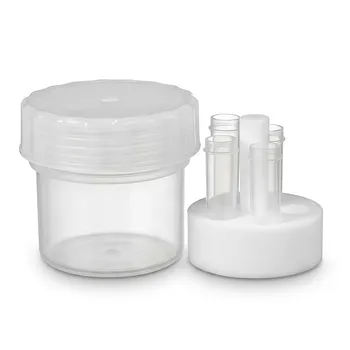
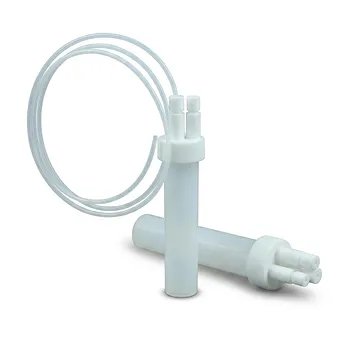
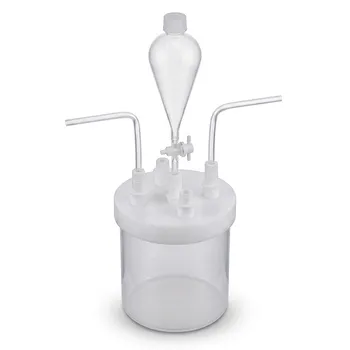
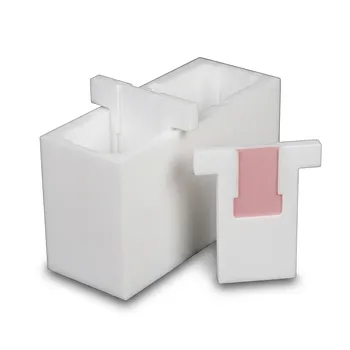
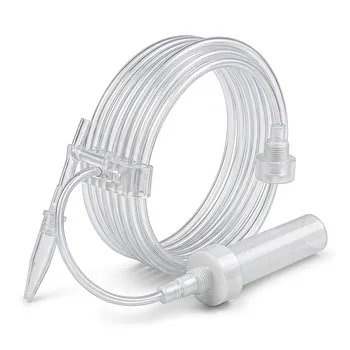
- Corrosion Resistant PTFE Support with PFA Transparent Reaction Tank and High Purity PFA Sampling Tube for Trace Analysis
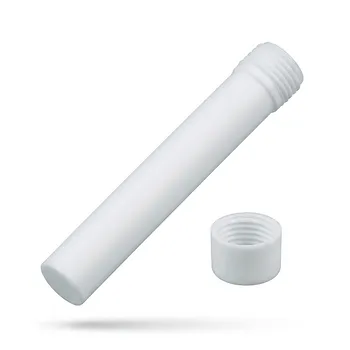
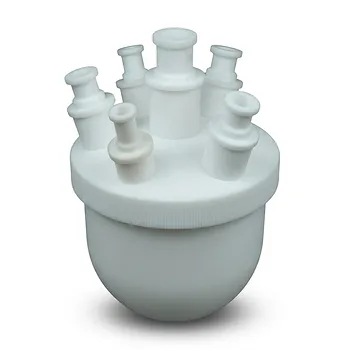
- Custom PFA Reaction Bottles High Purity PTFE Reaction Vessels Corrosion Resistant Petrochemical Containers
- High Purity TFM Microwave Digestion Vessels PTFE Acid Evaporation Liners Domestic GT-400 Equivalent Laboratory Reaction Containers
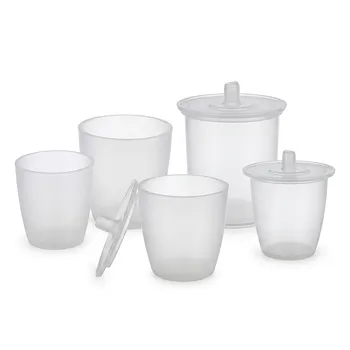
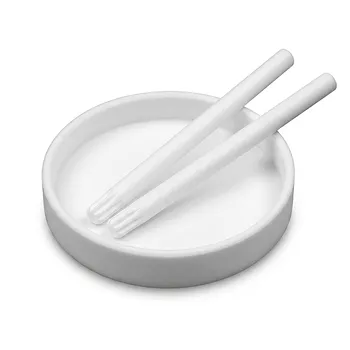
- High Purity PFA Crucible and Corrosion Resistant PTFE Beaker for Trace Analysis and Custom Laboratory Applications
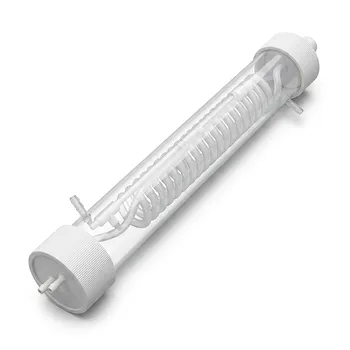
- High Purity PFA Condenser Serpentine Straight HF Resistant Reaction Apparatus Custom Circulation Column
People Also Ask
- What is the role of high chemical inertness reaction vessels in the organic synthesis of acylhydrazone ligands? | Guide
- How do the material choice and sealing integrity of the reaction vessel affect the growth of NiFe-LDH? Optimize Synthesis
- Role of reaction vessels in alkali treatment for oil palm waste: Achieve High-Purity Cellulose with PTFE Vessels
- Why are well-sealed reaction vessels necessary for superacid-promoted Friedel-Crafts polycondensation? Optimize Synthesis
- How do PTFE fluoropolymer laboratory vessels and tubing handle exposure to different types of organic solvents? Discover key insights for optimal solvent compatibility.