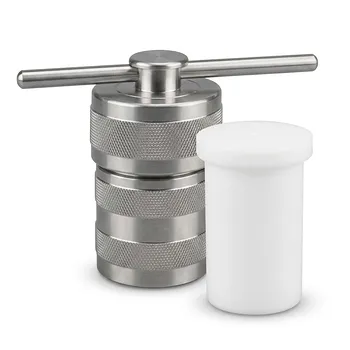
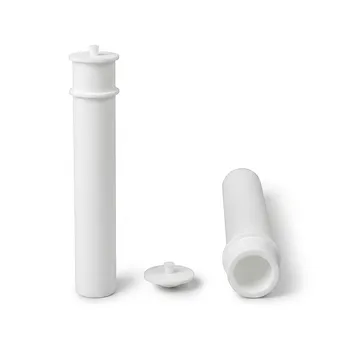
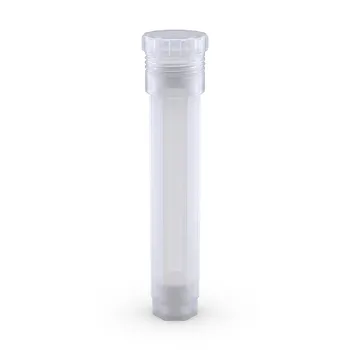
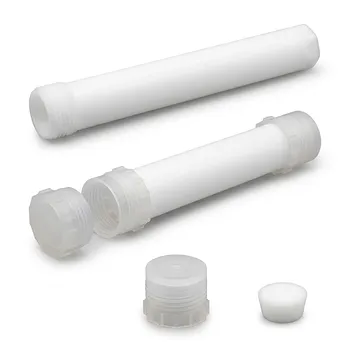
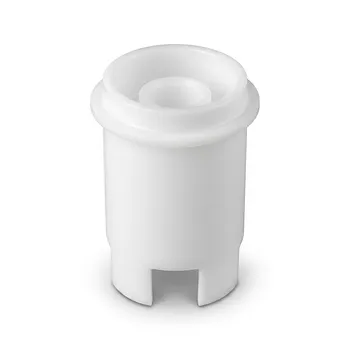
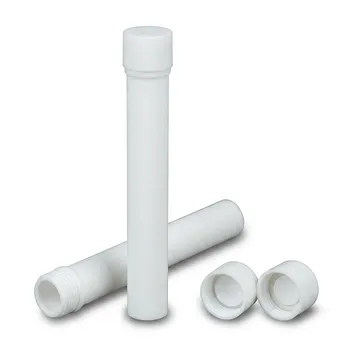
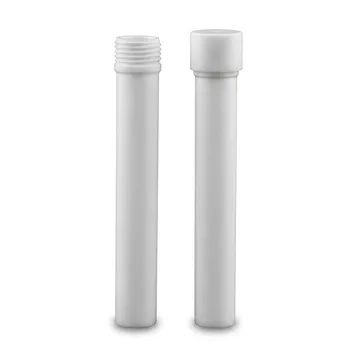
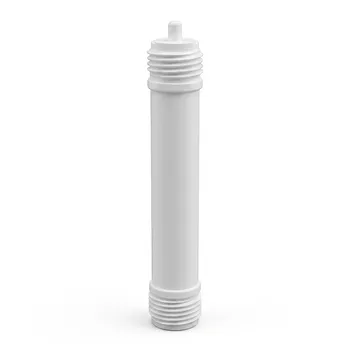
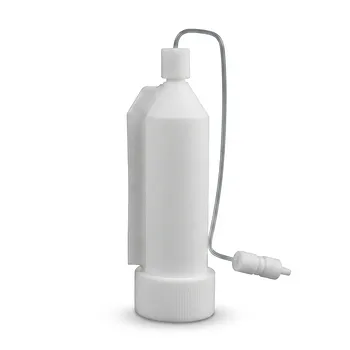
Fluoroplastic-lined high-pressure digestion vessels are mandatory for the synthesis of Ir/CMK-3 catalysts primarily due to their exceptional resistance to alkaline corrosion from potassium hydroxide (KOH) solutions at temperatures up to 180°C. These vessels provide a chemically inert, sealed environment that ensures the quantitative reduction of iridium salts by sodium borohydride. This stability is essential for achieving precise control over the iridium nanoparticle size distribution and preventing the introduction of metallic impurities.
Core Takeaway: The use of fluoroplastic liners (such as PTFE or PFA) is a technical necessity to withstand the aggressive alkaline environment and high temperatures required for iridium reduction, ensuring the chemical purity and structural integrity of the resulting Ir/CMK-3 catalyst.
The Role of Chemical Resistance in Harsh Synthesis
Neutralizing Alkaline Attack at High Temperatures
The hydrothermal synthesis of Ir/CMK-3 often involves potassium hydroxide (KOH), which is highly corrosive to standard glass or low-grade metal containers at 180°C. Fluoroplastics maintain their structural integrity and chemical inertness under these specific high-pH conditions, where other materials would leach silica or metallic ions into the catalyst.
Protecting the External Pressure Vessel
While the outer autoclave provides the mechanical strength to withstand high internal pressures, it is susceptible to acid mist or alkaline erosion. The fluoroplastic liner acts as a critical barrier, preventing the reaction solution from coming into direct contact with the metal canister and ensuring the longevity of the equipment.
Ensuring Precise Control Over Catalyst Properties
Preventing Trace Element Contamination
High-purity liners made of PTFE or PFA exhibit extremely low leaching characteristics, meaning they do not release background heavy metals into the reaction. This is vital for Ir/CMK-3 synthesis, as even trace amounts of exogenous metal ions can interfere with the coordination structure of the active iridium sites or alter the electronic properties of the carbon support.
Facilitating Quantitative Reduction
The superior sealing properties of fluoroplastic liners create a stable, closed environment necessary for the reaction between potassium salts and sodium borohydride. This pressure stability ensures that the reduction process is completed quantitatively, which is the primary mechanism for controlling the final size distribution of the iridium nanoparticles.
Preventing Material Adhesion
Fluoropolymers possess a naturally low surface energy, which prevents the CMK-3 carbon support and iridium precursors from adhering to the vessel walls. This ensures that the entire sample undergoes uniform hydrothermal treatment and simplifies the recovery of the synthesized catalyst without loss of material.
Understanding the Trade-offs and Limitations
Thermal Boundaries of Fluoropolymer Materials
While PTFE and PFA are resilient, they have specific thermal limits (typically around 250°C-260°C). Exceeding these temperatures during synthesis can lead to liner deformation, "creeping," or the release of toxic fluorinated vapors, compromising both the experiment and lab safety.
The Risk of Cross-Contamination
Fluoroplastic liners can be porous at a microscopic level, leading to a "memory effect" where trace amounts of previous reagents are absorbed. If the vessels used for Ir/CMK-3 are not subjected to rigorous acid cleaning cycles between uses, residual ions can contaminate subsequent batches, leading to inconsistent catalytic performance.
Mechanical Wear and Deformation
Under repeated high-pressure cycles, liners may undergo physical deformation, potentially compromising the seal of the digestion vessel. Regular inspection for thinning walls or "necking" at the rim is necessary to prevent pressure leaks that would disrupt the hydrothermal synthesis conditions.
How to Optimize Vessel Selection for Synthesis
The choice of vessel and liner material should be dictated by your specific temperature requirements and the sensitivity of your catalyst to impurities.
- If your primary focus is Maximum Chemical Purity: Utilize high-purity PFA liners, as they generally offer lower trace-metal leaching profiles than standard PTFE for ultra-trace catalytic applications.
- If your primary focus is High-Temperature Stability: Opt for TFM (modified PTFE) liners, which provide better mechanical rigidity and lower permeability at the 180°C–220°C range compared to standard PTFE.
- If your primary focus is Routine Synthesis Throughput: Standard PTFE liners are the most cost-effective solution, provided they are dedicated to specific reaction types to avoid cross-contamination between different metal precursors.
By strictly adhering to the use of fluoroplastic-lined vessels, researchers ensure the reproducible production of high-performance catalysts within a stable and uncontaminated chemical environment.
Summary Table:
| Feature | Benefit | Importance for Ir/CMK-3 Synthesis |
|---|---|---|
| Chemical Resistance | KOH Resistance | Withstands aggressive alkaline environments at 180°C. |
| High Purity | Low Leaching | Prevents trace metal ions from contaminating iridium active sites. |
| Non-Stick Surface | Anti-Adhesion | Ensures uniform hydrothermal treatment and easy catalyst recovery. |
| Thermal Stability | Pressurized Seal | Facilitates quantitative reduction for precise nanoparticle size control. |
Optimize Your Synthesis with KINTEK’s High-Performance Fluoropolymers
Achieving precision in catalyst synthesis starts with the right materials. KINTEK specializes in manufacturing virtually all imaginable laboratory supplies crafted from high-performance PTFE and PFA.
From everyday basic labware (beakers, measuring cylinders, crucibles, and reagent bottles) to advanced reaction apparatus like hydrothermal synthesis liners, microwave digestion vessels, and custom electrochemical cells, we provide the chemical inertness your research demands. Our expertise extends to comprehensive fluid transfer components, sample prep tools, and high-purity trace analysis instruments.
Whether you require high-volume standard consumables or bespoke, complex non-standard machined parts via our end-to-end custom CNC fabrication, KINTEK ensures your laboratory is equipped for success without the risk of contamination.
Contact KINTEK today to request a quote or discuss your custom lab requirements.
References
- ALEKSANDR S. KAZACHENKO, Anatoly Zhizhaev. FACILE HYDROTHERMAL SYNTHESIS OF Pd, Ir, Pd-Ir PARTICLES ON CMK-3 FOR REDUCTIVE CATALYTIC FRACTIONATION OF BIRCH WOOD. DOI: 10.35812/cellulosechemtechnol.2025.59.81
This article is also based on technical information from Kintek Knowledge Base .
Related Products
- PTFE Lined High Pressure Digestion Vessel 50ml High Temperature Hydrothermal Synthesis Tank
- 5ml High Pressure PTFE Digestion Vessel for Geological Mineral Analysis Corrosion Resistant Polytetrafluoroethylene TFM Digestion Inner Liner
- Custom 100ml PTFE Digestion Tube for Heavy Metal Trace Analysis and High Temperature Acid Digestion
- High Purity PTFE PFA Microwave Digestion Vessels Custom Acid Digestion Tanks for Laboratory Sample Preparation
- High Purity Laboratory Microwave Digestion Vessel Customizable PFA PTFE Digestion Tank for Analytical Sample Preparation Trace Metal Analysis
People Also Ask
- What are the benefits of using a PTFE-lined vessel for carbon-sulfur cathode treatment? Maximize Purity & Performance
- Why are PTFE-lined pressure digestion vessels required for the preparation of Ag/CeO2 catalysts? Purity & Performance
- What safety features are typically incorporated into high-pressure PTFE digestion vessel designs? Ensure Lab Safety
- What is the function of PTFE lined high-pressure vessels in g-C3N4 synthesis? Achieve High-Purity Material Growth
- Role of High-Pressure Digestion Tanks in Perovskite Synthesis: Achieve Superior Stability and Latent Heat