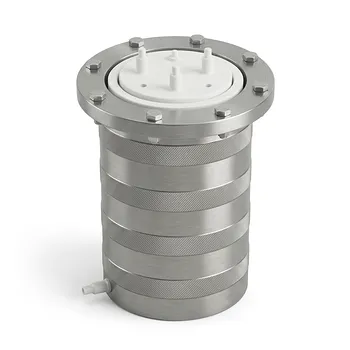
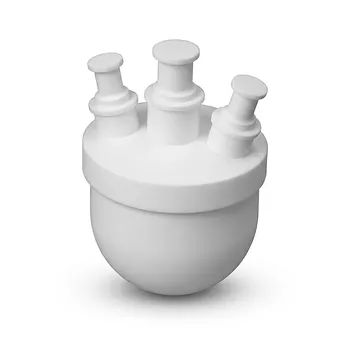
For high-pressure fluoropolymer synthesis, safety begins with a pressure-rated, corrosion-resistant vessel system—not simply a strong container. Essential features include 316 or higher stainless steel, high-purity passivated internal surfaces, an integrated heating/cooling jacket, reliable pressure instrumentation, and a correctly sized rupture disc. The system should also use chemically compatible PTFE or PFA seals and components where appropriate, together with intrinsically safe controls, leak containment, ventilation, and regular inspection.
The vessel must resist both the process chemistry and the operating pressure. Material compatibility, rapid heat removal, controlled pressure relief, contamination control, and disciplined maintenance are all required; omitting any one of these can create vessel failure, toxic release, explosion, or product-quality risks.
Build the Vessel Around Corrosion and Pressure Resistance
Use 316 or Higher Stainless Steel
The primary vessel should be fabricated from grade 316 stainless steel or a higher suitable grade to withstand acidic reaction environments and maintain the required purity.
Material selection should be confirmed against the specific monomers, initiators, acids, halogenating agents, solvents, temperature, and pressure used in the process. “Stainless steel” is not a sufficient specification by itself because corrosion resistance depends on both alloy grade and process conditions.
Design for the Full Pressure Envelope
The autoclave, closures, nozzles, piping, valves, and fittings must be rated for the maximum credible pressure and temperature, including abnormal conditions such as runaway reaction, blocked discharge, rapid vaporization, or loss of cooling.
For volatile and flammable fluoromonomers such as vinylidene fluoride, high-pressure-rated autoclaves and piping are essential. The complete pressure boundary—not only the reactor shell—must be treated as safety-critical.
Apply Appropriate Pressure-Vessel Engineering
The vessel should be designed, fabricated, inspected, and tested under the pressure-vessel requirements applicable to its jurisdiction and installation. This includes documented material traceability, weld-quality control, pressure testing, and a defined inspection interval.
Safety devices should not be treated as substitutes for sound vessel design or process controls.
Control Heat Before It Creates Pressure
Install an Integrated Heating and Cooling Jacket
An integrated jacket provides controlled heating during reaction startup and rapid heat removal if the reaction accelerates or becomes unstable.
Cooling capacity should be evaluated against the reaction’s maximum credible heat-release rate. A jacket that can maintain normal operating temperature may still be inadequate for emergency cooling.
Monitor Temperature Independently
Use reliable temperature measurement with alarms and automatic protective actions for high temperature, loss of cooling, and sensor failure.
Fluoropolymer systems can generate decomposition products when overheated. Discoloration, off-gassing, seal degradation, and loss of material integrity are warning signs that require immediate process review.
Respect Fluoropolymer Temperature Limits
PTFE and PFA are highly chemically resistant, but they are not unlimited-temperature materials. The supplementary reference identifies discoloration and trace HF off-gassing around or above 204°C, with short-term processing limits approximately 232–249°C, depending on the material and conditions.
Strong Lewis acids, including BF₃-containing systems, can catalyze fluoropolymer decomposition at lower temperatures. Material compatibility must therefore consider both temperature and catalytic chemistry, not temperature alone.
Provide Reliable Overpressure Protection
Use a Correctly Sized Rupture Disc
A rupture disc is an essential emergency pressure-relief device. It must be selected for the vessel’s allowable pressure, operating temperature, process chemistry, discharge path, and credible failure scenarios.
The relief arrangement must discharge to a location and containment system that can safely handle corrosive, toxic, flammable, or reactive contents.
Prevent Fouling of the Relief Device
Fluoropolymer buildup on the rupture disc can prevent it from opening correctly. This creates a severe overpressure and explosion risk.
The disc should be inspected and cleaned at defined intervals, with the frequency based on observed fouling, batch history, and process hazard review. Any disc that is damaged, corroded, contaminated, or beyond its service requirements should be replaced rather than returned to service.
Do Not Rely on One Protective Layer
Pressure control, shutdown logic, alarms, the rupture disc, containment, and safe vent routing should function as independent layers of protection.
A pressure transmitter or control valve can fail. The rupture disc is an emergency safeguard, not a routine pressure-control device.
Select Seals and Wetted Components Carefully
Use PTFE or PFA Where Chemical Compatibility Requires It
High-purity PTFE and PFA are appropriate for many seals, liners, tubing, fittings, and transfer components exposed to aggressive fluorinating or halogenating environments.
They offer strong chemical inertness, low contamination potential, and useful thermal resistance. However, their pressure rating, creep behavior, temperature limit, and mechanical loading must be verified for the specific seal geometry and service.
Treat Sealing as a Pressure-Safety Issue
A chemically resistant seal can still fail through extrusion, creep, thermal cycling, improper compression, or mechanical damage.
Seals should be selected as part of the complete pressure-boundary design. Inspect them for swelling, embrittlement, discoloration, deformation, and surface damage before reuse.
Avoid Incompatible Conventional Materials
Ordinary plastics, unsuitable elastomers, and poorly selected metallic components may degrade rapidly in elemental fluorine or other aggressive fluorination environments.
The correct choice depends on the exact chemistry. PTFE and PFA are not universal replacements for every gasket or structural component, and they should not be used beyond their validated temperature and pressure limits.
Protect Product Purity Through Surface Preparation
Passivate the Internal Surfaces
Interior wall passivation using high-purity water with resistivity of approximately 16–18 MΩ·cm helps reduce ionic contamination and supports high-purity fluoropolymer synthesis.
Passivation should be part of a documented cleaning and qualification program rather than an informal rinse step.
Control Metallic and Ionic Contamination
Surface condition, weld residues, corrosion products, cleaning chemicals, and transferred particles can affect polymer quality and downstream performance.
The vessel should have defined acceptance criteria for cleanliness, passivation, surface condition, and requalification after maintenance or repair.
Control Flammable and Toxic Process Hazards
Use Intrinsically Safe Controls
Fluoromonomers such as VDF can present serious flammability hazards under pressure. Instrumentation, electrical equipment, control systems, and emergency shutdowns should be selected for the classified hazardous area and process risk.
The system should also control ignition sources and prevent air ingress during evacuation, charging, reaction, and depressurization.
Provide Ventilation and Blast-Resistant Containment
High-pressure fluoropolymer synthesis should be performed within suitable ventilated, blast-resistant containment, such as a properly engineered bunker or enclosure where the hazard assessment requires it.
Vent systems must be compatible with the released gases and designed to prevent exposure, unsafe accumulation, or discharge into occupied areas.
Verify Leak Tightness Before Operation
Vacuum pre-evacuation and pressure containment are important for both process control and safety. Leak testing should cover the vessel, closure, valves, fittings, transfer tubing, instrumentation connections, and relief system interfaces.
Leak detection should be appropriate for the process gases and should never depend solely on operator observation.
Understanding the Trade-offs
Chemical Resistance Does Not Equal Structural Strength
PTFE and PFA resist many aggressive chemicals, but they are generally used as seals, liners, tubing, or fittings rather than as the main structural pressure boundary in a high-pressure reactor.
The pressure shell normally requires a qualified metallic construction, such as 316 or higher stainless steel, with fluoropolymer components selected locally for chemical compatibility.
Higher Alloy Grades May Not Solve Every Problem
Moving from 316 stainless steel to a higher grade can improve resistance in some environments, but it does not automatically address erosion, crevice corrosion, weld effects, contamination, or incompatibility with a particular reagent.
The alloy decision must be based on an actual compatibility review and the complete operating envelope.
High-Temperature Fluoropolymer Service Has Limits
Fluoropolymer parts may remain chemically stable during normal operation but degrade during overheating or in the presence of catalytic acids.
This can produce toxic HF-containing fumes, loss of sealing, contamination, and additional pressure. Temperature interlocks and emergency cooling are therefore as important as material selection.
Relief Devices Require Maintenance
A rupture disc is effective only if it is correctly selected, unobstructed, and maintained.
Fouling, corrosion, incorrect installation, or an unsuitable discharge path can turn a nominal safety feature into a false assurance.
Making the Right Choice for Your Goal
The safest specification is a complete system specification rather than a single material or component choice.
- If your primary focus is pressure safety: Specify a code-compliant 316-or-higher stainless-steel pressure boundary, independent temperature and pressure protection, a correctly sized rupture disc, and safe relief discharge.
- If your primary focus is chemical compatibility: Use validated PTFE or PFA seals, liners, tubing, and fittings where appropriate, while confirming their pressure, temperature, creep, and catalytic-chemical limits.
- If your primary focus is product purity: Require documented internal passivation with 16–18 MΩ·cm water, controlled cleaning, material traceability, and contamination checks after maintenance.
- If your primary focus is flammable or toxic monomers: Use intrinsically safe controls, verified leak-tight construction, continuous ventilation, appropriate gas detection, and blast-resistant containment.
- If your primary focus is long-term reliability: Establish inspection and replacement schedules for rupture discs, seals, welds, instrumentation, cooling systems, and all process-contact surfaces.
A high-pressure fluoropolymer reactor is safe only when materials, thermal control, pressure relief, containment, purity, and maintenance are engineered as one integrated system.
Summary Table:
| Aspect | Key Requirements |
|---|---|
| Vessel Material | 316 or higher stainless steel, corrosion-resistant, code-compliant |
| Pressure Rating | Rated for max credible pressure, including abnormal conditions |
| Temperature Control | Integrated heating/cooling jacket, independent temperature monitoring |
| Overpressure Protection | Correctly sized rupture disc, inspection and cleaning to prevent fouling |
| Seals & Wetted Parts | PTFE/PFA where compatible, verified for pressure, temperature, and chemical limits |
| Surface Preparation | Passivation with 16–18 MΩ·cm water to ensure product purity |
| Safety Systems | Intrinsically safe controls, ventilation, blast-resistant containment, leak testing |
| Maintenance | Regular inspection and replacement of rupture discs, seals, and other critical components |
Ensure the safety and efficiency of your high-pressure fluoropolymer synthesis with KINTEK's precision PTFE and PFA components, designed for extreme chemical resistance and purity. From custom seals to complete reaction vessels, our expert team supports your unique process requirements. Contact us today to discuss your application and discover how KINTEK's high-performance fluoropolymer solutions can enhance safety, reliability, and product quality.
Related Products
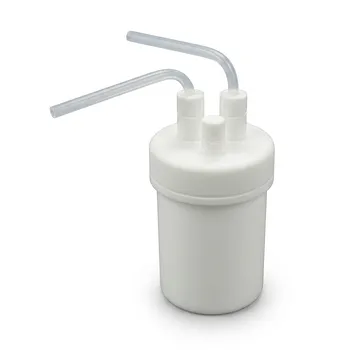
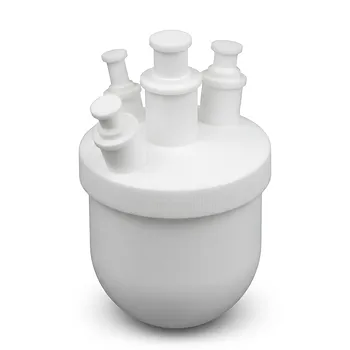
- Custom PTFE Continuous Reaction Bottles Virgin Fluoropolymer High Purity Low Background Synthesis Vessels
- High Purity Custom PTFE Large Volume 15L Flask Corrosion Resistant Low Trace Background Fluoropolymer Reaction Vessel
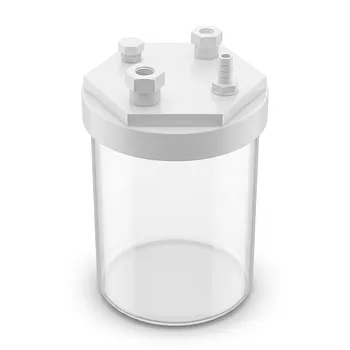
- PFA Chemical Reaction Tank with Customizable Fittings for Corrosive Solvent Synthesis and High Purity Lab Applications
- Custom PTFE Flask 250ml High Purity Fluoropolymer Laboratory Vessel for Chemical Research
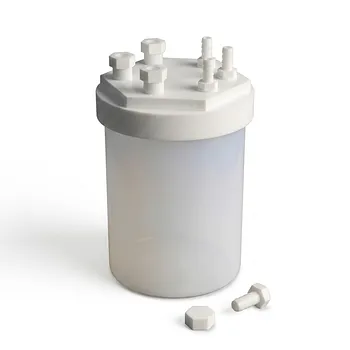
- PFA Reaction Tank 6L Customizable Fittings Corrosion Resistant Solvent Resistant PFA Reaction Bottle for New Material Synthesis
People Also Ask
- What reaction vessel and fluid handling considerations are necessary for living cationic polymerization of fluorinated monomers involving Lewis acid catalysts? Key design and safety tips
- Ion Activation Reaction Vessel Requirements: Why PTFE is Critical for Membrane Performance
- How do perfluorinated solvent environments influence the selection of reaction vessels and fluid handling components in nonaqueous emulsion polymerizations? Choose fluoropolymer materials.
- Why are high-purity PTFE or PFA reaction vessels recommended for the synthesis of PANI-TiC hybrid materials? - Guide
- Why are fluoroplastic (PTFE) reaction vessels recommended for Methylene Blue (MB) adsorption kinetic experiments?