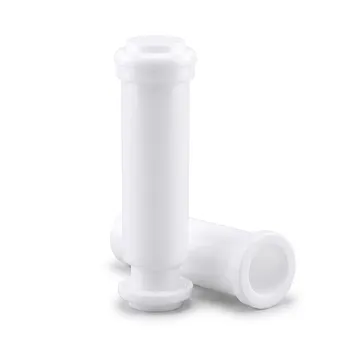
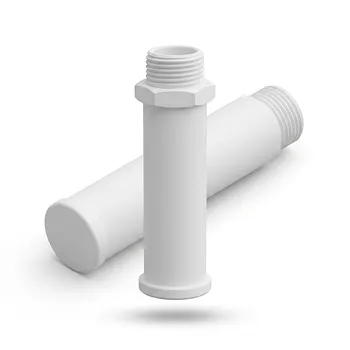
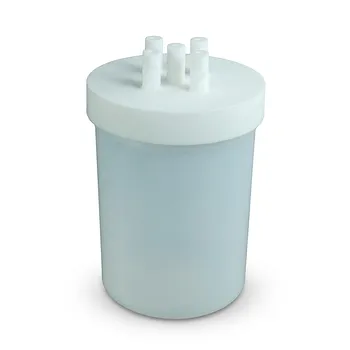
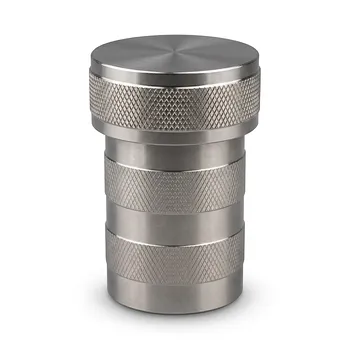
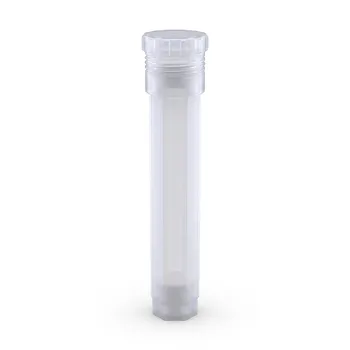
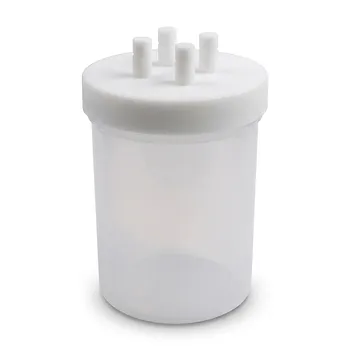
The hydrothermal vessel acts as a specialized chemical reactor that enables the controlled synthesis of $WO_3$ nanostructures. By maintaining a sealed environment of high temperature and high pressure, it forces precursor molecules to nucleate and grow into specific, ordered morphologies that would be impossible under ambient conditions. This process is the foundational step in creating high-performance photoanodes for energy applications.
The hydrothermal vessel provides the essential thermodynamic environment—specifically high pressure and elevated temperatures—to drive the directional growth of tungsten oxide crystals. This control over microscopic morphology is what determines the final electrode's surface area and its efficiency in transporting electrical charges.
The Mechanics of the Hydrothermal Environment
High-Pressure Containment
The primary role of the vessel is to create a sealed environment where the internal pressure rises significantly as the temperature increases. This pressure allows the solvent to remain in a liquid state well above its normal boiling point, dramatically increasing the solubility and reactivity of tungsten precursors.
Thermal Energy and Reaction Kinetics
Consistent heat, often reaching levels like 180 degrees Celsius, provides the activation energy required for chemical transformation. Under these conditions, precursor molecules undergo oriented nucleation, meaning they begin to form solid structures in a highly organized fashion on the chosen substrate.
Controlling Microscopic Morphology
Directional Crystal Growth
The hydrothermal environment facilitates growth along specific crystal planes. By forcing the material to grow in a particular direction, the vessel allows for the creation of precise shapes such as nanowires, nanoneedles, or thin films.
Maximizing Effective Surface Area
The resulting structures, such as highly ordered nanoneedle arrays, possess an exceptionally high specific surface area. This physical characteristic is vital because it increases the effective contact area between the $WO_3$ photoanode and the electrolyte, allowing for more efficient chemical reactions.
Optimizing Electronic Properties
Enhancing Charge Carrier Transport
The hydrothermal process doesn't just change how the material looks; it changes how it performs. By improving the crystallinity of the tungsten oxide, the vessel helps optimize the kinetics of how charge carriers (electrons and holes) move through the material.
Facilitating Doping and Modifications
The stable, high-energy environment inside the vessel is ideal for doping modifications. These modifications allow researchers to alter the electronic structure of the $WO_3$, which is a critical step before subsequent processes like hydrogenation or ruthenium loading.
Understanding the Trade-offs
Sensitivity to Reaction Parameters
While the hydrothermal vessel offers precision, it is highly sensitive to minor changes in temperature and duration. Small fluctuations can lead to inconsistent crystal sizes or the growth of undesired phases, which can degrade the performance of the photoanode.
Scalability and Safety Concerns
Hydrothermal synthesis is often limited by the size of the pressure vessel, making large-scale production challenging. Additionally, operating at high pressures and temperatures requires rigorous safety protocols and specialized equipment to prevent vessel failure.
How to Apply This to Your Project
When utilizing a hydrothermal vessel for $WO_3$ preparation, your approach should be dictated by your specific performance requirements.
- If your primary focus is Maximum Catalytic Activity: Prioritize longer reaction times at lower temperatures to encourage the growth of high-surface-area nanoneedle arrays.
- If your primary focus is Rapid Charge Transport: Optimize for higher temperatures to improve crystallinity and reduce internal defects within the $WO_3$ nanowires.
- If your primary focus is Material Stability: Ensure the vessel's cooling phase is strictly controlled to prevent thermal shock and cracking of the tungsten oxide film.
By mastering the high-pressure environment of the hydrothermal vessel, you gain the ability to engineer tungsten-based photoanodes at the atomic level for peak efficiency.
Summary Table:
| Feature | Role in WO3 Synthesis | Impact on Performance |
|---|---|---|
| High Pressure | Maintains solvent as liquid above boiling point | Increases precursor solubility and reactivity |
| Thermal Energy | Provides activation energy for transformation | Drives oriented nucleation and crystal growth |
| Morphology Control | Enables directional growth (nanowires/needles) | Maximizes effective surface area for reactions |
| Crystallinity | Optimizes internal atomic structure | Enhances charge carrier transport and efficiency |
| Environment | Facilitates stable doping modifications | Allows for precise tuning of electronic properties |
Elevate Your Research with KINTEK’s Precision Fluoropolymer Solutions
Achieving the perfect WO3 nanostructure requires equipment that can withstand rigorous hydrothermal conditions without compromising purity. KINTEK specializes in high-performance laboratory supplies crafted from PTFE and PFA, ensuring your synthesis environment remains uncontaminated and thermally stable.
Whether you need standard hydrothermal synthesis liners, custom electrochemical cells, or high-purity PFA bottles and digestion tubes, our end-to-end custom CNC fabrication is ready to deliver. From everyday labware like beakers and tubing to complex, bespoke reaction apparatus and battery testing fixtures, we provide the specialized tools researchers need for advanced material science.
Ready to optimize your laboratory setup? Contact us today to discuss your custom requirements or high-volume orders and discover the KINTEK advantage in high-performance fluoropolymers.
References
- Zhaoyi Xi, Mingzhao Liu. Advancing photoelectrochemical systems for sustainable energy and chemical production: challenges and opportunities. DOI: 10.1038/s44296-025-00061-z
This article is also based on technical information from Kintek Knowledge Base .
Related Products
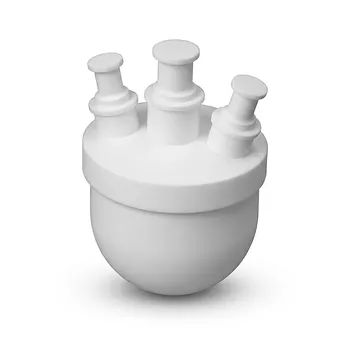
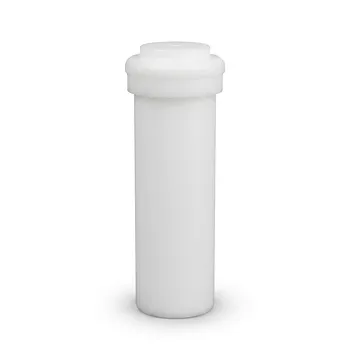
- PTFE Lined High Pressure Digestion Vessel 50ml High Temperature Hydrothermal Synthesis Tank
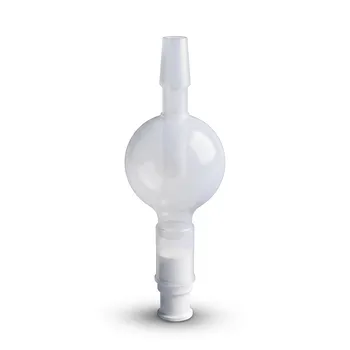
- PFA Anti Splash Ball High Temperature HF Resistant Laboratory Buffer Vessel for Distillation and Trace Analysis
- Custom TFM Reaction Vessel with Stainless Steel Jacket and PTFE Inner Cup for High Corrosion Resistance
- Custom PTFE Beaker with Lid 200ml Hot Plate Compatible 200C Temperature Resistant Laboratory Vessel
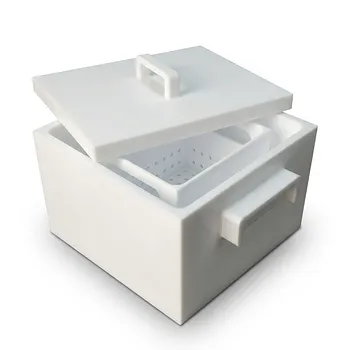
- Custom PTFE Rectangular Tank Semiconductor Cleaning Acid Bath Corrosion Resistant Fluoropolymer Filtration Vessel
People Also Ask
- What are the benefits of using a PTFE-lined vessel for carbon-sulfur cathode treatment? Maximize Purity & Performance
- Why are PTFE-lined pressure digestion vessels required for the preparation of Ag/CeO2 catalysts? Purity & Performance
- What is the function of high-pressure PTFE digestion vessels in mineral analysis? Optimize Sample Mineralization
- What safety features are typically incorporated into high-pressure PTFE digestion vessel designs? Ensure Lab Safety
- What is the function of PTFE lined high-pressure vessels in g-C3N4 synthesis? Achieve High-Purity Material Growth