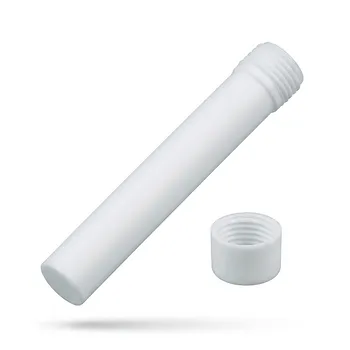
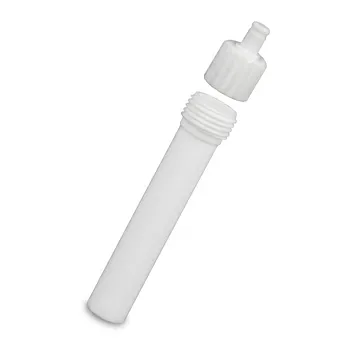
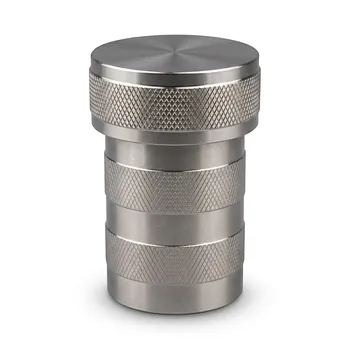
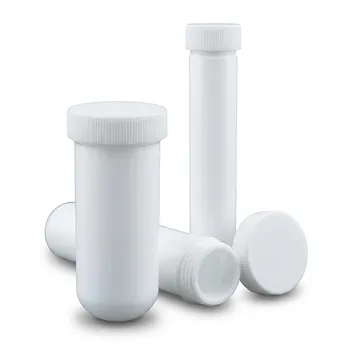
High-pressure stainless steel autoclaves and PTFE liners are the fundamental hardware components that enable the hydrothermal growth of Zinc Oxide Nanorod (ZnONR) arrays. They create a controlled, high-energy environment that forces zinc precursors into a state of supersaturation while maintaining absolute chemical purity. This specific combination allows for the precise, anisotropic growth required to form one-dimensional nanorod structures.
The autoclave serves as a pressure vessel to facilitate the dissolution-recrystallization process at elevated temperatures, while the PTFE liner protects the reaction from contamination and the vessel from corrosion. Together, they provide the thermodynamic and chemical stability necessary for producing high-purity, oriented ZnO crystal structures.
The Role of the Stainless Steel Autoclave
Achieving Supersaturation and Anisotropic Growth
The primary function of the autoclave is to provide a closed, high-pressure environment that allows the reaction to reach temperatures typically ranging from 90°C to 200°C. This environment ensures the Zinc Oxide precursor solution reaches a state of supersaturation, which is the driving force for crystal precipitation. Under these specific conditions, the ZnO crystals undergo anisotropic growth, specifically along the [0001] crystal direction, resulting in the desired nanorod morphology.
Operating Above Standard Boiling Points
The sealed nature of the autoclave allows aqueous solvents to remain in a liquid state at temperatures significantly above their normal boiling points. This increased energy level significantly improves the solubility of precursors, facilitating a more efficient dissolution-recrystallization process. This thermodynamic control is essential for producing ZnO nanostructures with high crystallinity and specific aspect ratios.
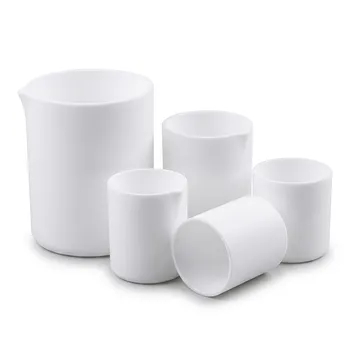
The Role of the PTFE Liner
Chemical Resistance in Strong Alkaline Media
Hydrothermal synthesis of ZnO often requires strong alkaline environments, utilizing high concentrations of Sodium Hydroxide (NaOH) such as 3M or 6M solutions. A Polytetrafluoroethylene (PTFE) liner provides exceptional chemical corrosion resistance, shielding the stainless steel outer vessel from these aggressive reagents. Without this protection, the alkaline medium would rapidly erode the steel, compromising the structural integrity of the autoclave.
Maintaining Phase Purity and Preventing Contamination
The chemical inertness of PTFE is critical for ensuring the purity of the synthesized nanorods. It prevents metal ion impurities from the steel vessel from leaching into the reaction solution and contaminating the product. This high level of purity is vital for maintaining the optoelectronic properties and phase purity of the Zinc Oxide, as even trace metal contamination can degrade crystalline quality.
Understanding Technical Trade-offs and Limitations
Thermal and Pressure Constraints
While PTFE is highly resistant to chemicals, it has a thermal limit, typically around 250°C, above which it may deform or release toxic fumes. Operators must carefully balance the need for high-temperature dissolution with the mechanical limits of the liner and the pressure rating of the steel vessel. Exceeding these limits risks mechanical failure or permanent damage to the sealing surfaces.
Risk of Cross-Contamination
Despite its inertness, PTFE can be porous at a microscopic level, potentially trapping trace amounts of precursors from previous experiments. If the liner is not rigorously cleaned between uses, it can lead to cross-contamination, affecting the reproducibility of the nanorod arrays. This is particularly critical when switching between different doping agents or precursor concentrations.
Applying This to Your Synthesis Goals
How to Apply This to Your Project
- If your primary focus is high-aspect-ratio nanorods: Ensure your autoclave is rated for the pressures generated at your target temperature to maintain the supersaturation required for [0001] directional growth.
- If your primary focus is optoelectronic performance: Invest in high-purity PTFE or PFA liners to eliminate metal ion leaching, which is the most common cause of crystalline defects and poor device performance.
- If your primary focus is industrial scalability: Utilize large-scale autoclaves that allow for the growth of bulk single crystals at relatively low temperatures (90°C) to minimize energy costs while maintaining material quality.
The synergy between the mechanical strength of the autoclave and the chemical passivity of the PTFE liner is what makes the precision engineering of Zinc Oxide nanostructures possible.
Summary Table:
| Component | Primary Function | Key Benefit for ZnONR Synthesis |
|---|---|---|
| Stainless Steel Autoclave | High-pressure/temperature containment | Enables supersaturation and anisotropic growth along the [0001] axis. |
| PTFE (Teflon) Liner | Chemical corrosion resistance | Protects the vessel from alkaline media and prevents metal ion contamination. |
| The Synergy | Controlled hydrothermal environment | Produces high-crystallinity nanorods with precise phase purity. |
Elevate Your Synthesis with KINTEK’s Precision Fluoropolymer Solutions
Achieving the perfect Zinc Oxide Nanorod array requires hardware that can withstand extreme conditions without compromising purity. KINTEK specializes in high-performance fluoropolymer materials, offering an unparalleled range of PTFE and PFA laboratory supplies designed for hydrothermal and trace analysis applications.
Whether you need standard digestion vessels, high-purity liners, or reagent bottles, or require end-to-end custom CNC fabrication for complex non-standard machined parts and bespoke laboratory setups, we have the expertise to deliver. Our catalog extends from everyday basic labware (beakers, cylinders, crucibles) and fluid transfer components (tubing, valves, fittings) to advanced reaction apparatus like electrochemical cells and microwave digestion vessels.
Don't let contamination or equipment failure stall your research. Trust KINTEK for absolutely everything from high-volume orders to specialized high-performance parts.
Contact us today to discuss your custom project or request a quote!
References
- Jiaqiang Liu, Jun Chen. Simultaneous Electrochemical Detection of Puerarin and Daidzein by Ag Nanoparticles and CuO Nanowires Coated ZnO Nanorod Arrays Self‐Supporting Electrode. DOI: 10.1002/celc.202400592
This article is also based on technical information from Kintek Knowledge Base .
Related Products
- Custom TFM Reaction Vessel with Stainless Steel Jacket and PTFE Inner Cup for High Corrosion Resistance
- PTFE Lined High Pressure Digestion Vessel 50ml High Temperature Hydrothermal Synthesis Tank
- High Pressure Custom TFM Reactor Stainless Steel Outer Vessel PTFE Inner Cup for Corrosive Synthesis
- High Purity TFM Microwave Digestion Vessels PTFE Acid Evaporation Liners Domestic GT-400 Equivalent Laboratory Reaction Containers
- High Purity PTFE Microwave Digestion Vessel Replacement Liner for Acid Sample Preparation and Trace Analysis
People Also Ask
- Why are high-performance pressure-resistant reaction vessels required for oxygen-assisted hydrothermal conversion at 150 °C?
- Why are PTFE-lined reaction vessels necessary for forced degradation studies? Ensure high-purity results and accuracy.
- Why are high-quality fluoropolymer-lined reaction vessels required for alk-Ti3C2Tx MXene? Ensure Purity & HF Resistance
- How do magnetic stirring and reaction vessels impact MOF-derived carbon quality? Optimize Your Composite Performance
- Why is a high-purity PTFE lined reaction vessel required for the acidic etching of MXenes? Ensure Material Purity.