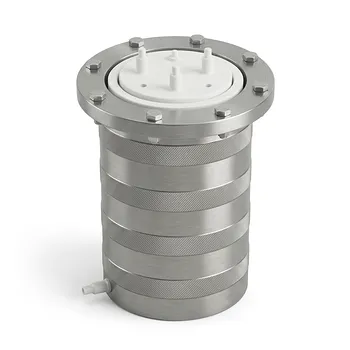
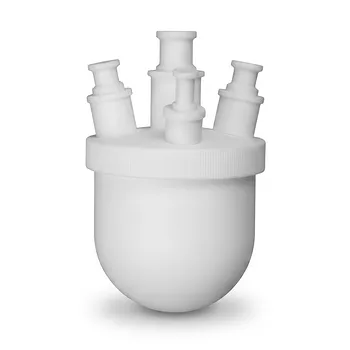
High-pressure reaction vessels are the critical containment system that enables the microwave-assisted hydrothermal synthesis of magnesium fluoride hydroxide (Mg(OH)F). They create a sealed environment that allows aqueous precursors to reach temperatures up to 250°C and pressures up to 40 bar, conditions far exceeding the atmospheric boiling point of water. This extreme environment is essential for increasing the solubility and reactivity of MgF₂ and Mg(OH)₂ precursors, driving the phase transformation into a pure diaspore-type structure within just 60 minutes.
Core Takeaway: High-pressure vessels serve as the essential pressure-cooker environment required to superheat solvents and accelerate chemical kinetics. By safely containing internal pressures while remaining transparent to microwave energy, they enable the rapid, uniform synthesis of Mg(OH)F nanocrystals.
Facilitating Superheated Conditions
Exceeding Atmospheric Boiling Points
In a standard open system, water cannot exceed 100°C; however, the sealed nature of high-pressure vessels allows the reaction to reach 250°C. By keeping the aqueous solution in a liquid state at these elevated temperatures, the vessel facilitates a hydrothermal environment that is impossible at atmospheric pressure.
Increasing Solubility and Reactivity
The high-temperature and high-pressure conditions within the vessel significantly enhance the solubility of precursors like MgF₂ and Mg(OH)₂. This increased solubility promotes the decomposition and nucleation of precursor complexes, which are necessary for the formation of Mg(OH)F.
Material and Structural Requirements
Microwave Permeability for Rapid Heating
The vessels must be constructed from materials with high microwave permeability, allowing radiation to pass through the walls and act directly on the reactants. This ensures rapid and uniform heating, which is a hallmark of microwave-assisted synthesis compared to conventional thermal methods.
Chemical Inertness with Fluoropolymer Liners
To prevent contamination and withstand corrosive environments, these reactors often utilize chemically inert liners made of fluoropolymers like PTFE or PFA. These liners ensure that the high-purity magnesium fluoride hydroxide is not compromised by metal impurities from the vessel walls during the 60-minute reaction.
Impact on Crystal Growth and Phase Transformation
Driving the Formation of Mg(OH)F
The internal pressure, which can reach 40 bar, provides the mechanical energy and thermodynamic conditions required for phase transformation. This specific environment is what allows the precursors to reorganize into a pure diaspore-type structure efficiently.
Precision in Nanoparticle Morphology
Because the vessel maintains a sealed, stable environment, the nucleation and growth of crystals occur uniformly. This results in the production of nanocrystals with controlled particle sizes and consistent morphology, which is vital for the functional performance of Mg(OH)F.
Understanding Technical Constraints and Risks
Material Fatigue and Thermal Limits
While these vessels are designed for high performance, they are subject to thermal and mechanical stress over repeated cycles. Exceeding the rated temperature (often around 250°C–260°C for fluoropolymer liners) can lead to material deformation or structural failure.
Pressure Management and Safety Hazards
The primary risk in microwave hydrothermal synthesis is uncontrolled pressure buildup from volatile reactants or rapid heating. High-pressure vessels must be equipped with safety relief mechanisms to prevent explosions, as the internal autogenous pressure can quickly exceed the vessel's structural integrity if not monitored.
Selecting the Right Vessel for Your Synthesis
To ensure successful synthesis and operator safety, choose your reaction vessel based on your specific experimental parameters.
- If your primary focus is phase purity: Utilize high-performance PTFE or PFA liners to prevent any leaching of impurities into the Mg(OH)F matrix.
- If your primary focus is rapid production: Ensure the vessel has high microwave transparency and a high pressure rating (at least 40 bar) to allow for the maximum reaction rate at 250°C.
- If your primary focus is safety and longevity: Select vessels with integrated pressure-monitoring systems and avoid exceeding 80% of the manufacturer’s maximum pressure and temperature ratings.
The high-pressure vessel is the indispensable engine of microwave-assisted synthesis, transforming standard chemical precursors into advanced functional materials through controlled, extreme environments.
Summary Table:
| Feature | Role in Mg(OH)F Synthesis |
|---|---|
| Superheating | Enables temperatures up to 250°C and 40 bar to increase precursor solubility. |
| Microwave Transparency | Allows radiation to pass through vessel walls for rapid, uniform heating. |
| Chemical Inertness | PTFE/PFA liners prevent contamination from corrosive fluoride environments. |
| Kinetic Acceleration | Drives phase transformation into pure diaspore-type structures within 60 minutes. |
Optimize Your Synthesis with KINTEK’s Fluoropolymer Expertise
Achieve precision and purity in your hydrothermal synthesis with KINTEK. We manufacture a comprehensive range of high-performance laboratory supplies crafted from PTFE and PFA, specifically designed for demanding chemical environments.
Our catalog spans from everyday basics—including beakers, crucibles, and reagent bottles—to specialized tools like hydrothermal synthesis liners, microwave digestion vessels, and custom reaction apparatus. Whether you need standard consumables like stirring bars and seal tapes or complex, non-standard machined parts via our end-to-end custom CNC fabrication, KINTEK delivers the durability and chemical inertness your research requires.
Ready to upgrade your lab setup? Contact us today to discuss your custom requirements or high-volume orders.
References
- Helies Hyrondelle, Alain Demourgues. Decoding Anionic Organization of Hydroxide-Fluorides in a Diaspore-Type Network. DOI: 10.1021/acs.inorgchem.4c03794
This article is also based on technical information from Kintek Knowledge Base .
Related Products
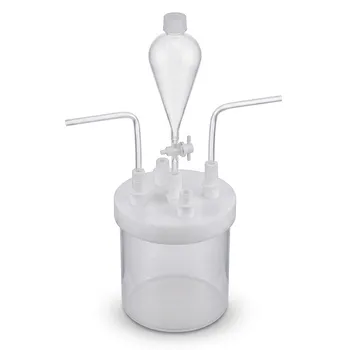
- High Purity PFA Reaction Vessel for Biopharmaceutical Synthesis and Corrosive Chemical Fluid Handling with Customizable Tube Fittings
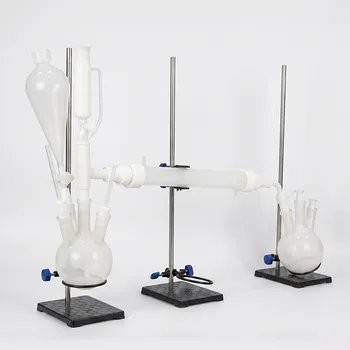
- High Purity PFA Constant Pressure Condensation Reaction System Acid Resistant High Temperature Customizable Teflon Labware
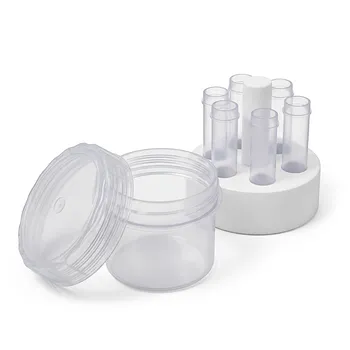
- High Purity Corrosion Resistant PFA Reaction Vessel with PTFE Holder and Integrated Sampling Tube for Trace Analysis
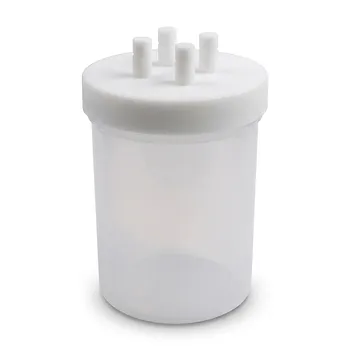
- High Purity PFA Reaction Tank for Proton Exchange Membrane Electrolysis and Water Oxygen Separation Custom Labware
- Custom PFA Reaction Bottles High Purity PTFE Reaction Vessels Corrosion Resistant Petrochemical Containers
People Also Ask
- Why is a stable reaction vessel essential for CuO nanoflower growth? Ensure Purity and Structural Integrity.
- Why are the reaction vessel and steam environment critical for alpha-FeOOH conversion? Achieve Superior Phase Purity.
- Why is the choice of reaction vessel material critical during B-NiBDC synthesis? Optimize MOF Purity & Performance
- How does hardware selection optimize research? Enhance Workflows with Custom Reaction Vessels
- Why is PFA preferred over FEP for high-temperature reaction vessels and fluid handling fittings in demanding chemical analysis? Explore its superior thermal stability and chemical resistance.