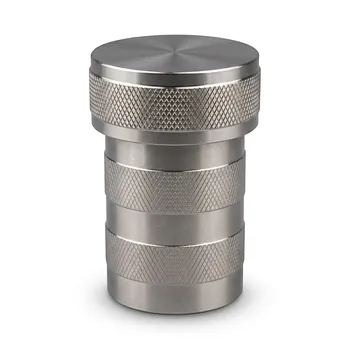
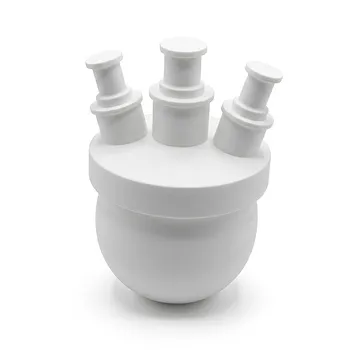
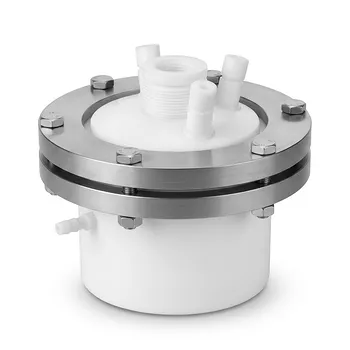
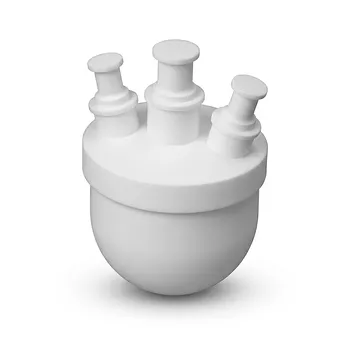
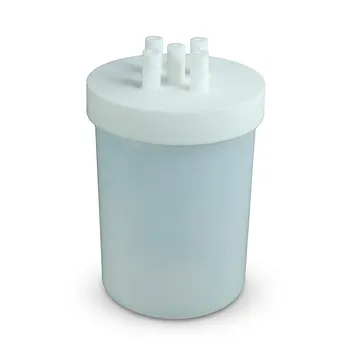
The hydrothermal synthesis vessel creates a specialized high-pressure, high-temperature environment that enables the controlled transformation of chemical precursors into complex nanostructures. Specifically, at a constant temperature of 160 °C, the vessel facilitates the thermal decomposition of thioacetamide, generating a pressurized acidic corrosive atmosphere necessary for the in-situ growth of high-entropy sulfides (HES) on Nickel Foam.
This hydrothermal environment serves as a closed kinetic system where simultaneous high pressure and elevated temperature drive the decomposition of sulfur sources and the directional corrosion of the substrate. This synergy is the critical factor that allows for the precise deposition of dense high-entropy sulfide nanoneedle arrays directly onto the Nickel Foam surface.
The Thermodynamics of the Hydrothermal Environment
High-Temperature Thermal Decomposition
The vessel maintains a steady state of 160 °C, providing the necessary activation energy for the chemical precursors. At this specific temperature, thioacetamide (TAA) begins a programmed thermal decomposition process within the solvent.
This decomposition is the "engine" of the synthesis, as it provides the steady supply of sulfur species required for the reaction. Without this precise thermal threshold, the chemical pathway for sulfide formation remains inactive.
High-Pressure Containment
Because the vessel is a sealed system, the heating of the solvent generates significant internal pressure. This pressure is vital for increasing the solubility of precursors and driving the reagents into the porous structure of the Nickel Foam (NF).
High pressure also alters the boiling point of the solvent, allowing the liquid phase to interact with the solid substrate at temperatures that would otherwise cause evaporation. This ensures a consistent liquid-solid interface throughout the growth period.
The Chemical Mechanism of In-Situ Corrosion
Evolution of the Acidic Atmosphere
The thermal decomposition of thioacetamide releases H₂S gas, which subsequently hydrolyzes within the vessel. This reaction produces sulfide ions and hydrogen ions, effectively turning the internal environment into a controlled acidic atmosphere.
This acidity is not a byproduct but a functional requirement for the synthesis. It creates the aggressive environment needed to interact with the metallic substrate on a molecular level.
Directional Corrosion and Nucleation
The acidic environment triggers the directional corrosion of the Nickel Foam substrate. As the nickel surface dissolves slightly, it releases metal ions that immediately react with the available sulfide ions in the vicinity.
This process facilitates the simultaneous deposition of metal and sulfide ions. The result is the self-assembled growth of dense nanoneedle arrays, which are rooted directly into the substrate for superior mechanical and electrical contact.
Understanding the Trade-offs
Kinetic Control vs. Over-Corrosion
Maintaining the environment at 160 °C is a delicate balance between reaction speed and structural integrity. While higher temperatures might accelerate growth, they risk excessive corrosion that could degrade the structural stability of the Nickel Foam.
If the acidic atmosphere becomes too aggressive too quickly, the nanoneedles may fail to form a dense, uniform array. Precise control of the temperature-pressure-time relationship is essential for high-entropy material uniformity.
Equipment Safety and Pressure Limits
The reliance on high-pressure reactors introduces operational risks associated with sealed vessels. Users must ensure that the filling degree of the vessel and the concentration of gas-releasing agents (like thioacetamide) do not exceed the safety ratings of the reactor.
Unexpected pressure spikes can lead to vessel failure or inconsistent morphology in the HES layer. Regular calibration of heating elements is required to prevent temperature overshoots that would disrupt the pressurized equilibrium.
How to Apply This to Your Project
Recommendations for Environment Optimization
- If your primary focus is maximizing nanoneedle density: Ensure the vessel is sealed perfectly to maintain maximum internal pressure, which forces precursors into the deep pores of the Nickel Foam.
- If your primary focus is substrate structural integrity: Strictly monitor the 160 °C temperature setpoint to prevent the acidic atmosphere from thinning the Nickel Foam struts beyond their load-bearing capacity.
- If your primary focus is high-entropy phase purity: Focus on the concentration of thioacetamide to ensure the release of H₂S is steady and sufficient to react with all five or more metal cations simultaneously.
By precisely controlling the pressurized acidic environment within the vessel, you can transform a simple metal foam into a sophisticated, high-performance high-entropy sulfide electrode.
Summary Table:
| Parameter | Physical Environment | Functional Impact on HES/NF Synthesis |
|---|---|---|
| Temperature | Steady state at 160 °C | Provides activation energy for Thioacetamide (TAA) decomposition. |
| Pressure | High-pressure sealed system | Increases precursor solubility and drives reagents into Nickel Foam pores. |
| Atmosphere | Acidic (H₂S and H⁺ ions) | Triggers directional corrosion and facilitates nanoneedle array nucleation. |
| Kinetic State | Closed kinetic system | Enables simultaneous high-entropy ion deposition and substrate bonding. |
Elevate Your Synthesis Precision with KINTEK
Achieving the delicate balance of pressure, temperature, and chemical resistance in high-entropy material synthesis requires equipment you can trust. KINTEK specializes in high-performance fluoropolymer laboratory supplies designed for the most aggressive chemical environments.
From hydrothermal synthesis liners and microwave digestion vessels to high-purity PFA labware and custom CNC-machined components, we provide the tools necessary for precision material science. Our expertise extends across the full spectrum of lab needs, including:
- Advanced Reaction Apparatus: Custom electrochemical cells, battery testing fixtures, and condensation devices.
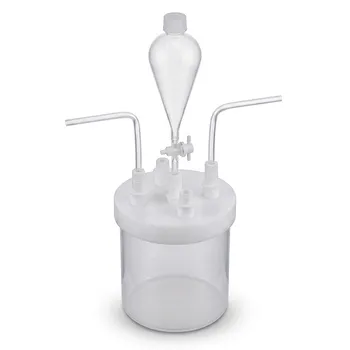
- Sample Prep & Filtration: Separatory funnels, high-purity filters, and trace analysis instruments.
- Fluid Transfer: Specialized PTFE/PFA tubing, fittings, and valves.
Whether you need bespoke laboratory setups or high-volume consumables, KINTEK delivers end-to-end solutions with an absolute focus on high-performance materials.
Ready to optimize your lab’s performance? Contact our experts today to find the perfect solution for your research.
References
- Hangning Liu, Jie Wang. Enhancing Oxygen Evolution Electrocatalysis in Heazlewoodite: Unveiling the Critical Role of Entropy Levels and Surface Reconstruction. DOI: 10.1002/adma.202501186
This article is also based on technical information from Kintek Knowledge Base .
Related Products
- PTFE Lined High Pressure Digestion Vessel 50ml High Temperature Hydrothermal Synthesis Tank
- High Temperature Corrosion Resistant Hydrothermal Synthesis Reactor with TFM Inner Liner and Straight Cylinder Design
- High Purity PFA Reaction Vessel for Biopharmaceutical Synthesis and Corrosive Chemical Fluid Handling with Customizable Tube Fittings
- High Temperature PTFE Reaction Flask 1000ml Single Neck Round and Flat Bottom Laboratory Bottle
- High Pressure Custom TFM Reactor Stainless Steel Outer Vessel PTFE Inner Cup for Corrosive Synthesis
People Also Ask
- What are the benefits of using a PTFE-lined vessel for carbon-sulfur cathode treatment? Maximize Purity & Performance
- Why are PTFE-lined pressure digestion vessels required for the preparation of Ag/CeO2 catalysts? Purity & Performance
- What is the function of high-pressure PTFE digestion vessels in mineral analysis? Optimize Sample Mineralization
- What safety features are typically incorporated into high-pressure PTFE digestion vessel designs? Ensure Lab Safety
- What is the function of PTFE lined high-pressure vessels in g-C3N4 synthesis? Achieve High-Purity Material Growth