The key requirement is sufficient comonomer content to prevent crystallization. In vinylidene fluoride (VDF) and hexafluoropropylene (HFP) copolymers, HFP should generally comprise at least about 19–20 mol% of the monomer composition to obtain an amorphous, flexible elastomer suitable for gaskets, O-rings, and flexible fluid-handling components. For VDF/HFP/tetrafluoroethylene (TFE) terpolymers, the combined monomer weight ratios must remain within the system’s elastomeric boundary region, because excessive TFE or insufficient HFP can restore crystallinity and reduce elasticity.
Amorphous elastomeric performance depends on controlling crystallinity through composition. Use approximately 19–20 mol% HFP or more in VDF/HFP systems, and qualify VDF/HFP/TFE formulations against an established elastomeric composition window rather than relying on a single universal ratio.
Why Monomer Composition Controls Elasticity
Crystallinity Must Be Suppressed
VDF can form ordered crystalline regions. If the polymer contains too much crystallizable VDF sequence, the material becomes stiffer and less capable of recovering after compression or repeated flexing.
HFP disrupts this regular molecular structure. At approximately 19–20 mol% HFP or higher, the VDF/HFP copolymer is more likely to remain sufficiently amorphous for elastomeric behavior.
Amorphous Structure Supports Sealing
A sealing material must deform to fill surface irregularities while retaining recovery force. An amorphous composition provides the molecular mobility needed for this behavior, particularly in gaskets and O-rings exposed to pressure cycling.
The composition requirement is therefore not merely a processing preference. It is a structural condition for achieving the flexibility and resilience expected from an elastomer.
Flexible Fluid Handling Requires Consistent Deformation
Tubing, diaphragms, seals, and related fluid-handling components may experience bending, compression, and repeated pressure changes. Excessive crystallinity can make these components harder to flex and less reliable in maintaining contact with mating surfaces.
Requirements for VDF/HFP Copolymers
Maintain at Least 19–20 Mol% HFP
For VDF/HFP copolymers, the practical compositional threshold is approximately 19–20 mol% HFP or greater. This level disrupts VDF crystallization enough to support an amorphous elastomeric morphology.
The exact formulation may still require adjustment for processing, temperature, chemical exposure, and mechanical targets, but compositions below this range present a higher risk of excessive crystallinity.
Treat the Threshold as a Design Boundary
The 19–20 mol% value should be treated as a minimum compositional guideline, not as a guarantee that every formulation will deliver identical performance. Molecular weight, cure chemistry, additives, and processing history can also influence final behavior.
However, monomer composition is the first control point. If the HFP content is too low, later formulation changes may not fully compensate for the resulting crystalline structure.
Requirements for VDF/HFP/TFE Terpolymers
Keep the Formulation Inside the Elastomeric Region
In VDF/HFP/TFE terpolymers, the monomers must be combined within a defined elastomeric boundary region. The acceptable region is determined by the balance among VDF, HFP, and TFE, rather than by one isolated minimum percentage.
This balance must suppress excessive crystallinity while preserving enough fluoropolymer structure for the required chemical and thermal performance.
Avoid Assuming Copolymer Limits Apply Directly
The 19–20 mol% HFP guideline applies directly to VDF/HFP copolymer systems. It should not be transferred mechanically to every VDF/HFP/TFE formulation because TFE changes the composition and crystallization behavior.
Terpolymer designs should therefore be evaluated using the applicable composition diagram, specification, or validated formulation window for that polymer family.
Confirm Elasticity Across Operating Conditions
A formulation may appear flexible at room temperature but lose useful recovery or become too stiff at its actual service temperature. The selected terpolymer composition must maintain low crystallinity and elastic response across the intended pressure, temperature, and chemical exposure range.
Why the Result Matters in Fluid-Service Applications
Chemical and Oxidative Stability
Amorphous fluoropolymers are valued for strong thermal and oxidative stability and broad chemical resistance. These properties are important when seals or flexible components contact aggressive fluids or operate in demanding laboratory and chemical-processing environments.
The monomer composition must preserve these advantages without sacrificing the mechanical compliance required for sealing.
Low Moisture Sensitivity
Low moisture absorption helps maintain more consistent dimensional and dielectric behavior. This can benefit trace-analysis equipment and specialized fluid-handling systems where environmental variation could affect measurements or component fit.
Electrical and Optical Performance
Amorphous fluoropolymers can provide high optical clarity and very low dielectric constants, commonly reported in the range of about 1.87 to 2.2. These properties are useful in specialized analytical and laboratory systems, although they do not replace the need to verify mechanical sealing performance.
Understanding the Trade-offs
More Comonomer Is Not Automatically Better
Increasing HFP or changing TFE content can further disrupt crystallinity, but composition changes may also affect modulus, tensile strength, compression recovery, processing behavior, and chemical compatibility.
The objective is not simply to maximize comonomer content. It is to select a composition that remains within the validated elastomeric range while meeting the component’s service requirements.
A Nominal Ratio Does Not Define Final Performance
The stated monomer ratio describes the polymer’s composition, but the finished component also depends on molecular weight, curing or crosslinking, fillers, additives, molding conditions, and post-treatment.
A material should therefore be evaluated as a complete formulation and component, not only by its nominal monomer percentages.
Avoid Unverified Terpolymer Compositions
For VDF/HFP/TFE systems, the primary reference establishes that an elastomeric boundary exists but does not provide universal numerical limits. Inventing or assuming exact ratios without the relevant polymer-specific data would create an unreliable design basis.
Use supplier data, phase-behavior information, or validated qualification testing for the specific terpolymer family.
Making the Right Choice for Your Goal
The composition should be selected alongside mechanical, chemical, thermal, and processing requirements.
- If your primary focus is sealing reliability: Use a VDF/HFP composition with approximately 19–20 mol% HFP or more, then verify compression recovery and long-term elasticity under actual service conditions.
- If your primary focus is flexible chemical fluid handling: Select a VDF/HFP/TFE formulation within its validated elastomeric boundary region and confirm that crystallinity remains low throughout the operating temperature range.
- If your primary focus is laboratory or trace-analysis equipment: Preserve the amorphous composition while separately verifying chemical resistance, moisture behavior, dielectric performance, and dimensional stability.
- If your primary focus is formulation development: Treat monomer composition as the first crystallinity-control variable, then optimize cure system, additives, and processing after the polymer remains inside the amorphous elastomeric region.
A properly balanced monomer composition provides the structural foundation for fluoropolymer seals and flexible components that remain compliant, chemically resistant, and reliable in demanding service.
Summary Table:
| Parameter | Requirement |
|---|---|
| VDF/HFP copolymer HFP content | ≥ 19–20 mol% |
| VDF/HFP/TFE terpolymer | Within elastomeric boundary region |
| Effect of crystallization | Suppressed for elasticity |
| Service temperature | Maintain low crystallinity across range |
Achieve reliable sealing and flexible fluid handling with our high-performance PTFE/PFA products. Our custom CNC machining capabilities ensure components tailored to your exact needs. Contact us today to optimize your fluoropolymer solutions! Get in touch.
Related Products
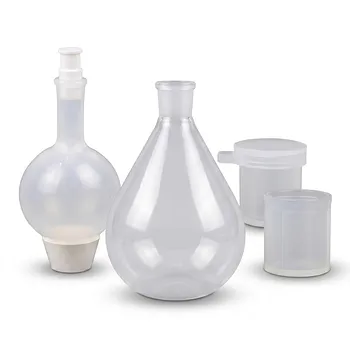
- PFA Eggplant Flask Custom Molded Pear Shaped Laboratory Flask Corrosion Resistant Glass Alternative
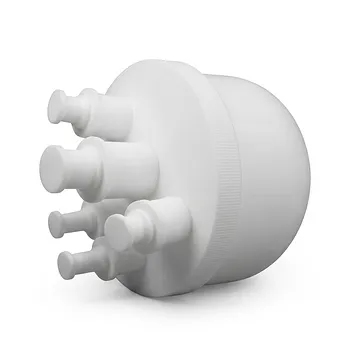
- Custom Multi Neck PTFE Flask for Chemical Engineering and High Purity Laboratory Synthesis Applications
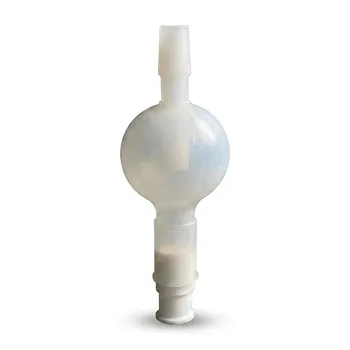
- High Purity PFA Chromatography Column with Collection Bottle Corrosion Resistant Fluoropolymer Filtration System for Trace Analysis
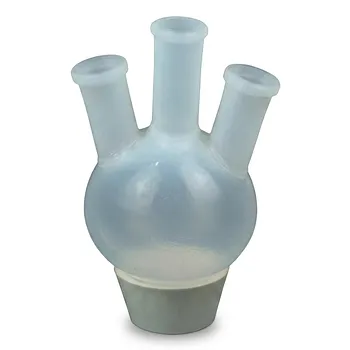
- Custom Corrosion Resistant PFA PTFE Multi Neck Laboratory Reaction Flask GL Standard Mouth Fluoropolymer Flasks
- Custom PFA Pear Shaped Flask High Purity Corrosion Resistant Labware Custom Molded Fluoropolymer Flask Glass Replacement Solution
People Also Ask
- Why is the chemical stability of polymer endgroups critical when selecting melt-processible fluoropolymers like PFA for high-purity laboratory apparatus? Choose Stable Endgroups for Reliable Performance
- Why is PFA often selected over traditional PTFE for manufacturing complex fluoropolymer fluid components, custom fittings, and sealed laboratory digestion vessels? Discover the key advantages for your lab.
- What are the characteristics of PFA material? A Guide to Its High-Performance Balance
- What are the key properties of PFA (PerFluoroAlkoxy)? A Guide to Extreme Chemical and Thermal Resistance
- Why is perfluoroalkoxy polymer (PFA) often selected over PTFE and FEP for complex molded lab apparatus?