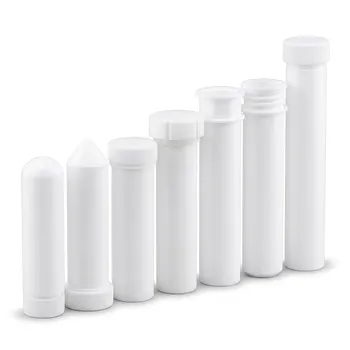
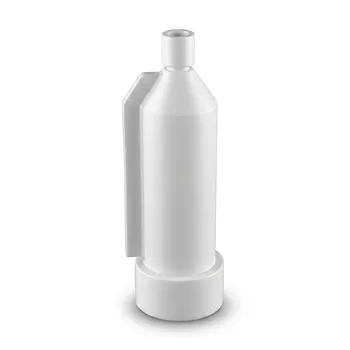
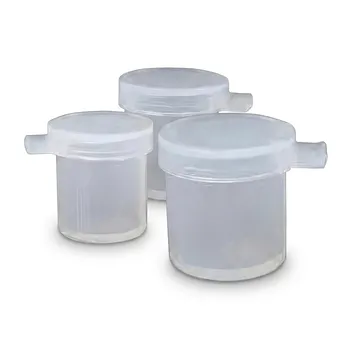
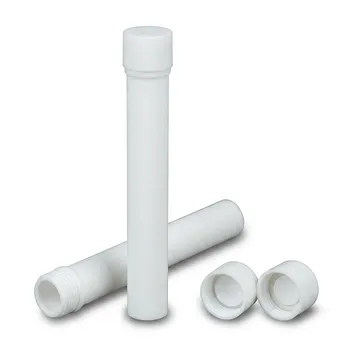
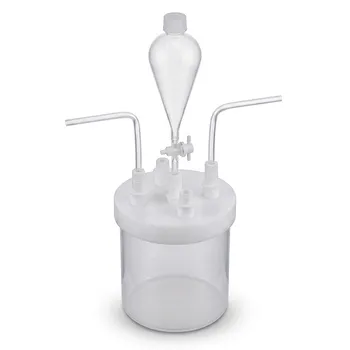
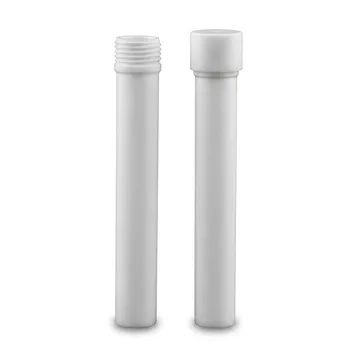
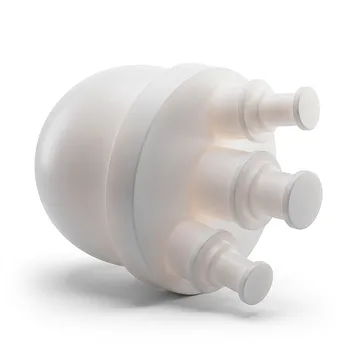
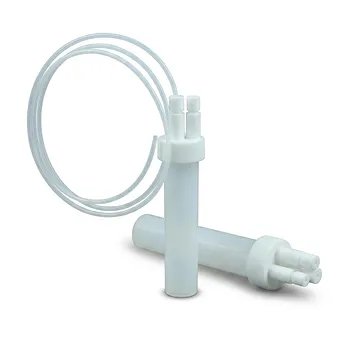
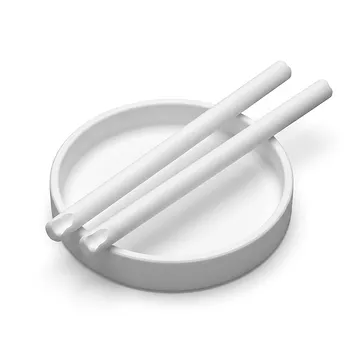
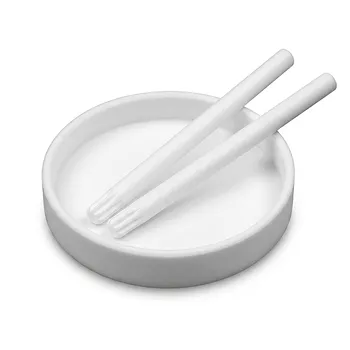
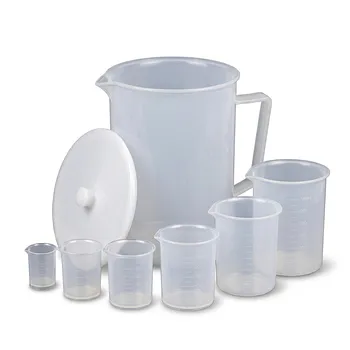
PTFE and PFA are indispensable because they protect samples from the vessel itself. Their highly fluorinated structures provide near-universal resistance to strong acids, bases, oxidizing agents, and organic solvents, while their high purity produces exceptionally low elemental leaching and extractables. Their extremely low surface energy also minimizes adsorption, wetting, and liquid retention, which is essential for accurate trace analysis and reliable biopharmaceutical processing.
The central advantage of PTFE and PFA is sample integrity: they resist chemical attack, contribute almost no contamination, and release very little of the sample during transfer, digestion, storage, or processing.
Why Chemical Inertness Matters
Strong Reagents Do Not Attack the Vessel
PTFE and PFA contain fully fluorinated polymer backbones with exceptionally strong carbon-fluorine bonds. This structure gives them resistance to most concentrated acids, strong bases, oxidizing agents, and organic solvents across a broad operating range.
That resistance is particularly important during aggressive acid digestion, where conventional materials can corrode, absorb analytes, or contribute background metals to the sample.
Low Leaching Protects Trace Measurements
Trace analysis can be compromised by contamination at concentrations far below what is visible or measurable in routine laboratory work. High-purity PTFE and PFA introduce extremely low levels of elemental leachables, extractables, and outgassed species.
As a result, digestion tubes, reagent bottles, beakers, and transfer components made from these fluoropolymers help preserve low analytical backgrounds and improve confidence in measurements.
Chemical Stability Preserves Reagents and Samples
A chemically stable vessel is less likely to react with the contents or promote sample degradation. This protects both sensitive analytes and high-purity reagents during preparation and storage.
For biopharmaceutical applications, that stability supports the containment of process fluids, drug formulations, and cleaning chemicals without creating unwanted chemical interactions.
Why Low Surface Energy Improves Recovery
Minimal Sample Adhesion
PTFE and PFA have exceptionally low surface energy, giving them non-stick and non-wetting behavior. Liquids are less likely to spread across or remain attached to the vessel wall.
This reduces sample retention during transfers and helps recover more of the material being measured.
Lower Cross-Contamination Risk
When less liquid adheres to the surface, fewer residues remain after dispensing, rinsing, or cleaning. That is valuable when vessels are reused or when different samples pass through the same fluid-handling system.
The result is more complete volumetric delivery and a lower risk that one sample will influence the next.
Reliable Cleaning and Rinsing
Low surface adhesion allows aggressive rinses and cleaning procedures to remove residual material more effectively. This supports repeatable workflows involving reagent bottles, centrifuge tubes, measuring vessels, fittings, and tubing.
In high-purity environments, cleanability is not merely convenient; it is part of controlling the analytical background.
How PTFE and PFA Support Temperature-Critical Work
Broad Thermal Capability
PTFE and PFA remain useful across a wide temperature range, from cryogenic conditions to continuous service around 260°C, or approximately 500°F. Actual limits depend on grade, geometry, mechanical load, pressure, and exposure time.
This thermal stability allows the same material family to support cold storage, heated digestion, sterilization-related processes, and demanding fluid transfer applications.
Stability During Digestion and Processing
During elevated-temperature acid digestion, the vessel must resist both chemical attack and thermal deformation. PTFE and PFA are well suited to this combination of stresses compared with many conventional plastics.
Their thermal capability helps maintain vessel integrity while aggressive reagents break down the sample matrix.
Choosing Between PTFE and PFA
PTFE for Maximum Inertness and Established Labware
PTFE is a highly chemically inert fluoropolymer widely used for digestion vessels, liners, beakers, tubing, seals, and machined components. It is especially appropriate when chemical resistance and low contamination risk are the dominant requirements.
Its very high melt viscosity means that it cannot normally be processed through standard injection molding or melt extrusion. PTFE parts are generally compression molded and sintered, or machined from stock shapes.
PFA for Complex, Transparent Components
PFA provides comparable high-purity and chemical-resistance characteristics while adding melt processability. Its perfluoroalkoxy side chains allow precision injection molding and extrusion of complex fittings, fluid-transfer components, and specialized vessels.
PFA also offers greater optical clarity than conventional processed PTFE. This can help operators visually monitor fluid levels, particulates, bubbles, or process conditions inside a vessel.
PFA for Fluid-Handling and Biopharmaceutical Systems
PFA is particularly valuable when a system requires molded geometries, smooth internal surfaces, visual inspection, and very low extractables. These characteristics support reagent bottles, tubing, valves, fittings, microporous dispersion components, and biopharmaceutical vessels.
The choice is therefore not simply between “more” and “less” chemical resistance. It also depends on whether the design requires transparency, molded complexity, dimensional precision, or the established processing methods associated with PTFE.
Understanding the Trade-offs
Neither Material Is Completely Universal
PTFE and PFA resist nearly all common laboratory chemicals, but they are not immune to every possible exposure. Severe exceptions include molten alkali metals, elemental fluorine under extreme conditions, and highly specialized fluorinating compounds such as chlorine trifluoride.
Chemical compatibility must still be checked against the actual reagent, concentration, temperature, pressure, and exposure duration.
Mechanical Performance Requires Application Review
Chemical inertness does not eliminate mechanical design constraints. Temperature, pressure, creep, wall thickness, sealing loads, and repeated sterilization can affect long-term performance.
A chemically compatible material can still be unsuitable if the vessel or fitting is mechanically underdesigned.
Purity Depends on Manufacturing and Handling
Selecting PTFE or PFA is not, by itself, a guarantee of ultra-high purity. Clean manufacturing, appropriate grades, surface finishing, packaging, cleaning, and controlled handling determine the final contamination performance.
Fillers, pigments, processing residues, poor storage, and improper cleaning can undermine the benefits of the base polymer.
PTFE and PFA Are Not Always the Most Economical Choice
Fluoropolymer components can cost more than conventional plastic or glass alternatives, particularly when they require specialized fabrication or tight contamination controls. Their value is highest where analytical accuracy, chemical compatibility, product protection, or process reliability outweighs initial material cost.
Making the Right Choice for Your Goal
The correct selection should reflect both the chemical environment and the required component design.
- If your primary focus is ultra-trace analytical accuracy: Choose high-purity PTFE or PFA labware with verified low elemental backgrounds, extractables, and leachables.
- If your primary focus is aggressive acid digestion: Use PTFE or PFA vessels rated for the intended reagent, temperature, pressure, and digestion procedure.
- If your primary focus is maximum sample recovery: Favor the low-surface-energy fluoropolymer surface to reduce adhesion, liquid retention, and cross-contamination.
- If your primary focus is transparent or geometrically complex equipment: Prefer melt-processible PFA for molded vessels, fittings, tubing, and components requiring visual inspection.
- If your primary focus is biopharmaceutical storage and fluid handling: Specify a high-purity grade and validate the complete manufacturing, cleaning, sterilization, and extractables-control process.
PTFE and PFA preserve the integrity of demanding samples by combining chemical inertness, exceptional cleanliness, low surface adhesion, and broad thermal capability in a single material family.
Summary Table:
| Material | Key Characteristics | Benefits | Best For |
|---|---|---|---|
| PTFE | Maximum inertness, non-melt processable | Extreme chemical resistance, low contamination | Digestion vessels, traditional labware |
| PFA | Melt processable, transparent | Uniform fabrication, visual inspection | Complex fittings, biopharmaceutical fluid handling |
Enhance your lab's precision with high-purity PTFE and PFA labware from KINTEK. Our fluoropolymer products are designed for trace analysis and biopharma, ensuring minimal contamination and maximum recovery. Contact us today to discuss your specific requirements and benefit from our expert guidance and custom solutions. Contact us to ensure your samples stay pure!
Related Products
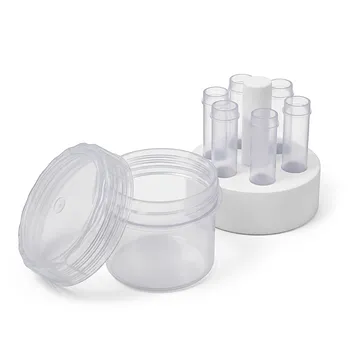
- High Purity Corrosion Resistant PFA Reaction Vessel with PTFE Holder and Integrated Sampling Tube for Trace Analysis
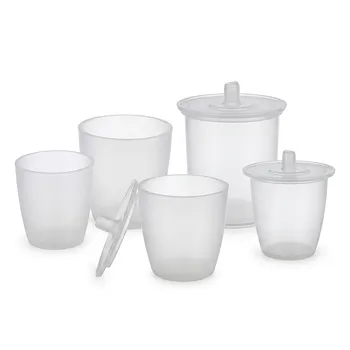
- High Purity PFA Crucible and Corrosion Resistant PTFE Beaker for Trace Analysis and Custom Laboratory Applications
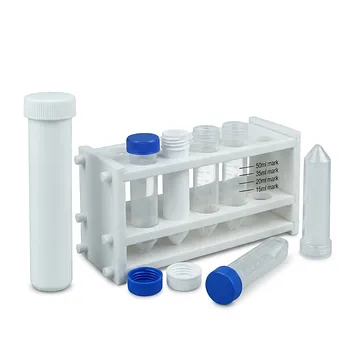
- Custom PTFE Digestion Tubes and High Purity Polytetrafluoroethylene Centrifuge Vessels 60ml for Trace Analysis
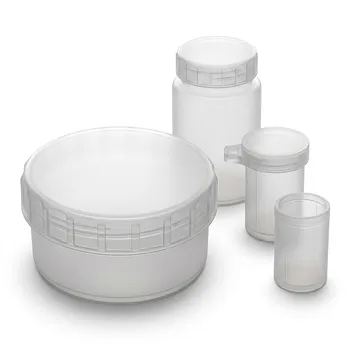
- PFA Reaction Jar Corrosion Resistant Wide Mouth PTFE Lab Bottle High Purity Chemical Vessel
- Custom High Purity PTFE Digestion Tubes and Centrifuge Tubes for Trace Metal Analysis
People Also Ask
- Why is the choice of reaction vessel material critical during B-NiBDC synthesis? Optimize MOF Purity & Performance
- How do the material choice and sealing integrity of the reaction vessel affect the growth of NiFe-LDH? Optimize Synthesis
- Why are well-sealed reaction vessels necessary for superacid-promoted Friedel-Crafts polycondensation? Optimize Synthesis
- Role of reaction vessels in alkali treatment for oil palm waste: Achieve High-Purity Cellulose with PTFE Vessels
- What is the role of high chemical inertness reaction vessels in the organic synthesis of acylhydrazone ligands? | Guide