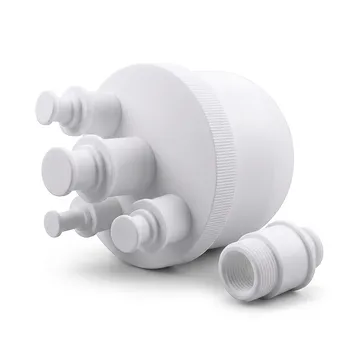
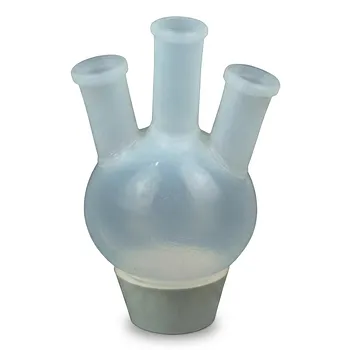
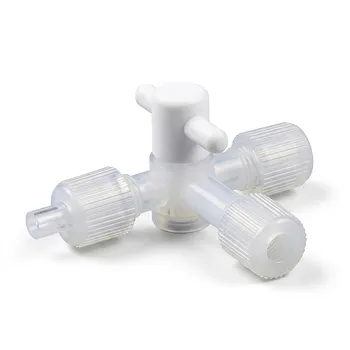
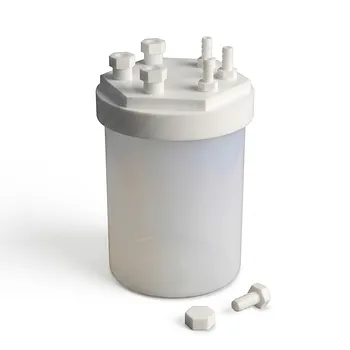
Fluoropolymers are suitable because they combine electrical insulation, thermal stability, chemical inertness, and low-contamination behavior in one material family. Their high dielectric strength and resistivity support reliable insulation and signal integrity, while their broad temperature capability, flame resistance, and weatherability help maintain performance under severe operating conditions. In fluid transfer lines, exceptional resistance to aggressive chemicals, low absorption, and low surface energy help prevent degradation, leakage, contamination, and difficult-to-clean residue.
The central advantage of fluoropolymers is property retention under combined thermal, electrical, chemical, and environmental stress. This makes materials such as PTFE and PFA effective for both high-performance wiring insulation and demanding tubing, fittings, valves, liners, and seals.
Why Fluoropolymers Perform Reliably
High dielectric strength and electrical resistivity
Fluoropolymers provide strong electrical insulation through high dielectric strength, high volume resistivity, and high surface resistivity. These properties reduce the risk of dielectric breakdown, leakage currents, and unwanted ionic interference.
PTFE also has a very low dielectric constant and low dielectric loss. In specialized high-frequency cables, circuit substrates, and instrumentation, this helps limit signal attenuation and distortion.
Broad thermal stability
Fluoropolymers maintain structural and electrical stability across a wide temperature range. They are suitable for applications exposed to elevated temperatures, thermal cycling, and, depending on the grade and design, cryogenic conditions.
PTFE and PFA can provide low outgassing and retain useful performance at temperatures approaching 500°F (260°C). The actual limit depends on the specific polymer, geometry, pressure, electrical loading, and exposure duration.
Exceptional chemical inertness
The carbon-fluorine structure gives fluoropolymers strong resistance to many acids, bases, solvents, oxidizing reagents, and corrosive process chemicals. Perfluorinated materials such as PTFE and PFA generally provide the highest level of chemical stability and purity.
This resistance helps prevent embrittlement, swelling, cracking, permeation-related failure, and chemical attack in fluid lines and electrical components exposed to aggressive environments. It is more accurate to describe this as exceptional chemical resistance, rather than claiming that fluoropolymers resist every chemical under every condition.
Flame resistance and weatherability
Many fluoropolymers are flame resistant or self-extinguishing, which supports safer operation in electrical systems and industrial environments. They also resist degradation from weathering and environmental exposure.
This combination is valuable where insulation or fluid-handling components must remain dependable despite heat, moisture, ultraviolet exposure, and changing atmospheric conditions.
Why They Work Well in Fluid Transfer Lines
Low water and solvent absorption
Fluoropolymers absorb very little water and generally have low absorption of many solvents. This helps preserve dimensional stability and reduces the chance that the material will swell, soften, or change its electrical behavior during service.
For high-purity fluid handling, low absorption also reduces opportunities for retained chemicals or moisture to contaminate later process streams.
Low surface energy and nonstick behavior
Fluoropolymers have exceptionally low surface energy, with both hydrophobic and lipophobic characteristics. Liquids and residues are less likely to adhere strongly to the internal surface of tubing, vessels, valves, and fittings.
That supports more complete drainage, easier cleaning, lower sample carryover, and reduced contamination risk in laboratory and chemical-processing systems.
Low friction and wear
The low coefficient of friction provides smooth movement in valves, stopcocks, seals, and other dynamic components. It can reduce actuation forces, sticking, and wear without relying on additional lubricants that might contaminate the process fluid.
The benefit is particularly important when components repeatedly cycle while exposed to aggressive chemicals or elevated temperatures.
Purity and low leaching risk
High-purity fluoropolymers are chemically inert and are less likely to react with or leach contaminants into the media they carry. This makes them suitable for trace analysis, high-purity reagents, electrochemical systems, and sensitive laboratory processes.
Material grade, manufacturing cleanliness, fillers, additives, and processing history still matter. A chemically resistant polymer is not automatically suitable for every high-purity application unless its formulation and manufacturing controls meet the required standard.
How These Properties Support Electrical Insulation
Stable insulation under environmental stress
Electrical insulation must retain its dielectric and mechanical properties as temperature, humidity, chemical exposure, and voltage conditions change. Fluoropolymers provide a strong margin because their electrical stability is supported by low moisture uptake and high chemical and thermal resistance.
This helps prevent insulation breakdown and long-term reliability problems in wiring, instrumentation, and specialized cable assemblies.
Reduced signal loss and interference
Low dielectric constant and low loss tangent are important for high-frequency signal transmission. PTFE is especially useful where the insulation must minimize electrical energy loss and preserve signal shape.
Expanded PTFE can incorporate microscopic air pockets, lowering its effective dielectric constant and dielectric loss further. This is a specialized construction rather than a general property of every fluoropolymer component.
Compatibility with electrochemical systems
High volume and surface resistivity help prevent unwanted electrical paths and ionic interference in electrochemical equipment. Chemical and electrochemical stability also allows the material to remain reliable near strong potential gradients and reactive environments.
PTFE and PFA are therefore used in applications such as electrochemical cells, digestion vessels, and associated fluid-handling systems.
Understanding the Trade-offs
Mechanical strength varies by polymer and design
Fluoropolymers are not interchangeable, and their mechanical strength, creep resistance, flexibility, and wear behavior differ by grade. Some components may require reinforcement, a supporting structure, or careful control of pressure and temperature.
Designers must evaluate long-term dimensional stability, especially in pressurized tubing, seals, valve seats, and connections subject to sustained loads.
Permeation can still matter
Chemical resistance does not mean that a fluid cannot permeate through the polymer. Small molecules and gases may migrate through some fluoropolymer constructions, particularly under pressure, temperature, or concentration gradients.
For critical fluid transfer, the material specification should address permeation, wall thickness, pressure rating, temperature, and the exact chemical exposure.
Processing and joining require attention
Fluoropolymers can be difficult to bond, machine, weld, or connect compared with more conventional plastics. Poorly designed fittings or transitions can become the actual source of leakage even when the polymer itself is chemically stable.
Reliable systems depend on compatible connection methods, controlled tolerances, appropriate sealing geometry, and validation under operating conditions.
Chemical compatibility remains application-specific
Fluoropolymers resist a very broad range of chemicals, but performance can change with temperature, pressure, exposure time, mechanical stress, and the presence of reactive species. Compatibility charts and supplier data should be checked for the specific polymer grade and service conditions.
How to Apply This to Your Project
The correct selection depends on whether the dominant risk is electrical failure, chemical attack, contamination, heat, mechanical wear, or a combination of these factors.
- If your primary focus is electrical insulation: Prioritize dielectric strength, volume and surface resistivity, dielectric constant, loss tangent, temperature capability, flame behavior, and moisture resistance.
- If your primary focus is high-purity fluid transfer: Prioritize chemical inertness, low absorption, low extractables and leachables, surface cleanliness, and the appropriate high-purity grade.
- If your primary focus is aggressive chemical service: Evaluate the exact chemical, concentration, temperature, pressure, exposure duration, and permeation risk rather than relying on the word “fluoropolymer” alone.
- If your primary focus is valves, seals, or moving components: Consider low friction, wear resistance, creep, dimensional stability, cycling behavior, and the compatibility of the entire sealing assembly.
- If your primary focus is high-frequency signal integrity: Examine dielectric constant and loss tangent, and consider specialized constructions such as expanded PTFE where appropriate.
Fluoropolymers deliver high reliability when their electrical, thermal, chemical, purity, and mechanical properties are matched precisely to the service environment.
Summary Table:
| Property | Electrical Insulation Benefit | Fluid Transfer Benefit |
|---|---|---|
| High dielectric strength & resistivity | Prevents breakdown, leakage, and ionic interference | Ensures safe handling of conductive fluids |
| Broad thermal stability | Maintains insulation at high temps | Handles hot chemicals without degradation |
| Exceptional chemical inertness | Resists corrosion from environmental chemicals | Prevents attack by aggressive acids, bases, solvents |
| Low water/solvent absorption | Stable electrical properties in humid conditions | Reduces swelling, contamination, and dimensional change |
| Low surface energy & nonstick | Reduces moisture film that could affect insulation | Provides easy cleaning and low sample carryover |
| Low friction & wear | - | Enhances valve and seal operation with low wear |
| Purity & low leaching | - | Prevents contamination in high-purity processes |
| Flame resistance & weatherability | Enhances safety and long-term reliability outdoors | Withstands harsh environmental exposure |
Enhance your system's reliability with KINTEK's precision PTFE and PFA components. Our high-purity fluoropolymers are ideal for demanding electrical and fluid handling applications. From custom-machined parts to standard labware, we deliver solutions that withstand extreme temperatures, corrosive chemicals, and high electrical stress. Contact us today to discuss your requirements and get a quote!
Related Products
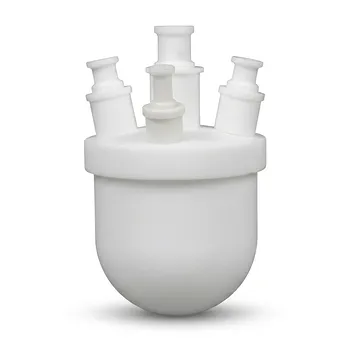
- Custom PTFE Flask 250ml High Purity Fluoropolymer Laboratory Vessel for Chemical Research
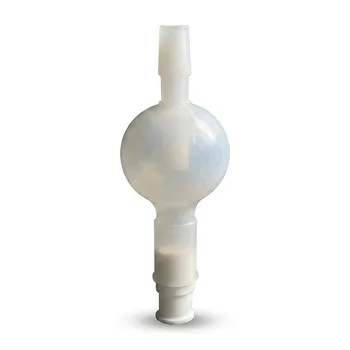
- High Purity PFA Chromatography Column with Collection Bottle Corrosion Resistant Fluoropolymer Filtration System for Trace Analysis
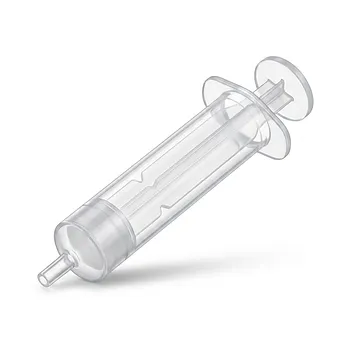
- Corrosion Resistant PFA Syringe Translucent Visual Fluoropolymer Labware 10ml Chemical Handling Tool
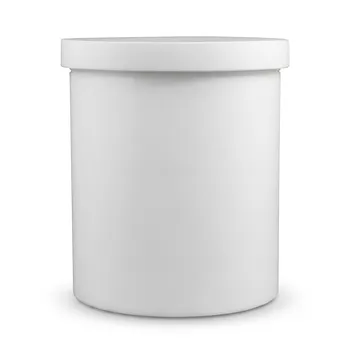
- Custom PTFE Reaction Tank Corrosion Resistant Fluoropolymer Chemical Processing Barrel 10L 20L 30L
- Custom PFA Tubing 1/4 Inch High Purity Corrosion Resistant Fluoropolymer Tube with Welding and Machining Services
People Also Ask
- What are the key steps for structural integrity in molded PTFE lab reaction vessels? Master fine powder processing.
- Why Are High-Purity Fluoropolymer Vessels and Tubing Critical for Trace Analysis? Prevent Contamination Reliably
- Why do PTFE fluoropolymer laboratory vessels and containers exhibit superior chemical resistance against harsh solvents and corrosive acids compared to standard plastic labware? Discover the molecular secrets
- How do choice of solvent and chain transfer activity affect molecular weight during vinylidene fluoride (VDF) radical polymerization? Learn Key Factors for High-MW PVDF
- Why are fluoropolymer reaction vessels essential for SnO2/rGO synthesis? The Key to High-Performance Composites