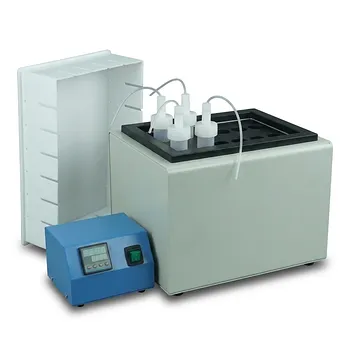
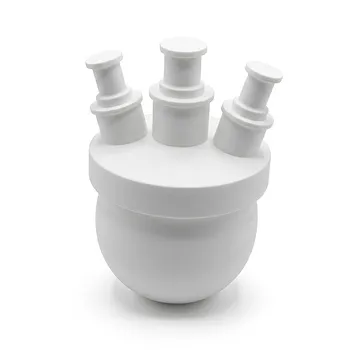
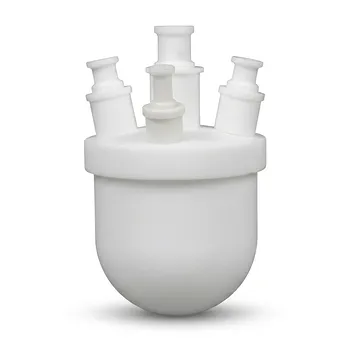
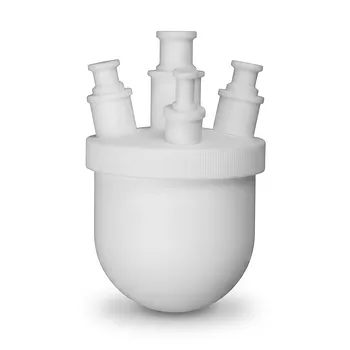
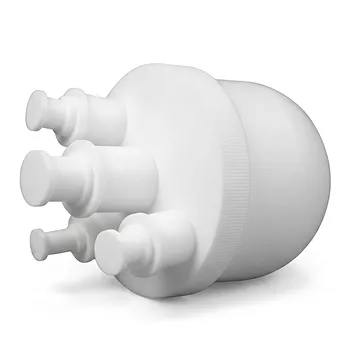
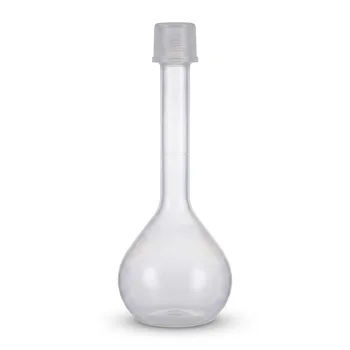
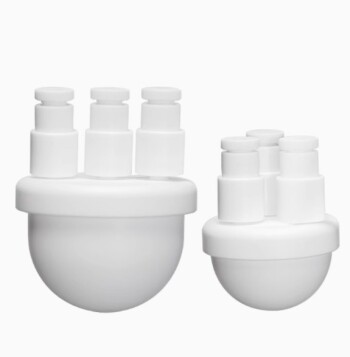
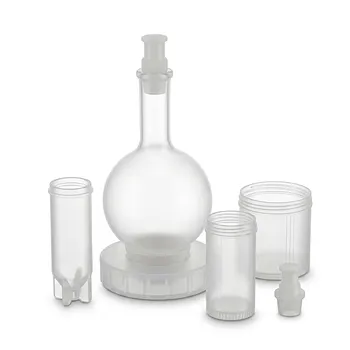
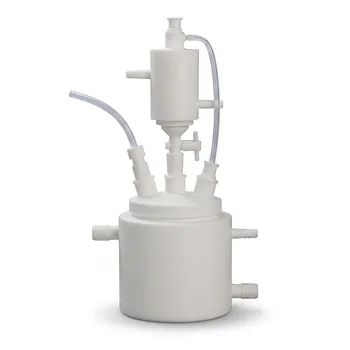
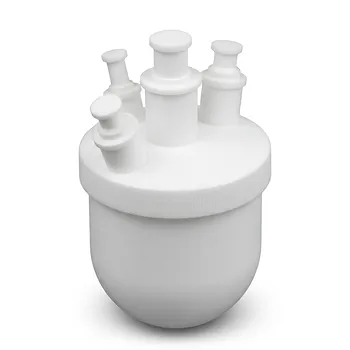
The standard procedure is to combust the fluoropolymer in an oxygen-filled flask, absorb the resulting fluorine-containing gases in a liquid scrubber, and quantify fluoride by ion chromatography. The sample is placed in a platinum basket attached to the flask head with the absorbing solution, then ignited in pure oxygen. After approximately one hour of absorption, the solution is diluted to a defined volume with ultrapure water and analyzed by ion chromatography to determine the fluorine content.
Core takeaway: Oxygen flask combustion converts fluorine in the polymer into soluble fluoride species that can be measured accurately by ion chromatography. Reliable results depend on complete combustion, quantitative absorption, appropriate blanks and calibration, and conversion of measured fluoride to the original sample basis.
How the Oxygen Combustion Flask Method Works
Converting polymer-bound fluorine into a measurable form
Fluoropolymer samples contain fluorine that is chemically bound within a stable polymer matrix. Direct aqueous analysis is generally unsuitable because the polymer does not readily dissolve or release its fluorine.
Oxygen flask combustion uses controlled combustion to break down the polymer. The fluorine-containing combustion products are transferred into an absorbing liquid, where they are converted into fluoride available for instrumental measurement.
Why the platinum basket is used
The specimen is placed in a platinum basket attached to the flask head. Platinum provides a heat-resistant, chemically compatible support during ignition and combustion.
The basket keeps the sample positioned in the oxygen atmosphere and helps prevent material from being lost before the combustion gases can be absorbed.
Standard Procedure
Prepare the combustion flask
The flask is charged with pure oxygen and fitted with the head assembly containing the platinum basket and the selected scrubber or absorbing solution.
The apparatus should be clean and free from fluoride contamination. A reagent blank should be prepared using the same absorbing solution and handling steps but without the polymer sample.
Weigh and position the sample
A representative fluoropolymer specimen is weighed and placed in the platinum basket. The sample mass should be recorded accurately because the final result is calculated relative to the original sample mass.
The basket is then secured to the flask head, with the absorbing solution already positioned inside the flask.
Ignite the sample
The sample is ignited while the flask contains oxygen. Combustion products remain within the closed flask and are subsequently taken up by the liquid phase.
The procedure must be performed using equipment and operating conditions appropriate for oxygen combustion. Oxygen-enriched combustion presents a significant fire and pressure hazard, so the laboratory’s approved safety procedure and apparatus limits must be followed.
Allow the gases to be absorbed
After ignition, the flask is allowed to stand for approximately one hour. This absorption period allows the combustion gases to dissolve into and react with the scrubber solution.
Adequate absorption is essential. Incomplete capture can cause low fluorine results because part of the analyte remains in the gas phase or is lost during handling.
Dilute to a defined volume
After the absorption period, the solution is transferred or brought to a calibrated final volume using ultrapure water. The same final-volume procedure must be used consistently for samples, blanks, and quality-control solutions.
This solution is the test solution for ion chromatographic analysis.
Measuring Fluoride by Ion Chromatography
Establish the measurement system
Ion chromatography is used to separate and quantify fluoride in the absorbed combustion solution. Calibration standards should cover the expected concentration range, and the system should be checked for appropriate precision and response.
The blank result must be considered because fluoride can be introduced by reagents, containers, laboratory surfaces, or the combustion apparatus.
Analyze the combustion solution
The diluted sample solution is injected into the ion chromatograph. The instrument measures the fluoride concentration in the solution, typically reported as a concentration such as mass of fluoride per unit volume.
The measured concentration is corrected using the applicable blank and then combined with the final solution volume and sample mass.
Calculate fluorine content
The fluorine content is determined from the corrected fluoride measurement:
[ \text{Fluorine content} = \frac{C_{\mathrm{F}} \times V}{m} ]
where:
- (C_{\mathrm{F}}) is the blank-corrected fluoride concentration in the final solution.
- (V) is the final solution volume.
- (m) is the mass of the original fluoropolymer sample.
If the result is reported as elemental fluorine, the calculation must use the fluoride concentration expressed on a fluorine-mass basis. Results may then be reported as mass fraction, percentage by mass, or another specified unit.
Controls That Determine Result Quality
Use representative samples
Fluoropolymer materials can be heterogeneous because of fillers, additives, coatings, or processing history. The test portion should represent the material being evaluated, and the sample preparation should avoid contamination or selective loss of material.
Include blanks and quality controls
A reagent or procedural blank identifies background fluoride introduced by the method. Replicate samples help assess repeatability, while a suitable control material or recovery check helps reveal incomplete combustion or absorption.
Confirm quantitative absorption
The one-hour standing period supports absorption, but laboratories should verify that their selected conditions provide quantitative recovery for the specific polymer type and sample mass. Highly stable or heavily filled materials may require method validation before routine use.
Maintain calibrated dilution and weighing steps
Errors in sample mass, final volume, or dilution directly affect the calculated fluorine content. Calibrated volumetric equipment and traceable balance checks are therefore part of a defensible procedure.
Understanding the Trade-offs
The method provides broad applicability
Oxygen flask combustion is useful for fluoropolymers because it separates the difficult task of decomposing the polymer from the relatively straightforward measurement of fluoride in solution.
It is especially suitable for research and quality-control laboratories that need total fluorine content rather than identification of individual polymer species.
Combustion is a destructive technique
The sample is consumed during analysis, so the method cannot provide information about the original specimen after testing. It also does not identify which fluoropolymer or additive supplied the measured fluorine.
Additional techniques are required when the analytical objective is polymer identification, additive characterization, or differentiation between inorganic and organic fluorine sources.
Incomplete recovery is the main analytical risk
Poor ignition, incomplete combustion, inadequate absorption, contamination, and incorrect dilution can all bias the result. A low result does not necessarily mean the sample contains less fluorine; it may indicate that the method failed to transfer all fluorine into the measured solution.
Ion chromatography measures the absorbed fluoride
The instrument measures fluoride present in the final solution. The reported total fluorine value is valid only when the combustion and absorption steps quantitatively convert and capture the fluorine from the original sample.
How to Apply This to Your Project
The procedure should be validated for the specific fluoropolymer matrix before it is used for release or compliance decisions.
- If your primary focus is routine quality control: Use a documented oxygen flask combustion procedure with representative sampling, procedural blanks, calibrated dilution, and ion chromatography calibration checks.
- If your primary focus is method development: Confirm complete combustion and quantitative fluoride recovery using replicates, recovery studies, and suitable control materials.
- If your primary focus is total elemental fluorine: Report the blank-corrected fluoride result after conversion to a fluorine-mass basis and normalize it to the original sample mass.
- If your primary focus is polymer or additive identification: Treat oxygen flask combustion and ion chromatography as a total-fluorine measurement and supplement it with a structural or compositional technique.
A reliable result comes from controlling the entire chain: representative sampling, complete oxygen combustion, quantitative absorption, calibrated ion chromatography, and transparent calculation.
Summary Table:
| Step | Key Action | Critical Considerations |
|---|---|---|
| 1. Prepare flask | Fill with oxygen; add absorbing solution; attach platinum basket | Ensure cleanliness to avoid fluoride contamination; run a reagent blank |
| 2. Weigh sample | Place representative sample in platinum basket; record mass | Sample must be representative; avoid contamination |
| 3. Ignite sample | Ignite in oxygen; keep flask closed | Follow safety procedures for oxygen combustion |
| 4. Absorb gases | Allow to stand for ~1 hour | Ensure quantitative absorption of fluorine compounds |
| 5. Dilute to volume | Bring solution to calibrated final volume with ultrapure water | Use consistent dilution for samples, blanks, and standards |
| 6. Analyze by IC | Inject into ion chromatograph; measure fluoride concentration | Calibrate with standards; correct for blank |
| 7. Calculate content | Use formula: F content = (C_F x V) / m | Use blank-corrected concentration and sample mass |
Ensure accurate fluorine analysis in your fluoropolymer products with KINTEK's high-purity PTFE and PFA labware, designed for reliable oxygen flask combustion and ion chromatography. From digestion vessels to clear sample storage, our custom CNC-machined parts and consumables meet rigorous standards. Contact us today to discuss your application and discover how our fluoropolymer solutions enhance your lab's performance.
Related Products
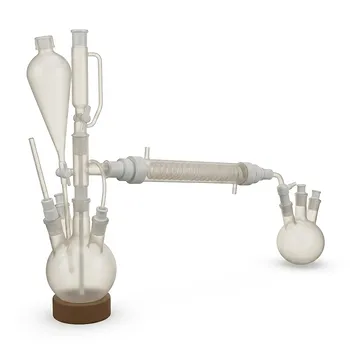
- PTFE Distillation Condensation Apparatus High Temperature Hydrofluoric Acid Resistant Fluorination Reaction Flask
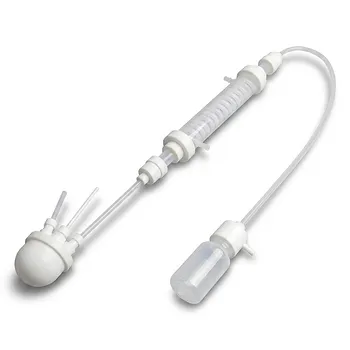
- Corrosion Resistant Hydrogen Fluoride Reflux Apparatus PTFE Flask Condenser Separatory Funnel Collection Bottle High Temperature Laboratory System
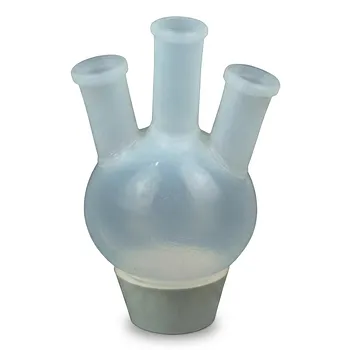
- Custom Corrosion Resistant PFA PTFE Multi Neck Laboratory Reaction Flask GL Standard Mouth Fluoropolymer Flasks
- High Purity 4L PFA Reaction Tank for Proton Exchange Membrane Electrolysis Water Oxygen Separation Systems
- PFA Distillation Flask for Water Quality Alkylmercury Determination and Laboratory Trace Analysis Heating Applications
People Also Ask
- How does the low surface energy of PTFE benefit the condensation process? Boost Heat Transfer and Prevent Fouling
- What structural characteristics provide PTFE fluoropolymer laboratory apparatus with high thermal stability? Strong C-F bonds, dense fluorine shielding, and rigid helical conformation ensure stability during high-temperature analysis.
- How can autopolymerization of TFE gas be prevented during storage and handling? Master TFE safety with oxygen control, inhibitors, and robust system design.
- How do pyrolysis temperature and steam diluent ratios influence tetrafluoroethylene (TFE) conversion and yield in fluoropolymer monomer reaction apparatus? Optimize TFE yield with temperature and steam control
- What impact does thermal annealing and crystallization temperature have on the material properties of custom-machined fluoropolymer apparatus? Optimize Performance with Controlled Thermal Processing