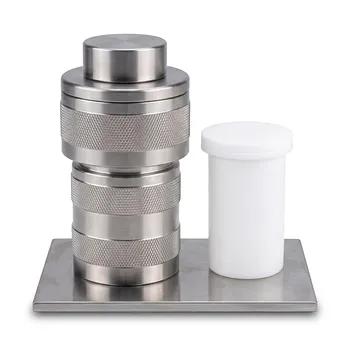
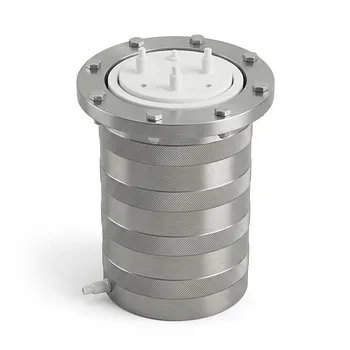
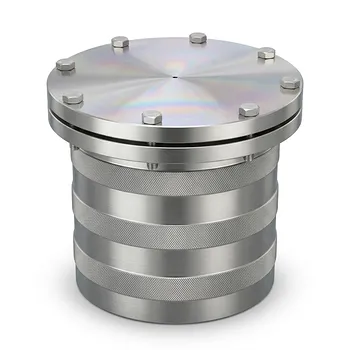
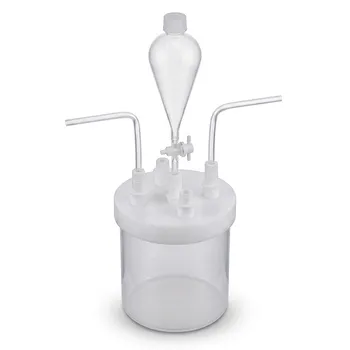
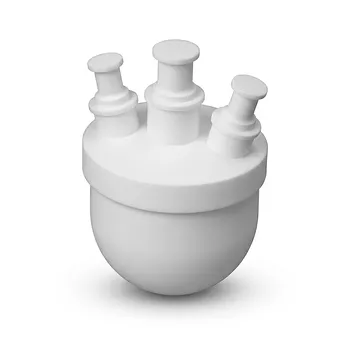
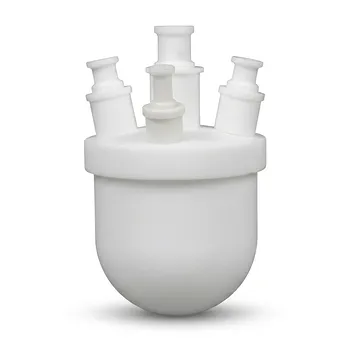
The primary purpose of a closed pressure vessel in synthesizing CuO nanosheets is to create a controlled, high-pressure hydrothermal environment that regulates the phase transformation of precursors. This sealed, constant-volume system allows the reaction temperature to exceed the atmospheric boiling point of the solvent while keeping it in a liquid state. By leveraging the synergy between temperature and pressure, researchers can precisely drive the conversion of copper hydroxide intermediates into copper oxide nanosheets with specific crystalline orientations.
Core Takeaway: A closed pressure vessel enables a high-pressure, liquid-phase environment that is essential for transforming chemical precursors into high-purity CuO nanosheets with precise morphological control and superior catalytic properties.
The Role of High-Pressure Environments
Maintaining Liquid Phase Stability
A sealed vessel ensures that the solvent remains in a liquid phase even when heated significantly above its atmospheric boiling point. This state is critical for hydrothermal synthesis, as it allows for the dissolution and recrystallization of precursors that would otherwise remain solid or decompose differently in a gaseous environment.
Regulating the Chemical Transformation
The pressurized environment facilitates the precise transformation from copper hydroxide (CuOH) intermediates to copper oxide (CuO). This controlled transition is necessary to ensure that the chemical reaction proceeds uniformly throughout the entire solution.
Uniform Thermal Distribution
Compared to atmospheric reduction methods, the closed vessel provides a more uniform and controllable thermal environment. This consistency results in a narrower particle size distribution and higher overall crystallinity in the resulting nanosheets.
Achieving Precision Morphology
Influencing Crystalline Orientation
The pressure within the vessel allows for the anisotropic growth of copper structures along specific crystalline axes. This directional growth is what transforms basic precursors into complex, two-dimensional nanosheets rather than simple spherical particles.
Maximizing Specific Surface Area
Using a pressure vessel facilitates the formation of flake-like morphologies and hierarchical porous structures. These shapes possess a high specific surface area, which is a critical requirement for enhancing the catalytic activity of the material.
Promoting Specific Orientations
The synergistic effect of temperature and pressure enables the selection of specific crystalline orientations. These orientations are often more reactive or stable, providing the final CuO nanosheets with stronger antioxidant capabilities and better performance in technical applications.
Material Purity and Integrity
Preventing Impurity Leaching
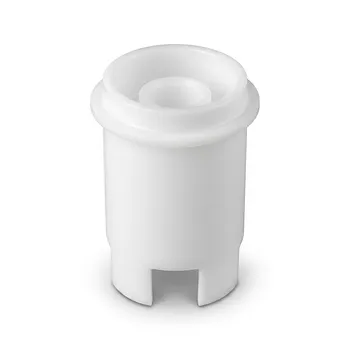
High-performance reaction vessels are typically lined with materials like PTFE (Teflon) or PFA to ensure high chemical stability. These linings prevent impurities from the vessel walls from leaching into the reaction solution, even under highly alkaline conditions.
Chemical Inertness in Harsh Conditions
Synthesis often requires a constant alkaline environment, such as 1 M NaOH, which can be highly corrosive. The use of a closed, chemically inert vessel protects the integrity of the reaction and ensures the high purity of the precursors.
Thermal Stability and Uniformity
The thermal stability of the vessel lining ensures that no degradation products are released at typical reaction temperatures, such as 130°C. This stability guarantees that the resulting nanosheets maintain a uniform morphology without contamination.
Understanding the Trade-offs
Complexity and Safety
Operating a closed pressure vessel requires specialized equipment and strict safety protocols to manage the internal pressure. This adds a layer of complexity compared to open-beaker synthesis, which can be performed with standard laboratory glassware.
Equipment Limitations
The size of the pressure vessel often limits the volume of material that can be produced in a single batch. While suitable for high-quality production, it requires parallelization or larger specialized autoclaves for industrial-scale manufacturing.
Cost and Accessibility
High-purity vessels with PTFE or PFA linings are more expensive than standard reaction containers. Additionally, the need for precise heating systems to maintain constant pressure increases the initial capital investment for the synthesis process.
Making the Right Choice for Your Goal
To determine the necessity of a closed pressure vessel for your synthesis, consider your primary objective:
- If your primary focus is High Catalytic Activity: You must use a pressure vessel to achieve the specific crystalline orientations and high surface area flake-like morphologies required.
- If your primary focus is Material Purity: Utilize a vessel with a PTFE or PFA lining to prevent chemical leaching and ensure the structural integrity of the nanosheets.
- If your primary focus is Environmental Sustainability: Hydrothermal synthesis in a closed vessel is the preferred route, as it avoids the use of highly toxic reducing agents like hydrazine.
- If your primary focus is Structural Uniformity: The pressurized environment is essential for maintaining a narrow particle size distribution and consistent crystallinity across the batch.
The closed pressure vessel is the definitive tool for transitioning from simple chemical precursors to advanced, high-performance copper oxide nanostructures.
Summary Table:
| Feature | Benefit in CuO Synthesis | Role in Process |
|---|---|---|
| High Pressure | Maintains liquid phase above boiling point | Facilitates precursor dissolution & recrystallization |
| PTFE/PFA Lining | Prevents impurity leaching & chemical corrosion | Ensures high purity in harsh alkaline (NaOH) conditions |
| Uniform Heat | Narrow particle size distribution | Regulates the transformation from CuOH to CuO |
| Sealed System | Anisotropic crystalline growth | Drives formation of 2D nanosheets vs. simple spheres |
| Closed Environment | Environmental sustainability | Eliminates the need for toxic reducing agents |
Elevate Your Material Synthesis with KINTEK’s High-Performance Labware
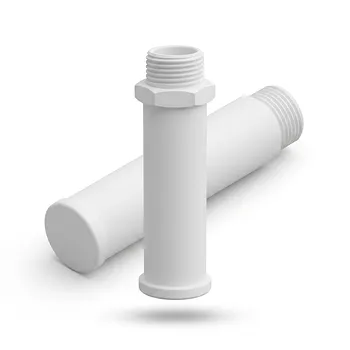
Precision in CuO nanosheet synthesis starts with the right environment. At KINTEK, we specialize in high-performance fluoropolymer solutions designed to withstand the harshest hydrothermal conditions. Whether you need standard PTFE and PFA labware (beakers, crucibles, reagent bottles) or advanced reaction apparatus like hydrothermal synthesis liners and microwave digestion vessels, our products ensure zero contamination and absolute chemical inertness.
From everyday consumables—like stirring bars, O-rings, and tubing—to custom CNC-fabricated non-standard parts and complex fluid transfer components, we provide everything required for sophisticated material research. Partner with KINTEK for bespoke laboratory setups and high-volume orders tailored to your specific research goals.
Ready to optimize your synthesis process? Contact us today to discuss your custom requirements!
References
- Chenbao Lu, Tianfu Wang. Heteroarchitectural Gas Diffusion Layer Promotes CO<sub>2</sub> Reduction Coupled with Biomass Oxidation at Ampere‐Level Current Density. DOI: 10.1002/ange.202423263
This article is also based on technical information from Kintek Knowledge Base .
Related Products
- PTFE Lined High Pressure Digestion Vessel 50ml High Temperature Hydrothermal Synthesis Tank
- High Pressure Custom TFM Reactor Stainless Steel Outer Vessel PTFE Inner Cup for Corrosive Synthesis
- High Pressure PTFE Digestion Vessel Inner Cup Holder Custom Corrosion Resistant Low Background Teflon
- Custom PTFE Digestion Vessel for Microwave and Graphite Digesters with Acid Removal for Trace Analysis
- Custom High Purity TFM Microwave Digestion Vessel 100ml for Analytical Laboratory Sample Preparation
People Also Ask
- What are the benefits of using a PTFE-lined vessel for carbon-sulfur cathode treatment? Maximize Purity & Performance
- Why are PTFE-lined pressure digestion vessels required for the preparation of Ag/CeO2 catalysts? Purity & Performance
- What is the function of high-pressure PTFE digestion vessels in mineral analysis? Optimize Sample Mineralization
- What safety features are typically incorporated into high-pressure PTFE digestion vessel designs? Ensure Lab Safety
- What is the function of PTFE lined high-pressure vessels in g-C3N4 synthesis? Achieve High-Purity Material Growth