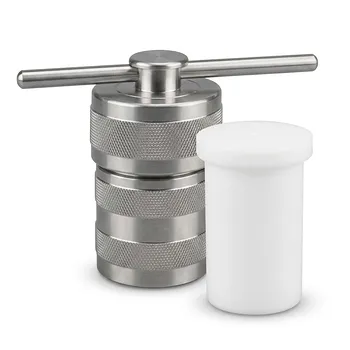
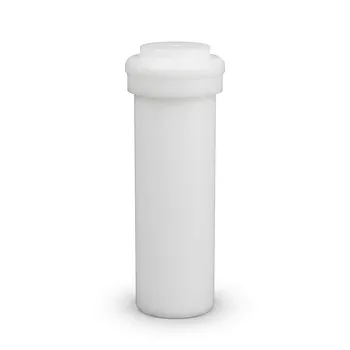
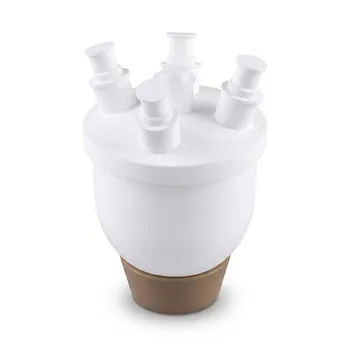
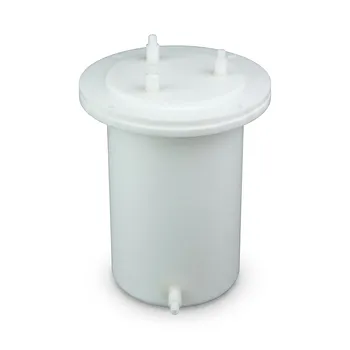
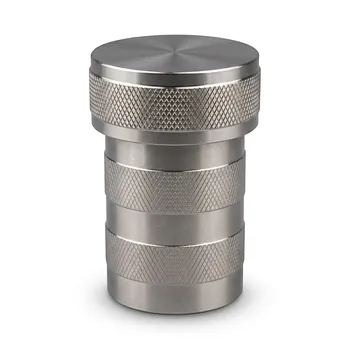
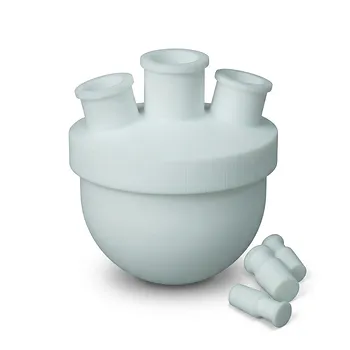
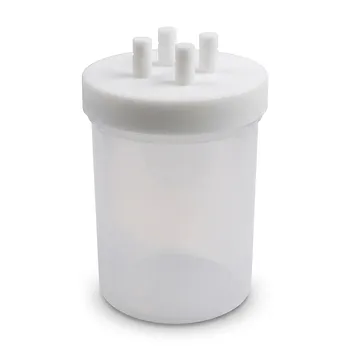
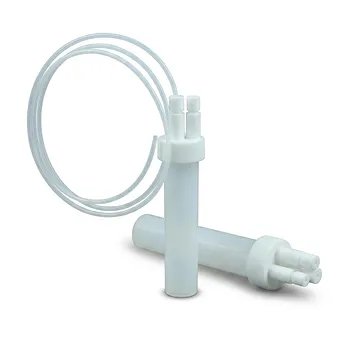
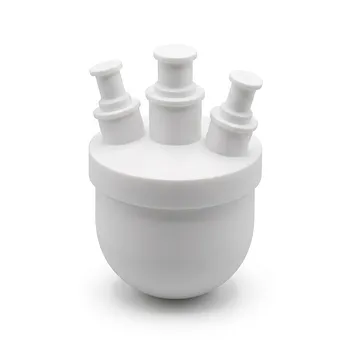
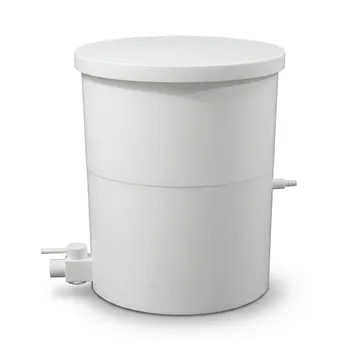
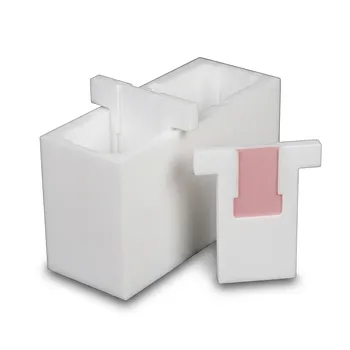
The primary function of a high-pressure reaction vessel liner in brookite titanium dioxide synthesis is to provide a chemically inert barrier that isolates corrosive reagents from the metal reactor walls. By resisting aggressive chemicals like sulfuric acid and potassium hydroxide at temperatures up to 220°C, the liner prevents metal ion contamination from leaching into the reaction. This isolation is fundamental to ensuring the phase purity, crystal quality, and precise morphology of the resulting brookite nanoparticles.
Core Takeaway: The liner acts as a critical safeguard that maintains a high-purity environment under extreme thermal and chemical stress. Without this inert interface, metal impurities would compromise the titanium dioxide's crystal structure and inhibit the formation of the desired brookite phase.
Maintaining Chemical and Phase Purity
Prevention of Metal Ion Leaching
During hydrothermal synthesis, the metal walls of the outer pressure vessel are susceptible to corrosion from the reaction slurry. The liner serves as a physical shield, ensuring that elements like iron or chromium from the stainless steel shell do not enter the solution.
Ensuring Phase-Specific Crystallization
Brookite is a specific crystalline phase of titanium dioxide that is sensitive to its chemical environment. By preventing impurity interference, the liner allows the precursors—such as titanium sulfate—to transform into pure brookite without the risk of forming unwanted secondary phases or amorphous clusters.
Protecting the Structural Integrity of the Reactor
The reagents used in this process, including strong bases like sodium hydroxide and acidic precursors, are highly aggressive. The liner protects the expensive high-pressure vessel from pitting and structural weakening, extending the equipment's lifespan and ensuring operational safety.
Mechanical and Thermal Performance
Facilitating Autogenous Pressure
The liner resides within a sealed system where heating the solvent beyond its boiling point generates significant internal pressure. This autogenous pressure is necessary to drive the chelation and dehydration reactions required to build the titanium dioxide framework.
Withstanding High-Temperature Environments
Standard liners, typically made of PTFE (polytetrafluoroethylene), are engineered to remain stable at temperatures reaching 220°C. This thermal resistance allows the synthesis to reach the energy thresholds necessary for high crystallinity.
Enhancing Product Recovery
The non-stick properties of the liner material facilitate the efficient collection of synthesized micro- and nano-powders after the reaction. This minimizes material loss and simplifies the cleaning process, preventing cross-contamination between different synthesis batches.
Understanding the Trade-offs and Limitations
Temperature and Pressure Thresholds
While PTFE is highly effective, it has a hard thermal ceiling; exceeding 220°C can lead to material deformation or the release of toxic vapors. Users must balance the need for high-temperature kinetics with the physical limits of the liner material.
Thermal Expansion Discrepancies
The liner and the metal outer vessel expand at different rates when heated. If the liner is not correctly sized or if the cooling process is too rapid, the liner can collapse or become permanently "vacuum-sealed" to the vessel walls, making removal difficult.
Risk of Permeation
Under extreme pressure, some small molecules can permeate the liner material over time. This requires regular inspection for "blistering" or discoloration, which indicates that the liner's integrity is compromised and contamination may occur.
How to Apply This to Your Synthesis Project
When selecting or using a liner for hydrothermal brookite synthesis, consider your specific experimental parameters to ensure the best results.
- If your primary focus is maximum phase purity: Ensure the use of a high-purity PTFE or PFA liner and perform a "blank" cleaning run with dilute acid before the actual synthesis to remove residual surface ions.
- If your primary focus is high-temperature kinetics (above 220°C): Investigate alternative liner materials like PPL (polyphenylene polymers) or quartz, as standard PTFE may fail or deform at these elevated ranges.
- If your primary focus is nanoparticle recovery and yield: Prioritize liners with a high-polish internal finish and utilize ultrasonic cleaning after each run to ensure no nano-seed crystals remain stuck to the walls.
The liner is not merely a container, but an active participant in creating the sterile, high-energy environment required for advanced material synthesis.
Summary Table:
| Feature | Primary Function | Benefit to Synthesis |
|---|---|---|
| Chemical Isolation | Barrier between reagents and metal walls | Prevents metal ion leaching and contamination |
| Phase Control | Maintains an inert environment | Ensures pure brookite crystallization without impurities |
| Reactor Protection | Guards against acidic/alkaline corrosion | Extends pressure vessel lifespan and ensures safety |
| Thermal Stability | Operates safely up to 220°C (PTFE) | Facilitates high-energy autogenous pressure reactions |
| Non-stick Surface | High-polish fluoropolymer finish | Maximizes nanoparticle recovery and simplifies cleaning |
Elevate Your Material Synthesis with KINTEK’s Precision Fluoropolymer Engineering
Achieving the perfect crystal phase requires uncompromising purity. At KINTEK, we specialize in high-performance fluoropolymer solutions designed for the most demanding hydrothermal environments. From high-purity PTFE and PFA liners to advanced hydrothermal synthesis vessels and microwave digestion liners, we provide the inert interface your research depends on.
Our expertise extends across the entire laboratory spectrum:
- Core Labware: Beakers, crucibles, reagent bottles, and digestion tubes.
- Fluid & Filtration: High-purity tubing, fittings, valves, and specialized filtration tools.
- Advanced Apparatus: Custom electrochemical cells, battery testing fixtures, and microchannel reactors.
Whether you need standard consumables like stirring bars and O-rings or bespoke, CNC-machined components tailored to your unique reactor geometry, KINTEK delivers end-to-end fabrication with an absolute focus on high-performance materials.
Ensure the integrity of your next synthesis. Contact our technical team today to discuss your custom labware requirements.
References
- Luke T. Coward, Oksana Love. Insights into Successful Hydrothermal Synthesis of Brookite TiO <sub>2</sub> Particles: From Micro to Nano. DOI: 10.1021/acsomega.5c06112
This article is also based on technical information from Kintek Knowledge Base .
Related Products
- 5ml High Pressure PTFE Digestion Vessel for Geological Mineral Analysis Corrosion Resistant Polytetrafluoroethylene TFM Digestion Inner Liner
- Custom TFM Reaction Vessel with Stainless Steel Jacket and PTFE Inner Cup for High Corrosion Resistance
- PTFE Lined High Pressure Digestion Vessel 50ml High Temperature Hydrothermal Synthesis Tank
- High Purity TFM Microwave Digestion Vessels for Trace Analysis and Custom Sample Preparation Systems
- High Pressure Custom TFM Reactor Stainless Steel Outer Vessel PTFE Inner Cup for Corrosive Synthesis
People Also Ask
- What safety features are typically incorporated into high-pressure PTFE digestion vessel designs? Ensure Lab Safety
- Why is a PTFE liner utilized in V2O5 synthesis? Ensure Chemical Purity and Corrosion Resistance
- What is the primary function of a PTFE liner? Key Benefits for Purity and Safety in Hydrothermal Synthesis
- What is the role of a PTFE liner in Bi2O3–TiO2 synthesis? Ensure High Purity and Controlled Crystal Growth
- What are the benefits of using a PTFE-lined vessel for carbon-sulfur cathode treatment? Maximize Purity & Performance