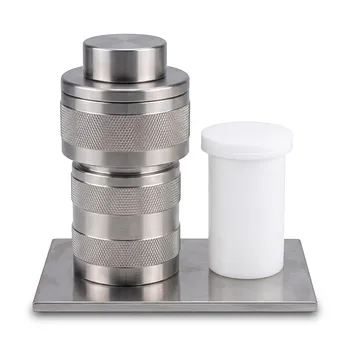
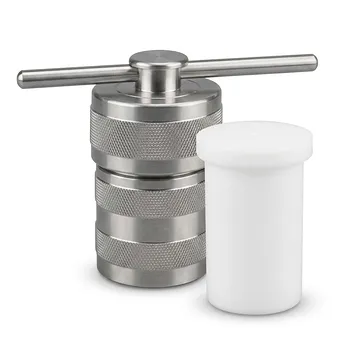
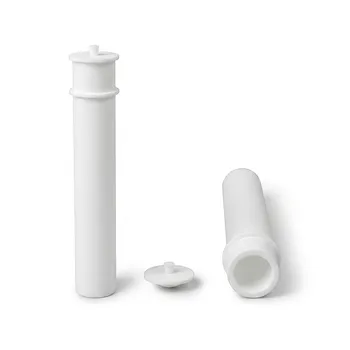
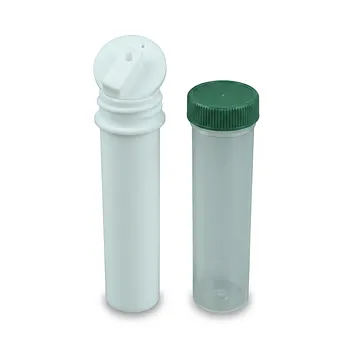
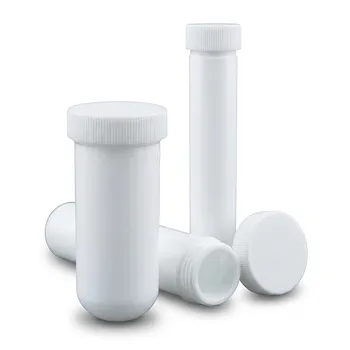
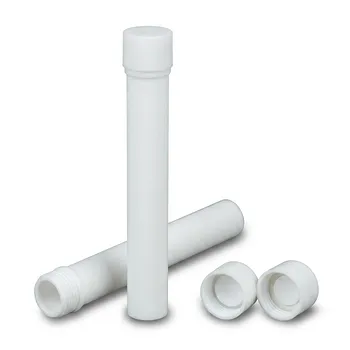
PTFE-lined stainless steel digestion vessels are engineered to facilitate the decomposition of difficult-to-dissolve samples by creating a high-pressure, high-temperature environment.
These "digestion bombs" combine the mechanical strength of a stainless steel outer shell with the extreme chemical inertness of a Polytetrafluoroethylene (PTFE) liner. This synergy allows aggressive acids to operate at temperatures and pressures well beyond their boiling points, ensuring the complete mineralization of complex matrices while preventing the loss of volatile elements.
The core function of these vessels is to provide a closed-system environment that accelerates chemical reactions through elevated internal pressure (typically 7 to 12.5 MPa). This process allows for the total dissolution of resistant minerals and organic materials while maintaining sample integrity for sensitive elemental analysis.
Synergistic Design: Steel Meets PTFE
Structural Integrity Under Pressure
The stainless steel outer jacket provides the mechanical support necessary to withstand the intense internal pressures generated during heating. Without this reinforced shell, the PTFE liner would deform or rupture as internal pressures climb between 7 and 12.5 MPa.
Chemical Resistance and Purity
The internal PTFE liner acts as the primary reaction container, offering superior resistance to strong oxidizing acids like nitric acid, hydrochloric acid, and hydrogen peroxide. Its exceptional chemical inertness ensures extremely low heavy metal background levels, preventing the leaching of interfering elements into the sample.
Protection of the Outer Shell
Beyond holding the sample, the PTFE liner serves as a corrosion barrier for the stainless steel jacket. By shielding the metal from aggressive chemical reagents, the liner extends the lifespan of the vessel and prevents structural degradation.
Enhancing Analytical Precision
Digestion of Resistant Matrices
The high-pressure environment significantly enhances the efficiency of acid attack on resistant minerals such as zircon and chromite. This method shortens digestion times compared to open-vessel techniques, which often struggle to break down these robust crystal structures.
Retention of Volatile Elements
In an open system, elements with low boiling points can escape as gases, leading to inaccurate results. The closed-vessel design effectively prevents the loss of volatile elements such as arsenic (As), antimony (Sb), and mercury (Hg), ensuring they remain in the solution for analysis.
Mineralization of Organic Samples
For biological and environmental samples, these vessels facilitate complete mineralization of organic chains into clear, inorganic liquids. This is critical for techniques like ICP-MS or ICP-OES, where complex organic matrices can interfere with plasma stability or cause clogging.
Understanding Technical Trade-offs
Temperature and Pressure Limitations
While robust, PTFE has a thermal limit (typically around 200°C to 240°C) beyond which it can become soft and lose its shape. Users must strictly monitor oven temperatures to prevent the liner from "creeping" or failing under the high internal pressures.
Cooling and Handling Requirements
Because these vessels operate under extreme pressure, they cannot be opened immediately after heating. A mandatory cooling period is required to allow internal pressures to subside, which can introduce bottlenecks in high-throughput laboratory workflows.
Potential for Memory Effects
Although PTFE is highly inert, it can be porous at a microscopic level, leading to potential adsorption of certain trace elements. This requires rigorous cleaning protocols, such as "blank" acid digestions, to prevent cross-contamination between different sample batches.
Making the Right Choice for Your Goal
To maximize the effectiveness of high-pressure acid digestion, align your vessel usage with your specific analytical objectives:
- If your primary focus is Analyzing Volatile Metals: Use these closed vessels exclusively to ensure that elements like Mercury or Arsenic do not evaporate during the heating process.
- If your primary focus is Geological Mineralogy: Ensure the stainless steel jacket is in peak condition to handle the high pressures (up to 12.5 MPa) required to dissolve resistant minerals like zircon.
- If your primary focus is Ultra-Trace Element Analysis: Prioritize high-purity PTFE liners and implement a pre-cleaning digestion cycle to eliminate any potential leachable contaminants.
- If your primary focus is Hydrothermal Synthesis: Utilize the vessel’s stable environment to provide the consistent pressure and heat necessary for the growth of nanomaterials and crystals.
By mastering the balance between mechanical pressure and chemical resistance, these vessels serve as an indispensable tool for achieving total sample dissolution in modern analytical chemistry.
Summary Table:
| Feature | Technical Specification | Benefit to Lab Analysis |
|---|---|---|
| Outer Shell | Reinforced Stainless Steel | Withstands internal pressures of 7 to 12.5 MPa |
| Inner Liner | High-Purity PTFE | Chemical inertness and ultra-low heavy metal background |
| Environment | Closed-System Design | Prevents loss of volatile elements like Hg, As, and Sb |
| Applications | Acid Digestion & Synthesis | Total dissolution of zircon, chromite, and organics |
| Temp Limit | 200°C - 240°C | Facilitates reactions well beyond atmospheric boiling points |
Optimize Your Trace Analysis with KINTEK’s Fluoropolymer Expertise
Achieving precise analytical results starts with the integrity of your labware. KINTEK specializes in high-performance PTFE and PFA solutions designed to withstand the most aggressive chemical environments.
Whether you need everyday basic labware (beakers, crucibles, reagent bottles), high-purity trace analysis instruments, or comprehensive fluid transfer components (tubing, fittings, valves), we provide the durability your research demands. Our range extends from sample prep and filtration tools (separatory funnels, filters, tweezers) and general consumables (O-rings, gaskets, stirring bars) to advanced reaction apparatus like custom hydrothermal synthesis liners, microwave digestion vessels, and electrochemical cells.
Backed by end-to-end custom CNC fabrication, KINTEK is equipped to deliver everything from high-volume orders to complex, non-standard machined parts tailored to your specific setup.
Ready to elevate your laboratory’s performance? Contact us today to discuss your custom requirements!
References
- Philip Robinson. <scp>GGR</scp> Handbook of Rock and Mineral Analysis Chapter 2 (Part 1) Analysis of Geological Materials – 1: Sample Preparation Methods. DOI: 10.1111/ggr.12555
This article is also based on technical information from Kintek Knowledge Base .
Related Products
- PTFE Lined High Pressure Digestion Vessel 50ml High Temperature Hydrothermal Synthesis Tank
- 5ml High Pressure PTFE Digestion Vessel for Geological Mineral Analysis Corrosion Resistant Polytetrafluoroethylene TFM Digestion Inner Liner
- Corrosion Resistant PTFE Digestion Vessel Low Background Straight Walled Boiling Bottle for Trace Analysis
- Custom 100ml PTFE Digestion Tube for Heavy Metal Trace Analysis and High Temperature Acid Digestion
- PTFE Digestion Tubes Teflon Material Chemical Resistant Laboratory Vessels for Trace Metal Analysis
People Also Ask
- What are the benefits of using a PTFE-lined vessel for carbon-sulfur cathode treatment? Maximize Purity & Performance
- Why are PTFE-lined pressure digestion vessels required for the preparation of Ag/CeO2 catalysts? Purity & Performance
- What safety features are typically incorporated into high-pressure PTFE digestion vessel designs? Ensure Lab Safety
- What is the function of high-pressure PTFE digestion vessels in mineral analysis? Optimize Sample Mineralization
- What is the function of PTFE lined high-pressure vessels in g-C3N4 synthesis? Achieve High-Purity Material Growth