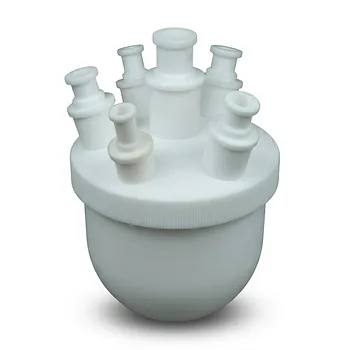
The key distinction is how TFE particles are controlled during polymerization. Suspension polymerization uses vigorous agitation and little or no surfactant, producing larger granular PTFE resin for compression molding and machining. Emulsion, or dispersion, polymerization uses milder agitation and fluorinated surfactants to maintain very small polymer particles, producing aqueous dispersions or fine powders for coatings, paste extrusion, and thin-walled products.
Suspension polymerization generally provides the cleaner starting route for solid, machined laboratory components, while emulsion polymerization is essential for dispersions and fine-powder applications but requires tighter control of surfactant residues. Resin purity matters because trace extractables from processing aids, metals, initiators, or other contaminants can become analytical background and compromise reproducibility.
How the Two Polymerization Routes Differ
Suspension polymerization produces granular resin
In suspension polymerization, TFE reacts in an aqueous medium under vigorous agitation. The growing polymer precipitates from the water as relatively large particles or reactor beads.
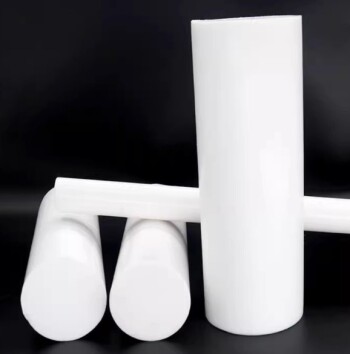
The resulting granular PTFE resin is commonly converted into preforms, blocks, rods, billets, and other shapes by compression molding. These forms can then be CNC-machined into digestion vessels, valve bodies, fittings, tanks, and other solid laboratory components.
Emulsion polymerization produces fine particles or dispersion
Emulsion polymerization uses milder agitation and a higher concentration of surfactant to keep very small PTFE particles dispersed in water. The product may remain as a liquid dispersion or be coagulated and dried into fine powder.
This fine-particle material is suited to applications such as coatings, impregnated materials, paste-extruded tubing, liners, and other thin-walled products. It is not generally the primary form used to machine large, solid PTFE laboratory vessels.
Particle size determines processing behavior
Emulsion polymerization produces sub-micron particles, while suspension polymerization produces much larger, granular material. That difference affects how the resin consolidates, flows, compacts, and develops its final microstructure.
For machined labware, granular resin supports the formation of dense, homogeneous preforms with the structural integrity needed for machining complex geometries.
Why Surfactants Matter
Historical emulsion aids can become contamination sources
Fluorinated surfactants such as APFO/PFOA-related processing aids were historically used in emulsion polymerization. Their environmental persistence and stringent regulatory limits make residual contamination a significant concern.
Modern manufacturing may use alternative processing methods and surfactants, but “fluoropolymer” alone does not prove that a product is free from relevant processing residues. The manufacturer’s resin, processing, and compliance documentation must be evaluated.
Suspension polymerization reduces one contamination pathway
Suspension polymerization generally requires little or no surfactant, so it avoids much of the surfactant-related residue burden associated with traditional emulsion processing. This makes it particularly attractive for solid labware used in trace analysis.
However, suspension polymerization is not automatically impurity-free. Water quality, initiator residues, reactor contamination, metals, telogenic agents, and post-polymerization handling can also affect resin purity.
Why Resin Purity Is Critical in Analytical Labware
Labware can contribute measurable background
In trace analysis, the sample may contain contaminants at extremely low concentrations. A small amount of organic extractable, metal ion, surfactant residue, or processing fragment released from a vessel can therefore appear as a false sample signal.
The problem is especially important for digestion vessels, cleaning tanks, tubing, valves, fittings, and fluid-handling components, because these surfaces may contact aggressive chemicals, elevated temperatures, or samples for extended periods.
Purity protects analytical reproducibility
High-purity PTFE and PFA are selected for their chemical inertness and low extractables. When the resin and manufacturing process are well controlled, the labware contributes minimal background and allows measurements to reflect the sample rather than the container.
This improves blank performance, detection limits, recovery studies, and result-to-result consistency.
Trace metals and organics have different consequences
Residual metals can interfere with elemental analysis or contaminate samples during digestion. Organic residues can affect chromatographic, spectrometric, or other trace-organic measurements.
Contaminants can also cause discoloration, reduce thermal stability, or increase leaching under demanding conditions. Purity must therefore address both inorganic contamination and organic extractables.
Choosing the Resin for the Application
Solid machined components favor granular resin
For custom vessels, beakers, valve bodies, tanks, and structural apparatus, granular PTFE produced by suspension polymerization is generally the appropriate starting material. It can be compression-molded into dense stock and machined to the required dimensions.
The quality of consolidation remains important. Resin morphology, compaction, sintering, and machining practices all influence surface smoothness, density, mechanical reliability, and cleanability.
Flexible and thin-walled products favor fine powder
Fine powder from emulsion polymerization is used in processes such as paste extrusion, which can produce thin-walled tubing and liners. Dispersion PTFE is also used for coatings and impregnated materials.
These applications may require emulsion processing, but the finished product must still be assessed for residual surfactants, extrusion aids, and other potential leachables.
PFA requires the same purity discipline
PFA laboratory products can provide useful melt-processable fluoropolymer characteristics, but the same contamination principles apply. Product purity depends on the polymer grade, additives, processing history, cleaning, and verification—not simply on the product name.
For sensitive work, select products with clear documentation covering composition, processing aids, extractables, and relevant contaminant controls.
Understanding the Trade-offs
Suspension processing is not a universal solution
Suspension polymerization is advantageous for minimizing surfactant-related contamination in solid PTFE stock, but it is less suited to producing stable aqueous dispersions or the fine powders required for paste extrusion and coatings.
The correct route depends on the finished geometry and manufacturing process.
“PFOA-free” does not mean “contaminant-free”
Eliminating PFOA-related processing aids addresses an important environmental and analytical concern, but it does not guarantee the absence of all extractables. Other surfactants, processing aids, initiator residues, metals, and manufacturing contaminants may still matter.
A credible specification should therefore consider broader purity and leachables performance, not one chemical designation alone.
Machining can affect cleanliness
Even high-purity resin can be compromised by dirty tooling, lubricants, shop residues, or inadequate post-machining cleaning. The final component must be handled and cleaned in a way that preserves the resin’s intended purity.
For critical applications, resin selection and fabrication controls should be treated as one contamination-control system.
Application claims need verification
Statements such as “ultra-pure” or “trace-analysis grade” should be supported by test data or a defined quality specification. Useful evidence may include extractables testing, blank testing, trace-metal data, process declarations, and lot traceability.
Making the Right Choice for Your Goal
The practical decision should match the required product form and the analytical contamination risk.
- If your primary focus is solid, machined laboratory equipment: Prefer high-purity granular PTFE made through a controlled, low- or no-surfactant suspension process, followed by validated fabrication and cleaning.
- If your primary focus is tubing, liners, coatings, or dispersions: Emulsion-derived material may be appropriate, but require documentation and testing for surfactant residues, extrusion aids, and other extractables.
- If your primary focus is trace elemental or organic analysis: Specify low-background resin and finished-product performance, including relevant blank, leachables, and trace-metal requirements.
- If your primary focus is environmental compliance: Confirm that the manufacturer’s current process is free of PFOA-related processing aids and identify what alternatives or residual controls are used.
Selecting the right polymerization route—and verifying the purity of the finished product—helps ensure that laboratory equipment protects the measurement instead of becoming part of it.
Summary Table:
| Aspect | Suspension Polymerization | Emulsion Polymerization |
|---|---|---|
| Agitation | Vigorous | Mild |
| Surfactant | Little or none | High concentration |
| Particle Size | Large granular | Sub-micron |
| Product Form | Granular resin | Aqueous dispersion or fine powder |
| Applications | Compression molded parts, machined labware | Coatings, paste-extruded tubing, thin-walled products |
| Purity Concerns | Lower surfactant residues, but other contaminants possible | Higher risk of surfactant residues (e.g., PFOA) |
Ensure your analytical labware meets the highest purity standards. At KINTEK, we specialize in high-performance fluoropolymers (PTFE and PFA) with precision CNC machining capabilities. Whether you require custom digestion vessels, tubing, fittings, or valves, our products are designed to minimize contamination and enhance reproducibility. Contact our experts today to discuss your requirements and discover how our solutions can support your trace analysis workflows. Contact us now.
Related Products
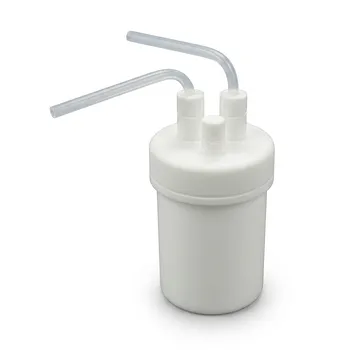
- Custom PTFE Continuous Reaction Bottles Virgin Fluoropolymer High Purity Low Background Synthesis Vessels
- Custom PTFE Teflon Balls for Advanced Industrial Applications
- Custom PTFE Wide Mouth Reagent Reaction Bottle Corrosion Resistant High Temperature Large Capacity Straight Body Laboratory Vessel
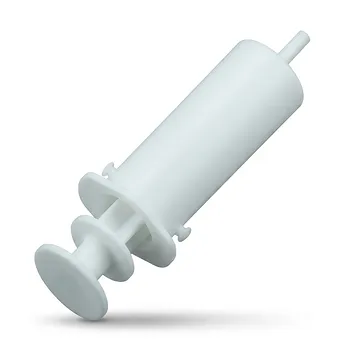
- High Purity Laboratory Grade PTFE Syringe Chemical Resistant Fluoropolymer Injector for Trace Analysis
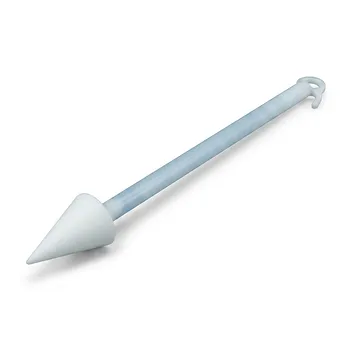
- High Temperature PTFE Solid Sampler Corrosion Resistant White Reusable Biopharmaceutical Sampling Tool
People Also Ask
- What reaction vessel and fluid handling considerations are necessary for living cationic polymerization of fluorinated monomers involving Lewis acid catalysts? Key design and safety tips
- Ion Activation Reaction Vessel Requirements: Why PTFE is Critical for Membrane Performance
- How do perfluorinated solvent environments influence the selection of reaction vessels and fluid handling components in nonaqueous emulsion polymerizations? Choose fluoropolymer materials.
- Why are high-purity PTFE or PFA reaction vessels recommended for the synthesis of PANI-TiC hybrid materials? - Guide
- Why are fluoroplastic (PTFE) reaction vessels recommended for Methylene Blue (MB) adsorption kinetic experiments?