Terminal perfluoroalkyl groups such as C8F17 can transform a polymer solution from a viscous liquid into a physically crosslinked gel. Their strong hydrophobic and lipophobic interactions promote aggregation of the fluorinated chain ends, and in sufficiently concentrated solutions these aggregates connect polymer chains into a three-dimensional network. The result is often a temperature-responsive sol-gel transition: the material can gel near ambient temperature while an otherwise comparable non-fluorinated polymer remains merely viscous.
The central effect is associative physical crosslinking: perfluoroalkyl end groups cluster into fluorinated domains that temporarily connect polymer chains, changing both the solution’s phase behavior and its mechanical response.
How Perfluoroalkyl End Groups Change Polymer Solutions
Fluorinated Chain Ends Form Associative Domains
A terminal group such as C8F17 has both low polarizability and strong resistance to interaction with conventional hydrocarbon or polar media. These hydrophobic and lipophobic characteristics make the end groups associate with one another rather than remain uniformly dispersed in solution.
The polymer backbone supplies chain connectivity, while the perfluoroalkyl ends act as associating junctions. Each fluorinated domain can therefore link multiple polymer chains.
The Network Produces Physical Gelation
When the polymer concentration is high enough, the end-group aggregates become interconnected throughout the solution. This creates a three-dimensional physical network that immobilizes a substantial portion of the solvent and gives the material solid-like behavior.
This network is physical rather than covalent. The associations can break and reform, allowing the gel to respond to temperature, concentration, solvent quality, and applied stress.
Gelation Depends on More Than End-Group Chemistry
Perfluoroalkyl functionalization does not guarantee gelation under every condition. The outcome depends on factors such as polymer concentration, molecular weight, number of fluorinated ends per chain, solvent compatibility, and temperature.
A dilute solution may show only increased viscosity or micelle-like aggregation. Gelation generally requires enough chains and associative groups to form a sample-spanning network.
How Functionalization Alters Phase Behavior
It Introduces Temperature-Responsive Sol-Gel Transitions
The balance between fluorinated end-group association and solvent-mediated mixing can change with temperature. As this balance shifts, the material may transition between a flowing sol and a mechanically connected gel.
The transition temperature is not universal. It is set by the polymer architecture, solvent, concentration, and strength of the fluorous associations.
It Can Separate Fluorinated and Non-Fluorinated Environments
Perfluoroalkyl groups are chemically distinct from both hydrocarbon segments and many common solvents. Their aggregation can therefore produce microphase separation or segregated fluorinated domains, even when the polymer does not contain a permanently crosslinked block structure.
This segregation changes the solution’s viscosity, transparency, relaxation behavior, and resistance to flow. Depending on the formulation, it may appear as reversible association rather than macroscopic precipitation.
It Creates Reversible, Not Permanent, Connectivity
Because the network is held together by intermolecular association, the material can recover after deformation as the end groups reassociate. This distinguishes the system from a covalent gel, whose network topology is fixed after crosslinking.
That reversibility is useful when processing requires flow followed by stabilization. It also means the material’s properties can vary during heating, cooling, dilution, or exposure to a competing solvent.
Why This Matters for Fluoropolymer Applications
Enhanced Surface Repellency
Perfluoroalkyl groups tend to reduce surface energy when they are present at or migrate toward an interface. This can improve resistance to wetting by water, oils, and other low-surface-tension liquids.
The effect is most relevant when the fluorinated groups are accessible at the surface. Chain-end functionalization can contribute to this behavior, but the final surface performance also depends on morphology, processing, orientation, and the chemical composition of the full material.
More Stable Physical Networks
Fluorous end-group association can reinforce a polymer solution or soft material without requiring irreversible chemical curing. The resulting network can provide higher viscosity, dimensional stability, and resistance to sagging or flow under selected conditions.
This is valuable for coatings, sealant-like formulations, and processing aids that must be applied as liquids but retain structure afterward.
Compatibility With Demanding Environments
Fluoropolymer systems are selected for their chemical resistance, low surface energy, and performance across demanding operating conditions. Adding fluorous terminal groups can extend these advantages into the solution or network structure by promoting segregation into robust fluorinated domains.
This can support the manufacture of high-purity fluid-transfer components, protective coatings, and custom laboratory apparatus, particularly where contamination control, chemical resistance, and nonwetting behavior are important.
Processing Flexibility
A physically associating system can be easier to process than a permanently crosslinked material. It may flow under conditions that disrupt the fluorous associations, then regain viscosity or gel strength when the associations reform.
That behavior can support coating, casting, dispensing, and other manufacturing operations where both processability and final stability are required.
Understanding the Trade-offs
Gelation Can Reduce Processability
The same associations that stabilize a gel can make a formulation difficult to pump, coat, or mix. If the fluorinated network forms too strongly or at too high a temperature, it may interfere with manufacturing.
Formulations therefore need a controlled balance between flow during processing and network strength during use.
The Phase Transition May Be Sensitive to Formulation
Small changes in concentration, solvent quality, molecular weight, or end-group content can shift the sol-gel transition. Performance measured in one solution may not transfer directly to another.
A useful formulation must be characterized under its actual temperature, concentration, and shear conditions rather than evaluated solely from the presence of a C8F17 group.
Physical Gels Are Not Equivalent to Covalent Networks
Reversible fluorous associations can relax over time and may weaken under dilution or exposure to solvents that disrupt aggregation. They generally provide less permanent dimensional stability than chemical crosslinking.
The benefit is reversibility; the limitation is that network strength is condition-dependent.
Surface Performance Requires Interfacial Accessibility
A fluorinated end group buried inside the bulk polymer will not provide the same repellency as one exposed at the surface. Processing history and phase morphology determine whether the terminal groups actually enrich the interface.
For this reason, bulk fluorine content alone is not a reliable predictor of surface behavior.
Making the Right Choice for Your Goal
The appropriate use of terminal perfluoroalkyl functionalization depends on whether the primary requirement is reversible rheology, surface performance, or both.
- If your primary focus is physical gelation: Use a sufficiently concentrated, end-functionalized polymer system and tune temperature, solvent quality, and molecular weight to create a connected but reversible fluorous network.
- If your primary focus is temperature-responsive behavior: Characterize the sol-gel transition across the intended operating range, because the transition depends strongly on concentration, solvent, and polymer architecture.
- If your primary focus is surface repellency: Confirm that the perfluoroalkyl groups are accessible at the interface; terminal functionalization alone does not guarantee optimal surface enrichment.
- If your primary focus is fluoropolymer processing: Exploit the reversible network for flow during manufacture and stabilization during use, while checking that gel strength does not compromise pumping, coating, or molding.
- If your primary focus is high-purity equipment or protective coatings: Evaluate repellency, chemical resistance, extractables, and long-term network stability together rather than optimizing only one property.
Terminal C8F17 groups are valuable because they couple fluorous surface chemistry with reversible intermolecular networking, allowing polymer solutions to gain controllable gelation, altered phase behavior, and application-specific fluoropolymer performance.
Summary Table:
| Effect | Description | Benefit |
|---|---|---|
| Associative crosslinking | C8F17 groups cluster, linking chains into reversible networks | Enables sol-gel transitions |
| Temperature responsiveness | Gelation depends on temperature, concentration, solvent | Allows processing flexibility |
| Microphase separation | Fluorous domains segregate from non-fluorinated parts | Enhances surface repellency |
| Reversible connectivity | Network breaks/reforms under conditions | Facilitates processing and recovery |
| Surface energy reduction | End groups migrate to interface, lowering surface energy | Improves water/oil repellency |
| Network stability | Physical crosslinks provide dimensional stability | Maintains structure in coatings, sealants |
Unlock the full potential of your fluoropolymer solutions with KINTEK's high-performance PTFE/PFA products. Our custom manufacturing and expert engineering help you leverage reversible gelation and surface properties for innovative applications. Whether you need labware, fluid handling components, or custom parts, we deliver precise, reliable solutions. Contact us today to discuss how our advanced fluoropolymer expertise can enhance your formulations.
Related Products
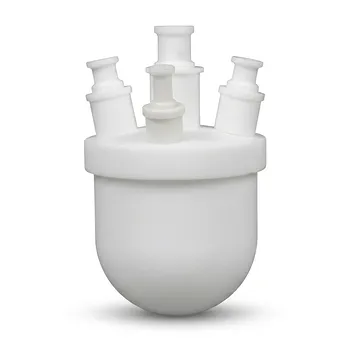
- Custom PTFE Flask 250ml High Purity Fluoropolymer Laboratory Vessel for Chemical Research
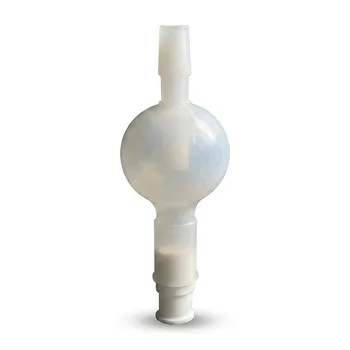
- High Purity PFA Chromatography Column with Collection Bottle Corrosion Resistant Fluoropolymer Filtration System for Trace Analysis
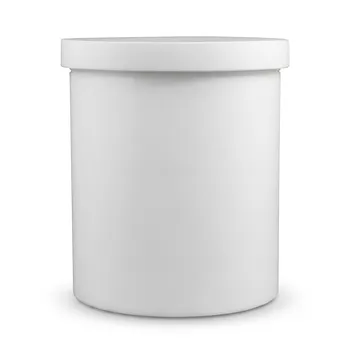
- Custom PTFE Reaction Tank Corrosion Resistant Fluoropolymer Chemical Processing Barrel 10L 20L 30L
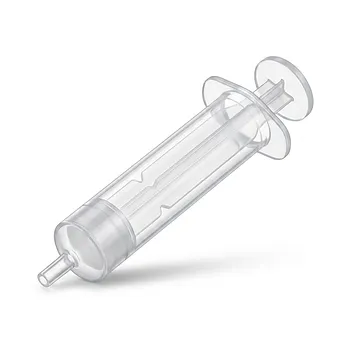
- Corrosion Resistant PFA Syringe Translucent Visual Fluoropolymer Labware 10ml Chemical Handling Tool
- Custom PFA Tubing 1/4 Inch High Purity Corrosion Resistant Fluoropolymer Tube with Welding and Machining Services
People Also Ask
- What are the key steps for structural integrity in molded PTFE lab reaction vessels? Master fine powder processing.
- Why do PTFE fluoropolymer laboratory vessels and containers exhibit superior chemical resistance against harsh solvents and corrosive acids compared to standard plastic labware? Discover the molecular secrets
- How do choice of solvent and chain transfer activity affect molecular weight during vinylidene fluoride (VDF) radical polymerization? Learn Key Factors for High-MW PVDF
- Why are fluoropolymer reaction vessels essential for SnO2/rGO synthesis? The Key to High-Performance Composites
- How does monomer purity during polymerization of fluoropolymers affect high-purity lab vessels? Key factors explained