Monomer purity is a direct determinant of fluoropolymer vessel quality. During the polymerization of tetrafluoroethylene (TFE) into high-molecular-weight PTFE and related fluoropolymers, trace hydrogen- or chlorine-bearing impurities can terminate growing polymer chains prematurely. The result may be lower molecular weight, altered endgroups, broader property variation, and a greater risk of extractables, leaching, weak points, and contamination in high-purity laboratory vessels.
The central principle is simple: purer monomer produces more controlled polymer architecture. That control supports the chemical inertness, thermal stability, mechanical durability, and low-contamination performance required from trace-analysis vessels, digestion vessels, storage containers, and fluid-transfer components.
Why Monomer Purity Controls Polymer Quality
Chain termination limits molecular weight
TFE polymerization depends on the continued growth of polymer chains. Telogenic impurities containing hydrogen or chlorine can act as chain-transfer or chain-termination agents, interrupting that growth before the desired molecular weight is achieved.
High molecular weight is important because it contributes to PTFE’s toughness, chemical resistance, dimensional stability, and resistance to deformation under demanding service conditions.
Impurities alter polymer endgroups
A chain terminated by an unwanted hydrogen- or chlorine-bearing species does not have the same endgroup structure as a chain formed under tightly controlled conditions. These altered endgroups can affect thermal behavior, chemical stability, and the potential for extractables.
For high-purity laboratory equipment, the concern is not only whether the vessel appears intact. Its internal chemistry must also remain stable when exposed to corrosive reagents, elevated temperatures, and sensitive analytical samples.
Small impurity levels can have large effects
Fluoropolymer production requires extremely stringent monomer specifications. The supplied reference identifies monomer purity around 99.99995% as necessary for high-performance TFE polymerization and notes that trifluoroethylene should be reduced to approximately 0.2–0.3 ppm or below to limit premature chain termination.
These limits illustrate the sensitivity of the process: impurities present at trace concentrations can still influence the molecular structure and final performance of the resin.
How Polymer Quality Affects Laboratory Vessels
Chemical resistance depends on controlled structure
PTFE and other highly fluorinated polymers are valued for their resistance to aggressive organic and inorganic chemicals. That resistance is supported by their fluorinated molecular structure and by the high molecular weight and stable architecture achieved during polymerization.
When monomer impurities disrupt chain growth or introduce less stable endgroups, the finished material may not provide the same margin of chemical stability, particularly under severe temperature or reagent conditions.
Mechanical durability protects containment
Laboratory vessels must withstand handling, pressure changes, thermal cycling, machining, and repeated exposure to chemicals. A high-quality, high-molecular-weight resin is better positioned to retain strength and dimensional integrity during these conditions.
Poorly controlled polymerization can increase the likelihood of structural variation or defects that become important when vessels are used for microwave digestion, corrosive reagent storage, or repeated fluid transfer.
Low extractables protect analytical accuracy
Trace analysis can be affected by extremely small quantities of material released from a vessel. Residual monomer-derived species, unstable endgroups, processing residues, or absorbed chemicals can contribute to background contamination.
Using resin made from highly purified monomers reduces one important source of variability and helps preserve the low-extractable behavior expected from high-purity fluoropolymer labware.
Purity Continues Beyond the Monomer
Polymerization chemistry can introduce residues
Monomer purity is necessary, but it is not the only purity variable. The polymerization method can introduce surfactants, inorganic residues, volatile compounds, or ionic endgroups into the resin.
Emulsion polymerization, for example, uses surfactants and inorganic initiators that may leave residual emulsifiers or ionic species. Suspension polymerization avoids surfactants and can produce resin with fewer of these particular residues.
Processing and curing affect porosity
Even a high-purity resin can perform poorly if processing produces excessive porosity or microstructural defects. Porous surfaces can absorb aggressive reagents, retain residues, and increase the risk of cross-contamination between samples.
Optimized resin chemistry, molding, machining, and curing are therefore needed to produce a dense, cleanable surface that resists chemical penetration.
Virgin resin provides the strongest purity basis
Reprocessed fluoropolymer may undergo acid and heat purification, but reprocessing can reduce important physical and chemical properties. It can also introduce uncertainty about prior exposure, residual contaminants, and property consistency.
For trace-analysis vessels and high-purity chemical containment, virgin fluoropolymer resin is generally the appropriate material basis when minimal leaching and maximum structural reliability are required.
Understanding the Trade-offs
Extreme purity increases manufacturing demands
Producing monomer at the required purity requires refined synthesis, separation, storage, and handling controls. Methods that generate unwanted fluorinated side-products can contaminate the monomer batch and compromise the resulting polymer.
These controls increase manufacturing complexity and cost, but they are justified when the application cannot tolerate background contamination or material failure.
High purity does not eliminate every contamination source
Pure monomer cannot compensate for contaminated equipment, unsuitable additives, poor cleaning, machining debris, or inadequate packaging. The full manufacturing chain must be controlled from polymerization through fabrication and final preparation.
Material qualification should therefore consider resin provenance, polymerization method, processing history, cleaning procedures, and extractables data where available.
Chemical inertness is not unlimited
PTFE and related perfluoropolymers provide exceptional chemical and thermal resistance, but no material should be treated as universally immune to every condition. Temperature, pressure, reagent concentration, exposure time, mechanical loading, and vessel design all affect service performance.
High-purity material improves the reliability margin; it does not replace application-specific compatibility and engineering evaluation.
Oxygen control is a process-safety requirement
Oxygen contamination during TFE storage and handling can promote unwanted polymerization and localized heating. Because uncontrolled TFE polymerization can create serious decomposition hazards, monomer purification must be paired with appropriate storage controls and process-safety measures.
This issue primarily concerns manufacturing and handling safety, but it also matters for product consistency because uncontrolled reactions can damage monomer quality before polymerization is deliberately performed.
Making the Right Choice for Your Goal
The material decision should reflect both contamination risk and service severity.
- If your primary focus is trace-analysis accuracy: Specify virgin fluoropolymer produced from highly purified monomer and manufactured through a process that minimizes ionic residues, surfactants, extractables, and surface porosity.
- If your primary focus is chemical resistance: Choose a high-molecular-weight, highly fluorinated polymer such as PTFE or PFA, then verify compatibility with the actual reagents, temperatures, and exposure times.
- If your primary focus is mechanical service life: Prioritize controlled molecular weight, consistent resin quality, dense microstructure, and fabrication processes that limit defects and dimensional instability.
- If your primary focus is lowest contamination risk: Evaluate the complete supply chain, including virgin versus reprocessed resin, polymerization residues, machining practices, cleaning, packaging, and extractables testing.
For high-purity laboratory vessels, monomer purity is not a minor specification: it is one of the foundations of reliable chemical containment and trustworthy analytical results.
Summary Table:
| Factor | Impact on Vessel Quality |
|---|---|
| Monomer purity | Higher purity → higher molecular weight, better chemical resistance, fewer extractables |
| Chain termination | Impurities terminate chains → lower MW, weak points, potential leaching |
| Endgroups | Altered endgroups → thermal/chemical instability, extractables risk |
| Polymerization method | Emulsion may leave surfactants; suspension yields fewer residues |
| Processing/curing | Dense, non-porous surface reduces contamination risk |
| Virgin vs. reprocessed | Virgin resin provides lowest contamination risk and consistent properties |
For high-purity PTFE and PFA labware manufactured from rigorously controlled virgin resins, contact KINTEK today! Our expertise in fluoropolymer fabrication ensures low extractables, superior chemical resistance, and dependable performance for your most sensitive applications. Get in touch with our specialists to discuss your requirements and elevate your lab's accuracy.
Related Products
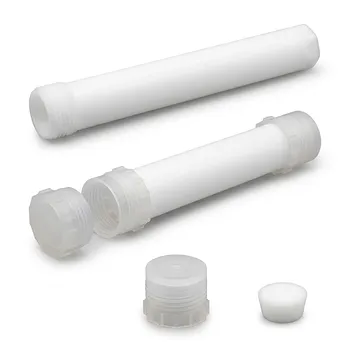
- High Purity Laboratory Microwave Digestion Vessel Customizable PFA PTFE Digestion Tank for Analytical Sample Preparation Trace Metal Analysis
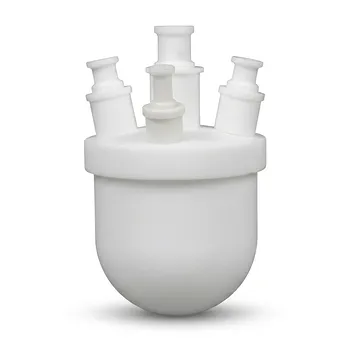
- Custom PTFE Flask 250ml High Purity Fluoropolymer Laboratory Vessel for Chemical Research
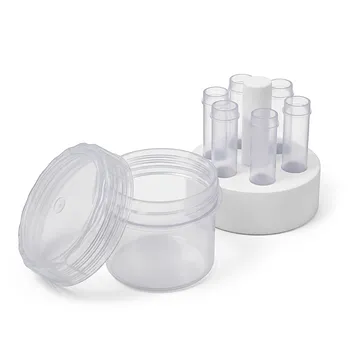
- High Purity Corrosion Resistant PFA Reaction Vessel with PTFE Holder and Integrated Sampling Tube for Trace Analysis
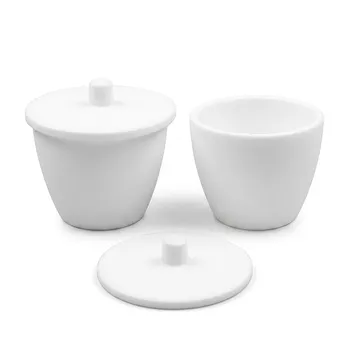
- High Purity Corrosion Resistant Teflon Crucible Low Background Laboratory PTFE Vessel for Trace Analysis and Acid Digestion
- High Purity PFA Reaction Vessel for Biopharmaceutical Synthesis and Corrosive Chemical Fluid Handling with Customizable Tube Fittings
People Also Ask
- What are the advantages of using microwave digestion vessels for environmental analysis? Boost speed and sample accuracy.
- What safety features are commonly integrated into microwave digestion vessels? Ensuring High-Pressure Laboratory Safety
- What are the advantages of using microwave digestion vessels? Optimize EG@MO synthesis with superior thermal control.
- How do microwave digestion vessels support pharmaceutical elemental impurity testing? Achieve Precise USP Compliance
- Which safety mechanisms are typically integrated into high-precision microwave digestion vessels? A Complete Safety Guide