Reaction vessels for molten salt-assisted synthesis must provide a unique combination of extreme thermal endurance and chemical non-reactivity. Specifically, these crucibles must remain stable at temperatures between 300°C and 1000°C while resisting the highly corrosive effects of acidic or oxidative salts like Zinc Chloride (ZnCl2) and Aluminum Chloride (AlCl3).
Core Takeaway: To ensure the integrity of advanced electrocatalysts, reaction vessels must be both thermally robust and chemically inert to prevent trace metal leaching, which can contaminate atomic-level active sites and skew electrochemical results.
Thermal and Chemical Resilience Requirements
Withstanding Extreme Temperature Profiles
Molten salt synthesis typically occurs in a demanding thermal window ranging from 300°C to 1000°C. The reaction vessel must maintain its structural integrity throughout these cycles without cracking or deforming.
Failure to use thermally stable materials can lead to vessel fatigue. This risks catastrophic failure during the synthesis of carbon-based materials, metal oxides, or nitrides.
Resistance to Corrosive Salt Media
The molten state of salts like ZnCl2 and AlCl3 creates a highly aggressive environment. These media are often acidic or oxidative, capable of rapidly degrading standard laboratory glassware.
Reaction vessels must be specifically rated for chemical inertness against these specific salt chemistries. This prevents the vessel itself from becoming a reactant in the process.
The Imperative of Material Purity
Preventing Trace Metal Contamination
Electrocatalysts, particularly M-N-C (Metal-Nitrogen-Carbon) types, are hyper-sensitive to trace impurities. Even microscopic levels of foreign ions can occupy or poison the intended atomic-level active sites.
High-purity vessels ensure that the resulting catalyst's performance is a reflection of its design rather than unintended background contaminants. This is critical for achieving reproducible and high-performance electrocatalytic results.
Avoiding Ion Leaching in Processing
Beyond the high-temperature synthesis, supplementary labware used for washing or testing must also be ultra-pure. Materials like high-purity PFA and PTFE are often employed because they offer virtually zero ion leaching.
These fluoropolymers can withstand strong oxidizing acids, such as Perchloric Acid (HClO4), which are frequently used in the post-synthesis or testing phases. Using these materials maintains a pristine environment from synthesis to electrochemical characterization.
Understanding the Trade-offs and Pitfalls
Material Fragility vs. Chemical Inertness
Many high-purity materials used for crucibles, such as specialized ceramics or quartz, are highly resistant to chemicals but can be sensitive to thermal shock. Rapid heating or cooling can cause micro-fractures, leading to vessel failure over repeated uses.
The Limitation of Fluoropolymers
While PFA and PTFE provide unmatched purity and acid resistance, they are strictly limited to lower-temperature processing. They cannot be used for the actual molten salt synthesis phase, as they will decompose long before reaching the required 300°C to 1000°C range.
Cost and Lifecycle Considerations
Ultra-high-purity vessels are significantly more expensive than standard laboratory grade equipment. However, using lower-grade crucibles often leads to "ghost" results where trace impurities from the vessel provide a false sense of catalytic activity.
How to Select the Right Vessel for Your Goal
To ensure the success of your molten salt-assisted synthesis, your choice of vessel should align with the specific phase of your workflow:
- If your primary focus is the high-temperature synthesis phase (300°C–1000°C): Utilize high-purity ceramic or quartz crucibles specifically rated for compatibility with ZnCl2 or AlCl3 to prevent vessel degradation.
- If your primary focus is synthesizing M-N-C catalysts: Prioritize vessels with the highest available purity ratings to protect sensitive atomic active sites from trace metal poisoning.
- If your primary focus is post-synthesis cleaning or electrochemical testing: Use PFA or PTFE labware to ensure that no ions leach into the system during exposure to strong oxidizing acids like HClO4.
By matching the vessel's chemical and thermal properties to the specific rigors of molten salt chemistry, you ensure the purity and precision of your electrocatalytic materials.
Summary Table:
| Feature | High-Temperature Synthesis Phase | Post-Synthesis & Testing Phase |
|---|---|---|
| Temperature Range | 300°C – 1000°C | Ambient to <260°C |
| Recommended Materials | High-Purity Ceramic, Quartz | PTFE, PFA Fluoropolymers |
| Chemical Resistance | ZnCl2, AlCl3 Molten Salts | HClO4, Strong Oxidizing Acids |
| Primary Goal | Structural Integrity & Salt Resistance | Zero Ion Leaching & Purity Preservation |
| Critical Risk | Thermal Shock & Vessel Deformation | Trace Metal Poisoning of Active Sites |
Maximize Your Research Precision with KINTEK
Achieving atomic-level precision in electrocatalysts demands labware that never compromises on purity. KINTEK manufactures virtually all imaginable laboratory supplies crafted from high-performance PTFE and PFA to eliminate contamination risks in your workflow.
From everyday basic labware (beakers, crucibles, reagent bottles) and fluid transfer components (tubing, valves) to advanced reaction apparatus like custom electrochemical cells, battery testing fixtures, and microwave digestion vessels, we provide the inert environment your research requires. Backed by end-to-end custom CNC fabrication, we deliver everything from complex non-standard machined parts to high-volume consumables like gaskets and stirring bars.
Protect your active sites from trace metal poisoning. Contact KINTEK today for bespoke laboratory setups and high-performance fluoropolymer materials tailored to your synthesis needs.
References
- Yutong Feng, Jun Wan. Engineering Electrocatalytic Structures Through Molten Salt‐Mediated Mechanistic Control. DOI: 10.1002/ece2.70022
This article is also based on technical information from Kintek Knowledge Base .
Related Products
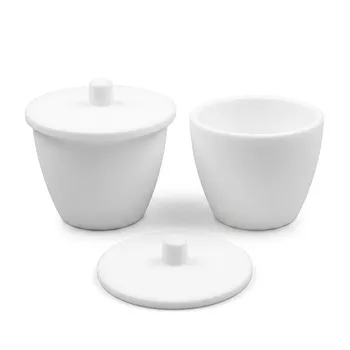
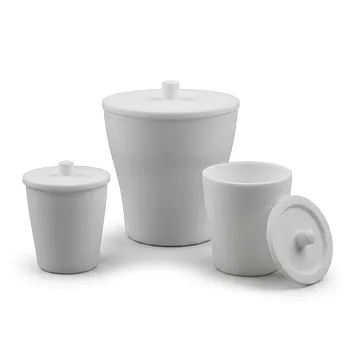
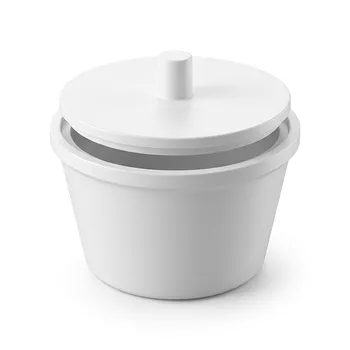
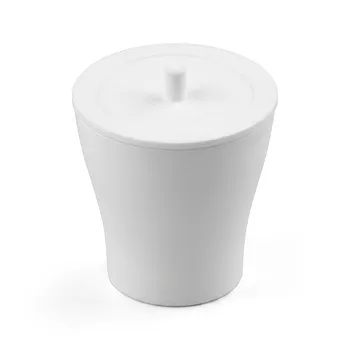
- High Purity PTFE Crucible with Lid Corrosion Resistant Trace Analysis Labware for Strong Acid and Base Applications
- High Purity Corrosion Resistant Teflon Crucible Low Background Laboratory PTFE Vessel for Trace Analysis and Acid Digestion
- Custom PTFE Laboratory Crucibles High Purity Chemical Resistant White Labware for Hot Plate Heating
- High Purity PTFE PFA Plastic Crucible for Corrosion Resistant Acid Digestion and Trace Analysis
- High Purity 30ml PTFE Corrosion Resistant Fluoropolymer Crucible with Graphite Heating Block Compatibility
People Also Ask
- Why use PTFE/PFA for pH adjustment in dye studies? Ensure chemical purity and reliable adsorption data accuracy.
- What is the function of an Ag/AgCl reference electrode during ECSA measurement? Ensure Precision in Catalyst Analysis
- Why is an Ag/AgCl reference electrode essential for NRGO testing? Ensure Precise Potential for Reliable Redox Data
- Why is an Ag/AgCl electrode selected as the reference electrode in three-electrode electrochemical testing systems? Key Benefits.
- What roles do the counter electrode and Ag/AgCl reference electrode play? Boost Accuracy in 3-Electrode Systems