High-pressure enclosed reaction vessels outperform mechanical milling in the synthesis of bis(indolyl)methane by providing superior thermal control and preventing the escape of volatile reagents. This method eliminates the physical inconsistencies—such as material clogging and localized overheating—that frequently plague mechanical techniques like ball milling or twin-screw extrusion. By maintaining a stable gas-liquid or liquid-liquid environment, these vessels ensure higher product purity and process reliability.
High-pressure enclosed vessels provide a controlled, uniform environment that preserves the stoichiometry of volatile substrates and prevents mechanical failure. This transition from mechanical grinding to pressurized fluid-phase reaction is essential for achieving consistent chemical outcomes and high-purity yields.
Superior Thermal Management
Achieving Uniform Heat Distribution
Enclosed vessels create a homogeneous heating environment for the reaction medium. Unlike mechanical milling, which relies on friction that can create "hot spots," the pressurized fluid phase ensures that every molecule experiences the same thermal conditions.
Enhanced Kinetic Control
Stable temperatures allow for predictable and repeatable reaction rates. This consistency is vital for the synthesis of bis(indolyl)methane derivatives, where temperature fluctuations can lead to unwanted side products or incomplete conversions.
Retention of Volatile Substrates
Preventing Material Loss
Many precursors in indole chemistry are sensitive or volatile at reaction temperatures. High-pressure vessels trap these vapors, ensuring they remain in the reaction zone rather than escaping the system, which is a common failure point in mechanical milling.
Maintaining Stoichiometric Balance
By preventing the evaporation of reagents, the system maintains the precise chemical ratios required for the reaction. In contrast, mechanical milling—especially twin-screw extrusion—can suffer from reagent depletion, leading to reduced yields and difficult purification steps.
Operational Stability and Reliability
Eliminating Material Clogging
Mechanical methods are often prone to physical blockages when dealing with the sticky or solidifying intermediates common in BIM synthesis. Enclosed vessels operate in fluid phases (liquid or gas), which naturally bypass the clogging issues found in screw-based or ball-milling hardware.
Ensuring Process Stability
The absence of high-friction moving parts in direct contact with the reactants reduces the risk of mechanical failure. This leads to a more stable process that can be monitored and controlled with greater precision over long reaction durations.
Understanding the Trade-offs
While high-pressure vessels offer clear process advantages, they require specialized, pressure-rated equipment which increases the initial capital investment. There are also inherent safety protocols associated with pressurized systems that must be strictly managed.
Furthermore, while mechanical milling is often lauded for being "solvent-free," high-pressure enclosed reactions may require specific conditions to maintain the liquid-liquid or gas-liquid phase, which can influence the environmental footprint of the process.
How to Apply This to Your Synthesis
When choosing between these two methodologies, consider your specific production requirements and the nature of your precursors.
- If your primary focus is product purity: Utilize high-pressure vessels to ensure uniform heating and prevent the formation of thermal degradation products.
- If your primary focus is working with volatile reagents: Choose enclosed vessels to maintain stoichiometry and prevent the loss of expensive or hazardous starting materials.
- If your primary focus is long-term process stability: Invest in pressurized systems to avoid the frequent downtime associated with clogging in mechanical milling equipment.
The adoption of high-pressure enclosed vessels transforms bis(indolyl)methane synthesis from an unpredictable mechanical grind into a precise, high-fidelity chemical process.
Summary Table:
| Feature | High-Pressure Enclosed Vessels | Mechanical Milling (Ball/Screw) |
|---|---|---|
| Thermal Management | Uniform fluid-phase heating; no hot spots | Frictional heat; prone to localized overheating |
| Reagent Retention | Traps volatile substrates; preserves stoichiometry | Risk of reagent escape and material loss |
| Physical Reliability | Fluid-phase operation; no clogging | Prone to blockages and mechanical wear |
| Product Purity | High; minimal side products | Variable; risks thermal degradation |
| Process Scale | Easily monitored and repeatable | Difficult to control with sticky intermediates |
Optimize Your Synthesis with High-Performance Fluoropolymer Solutions
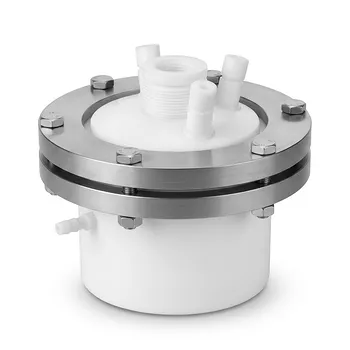
Transitioning to high-pressure synthesis requires equipment that can withstand demanding chemical environments. KINTEK specializes in manufacturing a comprehensive range of laboratory supplies crafted from premium PTFE and PFA, ensuring your reactions remain contaminant-free and thermally stable.
From advanced hydrothermal synthesis liners, microwave digestion vessels, and custom electrochemical cells to essential components like high-purity tubing, valves, and bespoke CNC-machined reactors, we provide everything needed for high-fidelity chemical processes. Whether you require everyday labware or complex, non-standard machined parts, our end-to-end fabrication capabilities are tailored to your specific research needs.
Ready to elevate your lab's precision? Contact our experts today to discuss your custom fluoropolymer requirements and discover how KINTEK’s high-performance materials can enhance your synthesis outcomes.
References
- Zhiqiang Wu, Wanyi Liu. Mild and Efficient Preparation of Organic Molecules with Different Structural Characteristics: Catalyst-Free and Solvent-Free Methods in Hydrothermal Synthesis Reactors. DOI: 10.2139/ssrn.4283399
This article is also based on technical information from Kintek Knowledge Base .
Related Products
- PTFE Lined High Pressure Digestion Vessel 50ml High Temperature Hydrothermal Synthesis Tank
- Custom TFM Reaction Vessel with Stainless Steel Jacket and PTFE Inner Cup for High Corrosion Resistance
- High Pressure Custom TFM Reactor Stainless Steel Outer Vessel PTFE Inner Cup for Corrosive Synthesis
- High Purity PFA Constant Pressure Condensation Reaction System Acid Resistant High Temperature Customizable Teflon Labware
- Custom High Purity TFM Microwave Digestion Vessel 100ml for Analytical Laboratory Sample Preparation
People Also Ask
- What are the benefits of using a PTFE-lined vessel for carbon-sulfur cathode treatment? Maximize Purity & Performance
- Why are PTFE-lined pressure digestion vessels required for the preparation of Ag/CeO2 catalysts? Purity & Performance
- What safety features are typically incorporated into high-pressure PTFE digestion vessel designs? Ensure Lab Safety
- What is the function of PTFE lined high-pressure vessels in g-C3N4 synthesis? Achieve High-Purity Material Growth
- Role of High-Pressure Digestion Tanks in Perovskite Synthesis: Achieve Superior Stability and Latent Heat