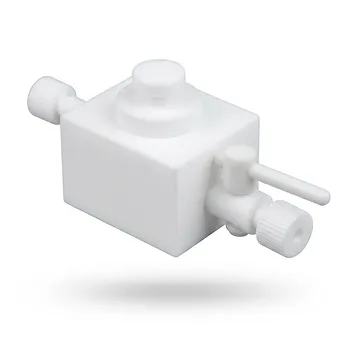
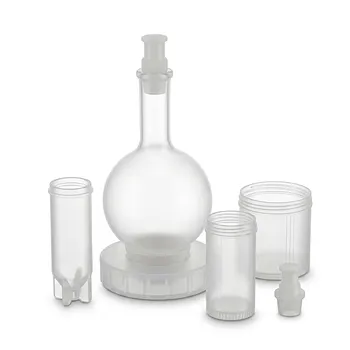
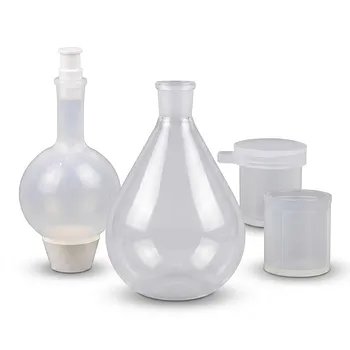
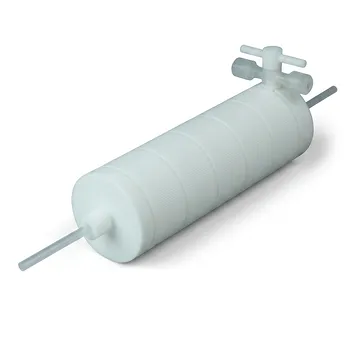
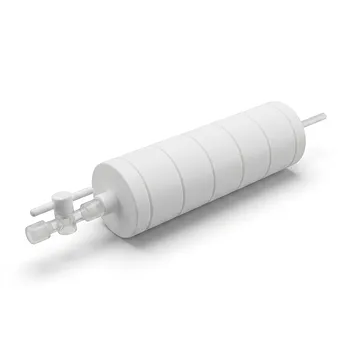
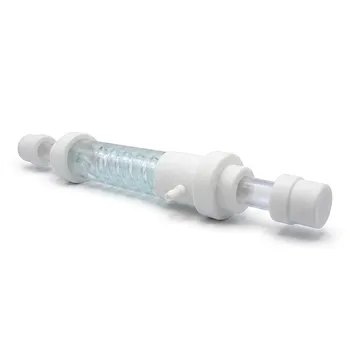
Fluoropolymer materials like PFA and PTFE are the gold standard for NS-CDs due to their near-total chemical inertness and exceptionally low surface energy. These properties prevent the leaching of metallic or organic impurities into the dispersion while ensuring that the carbon dots do not stick to the container walls. This preservation of purity and concentration is critical for maintaining the specific fluorescence performance and chemical signatures required in advanced sensing and imaging applications.
The primary advantage of using PFA or PTFE is the creation of a chemically "silent" environment that protects the chemical and optical integrity of nitrogen and sulfur co-doped carbon dots. By eliminating secondary contamination and surface adsorption, these materials ensure that experimental data reflects the intrinsic properties of the nanomaterial rather than artifacts introduced by the storage vessel.
Maintaining Chemical and Optical Integrity
Prevention of Trace Leaching and Contamination
High-purity fluoropolymers such as PFA (perfluoroalkoxy) and PTFE (polytetrafluoroethylene) are engineered to have extremely low levels of extractables. Unlike standard glass or lower-grade plastics, these materials do not leach trace metal ions or plasticizers into the dispersion. This is vital for NS-CDs, as even minute amounts of metallic impurities can interfere with the doping structure or quench the material's fluorescence.
Minimizing Non-Specific Adsorption
The extremely low surface energy of fluoropolymers prevents "sticking," a common issue where nanoparticles adhere to the container walls. This non-specific adsorption can lead to a significant decrease in the effective concentration of the carbon dots over time. By using PFA or PTFE, researchers ensure that the material concentration remains stable during long-term storage, preserving the reliability of the stock solution.
Stability of Fluorescence Performance
Nitrogen and sulfur co-doping is specifically performed to enhance the photoluminescence and catalytic properties of carbon dots. Contaminants from storage containers can alter the surface states of these dots, shifting their emission spectra or reducing quantum yield. Fluoropolymer vessels provide a stable environment that keeps the fluorescence performance consistent from the day of preparation to the day of application.
Durability in Harsh Preparation Environments
Resistance to Corrosive Reagents
The preparation and purification of carbon dots often involve strong acids (like hydrochloric acid) or highly alkaline electrolytes used for desalination and cleaning. PTFE and PFA are virtually immune to chemical attack from these corrosive substances, unlike glass which may etch or release silicates. This allows for high-purity preparation steps, such as acid-washing and filtration, to occur within the same material ecosystem without risk of container degradation.
Elimination of Catalyst Poisoning
In applications where NS-CDs are used for catalytic analysis or carbon dioxide reduction, the absence of leached metal ions is critical. Even trace levels of foreign ions can act as "poisons" to the catalyst or create "false activity" that skews experimental results. Using fluoropolymer reactor components ensures that any detected activity is attributed solely to the NS-CDs and not to contaminants from the laboratory equipment.
Mass Spectrometry and Trace Analysis Protection
For researchers performing non-targeted metabolomics or trace element analysis, the organic purity of PFA and PTFE is indispensable. These materials do not release organic impurities or plasticizers that could interfere with mass spectrometry signals. This reduction in baseline noise allows for the detection of low-abundance molecules and ensures the integrity of the nanoparticle's chemical profile.
Understanding the Trade-offs
Cost and Accessibility
High-purity fluoropolymer labware is significantly more expensive than borosilicate glass or standard polypropylene. This higher initial investment must be weighed against the potential cost of lost research time or compromised data due to sample contamination.
Physical Properties and Visibility
PTFE is opaque, which can make it difficult to visually monitor reactions or check for sediment without opening the container. While PFA is translucent, it still does not offer the same crystal-clear visibility as glass, which may be a consideration for certain photo-sensitive preparation steps.
Thermal Considerations
While these materials have high thermal stability, they are not suitable for direct flame contact or extreme temperature gradients. Users must ensure that preparation temperatures remain within the manufacturer's specified limits to maintain the structural integrity of the vessels.
Making the Right Choice for Your Goal
To achieve the best results with nitrogen and sulfur co-doped carbon dots, select your materials based on the specific phase of your workflow:
- If your primary focus is long-term storage of stock solutions: Use PFA reagent bottles to benefit from the lowest possible surface adsorption and maximum concentration stability.
- If your primary focus is harsh chemical synthesis or acid washing: Utilize PTFE beakers and tanks due to their extreme resistance to concentrated corrosive agents and durability during vigorous cleaning.
- If your primary focus is high-sensitivity trace analysis or MS: Select ultra-high-purity PFA components to minimize organic background noise and ensure the most accurate chemical signatures.
- If your primary focus is electrochemical testing: Employ PTFE tubing and fittings to prevent the introduction of foreign ions into electrolytes, preserving the intrinsic activity of your carbon dots.
By prioritizing these high-performance materials, you ensure that your research is built on a foundation of purity, reproducibility, and technical excellence.
Summary Table:
| Key Feature | Advantage for NS-CDs | Recommended Material |
|---|---|---|
| Chemical Inertness | Prevents trace metal leaching and catalyst poisoning. | PFA / PTFE |
| Low Surface Energy | Minimizes nanoparticle adsorption (sticking) to walls. | PFA (Best for storage) |
| Corrosion Resistance | Withstands harsh acids/bases during synthesis. | PTFE (Beakers/Tanks) |
| High Organic Purity | Reduces baseline noise in Mass Spectrometry (MS). | Ultra-High-Purity PFA |
| Optical Stability | Maintains consistent fluorescence and quantum yield. | PFA / PTFE |
Elevate Your Nanomaterial Research with KINTEK’s Fluoropolymer Solutions
Precision in nitrogen and sulfur co-doped carbon dot (NS-CDs) research demands an environment free from contamination. At KINTEK, we specialize in high-performance fluoropolymer labware designed to protect your most sensitive chemical and optical signatures.
Whether you need everyday basic labware like PFA beakers, crucibles, and reagent bottles, or complex custom-machined PTFE electrochemical cells and reactor components, our end-to-end CNC fabrication ensures every piece meets your exact specifications. From high-purity trace analysis instruments and filtration tools to bespoke laboratory setups, we deliver the absolute purity required for advanced nanomaterial synthesis.
Ready to eliminate experimental artifacts and ensure data integrity?
Contact KINTEK Today to discuss your custom project or browse our comprehensive range of PTFE and PFA laboratory supplies.
References
- Koranat Dechsri, Praneet Opanasopit. Fabrication of nitrogen and sulfur co-doped carbon dots for antioxidant applications. DOI: 10.69598/sehs.19.25050007
This article is also based on technical information from Kintek Knowledge Base .
Related Products
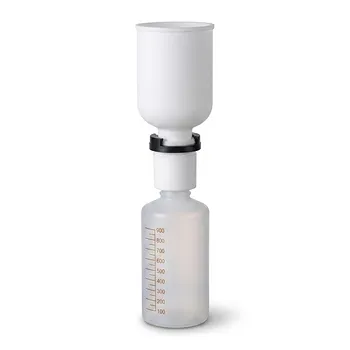
- PTFE PFA Vacuum Filtration System Corrosion Resistant Customizable Shatterproof Laboratory Device
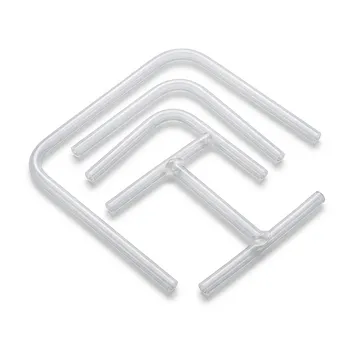
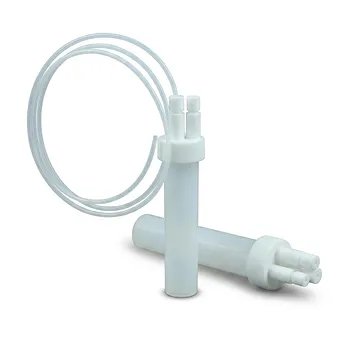
- High Purity PFA Coiled Tubing Custom PTFE Machining PFA Welding and Precision Bending Solutions
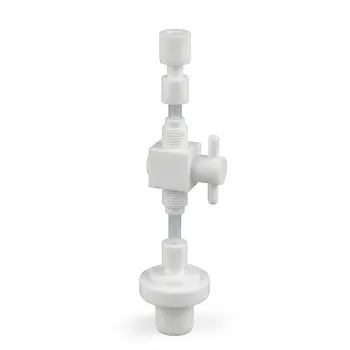
- High Purity PFA PTFE Flare Stop Valves Customizable 2-Way 3-Way Reducing Fluoropolymer Fluid Control Solutions
- Custom PFA Reaction Bottles High Purity PTFE Reaction Vessels Corrosion Resistant Petrochemical Containers
- Corrosion Resistant PFA Syringe Translucent Visual Fluoropolymer Labware 10ml Chemical Handling Tool
People Also Ask
- What makes PTFE filtration systems advantageous for industrial and scientific use? Unmatched Chemical & Thermal Stability
- What temperature resistance do PTFE filters offer? Unmatched Thermal Stability from -200°C to +260°C
- How does the hydrophobicity of PTFE filters benefit their use? Ensure Uninterrupted Gas Flow and Solvent Filtration
- Which chemicals are fully compatible with PTFE filters? Discover Unmatched Chemical Resistance
- What sizes and pore options are available for PTFE filters? Choose the Right Filter for Your Application