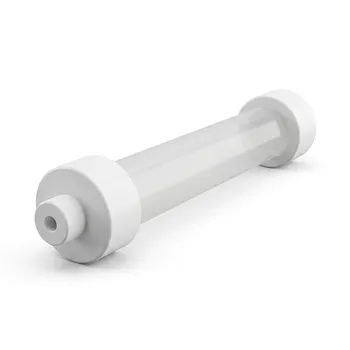
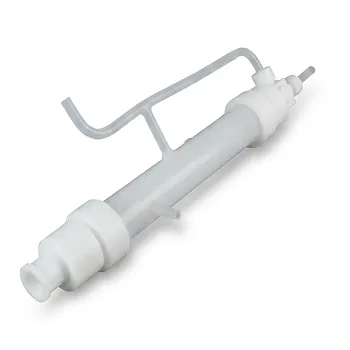
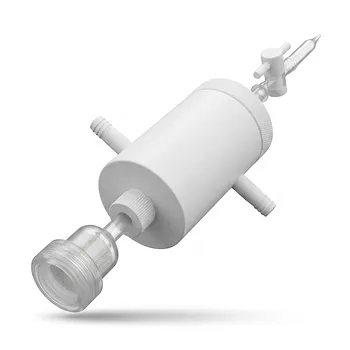
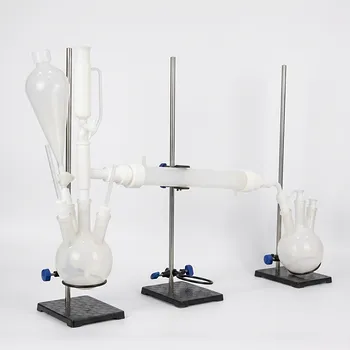
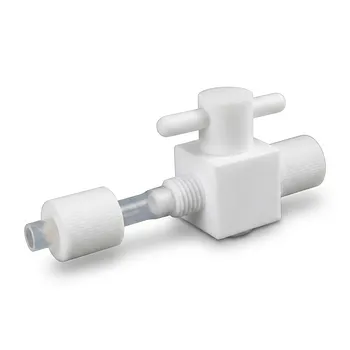
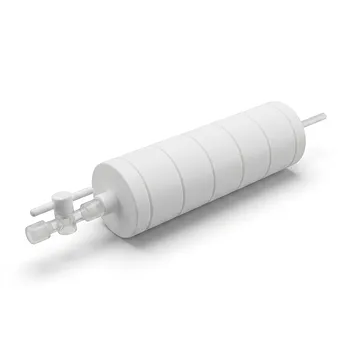
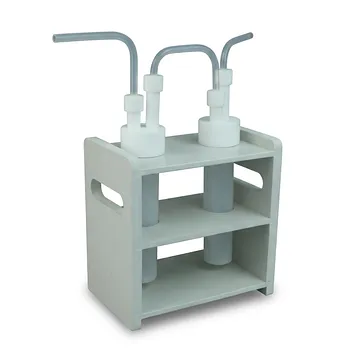
Custom CNC-fabricated PFA components provide the critical link between theoretical experimental design and physical execution in high-stakes chemical research. These components enable the creation of high-purity fluid paths and complex geometries that standard labware cannot achieve. By utilizing precision machining, researchers can develop bespoke prototypes like micro-reactors and electrochemical cells that withstand aggressive reagents and extreme temperatures without contaminating the reaction.
Core Takeaway: CNC-machined PFA bridges the gap between material purity and mechanical precision, allowing researchers to build specialized, contamination-free prototypes for advanced synthesis, trace analysis, and electrochemical testing.
Overcoming the Limits of Standard Labware
Precision Geometry for Specialized Flow Paths
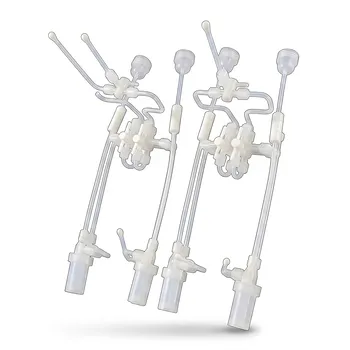
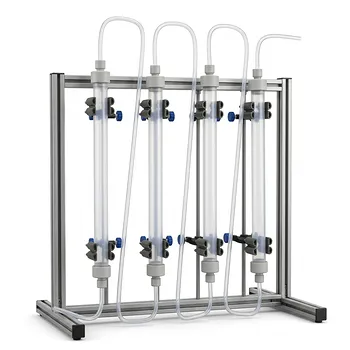
Standard off-the-shelf labware often fails to meet the specific fluid dynamic requirements of cutting-edge experiments. CNC fabrication allows for the creation of non-standard parts, such as microchannel reactors and complex manifolds, directly from solid PFA blocks.
Rapid Translation of Digital Designs
Researchers can move quickly from a CAD model to a functional physical prototype. This capability is essential for innovative chemical research where unique experimental setups, like specialized electrode holders, must be iteratively tested and refined.
End-to-End Customization for Research
Whether the need is for a single unique electrochemical cell or a specific hydrothermal liner, CNC machining provides a tailored solution. This flexibility supports diverse sectors, from semiconductor development to new energy research.
Maintaining Absolute Purity in Synthesis
Resistance to Aggressive Reagents
PFA is prized for its extreme chemical resistance, making it the ideal material for handling the corrosive chemistry involved in MXene synthesis or TNT extraction. CNC machining ensures these parts retain their structural integrity while exposed to harsh acids and solvents.
Critical Support for Trace Analysis
In applications like the hydrothermal production of doped oxide nanoparticles, even microscopic levels of leaching can ruin an experiment. PFA’s high-purity fluid path ensures that the final product remains uncontaminated by the reaction vessel itself.
Performance in Extreme Environments
Custom PFA components are engineered to maintain sealing integrity under high-pressure and high-temperature conditions. This is vital for specialized reactors that must remain stable and leak-proof during volatile chemical reactions.
Optimizing Data Accuracy in Electrochemical Research
Elimination of Stray Interference
Custom-machined PFA testing fixtures offer superior electrical insulation. This property is critical in battery research, as it effectively eliminates background current and stray interference that could otherwise skew sensitive data.
Precision Fitting for Electrodes
CNC machining allows for the creation of cell bodies that fit specific electrode geometries perfectly. This snug, high-precision fit ensures stable positioning, which is essential for obtaining reproducible and accurate electrochemical measurements.
Structural Stability in Electrolytes
Unlike some plastics that may degrade or swell, PFA remains absolutely stable in various electrolytes. This stability provides reliable structural support for the internal components of a reactor or testing cell throughout long-duration experiments.
Understanding the Trade-offs
Material Softness and Structural Limits
While PFA offers unmatched chemical resistance, it is a relatively soft fluoropolymer. Designers must account for material deformation under extreme mechanical stress, which may require thicker walls or external support structures compared to metal alternatives.
Cost and Production Time
Custom CNC fabrication is more resource-intensive than purchasing mass-produced glass or plastic labware. Each bespoke component requires dedicated programming and machining time, which can increase the initial cost of experimental setup.
Thermal Expansion Considerations
PFA has a significant coefficient of thermal expansion. In experiments involving wide temperature fluctuations, precision-machined tolerances must be carefully calculated to ensure that seals and fittings remain tight as the material expands and contracts.
Making the Right Choice for Your Goal
To successfully integrate custom PFA components into your research, consider the following recommendations:
- If your primary focus is trace element analysis: Prioritize PFA over PTFE for its superior surface smoothness and lower risk of sample carryover.
- If your primary focus is electrochemical testing: Utilize CNC machining to create bespoke fixtures that minimize electrode movement and maximize electrical insulation.
- If your primary focus is high-pressure synthesis: Work with engineers to optimize wall thickness and thread designs to ensure the PFA component can withstand the required mechanical loads.
- If your primary focus is microfluidics: Leverage high-precision CNC paths to create intricate internal channels that are impossible to achieve with traditional molding.
By leveraging the geometric freedom of CNC machining and the chemical inertness of PFA, researchers can build the specialized hardware necessary to push the boundaries of modern chemistry.
Summary Table:
| Feature | Research Benefit | Key Applications |
|---|---|---|
| Precision Geometry | Enables complex, non-standard flow paths | Microchannel reactors, manifolds |
| Absolute Purity | Eliminates leaching and sample contamination | Trace analysis, nanoparticle synthesis |
| Chemical Inertness | Withstands aggressive acids and solvents | MXene synthesis, corrosive extraction |
| Electrical Insulation | Removes stray interference and background current | Battery testing, electrochemical cells |
| Rapid Prototyping | Fast transition from CAD to physical hardware | Iterative experimental design |
Precision-Engineered Fluoropolymers for Your Most Demanding Research
At KINTEK, we bridge the gap between complex theoretical design and physical high-performance labware. From everyday basic labware like beakers, measuring cylinders, and reagent bottles to advanced reaction apparatus such as custom electrochemical cells, battery testing fixtures, and microwave digestion vessels, we manufacture virtually every laboratory supply crafted from premium PTFE and PFA.
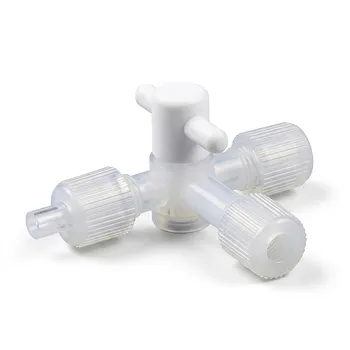
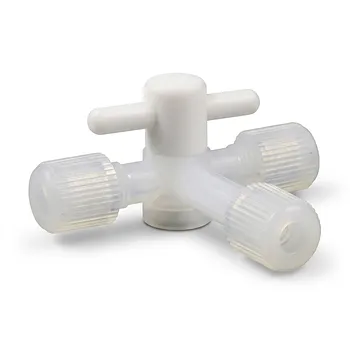
Our end-to-end custom CNC fabrication capabilities allow us to deliver everything from complex, non-standard machined parts to high-volume orders of high-purity trace analysis instruments, fluid transfer components (tubing, fittings, valves), and sample prep tools. Whether you are developing specialized laboratory prototypes or scaling up production, our exclusive focus on high-performance fluoropolymers ensures your experiments remain contamination-free and mechanically precise.
Ready to elevate your research setup? Contact us today to discuss your bespoke laboratory requirements and discover how KINTEK’s precision fabrication can drive your next breakthrough.
References
- Yaqi Zhu, Zhen Lei. Crystal lattice site occupation-based optical properties in Co2+-doped ZGGO persistent luminescence nanoparticles. DOI: 10.1038/s41598-025-23381-5
This article is also based on technical information from Kintek Knowledge Base .
Related Products
- Corrosion Resistant High Purity PFA Valve and Weldable Transparent Tubing for Semiconductor Fluid Transfer
- High Purity PFA Valves and Weldable Corrosion Resistant Transparent Tubing for Semiconductor Sensor Manufacturing Fluid Transfer
- High Performance PFA Coiled Spring Tubing and Custom PTFE Fabrication Services with Welded Fittings and Precision Bent Components
- High Purity PFA Coiled Tubing Custom PTFE Machining PFA Welding and Precision Bending Solutions
- Custom PFA Microcolumn Racks and PTFE Machined Low Background Corrosion Resistant Laboratory Fixtures
People Also Ask
- Why are high-purity PFA fluid transfer components preferred for battery electrolytes? Ensure Purity & Data Accuracy
- How do high-precision PFA fluid transfer components, such as tubing and fittings, affect the results of continuous-flow synthesis?
- How do PFA fluid transfer components contribute to chemical research precision? Achieve high-purity results today.
- What role do PFA tubing and valves play in high-precision laboratory fluid transfer systems? Ensure Ultra-Pure Results
- Which material characteristics of fluoropolymers are most critical for high-purity fluid transfer and labware? Key factors: chemical inertness, low extractables, thermal stability.