Carbon–fluorine bonds give fluoropolymers their fundamental durability, while trifluoromethyl groups reinforce it through molecular shielding and reduced intermolecular interactions. The C–F bond is exceptionally strong—approximately 490 kJ/mol—and fluorine atoms protect the carbon backbone from chemical attack. Bulky –CF₃ groups further limit chain mobility, reduce surface energy and polarizability, and shield reactive sites, improving resistance to heat, acids, solvents, oxidation, moisture, and swelling.
The key principle is a combination of strong bonds and protective molecular architecture: C–F bonds are difficult to break, while fluorinated groups make the polymer backbone less accessible and less chemically interactive.
Why C–F Bonds Improve Stability
High bond dissociation energy
The C–F bond requires substantially more energy to break than common C–H or C–O bonds. This makes fluorinated polymer chains less susceptible to thermally initiated bond scission and chemical reactions.
As a result, many high-performance fluoropolymers retain useful structural integrity at elevated temperatures, although the actual operating limit depends on the specific polymer, load, atmosphere, and exposure time.
Low polarizability and chemical inertness
Fluorine strongly attracts electrons and forms a stable, tightly bound electronic environment around carbon. The resulting structure is difficult for acids, bases, solvents, and oxidizing species to attack.
Low polarizability also reduces the polymer’s tendency to participate in intermolecular interactions or react with surrounding chemicals. This contributes to the low extractability and low contamination risk important in high-purity laboratory and fluid-handling applications.
Protection of the polymer backbone
Fluorine atoms occupy substantial space around the carbon framework. This creates a steric barrier that makes it more difficult for reactive species to reach and attack the underlying backbone.
The protection is especially effective in highly fluorinated structures, where the carbon skeleton is surrounded by a relatively continuous fluorinated environment.
How Trifluoromethyl Groups Add Protection
Steric shielding from chemical attack
A trifluoromethyl group contains three fluorine atoms attached to one carbon. Its size and fluorine-rich surface can shield nearby portions of the polymer chain from reagents and environmental species.
This reduces the likelihood of chain attack, hydrolysis-like reactions, oxidation, and solvent-induced degradation. It can also help limit swelling and chemical leaching.
Restricted chain mobility
Bulky –CF₃ groups interfere with close chain packing and large-scale molecular motion. In appropriately designed polymers, this can increase backbone rigidity and raise the glass-transition temperature.
Reduced chain mobility delays the molecular rearrangements that often precede softening, deformation, and thermal degradation.
Reduced intermolecular attraction
Fluorinated groups have low polarizability and generally weak dispersion interactions compared with many hydrocarbon or strongly polar groups. Lower chain-to-chain attraction can reduce moisture uptake and make the surface less receptive to many liquids.
This does not mean the material lacks internal cohesion. Rather, the polymer’s stability comes primarily from its strong covalent framework and molecular architecture, while its low surface energy provides additional resistance to wetting and absorption.
Why These Effects Improve Chemical Resistance
Hydrophobic, non-wetting surfaces
Perfluorinated structures often present a fluorine-rich outer surface with very low surface energy. Liquids therefore spread less readily and have less tendency to penetrate the material.
This non-wetting behavior helps prevent moisture absorption, reagent retention, and contamination in tubing, vessels, bottles, fittings, and other fluid-contact components.
Resistance to aggressive reagents
Because the backbone is strongly bonded and sterically protected, fluoropolymers resist many strong acids, organic solvents, and oxidative environments. The material is less likely to dissolve, swell, or release extractable species during exposure.
The exact resistance still depends on temperature, reagent concentration, mechanical stress, exposure duration, and the particular fluoropolymer grade.
Lower contamination and leaching risk
Minimal water uptake and low chemical reactivity help preserve the composition of fluids in contact with the polymer. This is especially valuable in trace analysis, semiconductor processing, chemical handling, and laboratory digestion equipment.
Fluoropolymer components can therefore maintain dimensional and chemical performance where less fluorinated plastics would absorb reagents or degrade.
How These Features Improve Thermal Performance
Delayed thermal degradation
Thermal degradation generally begins when polymer bonds break or when chain segments undergo oxidation and other irreversible reactions. Strong C–F bonds and fluorine shielding raise the energy required for these processes.
Many fluoropolymers consequently exhibit decomposition onset temperatures in the several-hundred-degree-Celsius range. However, decomposition temperature should not be confused with a safe continuous-use temperature.
Improved thermo-oxidative resistance
Fluorinated structures provide fewer readily attacked C–H sites and make the carbon framework less accessible to oxygen and other oxidants. This improves resistance to thermo-oxidative aging.
The benefit is particularly important when components are exposed to heat and chemically aggressive atmospheres simultaneously.
Contribution of bulky molecular groups
Groups such as –CF₃ and hexafluoroisopropylidene units can disrupt unfavorable chain packing and alter the polymer’s free volume. Depending on the architecture, they may increase rigidity and glass-transition temperature while reducing moisture uptake and dielectric polarizability.
These effects are design-dependent: increasing free volume can improve low absorption and processing characteristics, but excessive free volume may also affect permeability or mechanical strength.
Understanding the Trade-offs
Thermal stability is not unlimited
A strong C–F bond does not make every fluoropolymer suitable for every temperature. Mechanical strength, creep, dimensional stability, processing history, and the surrounding chemical environment may impose practical limits well below the decomposition temperature.
For example, some fluoropolymer components may operate continuously near 260 °C even though measurable decomposition occurs at substantially higher temperatures.
Chemical resistance varies by polymer structure
A fully fluorinated polymer, a partially fluorinated polymer, and a polymer containing isolated –CF₃ groups will not behave identically. The number and placement of fluorine atoms, backbone chemistry, crystallinity, and additives all affect performance.
Material compatibility should therefore be checked for the actual polymer grade and operating conditions rather than inferred from the presence of fluorine alone.
Bulky groups can affect mechanical and barrier properties
Trifluoromethyl groups may increase rigidity and reduce moisture uptake, but they can also disrupt close packing and increase fractional free volume. That may influence permeability, toughness, modulus, and dimensional stability.
The same architectural feature that improves non-wetting behavior or raises glass-transition temperature can therefore create design compromises.
Decomposition products require consideration
Fluoropolymers are highly resistant during normal service, but overheating can produce hazardous decomposition products. Processing, disposal, and accidental over-temperature events require appropriate engineering controls and manufacturer guidance.
How to Apply This to Your Project
The molecular explanation should be translated into application-specific limits rather than treated as a universal temperature or compatibility guarantee.
- If your primary focus is chemical resistance: Prefer a highly fluorinated polymer with a well-established compatibility record for the specific acids, solvents, oxidants, temperature, and exposure duration involved.
- If your primary focus is thermal endurance: Separate the material’s decomposition onset from its recommended continuous-use temperature, and evaluate creep, load, atmosphere, and long-term aging.
- If your primary focus is low contamination: Select fluoropolymer components with low extractables, low moisture uptake, and verified performance under the required purity and cleaning conditions.
- If your primary focus is mechanical or barrier performance: Treat –CF₃-induced free volume as a design variable, because improved hydrophobicity and thermal behavior may be accompanied by changes in permeability or strength.
Strong C–F bonds provide the foundation, and fluorinated molecular groups turn that bond strength into practical resistance through shielding, rigidity, low polarizability, and hydrophobicity.
Summary Table:
| Feature | Effect | Practical Benefit |
|---|---|---|
| C-F bond strength | High bond dissociation energy (~490 kJ/mol) | Withstands high temperatures without bond scission |
| Fluorine shielding | Steric barrier around carbon backbone | Protects against chemical attack |
| Low polarizability | Reduced reactivity with acids, bases, solvents | Enhances chemical resistance |
| Trifluoromethyl groups | Steric shielding and restricted chain mobility | Increases glass-transition temperature and reduces swelling |
| Hydrophobic surface | Low surface energy, non-wetting | Reduces moisture absorption and contamination |
Enhance your laboratory's performance with KINTEK's high-quality fluoropolymer products. Our PTFE and PFA labware, tubing, fittings, and custom machined parts are designed to deliver exceptional thermal stability and chemical resistance. Whether you need standard apparatus or bespoke solutions, our expert team is ready to assist. Contact us today to discuss your requirements and discover how we can support your demanding applications.
Related Products
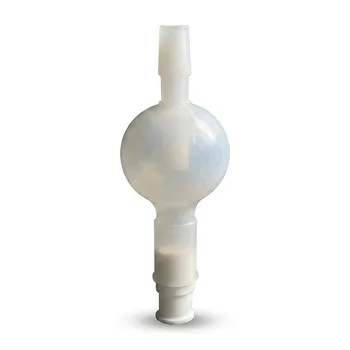
- High Purity PFA Chromatography Column with Collection Bottle Corrosion Resistant Fluoropolymer Filtration System for Trace Analysis
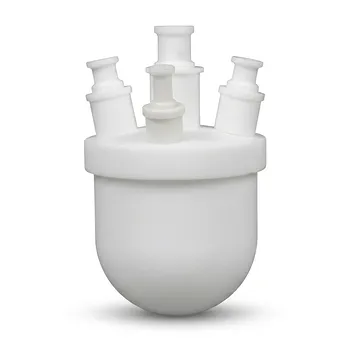
- Custom PTFE Flask 250ml High Purity Fluoropolymer Laboratory Vessel for Chemical Research
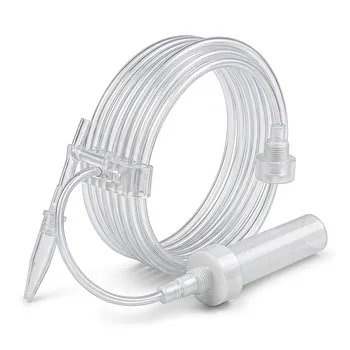
- Custom PFA Tubing 1/4 Inch High Purity Corrosion Resistant Fluoropolymer Tube with Welding and Machining Services
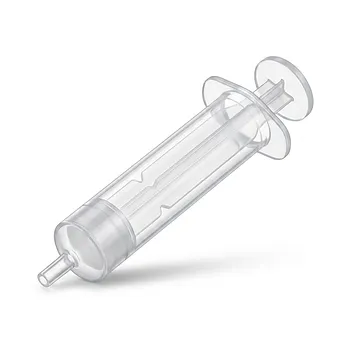
- Corrosion Resistant PFA Syringe Translucent Visual Fluoropolymer Labware 10ml Chemical Handling Tool
- Custom PTFE Reaction Tank Corrosion Resistant Fluoropolymer Chemical Processing Barrel 10L 20L 30L
People Also Ask
- Why is the chemical stability of polymer endgroups critical when selecting melt-processible fluoropolymers like PFA for high-purity laboratory apparatus? Choose Stable Endgroups for Reliable Performance
- What are the characteristics of PFA material? A Guide to Its High-Performance Balance
- Why is Perfluoroalkoxy alkane (PFA) preferred over glass or stainless steel in pharmaceutical process development? Pure Yield
- Why is PFA superior for cleaning and preventing cross-contamination? The Gold Standard for Ultra-Trace Lab Hygiene
- What are the key properties of PFA (PerFluoroAlkoxy)? A Guide to Extreme Chemical and Thermal Resistance