Perfluoropolymers are highly heat-resistant, but they are not unlimited-temperature materials. PTFE and PFA are generally limited to approximately 260 °C for continuous service, even though PTFE melts around 327–342 °C and substantial thermal decomposition occurs only at much higher temperatures. At controlled high-temperature conversion or pyrolysis conditions of roughly 500–800 °C, the polymer no longer functions as a structural material: it breaks down into fluorinated products, including monomers such as tetrafluoroethylene (TFE) and, depending on the polymer and process, hexafluoropropene (HFP).
High thermal stability defines a safe operating window; it does not make PTFE suitable for pyrolysis temperatures. The practical limit for reusable labware is governed by long-term mechanical and dimensional stability near 260 °C, while temperatures above approximately 500 °C represent deliberate chemical decomposition conditions.
What “High Thermal Stability” Actually Means
Continuous service is the key engineering limit
PTFE and PFA can retain useful structural and chemical performance at temperatures up to about 260 °C under continuous-use conditions. This rating is more relevant to laboratory vessels, tubing, seals, and machined components than the polymer’s melting point.
Continuous service limits account for long-term loss of mechanical properties, dimensional stability, creep, and exposure conditions. A component can remain visibly intact while becoming mechanically unsuitable for its application.
Melting does not equal immediate decomposition
PTFE melts in the approximate range of 327–342 °C, depending on whether the material is undergoing its first or subsequent melt. Reaching the melting range means the polymer has lost its solid structural form, but it does not mean that complete pyrolysis occurs instantly.
This distinction matters for apparatus design: a PTFE vessel may begin losing dimensional integrity well before it undergoes rapid chemical breakdown.
Thermal stability depends on time and environment
PTFE can show relatively low mass loss for limited periods above its melting point, while prolonged exposure progressively weakens the material. In air, thermal degradation begins above roughly 400 °C, and rapid decomposition occurs around 525 °C under the conditions described in the references.
Temperature alone is therefore not a sufficient specification. Exposure duration, atmosphere, geometry, mechanical load, and contact with chemicals all influence the practical limit.
How Pyrolysis Changes the Material’s Role
Above the service range, PTFE is no longer dependable labware
At temperatures above the recommended continuous-use limit, PTFE may soften, creep, warp, or lose tensile performance. These changes can compromise seals, pressure boundaries, dimensional tolerances, and sample containment even before obvious decomposition is visible.
For microwave digestion vessels, reaction containers, crucibles, and fluid-transfer tubing, operation should remain comfortably below 260 °C unless the equipment has been specifically engineered and qualified for another regime.
At 500–800 °C, decomposition is the intended process
Controlled high-temperature conversion between approximately 500 °C and 800 °C is fundamentally different from high-temperature laboratory use. Under these conditions, fluoropolymers undergo pyrolysis, and the polymer chains break into smaller fluorinated molecules.
Reported conversion yields above 80% demonstrate that the material can be chemically transformed efficiently. They do not indicate that PTFE or PFA can safely retain shape, strength, or sealing performance at those temperatures.
Monomer release creates a process-safety issue
Pyrolysis can produce fluorinated gases and vapors, including TFE and other fluorocarbon products. These emissions require purpose-built containment, ventilation, compatible materials, monitoring, and an established treatment or abatement strategy.
Ordinary PTFE labware is not a substitute for a pyrolysis reactor. Components designed for chemical resistance at 200–260 °C may fail rapidly when exposed to the thermal and chemical conditions of an 800 °C conversion process.
Why the Temperature Gap Matters in Design
Structural limits and chemical limits are different
The 260 °C continuous-use limit is primarily a materials-engineering boundary. It protects the component’s strength, shape, sealing behavior, and service life.
The 500–800 °C pyrolysis range is a chemical-conversion boundary. It is used to destroy or transform the polymer rather than preserve it.
Confusing these limits is similar to confusing the maximum operating temperature of a furnace lining with the temperature required to vaporize the material placed inside it.
Different fluoropolymers have different margins
PTFE and PFA generally provide the highest continuous-use temperature among the listed laboratory fluoropolymers, at approximately 260 °C. FEP is typically limited to about 200–205 °C, while ETFE, ECTFE, and PCTFE have lower limits of approximately 150 °C, 150 °C, and 120 °C, respectively.
Material selection must therefore consider the actual resin, not merely the general category “fluoropolymer.”
Thermal transitions can affect precision before failure
Perfluorinated ionomers may exhibit a matrix glass transition near 140 °C and an ionic-cluster transition near 240 °C. These transitions can affect relaxation, stiffness, and dimensional tolerance before any visible melting or decomposition occurs.
For precision fluid handling and reaction equipment, a component may become unsuitable because of softening or dimensional drift even when its temperature remains below the nominal decomposition range.
Understanding the Trade-offs
High-temperature ratings do not guarantee unchanged properties
PTFE can operate continuously near 500 °F, equivalent to approximately 260 °C, but mechanical properties can decline at the upper end of that range. Designs must account for creep, pressure, load, and sealing performance rather than treating the rating as a point at which all properties remain constant.
Additives may extend a stated operating range in some formulations, but the specific compound and manufacturer qualification must control the design decision.
Melting-point data can encourage unsafe assumptions
A melting point of 327–342 °C may appear to provide a substantial operating margin above 260 °C. It does not. The continuous-use rating is lower because useful engineering performance is lost through softening, deformation, and long-term property changes before complete chemical decomposition.
Pyrolysis equipment must address corrosion and off-gassing
Equipment processing fluoropolymers at elevated temperatures should use corrosion-resistant construction materials and suitable gas-handling systems. The decomposition products may be hazardous or corrosive, and they can attack unsuitable alloys, seals, sensors, and exhaust components.
The reactor, transfer lines, and abatement system must be designed as one process boundary.
Temperature limits are not interchangeable across applications
A short laboratory exposure, a pressurized digestion cycle, a loaded seal, and a continuous heated tube have different risk profiles. A temperature that is tolerable for an unloaded sample holder may be unacceptable for a pressure-bearing vessel or sealing surface.
Qualification should use the actual component geometry, stress state, atmosphere, and exposure duration.
How to Apply This to Your Project
The correct limit depends on whether the goal is to preserve the fluoropolymer or intentionally convert it.
- If your primary focus is preserving PTFE or PFA labware: Keep continuous operation at or below approximately 260 °C, with additional margin for pressure, mechanical load, exposure duration, and dimensional tolerances.
- If your primary focus is high-temperature pyrolysis: Treat 500–800 °C as a deliberate chemical-conversion process requiring purpose-built reactors, corrosion-resistant equipment, off-gas containment, and product-handling controls.
- If your primary focus is selecting among fluoropolymers: Verify the resin-specific continuous-use rating rather than applying PTFE’s limit to FEP, ETFE, ECTFE, or PCTFE.
- If your primary focus is preventing contamination or emissions: Avoid taking PTFE beyond its qualified service range, particularly near and above the temperatures where rapid decomposition and fluorinated off-gassing can occur.
The essential design principle is simple: PTFE’s thermal stability protects performance within a controlled service window, while pyrolysis temperatures mark the point at which the polymer is being chemically destroyed.
Summary Table:
| Property | PTFE/PFA Continuous Use | Pyrolysis Conditions |
|---|---|---|
| Temperature Limit | ~260°C (500°F) | 500–800°C |
| Material State | Maintains structure | Decomposes into monomers |
| Application | Labware, seals, tubing | Chemical conversion |
| Consideration | Mechanical and dimensional stability | Corrosion-resistant equipment, off-gas control |
Elevate your lab's performance with KINTEK's premium PTFE and PFA products, designed for maximum reliability up to 260°C. Whether you need standard labware, custom machined parts, or high-purity analysis tools, our expertise ensures your equipment operates safely and efficiently. Contact us today to discuss your specific requirements and benefit from our end-to-end fluoropolymer solutions — get in touch!
Related Products
- PTFE PFA Vacuum Filtration System Corrosion Resistant Customizable Shatterproof Laboratory Device
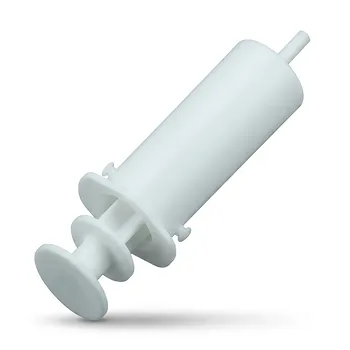
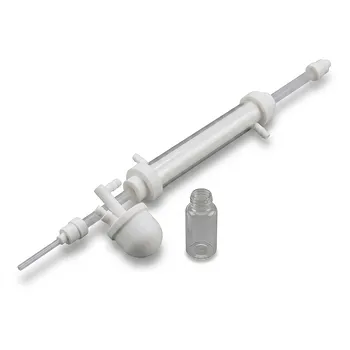
- High Purity Laboratory Grade PTFE Syringe Chemical Resistant Fluoropolymer Injector for Trace Analysis
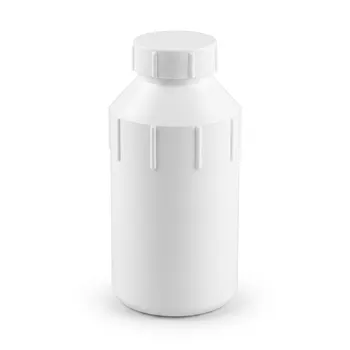
- Custom PFA Reaction Bottles High Purity PTFE Reaction Vessels Corrosion Resistant Petrochemical Containers
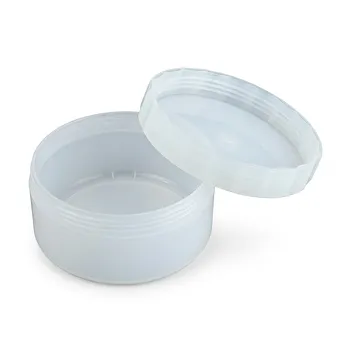
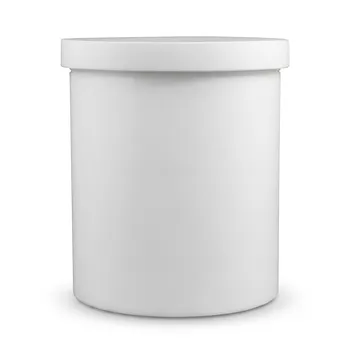
- Corrosion Resistant PFA Reaction Tank High Purity Laboratory Reaction Bottle Wide Mouth PTFE Jar Multiple Specifications
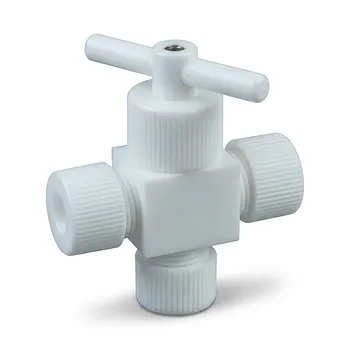
- Custom PTFE Valve 2-Way 3-Way Corrosion Resistant Low Background Virgin Fluoropolymer Industrial Fluid Control
People Also Ask
- What makes PTFE filtration systems advantageous for industrial and scientific use? Unmatched Chemical & Thermal Stability
- What temperature resistance do PTFE filters offer? Unmatched Thermal Stability from -200°C to +260°C
- How does the hydrophobicity of PTFE filters benefit their use? Ensure Uninterrupted Gas Flow and Solvent Filtration
- Which chemicals are fully compatible with PTFE filters? Discover Unmatched Chemical Resistance
- What steps are involved in selecting the proper PTFE filter? A 4-Step Guide to Optimal Filtration