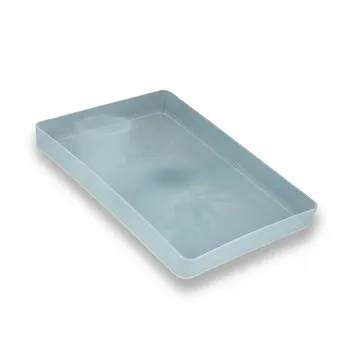
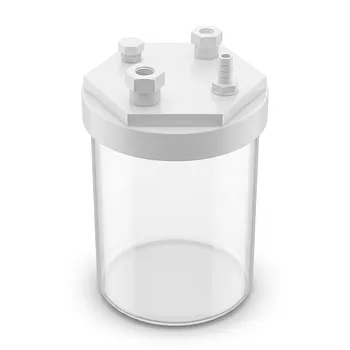
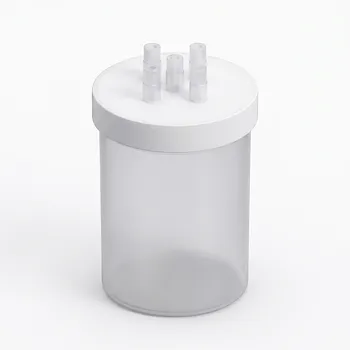
Higher fluorination generally makes fluoropolymer equipment more chemically inert, thermally stable, non-stick, and electrically insulating. Fully fluorinated materials such as PTFE and PFA therefore perform exceptionally well in digestion vessels, trace-analysis containers, reagent storage, tubing, valves, and other equipment exposed to aggressive acids, solvents, elevated temperatures, or contamination-sensitive samples. Partially fluorinated polymers can offer better mechanical strength or processability, but they typically provide less extreme chemical and thermal resistance.
The degree of fluorination is a material-selection trade-off: more fluorine usually improves chemical inertness, temperature capability, flame and weather resistance, and low-adhesion behavior, while potentially reducing certain mechanical properties and increasing manufacturing difficulty.
Why Fluorination Changes Performance
The Carbon-Fluorine Bond Protects the Polymer
Fluorine forms a strong bond with carbon and strongly shields the polymer backbone from chemical attack. As fluorine content increases, aggressive oxidizers, acids, bases, and organic solvents have fewer opportunities to react with or penetrate the material.
This is central to the performance of PTFE and PFA laboratory equipment. These materials can remain stable when exposed to corrosive reagents that would rapidly degrade many conventional plastics.
Higher Fluorination Reduces Chemical Interaction
More highly fluorinated polymers generally have lower solvent solubility and lower chemical reactivity. They are less likely to swell, absorb reagents, or release extractable material into a sample.
That behavior is particularly important in trace analysis, where even small amounts of sample absorption, leaching, or contamination can distort results.
Polymer Structure Still Matters
Fluorine content is important, but it does not determine performance by itself. The polymer’s molecular structure, crystallinity, copolymer composition, processing history, and additives also influence chemical resistance, strength, permeability, and temperature capability.
As a result, material selection should compare the specific resin grade and equipment design rather than relying only on a fluorine percentage.
Effects on Thermal and Environmental Performance
Thermal Stability Increases
Higher fluorination generally improves resistance to thermal decomposition and raises the temperature range in which the polymer can operate. Fully fluorinated materials are therefore suitable for demanding heating, digestion, and reaction processes.
Among commonly used materials, thermal performance depends on the specific polymer and application. A general comparison often places PTFE above PFA and FEP in thermal stability, although equipment geometry, pressure, and exposure time also affect practical service limits.
Melting and Processing Temperatures Rise
Increasing fluorination tends to raise melting or processing temperatures. This contributes to high-temperature capability but also makes fabrication more demanding.
PTFE, for example, is not processed like a conventional melt-flowing thermoplastic. PFA is more readily melt-processable, which can make it preferable for molded vessels, tubing, and complex fluid-handling components where both purity and manufacturability matter.
Flame and Weather Resistance Improve
Higher fluorination generally increases resistance to flame, oxidation, ultraviolet exposure, and environmental weathering. This helps equipment maintain its properties during long-term use near heat sources, reactive chemicals, or laboratory environments with demanding exposure conditions.
These benefits matter most for equipment expected to remain in service for extended periods rather than for short, single-use operations.
Effects on Surface and Fluid-Handling Behavior
Surface Energy Decreases
Highly fluorinated surfaces have very low surface energy. Liquids and contaminants are less likely to wet, adhere to, or remain on the surface.
In laboratory vessels, this supports improved drainage and reduced sample retention. It also helps minimize carryover between processing steps, although cleaning and rinsing procedures remain essential.
Friction and Adhesion Decrease
Higher fluorination generally lowers the coefficient of friction. This produces smooth, low-friction behavior in valves, fittings, seals, sliding interfaces, and fluid-transfer components.
The result can be easier actuation and reduced material buildup. However, low friction does not automatically guarantee low leakage; seal geometry, surface finish, pressure, and dimensional stability remain critical.
Permeability Is Not Defined by Fluorine Content Alone
Chemical inertness and low surface adhesion should not be confused with complete barrier performance. Gas and solvent permeability depend on polymer structure, crystallinity, thickness, temperature, and the specific chemical involved.
For highly volatile or hazardous chemicals, equipment must be evaluated using application-specific permeability and compatibility data.
Effects on Electrical and Analytical Performance
Electrical Insulation Improves
Higher fluorination generally increases surface and volume resistivity while lowering the dielectric constant and dissipation factor. These properties make highly fluorinated polymers useful where electrical insulation and low dielectric interaction are required.
This can benefit sensors, analytical instruments, insulating supports, and fluid-handling systems that operate near electrical components.
Contamination Risk Is Reduced
PTFE and PFA are widely selected for high-purity applications because they combine chemical inertness with low sample adhesion and low extractable contamination when properly manufactured.
For trace-analysis containers and digestion vessels, the material’s cleanliness, manufacturing process, surface condition, and handling history are as important as the polymer family itself.
Analytical Compatibility Requires Validation
No fluoropolymer should be treated as universally inert under every condition. Extreme temperatures, radiation, mechanical damage, pressure, and unusual reagents can change performance.
Laboratories should validate the selected material against the actual chemical mixture, temperature profile, contact time, cleaning process, and detection limits of the procedure.
Choosing Between Fully and Partially Fluorinated Materials
When PTFE or PFA Is the Better Choice
Fully fluorinated polymers are appropriate when the application prioritizes maximum chemical resistance, high-temperature endurance, low adhesion, and sample purity.
Typical examples include:
- Acid digestion vessels
- High-purity trace-analysis containers
- Aggressive-reagent storage tanks
- Reagent bottles and beakers
- Fluid-transfer tubing
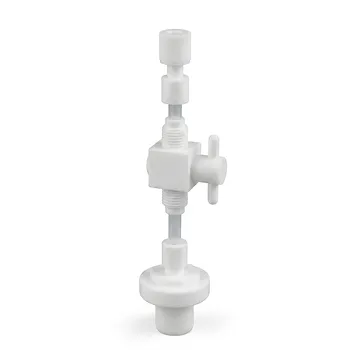
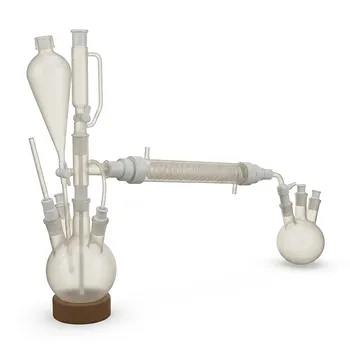
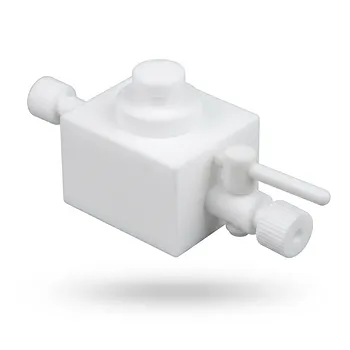
- Valves, fittings, and custom reaction components
PTFE is often favored for extreme chemical and thermal resistance. PFA can be advantageous when the equipment requires melt processing, transparency, complex molding, or smoother manufactured tubing.
When Partial Fluorination May Be Preferable
Partially fluorinated polymers can provide a more balanced combination of chemical resistance, mechanical strength, rigidity, flexibility, and processing capability.
They may be preferable when the component must withstand impact, repeated mechanical loading, cut-through forces, or structural stress that is not the primary strength of highly fluorinated materials.
The correct choice depends on whether chemical and thermal performance or mechanical and manufacturing performance is the controlling requirement.
Understanding the Trade-offs
Mechanical Strength May Decline in Some Areas
Higher fluorination can slightly reduce certain mechanical properties, including basic strength, cut-through resistance, or wear performance, depending on the polymer and test method.
This does not make PTFE or PFA unsuitable for equipment. It means that load-bearing parts, thin walls, sharp-edged components, and wear surfaces require appropriate geometry and design margins.
Fabrication Can Be More Difficult
Highly fluorinated polymers often require specialized processing. PTFE, in particular, is difficult to melt-process, while PFA generally offers greater fabrication flexibility.
This can affect component cost, dimensional tolerances, available shapes, and the feasibility of custom-machined designs.
Thermal Capability Has Practical Limits
A polymer’s high decomposition temperature does not mean every component can operate indefinitely at that temperature. Pressure, wall thickness, mechanical load, thermal cycling, and chemical exposure can reduce the usable service range.
Equipment should therefore be selected using the manufacturer’s continuous-use and short-term temperature ratings for the finished component.
Low Friction Can Affect Retention and Sealing
Low surface energy and low friction reduce adhesion, but they can also make bonding, coating, and some sealing arrangements more difficult.
Mechanical retention, compatible gasket materials, controlled surface finishes, and proper joint design are usually more reliable than assuming the polymer will bond or seal easily.
How to Apply This to Your Project
The material decision should begin with the most demanding chemical, thermal, purity, and mechanical conditions the equipment will experience.
- If your primary focus is maximum chemical resistance: Choose a fully fluorinated polymer such as PTFE or PFA, then verify compatibility with the exact acids, bases, oxidizers, and solvents involved.
- If your primary focus is high-temperature processing: Favor a material with the required continuous-use temperature and evaluate pressure, thermal cycling, and mechanical loading together.
- If your primary focus is trace-analysis purity: Use high-purity PTFE or PFA components with controlled manufacturing and cleaning procedures to minimize leaching, absorption, and sample carryover.
- If your primary focus is fluid handling: Use highly fluorinated materials for low adhesion and low friction, while separately validating permeability, seal design, and dimensional stability.
- If your primary focus is mechanical strength or rigidity: Consider a partially fluorinated alternative or a reinforced design, provided its chemical and thermal resistance meet the process requirements.
The best fluoropolymer is the one whose fluorination level matches the application’s dominant risk: chemical attack, heat, contamination, fluid friction, or mechanical failure.
Summary Table:
| Fluorination Level | Chemical Resistance | Thermal Stability | Surface Adhesion | Mechanical Strength | Typical Applications |
|---|---|---|---|---|---|
| Partially Fluorinated | Moderate | Moderate | Higher | Better | Structural supports, parts needing rigidity |
| Fully Fluorinated (PTFE, PFA) | Excellent | High | Very Low | Lower but adequate with design | Digestion vessels, trace-analysis containers, fluid handling, high-purity applications |
Looking for high-performance fluoropolymer lab equipment that meets your most demanding chemical and thermal requirements? At KINTEK, we specialize in crafting custom PTFE and PFA labware—from beakers and digestion vessels to complex reaction cells and fluid-handling components. Our end-to-end CNC machining capabilities ensure precise, non-standard parts tailored to your specifications. Whether you need standard equipment or bespoke solutions, our team is ready to support your lab's success. Contact us today to discuss your project and discover how our expertise can enhance performance, purity, and durability. Reach out now!
Related Products
- Custom PTFE Flask 250ml High Purity Fluoropolymer Laboratory Vessel for Chemical Research
- High Purity PFA Chromatography Column with Collection Bottle Corrosion Resistant Fluoropolymer Filtration System for Trace Analysis
- Custom PTFE Reaction Tank Corrosion Resistant Fluoropolymer Chemical Processing Barrel 10L 20L 30L
- Corrosion Resistant PFA Syringe Translucent Visual Fluoropolymer Labware 10ml Chemical Handling Tool
- Custom PFA Tubing 1/4 Inch High Purity Corrosion Resistant Fluoropolymer Tube with Welding and Machining Services
People Also Ask
- What are the key steps for structural integrity in molded PTFE lab reaction vessels? Master fine powder processing.
- What toxicological hazards and safe handling protocols must be established when PTFE fluoropolymer reaction vessels are subjected to pyrolysis temperatures? Learn essential safety measures now.
- When synthesizing TFVE monomers involving reactive organometallic reagents and aggressive polar solvents, what material performance characteristics are required? Ensure purity with PTFE/PFA.
- Why Are High-Purity Fluoropolymer Vessels and Tubing Critical for Trace Analysis? Prevent Contamination Reliably
- How does pressure management influence molar mass distribution and reaction rate in the iodine transfer emulsion polymerization of vinylidene fluoride, and how do custom fluoropolymer reaction vessels support this process?