PTFE’s melting transition is a design limit, not a usable operating condition. At approximately 327°C (621°F), PTFE’s crystalline structure is lost and its volume can increase sharply—by about 30% according to the primary reference. Even below melting, PTFE expands continuously with temperature, so high-temperature digestion vessels must provide expansion allowance, control seal deformation, and prevent heating conditions that can convert thermal expansion into dangerous pressure or mechanical failure.
Core takeaway: Safe PTFE vessel design must account for both ordinary thermal expansion throughout the operating range and the much larger dimensional change associated with melting. In practice, digestion vessels should operate well below the PTFE service-temperature ceiling, with controlled heating, sufficient clearance, reliable pressure containment, and protection against accidental overheating.
Why PTFE’s Crystalline Behavior Matters
The melting point marks a structural transition
Virgin PTFE begins with a very high degree of crystallinity—above 90% in the supplied reference data. Near its melting peak, generally reported around 325–335°C, that ordered crystalline structure is destroyed.
This is not merely a change from “solid” to “liquid.” It is a major change in the material’s dimensional stability, stiffness, and ability to maintain seals or support loads.
The secondary melt value is relevant to manufactured parts
PTFE that has been melted and cooled during sintering typically recrystallizes to a lower degree than virgin resin. The supplied references identify a post-processing or secondary melting point near 327–328°C.
For laboratory vessels, this means the thermal behavior of the actual manufactured component matters more than a generic resin datasheet value. Liner thickness, crystallinity, processing history, machining, and prior thermal exposure can all influence dimensional response.
PTFE does not remain dimensionally fixed below melting
PTFE undergoes continuous thermal expansion across its working temperature range, including approximately −190°C to +300°C in the primary reference. Therefore, a vessel can experience meaningful dimensional change without ever reaching its melting point.
Design calculations must account for the full temperature excursion—from storage or loading temperature through the maximum digestion temperature and back—not just the final setpoint.
How Expansion Affects Vessel Design
Provide clearance for the PTFE liner or vessel body
A PTFE insert constrained tightly inside a metal shell or other rigid structure can expand against that surrounding component. If the design leaves no accommodation for radial or axial growth, the resulting contact force can distort the liner or transfer excessive load into the vessel assembly.
Clearance must be evaluated at the hottest intended operating condition, not only at room temperature. The design must also consider differential expansion between PTFE and any metal support, cap, sleeve, or fitting.
Protect seals from excessive distortion
PTFE expansion can compress, displace, or distort gaskets and sealing interfaces. In a sealed digestion vessel, even modest seal movement can affect leakage resistance, pressure retention, and the repeatability of the digestion process.
Seal geometry should therefore be selected for the complete thermal cycle. A seal that performs well cold may become over-compressed at temperature, while a seal with insufficient compression may leak after thermal expansion or contraction.
Account for pressure as well as dimensional change
For a sealed vessel, thermal expansion of the PTFE and its contents can reduce internal free volume. The resulting pressure increase depends on the vessel geometry, fill level, chemical contents, heating profile, and gas generation from the reaction.
PTFE’s approximately 30% volume increase at melting is not a normal pressure-management mechanism. It is a failure condition that can sharply reduce available space, compromise seals, and overload the containment system.
Avoid rigidly trapping expanding components
The design should not treat PTFE as though it were a dimensionally stable ceramic or metal. Components that must move, expand, or seat during heating need a controlled path for that movement.
This may require defined clearances, compliant sealing features, appropriate support geometry, and a pressure-rated outer containment system. The exact dimensions must come from the vessel manufacturer’s engineering analysis and pressure rating.
What the Temperature Limits Mean in Practice
Use the continuous service limit—not the melting point—as the operating boundary
The references identify approximately +260°C as a practical continuous-use ceiling for PTFE laboratory equipment, while some data describes a broader functional range approaching +300°C. These values should not be treated as interchangeable.
A vessel’s allowable temperature is determined by the complete assembly, including its seals, fittings, support structure, pressure rating, chemical environment, and duration of exposure. The manufacturer’s specified operating limit should take precedence over the polymer’s nominal melting point.
Maintain substantial margin below melting
Operating near 327°C leaves very little protection against overshoot, sensor error, thermal gradients, or localized microwave heating. A setpoint below the melting point does not guarantee that every region of the vessel remains below it.
High-temperature digestion systems should therefore use the lowest temperature that achieves the analytical procedure and should include independent over-temperature protection where practical.
Consider thermal gradients and hot spots
The measured temperature may not equal the temperature at the liner wall, seal, cap, or localized reaction zone. Microwave heating can also produce nonuniform heating depending on the sample, vessel geometry, and system control.
Design validation should consider the hottest credible component location rather than relying only on a bulk or external temperature reading.
Safe Operation of PTFE Digestion Vessels
Follow the complete vessel rating
The relevant limit is not simply “PTFE melts at 327°C.” It is the rated combination of temperature, pressure, chemical compatibility, fill volume, heating duration, and thermal cycling.
Operators should use only the specified vessel, cap, liner, seal configuration, and heating program for the application. Substituting a different seal or changing the fill level can invalidate the original safety assumptions.
Control heating and prevent runaway conditions
Heating equipment should use calibrated temperature control and, ideally, an independent high-temperature cutoff. The system should be operated at the lowest temperature and power needed for the digestion procedure.
Overheating can result from control failure, incorrect programming, empty-vessel operation, inadequate cooling, or a change in sample composition. These conditions require specific safeguards in the operating procedure.
Respect pressure and fill constraints
Expansion of the vessel material is only one part of the pressure problem. Chemical reactions can generate gases, and heating liquid contents also increases pressure in a sealed system.
Do not exceed the manufacturer’s pressure, temperature, sample-volume, or reagent restrictions. Never open a hot pressurized vessel, and allow the prescribed cooling period before handling or disassembly.
Inspect parts after repeated thermal cycles
Repeated expansion and contraction can affect seals, threaded parts, supports, and interfaces even when each individual cycle remains within the rated range. Inspection should look for permanent deformation, cracking, discoloration, loss of elasticity, surface damage, or changes in fit.
Parts showing distortion or uncertain thermal history should be removed from service rather than returned to operation.
Thermal Decomposition Is a Separate Hazard
Melting is not the same as decomposition
PTFE’s melting transition occurs around 327°C, while the supplied references place the onset of measurable thermal decomposition at approximately 500°C and completion at higher temperatures. This does not make temperatures near 327°C acceptable for routine vessel operation.
The material may be chemically intact below decomposition while already losing the mechanical and dimensional stability required for a pressure vessel.
Prevent accidental exposure above the safe range
At sufficiently high temperatures, PTFE can break down and release hazardous fluorinated products, including carbonyl fluoride (COF₂) and perfluoroisobutene (PFIB). Such overheating must be treated as a serious equipment and laboratory-safety event.
Heating units should have reliable temperature limits, and laboratory procedures should provide appropriate local exhaust or forced ventilation for credible overheating and vapor-release scenarios.
Understanding the Trade-offs
Higher temperature improves digestion but reduces design margin
Higher digestion temperatures may accelerate reactions or improve sample decomposition. However, increasing temperature also increases PTFE expansion, seal stress, internal pressure, thermal gradients, and sensitivity to control errors.
The safest design is not the one that approaches the polymer’s melting point. It is the one that achieves the required chemistry with the greatest remaining thermal and pressure margin.
PTFE offers chemical resistance, not unlimited mechanical strength
PTFE is highly chemically inert and suitable for aggressive laboratory chemistry. That resistance does not eliminate the need to evaluate mechanical behavior at temperature.
As temperature rises, dimensional stability and load-bearing capability become increasingly important. A chemically compatible liner can still fail if it is over-constrained, over-pressurized, or operated beyond its rated temperature.
Do not generalize from one fluoropolymer to another
PTFE, PFA, and FEP have different melting points and continuous-use limits. The references place FEP’s melting range around 257–263°C and its upper continuous-use temperature near 200°C, substantially below PTFE’s typical limits.
A procedure validated for PTFE must not automatically be transferred to FEP, PFA, or a different vessel construction without checking the specific material and assembly rating.
Machining and manufacturing history matter
PTFE’s very high melt viscosity means it is commonly produced through specialized sintering and then precision machining rather than conventional injection molding. Poor temperature control during machining can soften or deform the material.
Manufacturing quality, density, crystallinity, wall thickness, and machining tolerances therefore influence the vessel’s final thermal and sealing performance.
Making the Right Choice for Your Goal
Use the material data as a design input, but base operation on the rating of the complete digestion-vessel assembly.
- If your primary focus is dimensional stability: Provide calculated clearance for PTFE expansion, including differential expansion between the liner and rigid surrounding components.
- If your primary focus is pressure safety: Use the specified fill limits, pressure rating, seal configuration, and cooling procedure; never treat the PTFE melting point as an allowable operating temperature.
- If your primary focus is high-temperature performance: Operate well below the approximately 327°C melting transition and follow the manufacturer’s lower continuous-use limit, commonly around 260°C for PTFE equipment.
- If your primary focus is overheating protection: Use calibrated temperature control, independent cutoffs where practical, appropriate ventilation, and procedures for isolating equipment after suspected thermal runaway.
- If your primary focus is long service life: Inspect seals and vessel components after thermal cycling and replace any part showing permanent deformation or uncertain damage history.
Safe PTFE digestion depends on treating thermal expansion, melting behavior, pressure, and decomposition as connected design constraints rather than isolated material properties.
Summary Table:
| Factor | Impact on Digestion Vessel | Design/Operation Consideration |
|---|---|---|
| Melting Temperature (327°C / 621°F) | Loss of structural integrity, seals fail, dimensional stability lost | Do not use as operating limit; vessel rating is lower (e.g., 260°C) |
| Volumetric Expansion (~30% at melt) | Sharp dimensional change, pressure increase, potential containment failure | Provide expansion allowance, avoid rigid constraint, control heating |
| Thermal Expansion (continuous below melt) | Dimensional changes affect seals and clearance | Calculate for full temperature cycle, allow clearance for growth |
| Pressure Buildup | Internal pressure from reduced free volume and gas generation | Respect pressure and fill limits, use rated containment |
| Thermal Decomposition (≥500°C) | Hazardous byproducts (COF₂, PFIB) | Never exceed safe range, use over-temp protection and ventilation |
Ensure your high-temperature digestion vessels are engineered for safety and performance. At KINTEK, we specialize in high-performance PTFE and PFA labware, including custom digestion vessels designed to handle thermal expansion and extreme conditions. Our team provides expert guidance on material selection and vessel design to meet your specific needs. Contact us today to discuss your requirements and get a quote. Contact KINTEK
Related Products
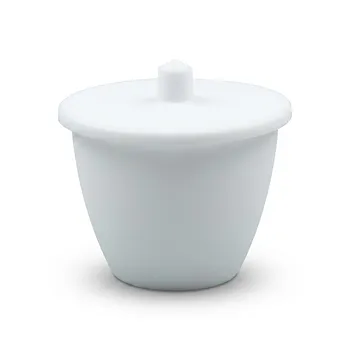
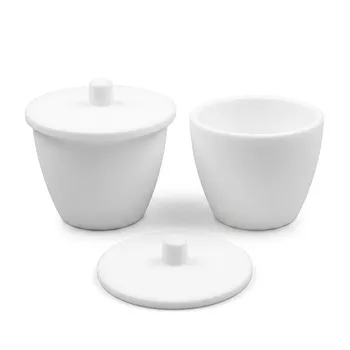
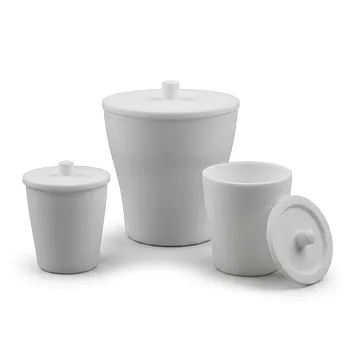
- High Temperature Corrosion Resistant Customizable PTFE Laboratory Digestion Crucible with Lid Small Volume Hot Plate Compatible Vessel
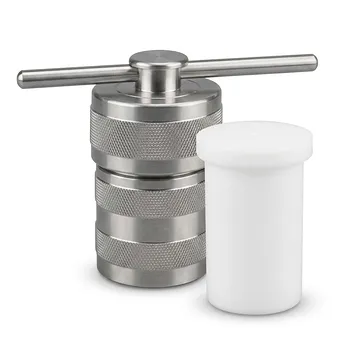
- PTFE Lined High Pressure Digestion Vessel 50ml High Temperature Hydrothermal Synthesis Tank
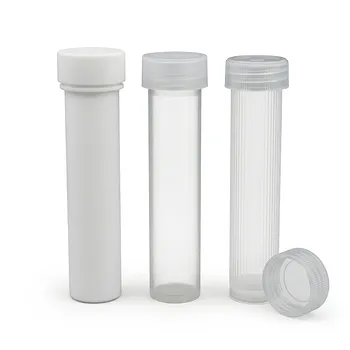
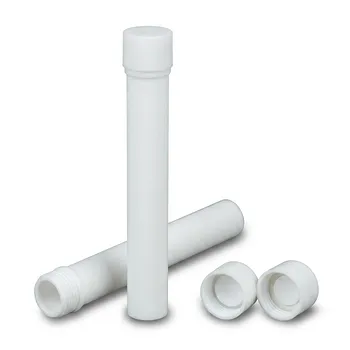
- Custom 100ml PTFE Digestion Tube for Heavy Metal Trace Analysis and High Temperature Acid Digestion
- 5ml High Pressure PTFE Digestion Vessel for Geological Mineral Analysis Corrosion Resistant Polytetrafluoroethylene TFM Digestion Inner Liner
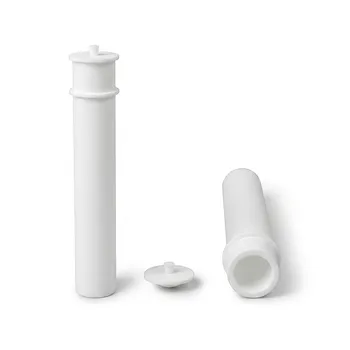
- Custom PTFE Digestion Tube Double Sided Openable High Temperature Corrosion Resistant Low Background
People Also Ask
- How does thermal stability and fluoride evolution impact the performance of high-temperature PTFE laboratory vessels? Uncover the key factors for reliable operation.
- What fundamental chemical properties make PTFE the material of choice for high-temperature chemical digestion vessels and aggressive reaction apparatus? Discover its chemical inertness and thermal stability.
- What is the function of high-pressure PTFE digestion vessels in mineral analysis? Optimize Sample Mineralization
- What safety features are typically incorporated into high-pressure PTFE digestion vessel designs? Ensure Lab Safety
- What thermal and non-reactive properties of PTFE fluoropolymers ensure sample purity and safety in high-temperature digestion equipment? Discover the Key Benefits for Your Lab