Structural fluorination improves fluoropolymer components by making their electronic structure more favorable for redox operation while strengthening resistance to chemical, thermal, and oxidative attack. Fluorine’s strong electron-withdrawing effect lowers frontier orbital energies and increases electron affinity, which can accelerate reduction and electrochromic switching—for example, reducing response time from 4.62 seconds to 0.42 seconds in the cited case. At the same time, strong carbon–fluorine bonds and fluorine-rich surfaces help components survive corrosive electrolytes, elevated temperatures, and repeated redox cycling.
The central benefit is a combination of electronic tuning and physical protection: fluorination can make redox processes faster and more efficient while helping the surrounding polymer retain its chemical, thermal, dimensional, and insulating performance over long service periods.
How Fluorination Changes Electrochemical Behavior
Lower-energy frontier orbitals
Fluorine is highly electronegative and withdraws electron density from adjacent molecular structures. In a polymer, this shifts the HOMO and LUMO energy levels, generally lowering the energies relevant to electron transfer.
A lower-lying LUMO and increased electron affinity can make reduction more accessible. This is particularly important in electrochromic materials, where optical switching depends on reversible oxidation or reduction of the active layer.
Faster reduction and switching
When the polymer’s electronic structure is better aligned with the applied electrochemical potential, charge injection and reduction can occur more readily. The practical result can be faster switching between optical states.
The primary reference reports a reduction in switching time from 4.62 seconds to 0.42 seconds after structural fluorination. The exact improvement depends on fluorine content, placement, backbone architecture, film morphology, electrolyte, and device configuration.
Higher near-infrared coloration efficiency
Fluorination can also improve the relationship between injected charge and the resulting optical modulation. This is reflected in increased near-infrared coloration efficiency, allowing a device to produce stronger infrared optical contrast for a given electrochemical input.
This benefit is relevant to electrochromic windows, optical attenuators, infrared modulators, and related devices where near-infrared rather than only visible-light performance matters.
Why Fluorinated Components Resist Electrochemical Degradation
Protection from oxidative attack
The carbon–fluorine bond is exceptionally strong, and fluorine reduces the electron density of the polymer backbone. These features make fluorinated structures less vulnerable to attack by oxidizing species, including oxygen-derived radicals and chemically aggressive electrolytes.
This protection is especially valuable when components are exposed to sustained anodic or cathodic potentials, reactive intermediates, or concentrated alkaline solutions.
Stability in harsh electrolytes
Perfluorinated materials such as PTFE and PFA provide high chemical inertness in demanding environments. They can be used for electrochemical cells, tubing, valves, fittings, seals, and fluid-handling parts where ordinary hydrocarbon polymers may swell, oxidize, leach, or lose mechanical integrity.
Fluorinated ion-conducting copolymers can also combine a chemically resistant backbone with functional groups such as sulfonic, phosphonic, or quaternized ammonium groups. This enables ion transport while preserving resistance to oxidative, alkaline, and thermal degradation.
Long redox-cycle life
Electrochemical components must tolerate repeated changes in oxidation state without embrittlement, dissolution, loss of adhesion, or chemical contamination. The cited fluorinated systems withstand up to 10,000 redox cycles without significant material degradation.
That durability is a system-level advantage: stable seals, cell bodies, insulating parts, and fluid pathways help preserve measurement repeatability and reduce maintenance during long-term testing.
Thermal and Physical Performance Advantages
Higher thermal endurance
Fluorinated groups improve resistance to thermal decomposition and oxidative degradation. Fluorinated polymers and related high-performance structures can exhibit glass-transition temperatures above 170°C, while some fluorinated formulations show decomposition temperatures above 500°C.
PTFE and PFA are useful in high-temperature electrochemical and laboratory environments because they retain chemical resistance and dimensional stability under conditions that challenge many conventional plastics.
Dimensional stability and low contamination
Stable fluoropolymer components resist chemical sorption and minimize leaching into electrolytes or reaction mixtures. This is important in electrochemical measurements, where trace contamination can alter conductivity, redox potentials, electrode behavior, or electrochromic response.
Their dimensional stability also helps preserve seal compression, channel geometry, electrode spacing, and fluid-flow characteristics during thermal cycling.
Electrical insulation and low dielectric loss
Fluorination generally reduces dielectric constant and dissipation factor while increasing volume and surface resistivity. Reported dielectric constants for fluorinated structures can reach approximately 2.05–2.47, compared with roughly 2.9–3.2 for conventional formulations.
For high-frequency or electrically sensitive apparatus, this can reduce capacitive loading, signal attenuation, and parasitic electrical losses. It is most relevant to insulating substrates, spacers, connectors, cell fixtures, and custom-machined components rather than to the electrochemically active electrode itself.
How Molecular Architecture Determines the Result
Fluorine placement matters
Fluorination is not a single material design choice. Fluorine may be incorporated directly into the backbone, attached through trifluoromethyl groups, or introduced through perfluoroalkyl side chains and other fluorinated linkages.
Its position affects orbital energies, free volume, surface energy, solubility, mechanical behavior, and compatibility with the electrolyte. Therefore, simply increasing fluorine content does not guarantee the same electrochemical response in every polymer.
Linear versus cross-linked structures
Linear fluoropolymers can retain useful solubility in solvents such as THF, DMF, or chloroform, enabling solution processing and coating. By contrast, tri- or tetra-functional precursors can create cross-linked networks with substantially higher resistance to solvent attack and deformation.
Cross-linking is valuable for robust electrochemical cells and containment components, but it can make processing, repair, recycling, and rework more difficult.
Perfluorinated versus partially fluorinated systems
Fully fluorinated materials generally provide the strongest chemical inertness, thermal endurance, and low-contamination performance. Partially fluorinated or functionalized copolymers may offer better processability, ion conductivity, adhesion, or mechanical flexibility.
The appropriate architecture depends on whether the component’s main job is redox activity, ion transport, electrical insulation, fluid containment, or mechanical support.
Understanding the Trade-offs
Faster switching does not automatically mean better durability
A lower-energy electronic structure may improve reduction kinetics, but electrochemical lifetime also depends on morphology, ion transport, electrode interfaces, electrolyte composition, and operating potential.
Switching speed and cycle life must therefore be measured together under realistic device conditions.
Higher fluorine content can reduce mechanical strength
Increasing fluorine content improves chemical resistance, thermal stability, electrical insulation, and non-stick behavior, but some mechanical-strength parameters may decline. A highly inert polymer is not automatically the best choice for a highly loaded seal, thin flexible film, or mechanically constrained component.
Designers must balance fluorination with reinforcement, thickness, cross-link density, and the required mechanical duty cycle.
Processing and adhesion can become more difficult
Fluoropolymers typically have low surface energy and strong non-stick characteristics. These properties are beneficial for chemical handling but can make bonding, coating, printing, and electrode adhesion more challenging.
Surface treatment, compatible primers, mechanical retention, or carefully selected copolymers may be needed when a fluorinated component must adhere strongly to another material.
Gas permeability and free volume require control
Fluorinated side groups and bulky linkages can alter fractional free volume and increase gas permeability while preserving hydrophobicity. That may be beneficial for controlled transport, but it can be undesirable in a barrier, seal, or electrolyte-containment application.
Permeation should be evaluated rather than inferred solely from the polymer’s fluorine content.
How to Apply This to Your Project
Fluorination should be selected according to the component’s electrochemical role and its exposure conditions.
- If your primary focus is faster electrochromic switching: Use fluorination to tune frontier orbital energies and increase electron affinity, but validate response time alongside coloration efficiency, ion transport, and cycle life.
- If your primary focus is long-term electrochemical durability: Favor chemically resistant fluorinated or perfluorinated structures such as PTFE or PFA for cell bodies, tubing, fittings, seals, and fluid-contact components.
- If your primary focus is ion conduction: Consider fluorinated copolymers functionalized with sulfonic, phosphonic, or quaternized ammonium groups to combine conductivity with oxidative and alkaline stability.
- If your primary focus is high-frequency electrical performance: Select low-dielectric fluorinated formulations for insulating parts to reduce capacitive loss and signal attenuation.
- If your primary focus is high-temperature operation: Evaluate fluorinated materials with high glass-transition and decomposition temperatures, while confirming dimensional stability at the actual operating temperature.
- If your primary focus is manufacturability: Prefer a linear or partially fluorinated architecture when solution processing, adhesion, or rework is important; use cross-linked structures when solvent resistance and structural permanence take priority.
Structural fluorination is most powerful when its electronic, chemical, thermal, and processing effects are designed together rather than treated as a single-material upgrade.
Summary Table:
| Aspect | Before Fluorination | After Fluorination | Benefit |
|---|---|---|---|
| Switching time | 4.62 s | 0.42 s | Faster electrochromic switching |
| Redox cycle life | Limited | Up to 10,000 | Enhanced durability |
| Dielectric constant | 2.9–3.2 | 2.05–2.47 | Better electrical insulation |
| Thermal stability | Conventional | Decomposition >500°C | High-temperature performance |
Ready to elevate your electrochemical and electrochromic applications with advanced fluoropolymer components? At KINTEK, we specialize in high-performance PTFE and PFA labware and custom-machined parts designed for superior chemical resistance, thermal stability, and electrical insulation. Whether you need standard beakers, high-purity analysis tools, or complex electrochemical cells, our end-to-end CNC machining capabilities ensure a precise fit for your unique requirements. Contact us today to discuss your project and discover how our fluoropolymer solutions can enhance your device performance and longevity. Get in touch with our experts.
Related Products
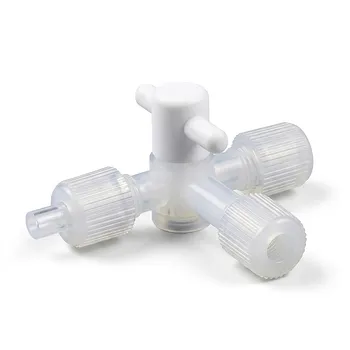
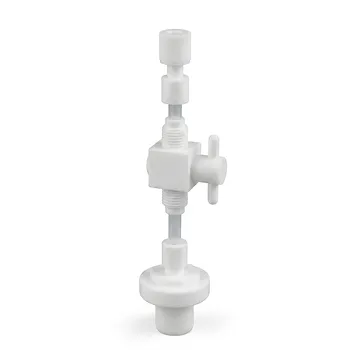
- Corrosion Resistant High Purity PFA Valve and Weldable Transparent Tubing for Semiconductor Fluid Transfer
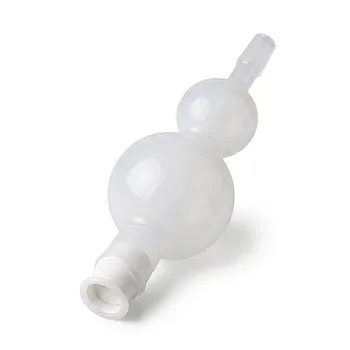
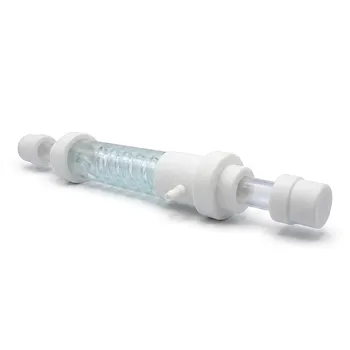
- High Purity PFA Chromatography Columns and Collection Bottles Corrosion Resistant Fluoropolymer Filtration Systems for Trace Analysis
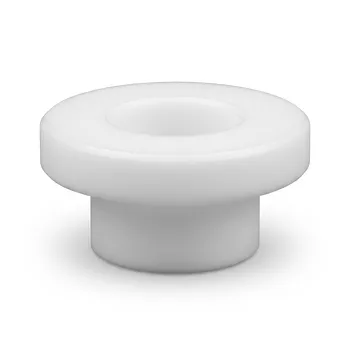
- Custom PTFE Insulating Gaskets and Corrosion Resistant Fluoropolymer Seals for Industrial Electrical Applications
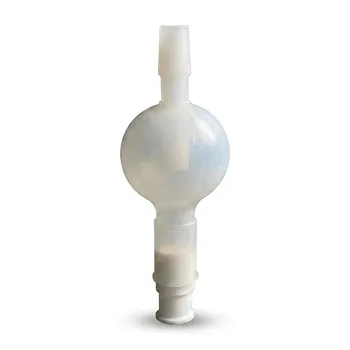
- High Purity PFA Chromatography Column with Collection Bottle Corrosion Resistant Fluoropolymer Filtration System for Trace Analysis
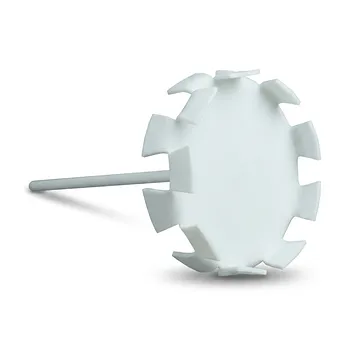
- High Purity PTFE Dispersion Disk for Food and Cosmetic Processing Non Stick Corrosion Resistant Large Stirring Paddle Customizable Fluoropolymer Impeller
People Also Ask
- Why are high-purity PFA fluid transfer components required for OSDAs and silica? Ensure Precision in Zeolite Synthesis
- Why are high-purity PFA fluid transfer components preferred for battery electrolytes? Ensure Purity & Data Accuracy
- How does high-purity PFA tubing maintain reagent purity? Achieve Ultra-Smooth, Zero-Contamination Fluid Transfer
- How do high-precision PFA fluid transfer components, such as tubing and fittings, affect the results of continuous-flow synthesis?
- How do PFA fluid transfer components contribute to chemical research precision? Achieve high-purity results today.