Side-group fluorination improves polyphosphazenes by protecting the backbone while adding low-surface-energy, chemically resistant organic groups. Trifluoroethoxy and related fluoroalkoxy substituents increase hydrolytic stability, chemical resistance, oil resistance, and hydrophobicity, while often lowering the glass-transition temperature. The same chemistry creates a demanding synthesis environment: strong nucleophiles such as sodium fluoroalkoxides, prepared using metallic sodium or sodium hydride, can attack or contaminate ordinary laboratory materials, making compatible PTFE or PFA components necessary.
Fluorinated side groups tune both the polymer and its processing environment. Their electron-withdrawing effect helps protect the phosphazene backbone from cleavage, while fluoropolymer equipment provides a chemically inert contact surface for the aggressive reagents used to install them.
How Fluorinated Side Groups Change the Polymer
They Improve Resistance to Hydrolysis
Polyphosphazenes contain a reactive phosphorus-nitrogen backbone that can be vulnerable to cleavage by water, acids, and bases. Fluorinated organic side groups reduce this vulnerability by withdrawing electron density from the neighboring skeletal nitrogen atoms.
This electronic effect helps shield the backbone from reactions that would otherwise promote hydrolytic degradation. The result is a polyphosphazene with greater stability in humid, aqueous, or chemically demanding conditions.
They Increase Chemical Resistance
The strongly electron-withdrawing character of fluorinated substituents makes the polymer backbone less susceptible to attack by aggressive chemical species. This contributes to improved resistance toward both acidic and basic environments.
The effect is not simply a protective fluorine “coating.” The side groups alter the electronic environment of the entire repeat unit, making backbone cleavage less favorable.
They Add Hydrophobicity and Oil Resistance
Fluorinated groups have low polarizability and low surface energy compared with many hydrocarbon substituents. As their concentration increases, the polymer generally becomes less wettable by water and more resistant to interaction with oils.
This combination is useful where the material must repel moisture, resist swelling or surface contamination, or maintain performance in contact with hydrocarbon-based fluids.
They Lower the Glass-Transition Temperature
Fluoroalkoxy groups can introduce flexibility and reduce the efficiency with which polymer chains pack together. This commonly lowers the glass-transition temperature, allowing the material to remain flexible over a wider temperature range.
The benefit is increased compliance and processability, although the resulting mechanical behavior depends on the full side-group composition, substitution level, and polymer architecture.
Why the Synthesis Uses Aggressive Reagents
Sodium Fluoroalkoxides Are Strong Nucleophiles
Fluorinated side groups are commonly introduced through nucleophilic substitution reactions. A representative reagent is a sodium fluoroalkoxide, such as a trifluoroethoxide salt.
These salts are strong nucleophiles and are often prepared using metallic sodium or sodium hydride. The reagents therefore combine high chemical reactivity with sensitivity to moisture and, in some cases, hazardous reactions with protic materials.
Moisture Can Disrupt the Reaction
Water and other protic contaminants can consume the alkoxide nucleophile before it reacts with the polyphosphazene. Moisture can also react with sodium metal or sodium hydride, generating heat and potentially flammable hydrogen in the case of hydride.
The reaction system must therefore be kept dry and chemically controlled. Equipment compatibility is part of maintaining that control, not merely a matter of convenience.
Ordinary Materials Can Create Contamination Risks
Reactive alkoxides and strongly basic reagents may attack, swell, or extract components from unsuitable plastics, elastomers, coatings, or adhesive residues. Glass and metal parts can also be inappropriate in specific configurations, depending on the reagent, temperature, surface condition, and exposure time.
Even when visible corrosion does not occur, leached contaminants can affect polymer substitution, molecular weight, color, or downstream material performance.
Why PTFE and PFA Components Are Used
They Resist the Reactive Chemistry
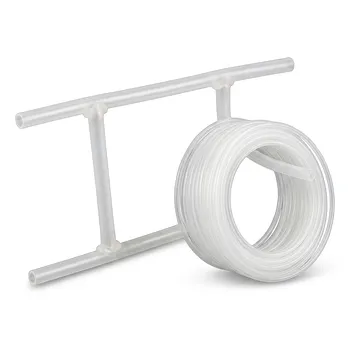
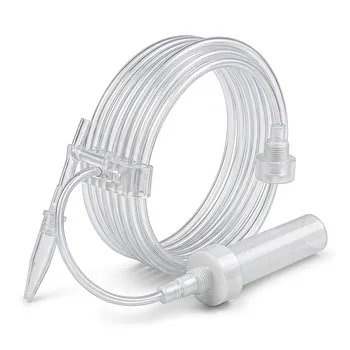
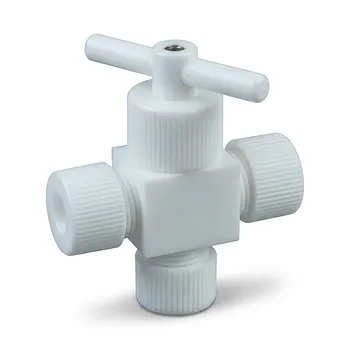
PTFE and PFA are fluoropolymers with broad resistance to strong bases, nucleophiles, and many organic solvents. Their chemically inert surfaces are therefore well suited to reaction vessels, transfer lines, tubing, valves, dishes, and other components that contact sodium fluoroalkoxides or related reagents.
This resistance helps prevent equipment degradation and reduces the likelihood that the apparatus will introduce reactive or extractable impurities.
They Reduce Wetting and Residue Retention
Fluoropolymer surfaces are non-wetting and have low surface energy. This can reduce adhesion of reactive salts and polymer residues, making transfers and cleaning more predictable.
The same property is valuable when handling small quantities of expensive or moisture-sensitive reagents because less material remains trapped on the equipment surface.
They Preserve Reagent Purity
A compatible PTFE or PFA fluid path minimizes interactions between the reagent and the apparatus. Maintaining reagent purity is especially important when the nucleophile must be generated in situ or used under rigorously anhydrous conditions.
The equipment does not make the chemistry safe by itself, but it removes a major source of avoidable chemical incompatibility and contamination.
Compatibility Must Still Be Verified
PTFE and PFA are often preferred, but no material should be selected solely because it is labeled “fluoropolymer.” Temperature, pressure, mechanical loading, exposure duration, seals, fittings, and impurities in the reagent all affect suitability.
The complete assembly must be evaluated, including non-fluoropolymer parts such as gaskets, valve bodies, supports, and connectors. Chemical compatibility data and the specific process conditions should govern the final selection.
Understanding the Trade-offs
Better Stability Does Not Mean Indestructibility
Side-group fluorination improves resistance to hydrolysis and chemical attack, but it does not make the polymer immune to degradation. Severe conditions, defects, incomplete substitution, or vulnerable non-fluorinated side groups can still limit service life.
Performance must therefore be assessed against the actual combination of temperature, solvent, pH, water exposure, and mechanical stress.
Lower Glass Transition Can Affect Strength
A lower glass-transition temperature can improve flexibility and low-temperature performance. It can also reduce stiffness or dimensional stability at temperatures where a less flexible formulation would remain more rigid.
Fluorination is consequently a design trade-off: the desired balance between flexibility, toughness, strength, permeability, and chemical resistance must be established for the application.
Fluoropolymer Equipment Is Not a Substitute for Process Controls
PTFE and PFA components reduce material-compatibility problems, but they do not eliminate hazards from sodium metal, sodium hydride, strong nucleophiles, or moisture-sensitive reactions. Appropriate drying, inert-atmosphere handling, temperature control, shielding, and waste procedures remain necessary.
Equipment selection should support the reaction design rather than be treated as the primary safety measure.
Excessive Fluorination May Not Be Optimal
Adding more fluorinated side groups can strengthen hydrophobic and chemical-resistance effects, but it may also change chain packing, flexibility, surface behavior, and processing characteristics. The best composition is usually a controlled compromise rather than the maximum possible fluorine content.
Making the Right Choice for Your Goal
Choose the polymer composition and equipment strategy together, because the side-group chemistry determines both the material properties and the demands placed on the synthesis system.
- If your primary focus is hydrolytic and chemical stability: Use fluorinated side groups such as trifluoroethoxy substituents to electronically protect the phosphazene backbone from cleavage by water, acids, and bases.
- If your primary focus is water and oil repellency: Increase the role of low-surface-energy fluorinated substituents while verifying that the resulting polymer still has acceptable mechanical and processing properties.
- If your primary focus is flexibility: Take advantage of the tendency of fluoroalkoxy groups to lower the glass-transition temperature, but evaluate the corresponding effect on stiffness and dimensional stability.
- If your primary focus is reliable synthesis: Use PTFE or PFA for reagent-contact surfaces and verify the compatibility of every seal, fitting, transfer component, and vessel under the actual reaction conditions.
- If your primary focus is safe handling: Treat sodium metal, sodium hydride, and sodium fluoroalkoxides as moisture-sensitive, highly reactive reagents and pair compatible equipment with rigorous dry, inert handling procedures.
Side-group fluorination is most effective when its electronic, surface, mechanical, and processing consequences are designed as one integrated system.
Summary Table:
| Aspect | Effect of Side-Group Fluorination | Reason for Fluoropolymer Components |
|---|---|---|
| Hydrolytic Stability | Enhanced | Inert to moisture and nucleophiles |
| Chemical Resistance | Improved | Resists attack by bases and solvents |
| Surface Properties | Hydrophobic, oil-resistant | Low surface energy reduces wetting |
| Glass-Transition Temp | Lowered | Flexibility and processability improve |
| Reagent Compatibility | N/A | Prevents contamination and equipment degradation |
Ensure your lab's efficiency and safety with KINTEK's high-performance PTFE and PFA components. Our fluoropolymer labware, fluid transfer systems, and custom-machined parts are engineered to withstand the harshest chemistries, ensuring purity and reliability. Contact us today to optimize your polyphosphazene synthesis and other demanding applications. Get in touch with our experts.
Related Products
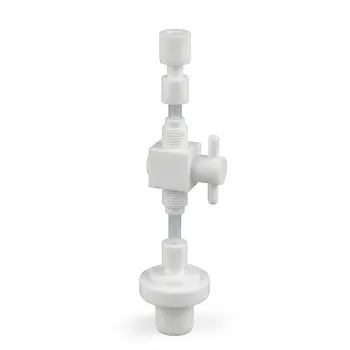
- Corrosion Resistant High Purity PFA Valve and Weldable Transparent Tubing for Semiconductor Fluid Transfer
- Custom PTFE Insulating Gaskets Corrosion Resistant Teflon Seals Tailored Engineering Plastic Components
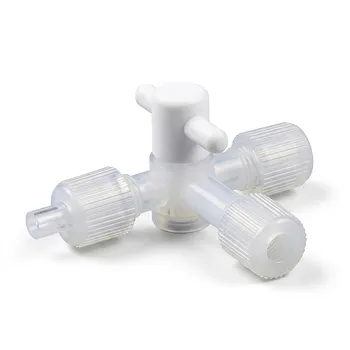
- High Purity PFA PTFE Flare Stop Valves Customizable 2-Way 3-Way Reducing Fluoropolymer Fluid Control Solutions
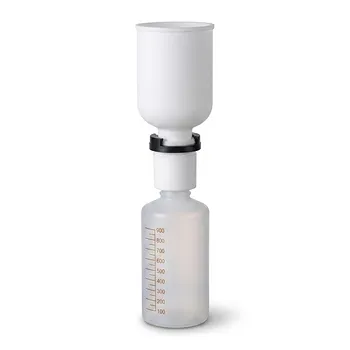
- PTFE PFA Vacuum Filtration System Corrosion Resistant Customizable Shatterproof Laboratory Device
- Corrosion Resistant PTFE Support with PFA Transparent Reaction Tank and High Purity PFA Sampling Tube for Trace Analysis
People Also Ask
- Why are high-purity PFA fluid transfer components preferred for battery electrolytes? Ensure Purity & Data Accuracy
- How do high-precision PFA fluid transfer components, such as tubing and fittings, affect the results of continuous-flow synthesis?
- How do PFA fluid transfer components contribute to chemical research precision? Achieve high-purity results today.
- What role do PFA tubing and valves play in high-precision laboratory fluid transfer systems? Ensure Ultra-Pure Results
- Which material characteristics of fluoropolymers are most critical for high-purity fluid transfer and labware? Key factors: chemical inertness, low extractables, thermal stability.