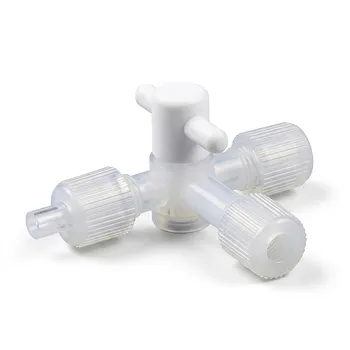
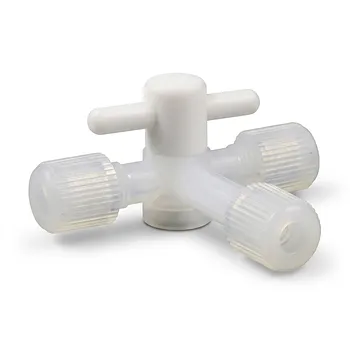
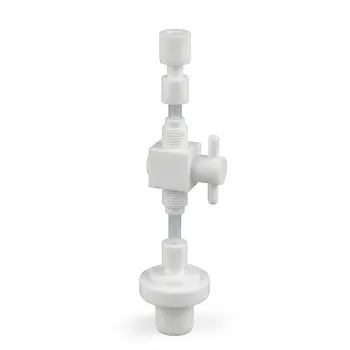
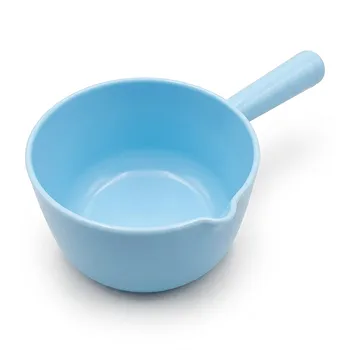
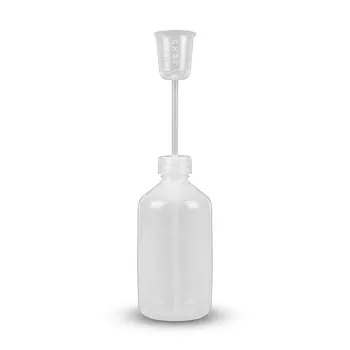
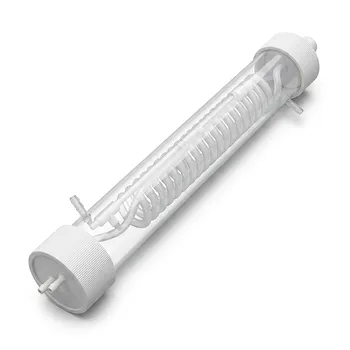
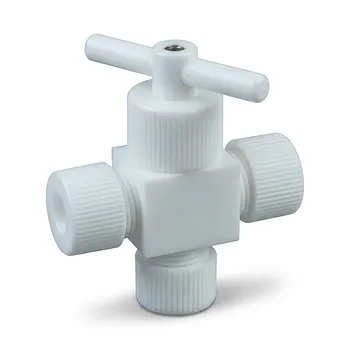
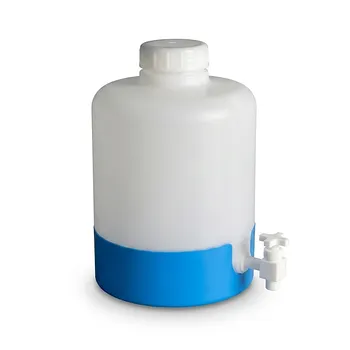
The most critical fluoropolymer characteristics are chemical inertness, thermal stability, low extractables, and low surface energy. For high-purity fluid transfer components and analytical labware, PTFE and PFA are commonly selected because they resist aggressive reagents, tolerate demanding temperatures, and minimize sample retention and contamination. The material must also have low absorption, stable dimensions, and a suitable high-purity grade for the specific fluid, pressure, and cleaning process.
The best fluoropolymer is not simply the one with the broadest chemical-resistance chart. Selection should balance purity, chemical compatibility, temperature capability, surface behavior, mechanical performance, and manufacturing quality against the actual analytical application.
Which Properties Matter Most in High-Purity Applications?
Chemical Inertness
Fluoropolymers are valuable because the strong carbon-fluorine molecular structure provides high resistance to chemical attack. PTFE and PFA can handle many strong acids, oxidizing reagents, solvents, and other aggressive laboratory chemicals without rapid degradation.
Chemical resistance must still be evaluated against the specific reagent, concentration, temperature, exposure time, and mechanical stress. A material that is compatible during brief room-temperature contact may perform differently during prolonged exposure to a hot, pressurized chemical.
Low Extractables and Leachables
For trace analysis, the material must contribute as little contamination as possible to the sample. Low leaching and low extractables help prevent the component from adding metals, organics, particles, or other impurities that can distort analytical results.
The base polymer is only part of this assessment. Fillers, pigments, processing aids, machining residues, and surface treatments can significantly affect purity, so high-purity grades and validated cleaning procedures are essential.
Low Surface Energy
Low surface energy gives fluoropolymers strongly non-wetting behavior. This reduces the tendency of aqueous and many organic samples to spread across or adhere to tubing walls, fittings, valves, and vessel surfaces.
Reduced surface retention supports lower carryover, easier rinsing, better recovery, and lower cross-contamination risk. This is especially important when transferring very small volumes or analyzing samples at trace concentrations.
Low Water and Solvent Absorption
Low absorption helps the component maintain its chemical and dimensional properties during repeated contact with liquids. It also reduces the risk that a previous sample or cleaning chemical will remain within the material and later migrate into a new sample.
Absorption and permeation are not identical. Even when a fluoropolymer does not visibly swell or degrade, certain chemicals may slowly diffuse through thin walls, seals, or tubing, so permeation data may be necessary for volatile or particularly aggressive fluids.
How Operating Conditions Affect Selection
Thermal Stability
Fluoropolymers provide a wide usable temperature range and retain their chemical resistance across demanding thermal conditions. This makes them suitable for heated transfers, digestion vessels, reaction equipment, and laboratory cleaning cycles.
However, practical service temperatures vary by polymer and product design. PTFE and PFA should be selected using the manufacturer’s continuous-use temperature, short-term temperature, pressure-temperature limits, and decomposition guidance, rather than relying on a general range such as -100 °C to 400 °C.
Thermal Cycling
Repeated heating and cooling can create stress, dimensional changes, or seal-performance problems even when the polymer itself remains chemically stable. Components used in digestion, sterilization, or repeated hot-cleaning cycles should therefore be evaluated for thermal cycling, not just maximum temperature.
Wall thickness, geometry, crystallinity, machining, and connection design can all affect performance during cycling.
Viscosity and Processability
Fluoropolymer melt behavior can influence how consistently a component is manufactured, particularly for molded PFA tubing, fittings, and vessels. Stable processing behavior supports uniform wall thickness, smooth surfaces, and predictable dimensions.
For the end user, component quality is usually more important than bulk melt viscosity. The relevant questions are whether the finished product maintains its dimensions, has a smooth and clean internal surface, and meets the required pressure, flow, and purity specifications.
What Mechanical Characteristics Should Be Considered?
Strength and Dimensional Stability
Fluoropolymers are chemically robust but are generally less stiff and mechanically strong than metals or engineering plastics. Under sustained load, some grades can exhibit creep, especially at elevated temperatures.
Tubing, fittings, valve seats, and vessels must therefore be checked for pressure rating, creep resistance, wall thickness, dimensional tolerances, and support requirements. Chemical compatibility alone does not establish mechanical suitability.
Flexibility and Bend Performance
Flexible fluoropolymer tubing can simplify routing and reduce the number of connections. More rigid tubing or machined components may provide better dimensional stability and resistance to deformation.
The choice should reflect the application’s bend radius, vibration, pressure pulses, connection method, and need for repeated installation.
Low Friction
PTFE has exceptionally low friction and inherent self-lubricating behavior. This can benefit valve components, sliding interfaces, threaded connections, and moving seals by reducing sticking and wear.
Low friction does not eliminate the need to evaluate mechanical wear. Particles generated by repeated movement may be unacceptable in some analytical environments, particularly where fluid-contact cleanliness is tightly controlled.
How Material Structure and Manufacturing Influence Purity
Polymer Grade and Formulation
The fluoropolymer concentration and formulation affect surface quality, durability, and resistance to degradation. High-purity applications generally favor high-fluoropolymer-content materials with minimal additives, rather than lower-cost blends containing substantial fillers or modifiers.
Claims about a universal “70% to 90%” optimum ratio should be treated cautiously. The correct formulation depends on the polymer type, component geometry, processing method, and required performance; a percentage alone does not establish purity or service life.
Molecular Structure and End Groups
Molecular weight, chain architecture, crystallinity, and end-group chemistry can influence mechanical strength, thermal behavior, surface properties, and potential extractables. These factors matter most when the application has stringent qualification requirements or involves long-term exposure.
For routine selection, supplier documentation and application-specific testing are usually more practical than independently analyzing polymer chain structure. Advanced characterization, such as fluorine NMR, is more relevant when validating a resin, investigating contamination, or comparing critical formulations.
Surface Finish and Cleanability
A smooth internal surface reduces particle retention, sample hold-up, and cleaning difficulty. This is particularly important for tubing, drilled passages, fittings, and custom CNC-machined labware.
Machining can introduce burrs, embedded particles, or residues even when the underlying fluoropolymer is highly pure. Cleaning, inspection, packaging, and handling controls should be considered part of the material-selection decision.
Understanding the Trade-offs
Chemical Resistance Does Not Guarantee Purity
A chemically inert polymer can still be unsuitable if it contains extractable additives, machining residue, or particulate contamination. High-purity applications require both chemical compatibility and contamination control.
Low Surface Energy Can Affect Sealing
Non-wetting and low-friction surfaces help reduce retention, but they can make bonding, printing, and some sealing methods more difficult. Mechanical seals, compression fittings, and compatible gasket materials may be preferable to relying on adhesive attachment.
Fluoropolymers Can Deform Under Load
PTFE and related materials may creep under sustained pressure or compression, particularly at high temperatures. Fittings and seals must be designed around the polymer’s mechanical limits rather than treated like rigid metal components.
Broad Temperature Ratings Can Mislead
A material may tolerate a brief temperature excursion but have a much lower continuous-use rating under pressure. Temperature, pressure, chemical exposure, and duration must be assessed together.
Different Fluoropolymers Serve Different Needs
PTFE offers excellent chemical resistance and low friction but is difficult to melt-process and can be less dimensionally stable under load. PFA generally offers similar high chemical resistance with better melt processability and transparency, which can be useful for molded tubing, vessels, and visual inspection.
Making the Right Choice for Your Goal
The selection should begin with the fluid and operating profile, then narrow the choice using purity, geometry, and qualification requirements.
- If your primary focus is trace-analysis purity: Prioritize high-purity PTFE or PFA grades, low extractables and leachables, low absorption, smooth surfaces, and documented cleaning and packaging controls.
- If your primary focus is aggressive chemical compatibility: Confirm resistance to the exact chemical mixture, concentration, temperature, exposure duration, and cleaning agents rather than relying only on a general compatibility table.
- If your primary focus is elevated-temperature service: Compare continuous-use and pressure-temperature ratings, thermal cycling behavior, dimensional stability, and degradation limits for the specific fluoropolymer and component design.
- If your primary focus is minimizing carryover: Select low-surface-energy, non-wetting surfaces and designs with minimal dead volume, smooth passages, and effective rinsing access.
- If your primary focus is long-term mechanical reliability: Evaluate creep, pressure rating, flexibility, wall thickness, seal design, and support requirements in addition to chemical resistance.
- If your primary focus is custom machined labware: Specify resin purity, additive restrictions, surface finish, dimensional tolerances, post-machining cleaning, inspection, and contamination-controlled packaging.
A sound fluoropolymer selection matches the material’s purity and surface behavior to the analytical risk while verifying that its thermal and mechanical limits fit the real operating conditions.
Summary Table:
| Characteristic | Why It Matters | Key Consideration |
|---|---|---|
| Chemical Inertness | Resists aggressive reagents, prevents degradation | Evaluate against specific chemicals, temperature, exposure time |
| Low Extractables | Minimizes contamination for trace analysis | Check for fillers, processing aids, surface residues |
| Low Surface Energy | Reduces sample retention and carryover | Improves rinsing and recovery |
| Thermal Stability | Withstands high temperatures and cycling | Verify continuous-use and pressure-temperature ratings |
| Mechanical Strength | Ensures durability under pressure and load | Watch for creep, especially at elevated temperatures |
| Surface Finish | Affects cleanability and particle retention | Smooth surfaces for low hold-up |
| Polymer Grade | Determines purity and performance | Choose high-purity grades with minimal additives |
Ready to ensure the highest purity and performance for your lab? At KINTEK, we specialize in high-performance fluoropolymers (PTFE and PFA) for all your labware and fluid handling needs. From beakers and tubing to custom CNC-machined parts and complete fluid transfer systems, our products are designed to meet the most stringent analytical requirements. With low extractables, excellent chemical resistance, and precise manufacturing, we help you achieve reliable results every time. Contact us today to discuss your specific needs and see how we can support your success!
Related Products
- Corrosion Resistant High Purity PFA Valve and Weldable Transparent Tubing for Semiconductor Fluid Transfer
- High Purity PFA Valves and Weldable Corrosion Resistant Transparent Tubing for Semiconductor Sensor Manufacturing Fluid Transfer
- High Purity PFA PTFE Flare Stop Valves Customizable 2-Way 3-Way Reducing Fluoropolymer Fluid Control Solutions
- High Purity PFA Sampling Scoop Custom Fluoropolymer Water Ladle Organic Solvent Resistant Dipper
- PFA Laboratory Pipette Tips High Purity Fluoropolymer Pipetting Tubes for Electronic Pipettors Customizable Teflon Suction Tubes
People Also Ask
- Why are high-purity PFA fluid transfer components preferred for battery electrolytes? Ensure Purity & Data Accuracy
- How do high-precision PFA fluid transfer components, such as tubing and fittings, affect the results of continuous-flow synthesis?
- How do PFA fluid transfer components contribute to chemical research precision? Achieve high-purity results today.
- What role do PFA tubing and valves play in high-precision laboratory fluid transfer systems? Ensure Ultra-Pure Results
- What advantages do PTFE and PFA tubing offer for organic solvents? Superior chemical resistance, purity, and high-temperature stability.