Increasing fluorine content generally makes a fluoropolymer more chemically inert, thermally stable, electrically insulating, and resistant to sticking and friction. These benefits are strongest in fully fluorinated materials such as PTFE and PFA, where strong carbon-fluorine bonds provide exceptional resistance to aggressive chemicals, elevated temperatures, weathering, and flame. The main compromise is that some mechanical properties, including cut-through and load-bearing strength, may be lower than those of less-fluorinated engineering plastics.
Higher fluorine content shifts a material toward chemical inertness, thermal endurance, low friction, and non-contamination. For custom components, this is highly valuable in fluid handling and laboratory applications, but mechanical loading, wear, dimensional stability, and fabrication requirements must still guide material selection.
How Fluorine Changes Polymer Performance
Chemical Resistance Becomes the Primary Advantage
Higher fluorine content makes the polymer less reactive with acids, solvents, reagents, and other aggressive chemicals. The strong carbon-fluorine bond helps prevent chemical attack and reduces the likelihood that solvents will dissolve, swell, or extract material from the component.
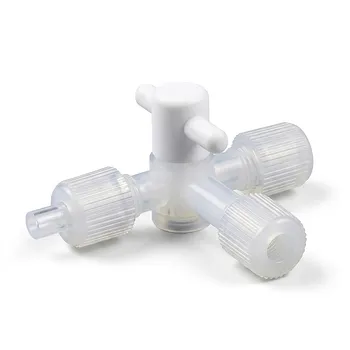
This makes highly fluorinated materials suitable for valves, fittings, tubing, reaction vessels, reagent storage components, and high-purity analytical equipment.
Thermal Stability Increases
Fluorination generally increases resistance to thermal degradation and improves performance during repeated exposure to elevated temperatures. Fully fluorinated materials such as PTFE and PFA are therefore preferred when components must maintain chemical inertness and purity across demanding thermal cycles.
The exact temperature capability still depends on the resin grade, component geometry, applied load, and exposure duration. A material's maximum short-term temperature rating should not be treated as its continuous service limit.
Melting and Processing Behavior Changes
Higher fluorine content is associated with higher melting temperatures and greater thermal endurance in the polymer structure. However, the processing method differs substantially between materials.
PFA is melt-processable, making it suitable for molded or welded geometries that require high purity and chemical resistance. PTFE is generally processed through techniques such as compression molding, sintering, or machining, rather than conventional melt extrusion.
Flame and Weather Resistance Improve
Greater fluorination improves resistance to ignition, flame propagation, ultraviolet exposure, and environmental weathering. This can extend service life in outdoor equipment, laboratory environments, and industrial systems exposed to heat, light, or chemically active atmospheres.
How Surface and Electrical Properties Change
Friction and Adhesion Decrease
Higher fluorine content generally lowers the coefficient of friction and surface energy. The result is a smoother, more non-stick surface that resists adhesion and supports easier movement between mating parts.
This is particularly useful for valve seats, sliding seals, pump components, fluid-transfer fittings, and machined channels where sticking or residue retention would impair operation.
Contamination Risk Is Reduced
Low surface energy makes highly fluorinated polymers less likely to retain chemicals, particles, and biological residues. Combined with their chemical inertness, this supports high-purity fluid handling and trace-analysis applications.
The material itself can still generate particles through wear or machining, so component design, surface finish, cleaning, and manufacturing controls remain important.
Electrical Insulation Improves
As fluorine content rises, volume and surface resistivity generally increase, while the dielectric constant and dissipation factor decrease. These changes improve electrical insulation and reduce dielectric losses.
This matters when a custom component must isolate conductive fluids, prevent leakage currents, or maintain stable electrical behavior across changing frequencies and temperatures.
What This Means for Custom Components
PTFE Favors Chemical Inertness and Low Friction
PTFE provides an exceptionally inert, low-friction, non-stick surface and is widely used for machined components exposed to aggressive reagents. It is often a strong choice for custom laboratory parts where chemical purity and sliding behavior matter more than high structural strength.
Its limitations can include relatively low stiffness, creep under sustained load, and more demanding dimensional control during design and machining.
PFA Favors Fabrication Flexibility and Purity
PFA combines high fluorination with melt-processability, allowing manufacturers to produce tubing, molded parts, and complex fluid-handling geometries. It is well suited to high-purity systems that require chemical resistance, thermal endurance, and reduced contamination.
The appropriate choice between PTFE and PFA depends on whether the design prioritizes machined geometry, melt processing, transparency, flexibility, dimensional behavior, or long-term loading.
Component Geometry Remains Important
Material properties alone do not determine component performance. Wall thickness, unsupported spans, sealing loads, thermal gradients, thread design, tolerances, and contact stresses can dominate the result.
A highly fluorinated polymer may resist the fluid perfectly but still deform if a seal is over-compressed or a thin section is exposed to sustained pressure.
Understanding the Trade-offs
Some Mechanical Strength Can Decrease
Higher fluorination can slightly reduce certain mechanical strength parameters compared with hydrocarbon-based engineering plastics. Cut-through resistance, stiffness, wear resistance, and resistance to deformation should therefore be evaluated for load-bearing or abrasive applications.
This does not make PTFE or PFA unsuitable for demanding components; it means the design must account for their characteristic mechanical behavior.
Creep and Cold Flow Must Be Considered
PTFE in particular can deform gradually under continuous compressive or tensile stress. A component that performs well during a short test may change dimensions over time if it carries a sustained load at elevated temperature.
Designers may need to use backup rings, reduced unsupported lengths, controlled compression, or a reinforced grade when dimensional stability is critical.
Low Friction Does Not Guarantee High Wear Resistance
A low coefficient of friction reduces sliding resistance, but wear performance also depends on load, speed, mating-surface finish, temperature, and the presence of abrasive particles. Filled grades may improve wear or stiffness, but fillers can affect purity, chemical compatibility, and electrical behavior.
Thermal Resistance Has Practical Limits
Fluoropolymers withstand high temperatures relative to many plastics, but prolonged exposure near their limits can still cause creep, property loss, or decomposition. Thermal cycling can also create dimensional changes that affect seals and precision interfaces.
Fabrication Can Affect Final Performance
Machining, molding, welding, and post-processing can introduce surface defects, residual stress, dimensional variation, or contamination. For high-purity components, resin selection and manufacturing controls should be specified together.
Making the Right Choice for Your Goal
The best material is the one that balances fluorination benefits with the component's actual mechanical and manufacturing demands.
- If your primary focus is chemical resistance and purity: Choose a highly fluorinated material such as PTFE or PFA, then verify compatibility with the specific chemicals, temperatures, pressure, and cleaning process.
- If your primary focus is low friction and non-stick behavior: Favor PTFE or another low-surface-energy fluoropolymer, while evaluating wear, mating materials, and expected sliding loads.
- If your primary focus is electrical insulation: Use the higher resistivity and lower dielectric properties of highly fluorinated polymers, but confirm performance at the operating temperature and frequency.
- If your primary focus is dimensional stability under load: Compare fluoropolymers with reinforced grades or alternative engineering plastics, and design explicitly for creep, compression, and thermal expansion.
- If your primary focus is complex molded or welded geometry: Consider PFA because its melt-processability can provide fabrication options that are not available with conventional PTFE processing.
Increasing fluorine content generally delivers maximum chemical, thermal, surface, and electrical performance, but successful custom-component design requires matching those advantages to the part's mechanical loads and manufacturing method.
Summary Table:
| Property | Effect of Higher Fluorine Content |
|---|---|
| Chemical Resistance | Enhanced inertness to acids, solvents, and reagents. |
| Thermal Stability | Improved resistance to degradation at elevated temperatures. |
| Surface Energy | Lower friction and adhesion, non-stick behavior. |
| Contamination Risk | Reduced retention of chemicals, particles, and bio-residues. |
| Electrical Insulation | Higher resistivity, lower dielectric constant and loss. |
| Flame and Weather Resistance | Improved resistance to ignition, UV, and environmental weathering. |
| Mechanical Strength | May slightly decrease, especially cut-through and load-bearing capacity. |
| Creep and Cold Flow | Increased susceptibility, especially in PTFE under sustained loads. |
| Fabrication Flexibility | PFA is melt-processable; PTFE requires specialized processing. |
Need custom fluoropolymer components with optimized performance? KINTEK offers high-performance PTFE and PFA solutions, from labware and fluid handling to custom CNC machined parts. Our expertise ensures your parts meet exacting purity, thermal, and mechanical requirements. Contact us today to discuss your project!
Related Products
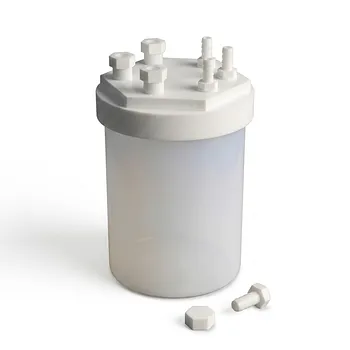
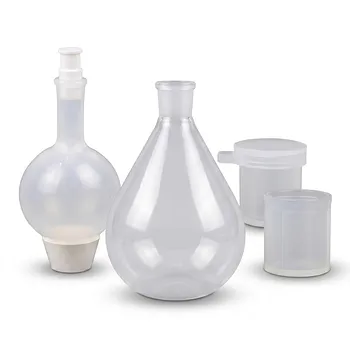
- Custom PTFE Flask 250ml High Purity Fluoropolymer Laboratory Vessel for Chemical Research
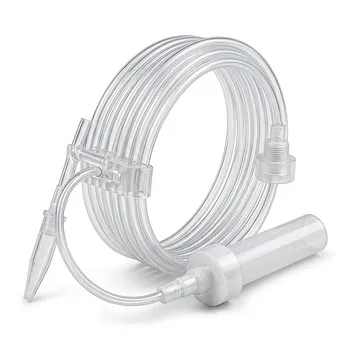
- Custom PFA Tubing 1/4 Inch High Purity Corrosion Resistant Fluoropolymer Tube with Welding and Machining Services
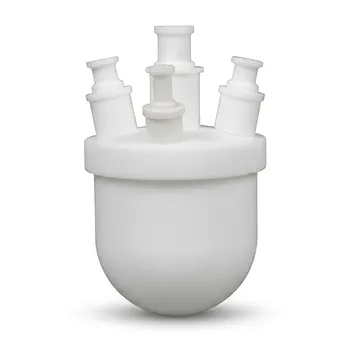
- Custom Corrosion Resistant PFA PTFE Multi Neck Laboratory Reaction Flask GL Standard Mouth Fluoropolymer Flasks
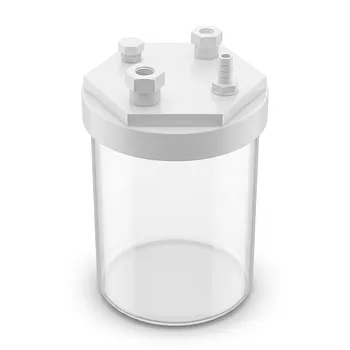
- Custom PTFE Reaction Tank Corrosion Resistant Fluoropolymer Chemical Processing Barrel 10L 20L 30L
- Custom PTFE Teflon Balls for Advanced Industrial Applications
People Also Ask
- What are the key steps for structural integrity in molded PTFE lab reaction vessels? Master fine powder processing.
- What toxicological hazards and safe handling protocols must be established when PTFE fluoropolymer reaction vessels are subjected to pyrolysis temperatures? Learn essential safety measures now.
- When synthesizing TFVE monomers involving reactive organometallic reagents and aggressive polar solvents, what material performance characteristics are required? Ensure purity with PTFE/PFA.
- Why Are High-Purity Fluoropolymer Vessels and Tubing Critical for Trace Analysis? Prevent Contamination Reliably
- How does pressure management influence molar mass distribution and reaction rate in the iodine transfer emulsion polymerization of vinylidene fluoride, and how do custom fluoropolymer reaction vessels support this process?