Adjusting monomer ratios and fluorine concentration changes the polymer’s performance profile from the molecular level upward. Higher fluorine content generally increases chemical resistance, thermal endurance, flame resistance, electrical resistivity, and low-adhesion behavior, while reducing surface energy, friction, dielectric constant, and dissipation factor. Changing the ratio of comonomers can also tune flexibility, crystallinity, melting behavior, solvent resistance, low-temperature performance, and resistance to specific reagents.
The right formulation is a balance, not a race toward maximum fluorination. Highly fluorinated polymers are preferred for chemical inertness and demanding temperatures, while carefully selected comonomer ratios can provide the flexibility, processability, sealing performance, or rigidity required by a particular labware component.
How Composition Controls Bulk Properties
Fluorine Increases Chemical Inertness
The carbon-fluorine bond gives fluoropolymers strong resistance to aggressive organic and inorganic reagents. Increasing fluorine incorporation generally reduces the polymer’s susceptibility to chemical attack, swelling, and solvent interaction.
This is particularly important for reaction vessels, digestion equipment, reagent containers, tubing, valve bodies, and trace-analysis components where contamination or material degradation can compromise results.
Fluorination Reduces Surface Interaction
Higher fluorine content usually lowers surface energy and the coefficient of friction. The resulting surface is more non-stick, less wettable by many substances, and less likely to retain samples or residues.
For laboratory fluid paths, this can reduce adhesion and support smoother valve, fitting, and tubing operation. It does not mean that every liquid will behave identically, because surface behavior also depends on texture, temperature, pressure, and the liquid’s own chemistry.
Monomer Ratios Tune Flexibility and Rigidity
The relative amounts of the base monomer and comonomers determine how regularly polymer chains can pack. More regular structures tend to support higher crystallinity, rigidity, and thermal resistance, while selected comonomers can interrupt packing and produce greater flexibility or toughness.
This allows formulations to serve very different purposes. Flexible compositions may be appropriate for tubing, gaskets, and seals, whereas more rigid compositions may be better suited to reaction vessels, machined blocks, and structural fittings.
How Fluorine Content Changes Thermal and Electrical Behavior
Higher Fluorination Raises Thermal Resistance
Increasing fluorine content generally improves thermal stability, melting behavior, flame resistance, and resistance to environmental weathering. These characteristics help labware tolerate elevated temperatures and repeated exposure to demanding operating conditions.
Among commonly used perfluorinated materials, the reference hierarchy is PTFE > PFA > FEP for thermal stability. Actual performance still depends on grade, fabrication method, mechanical loading, exposure time, and the difference between continuous-use temperature and short-term thermal capability.
Electrical Properties Also Shift
Higher fluorination generally increases surface and volume resistivity while lowering the dielectric constant and dissipation factor. These changes make highly fluorinated materials effective electrical insulators.
The electrical benefit matters in specialized labware that combines fluid handling with sensors, heaters, high-voltage components, or electrostatic-sensitive analytical processes.
Thermal Performance Can Reduce Processing Flexibility
A formulation optimized for high crystallinity and thermal endurance may be difficult to melt-process or machine. PTFE, for example, is commonly shaped through specialized processing and machining routes rather than conventional melt processing.
Comonomer selection can improve processability, but the resulting material may not match the maximum temperature or chemical-resistance performance of a more highly crystalline formulation.
How Monomer Selection Targets Specific Labware Functions
VDF and HFP Provide a Balanced Profile
Vinylidene fluoride and hexafluoropropylene copolymers, often containing approximately 66% fluorine by weight, provide a useful balance of chemical resistance, flexibility, and mechanical performance.
These characteristics are relevant to seals, gaskets, tubing, and fittings that must remain compliant while maintaining dimensional stability and leak resistance.
TFE Improves Heat and Solvent Resistance
Adding tetrafluoroethylene to a VDF/HFP-type composition can raise fluorine content to approximately 68-69.5% by weight. This generally improves heat resistance and resistance to aromatic solvents.
The benefit is valuable in fluid-transfer components exposed to elevated temperatures or solvent systems that would challenge less fluorinated elastomeric materials.
PMVE Supports Low-Temperature Performance
Incorporating perfluoromethyl vinyl ether can improve low-temperature behavior. This is useful where seals or flexible tubing must retain compliance during cold starts, refrigerated operation, or thermal cycling.
The formulation must still be evaluated for its high-temperature and chemical requirements, since optimizing one operating range does not automatically optimize all others.
TFE/Propylene Improves Strong-Base Resistance
Tetrafluoroethylene/propylene compositions can substantially improve resistance to strong bases. This makes monomer selection especially important for alkaline processing, cleaning, and chemical-transfer applications.
A general fluorine percentage alone is not enough to predict performance against every reagent. The identity and arrangement of the comonomers can be more relevant to a specific chemical exposure.
Matching Bulk Properties to Labware Design
Tubing and Seals Need Compliance
Fluid-transfer components must deform enough to seal against mating surfaces and tolerate movement or pressure variation. A formulation that is too rigid may resist compression and create leakage, even if its chemical resistance is excellent.
Monomer ratios that improve flexibility and low-temperature performance can therefore be more valuable than maximum fluorine content for gaskets, valve seats, and flexible tubing.
Reaction Vessels Need Dimensional Stability
Reaction vessels, digestion vessels, and machined containers generally require rigidity, low creep, chemical inertness, and thermal endurance. Higher fluorination and a structure that supports greater crystallinity can help meet these requirements.
Designers must also account for thermal expansion, wall thickness, machining tolerances, and mechanical loads. Chemical resistance alone does not guarantee dimensional stability under pressure or sustained heat.
High-Purity Applications Need Low Contamination Risk
Highly fluorinated polymers such as PTFE and PFA offer low surface energy, low sample adhesion, and strong resistance to aggressive reagents. These properties make them well suited to trace analysis, reagent storage, and high-purity fluid handling.
Material selection should include extractables, permeability, cleaning compatibility, surface finish, and manufacturing cleanliness. Bulk composition is a major factor, but it is not the entire contamination-control strategy.
Understanding the Trade-offs
More Fluorine Does Not Improve Every Mechanical Property
Higher fluorination can slightly reduce certain mechanical properties, including some measures of strength and cut-through resistance. This matters for load-bearing, wear-intensive, or sharply constrained components.
The trade-off is often acceptable in applications where chemical inertness, low friction, and thermal endurance dominate. It is less acceptable when the component must withstand concentrated mechanical stress or repeated abrasion.
Low Friction Can Increase Retention Challenges
A low-friction surface helps valves, fittings, and moving parts operate smoothly. However, low surface energy can also make bonding, coating, printing, and adhesive attachment more difficult.
When a component must be joined to another material, the design may require mechanical retention, specialized surface treatment, or a compatible joining process.
Chemical Resistance Is Reagent-Specific
A high fluorine percentage is a strong indicator of broad chemical resistance, but it does not replace compatibility testing. Temperature, concentration, exposure duration, pressure, stress, and the exact formulation all affect the result.
Permeation and swelling can also occur even when the polymer appears chemically intact. This is particularly important for thin tubing and seals exposed to solvents for long periods.
Thermal Ratings Must Be Interpreted Carefully
A high melting point or decomposition temperature does not define a universal operating limit. Mechanical strength, creep, dimensional change, and chemical exposure can impose lower practical limits.
For example, PTFE, PFA, and FEP may be ranked by thermal stability, but the best material for a component depends on whether the application prioritizes continuous heat, melt processability, flexibility, transparency, or pressure resistance.
Making the Right Choice for Your Goal
Composition should be selected against the complete operating envelope: chemical exposure, temperature, pressure, flexibility, mechanical loading, purity requirements, and fabrication method.
- If your primary focus is maximum chemical inertness: Favor highly fluorinated or perfluorinated materials such as PTFE or PFA, while confirming compatibility with the specific reagents and temperature profile.
- If your primary focus is flexible sealing or fluid transfer: Use a comonomer balance that preserves compliance, low-temperature performance, and leak resistance rather than selecting solely by fluorine percentage.
- If your primary focus is high-temperature service: Prioritize a formulation with strong thermal stability and dimensional retention, then verify continuous-use performance under the actual mechanical and chemical load.
- If your primary focus is strong-base resistance: Evaluate TFE/propylene compositions or another formulation designed for alkaline exposure instead of relying only on total fluorine content.
- If your primary focus is low adhesion and smooth movement: Favor highly fluorinated surfaces with low surface energy and friction, while planning for joining and retention challenges.
- If your primary focus is high-purity analytical work: Combine a chemically inert polymer with appropriate grade control, surface finish, cleaning procedures, and extractables testing.
The most reliable labware results come from treating fluorine concentration and monomer ratios as design variables that must be balanced against the component’s real operating demands.
Summary Table:
| Property | Higher Fluorine | Lower Fluorine |
|---|---|---|
| Chemical Resistance | Improved | Reduced |
| Thermal Stability | Improved | Reduced |
| Surface Energy/Friction | Reduced | Increased |
| Flexibility | Reduced | Improved |
| Crystallinity | Increased | Reduced |
| Processability | More Difficult | Easier |
Choose the Right Fluoropolymer for Your Labware
At KINTEK, we specialize in high-performance fluoropolymers (PTFE and PFA) for laboratory supplies. Our expertise in monomer ratios and fluorine content ensures your labware meets exact needs — from chemical inertness to flexibility. Whether you need custom CNC machining, intricate parts, or high-volume production, we deliver. Contact us today to discuss your requirements and elevate your lab's performance.
Related Products
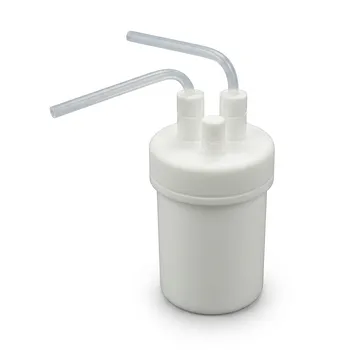
- Custom PTFE Continuous Reaction Bottles Virgin Fluoropolymer High Purity Low Background Synthesis Vessels
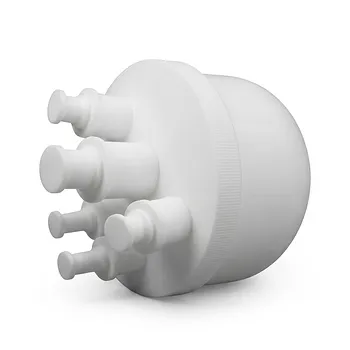
- Custom Multi Neck PTFE Flask for Chemical Engineering and High Purity Laboratory Synthesis Applications
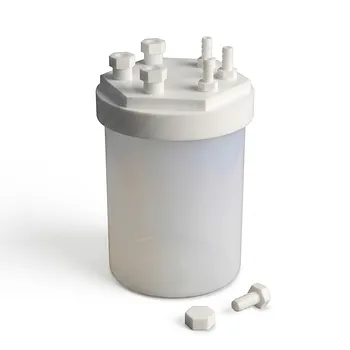
- PFA Chemical Reaction Tank with Customizable Fittings for Corrosive Solvent Synthesis and High Purity Lab Applications
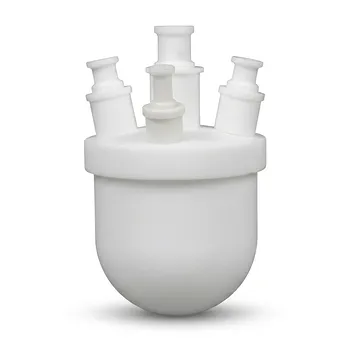
- Custom PTFE Flask 250ml High Purity Fluoropolymer Laboratory Vessel for Chemical Research
- PFA Reaction Tank 6L Customizable Fittings Corrosion Resistant Solvent Resistant PFA Reaction Bottle for New Material Synthesis
People Also Ask
- What reaction vessel and fluid handling considerations are necessary for living cationic polymerization of fluorinated monomers involving Lewis acid catalysts? Key design and safety tips
- Ion Activation Reaction Vessel Requirements: Why PTFE is Critical for Membrane Performance
- How do perfluorinated solvent environments influence the selection of reaction vessels and fluid handling components in nonaqueous emulsion polymerizations? Choose fluoropolymer materials.
- Why are high-purity PTFE or PFA reaction vessels recommended for the synthesis of PANI-TiC hybrid materials? - Guide
- Why are fluoroplastic (PTFE) reaction vessels recommended for Methylene Blue (MB) adsorption kinetic experiments?