Hard inorganic fillers and fluoropolymers solve different surface problems. Hard particles such as silicon carbide, aluminum oxide, and glass microspheres primarily improve scratch, abrasion, and wear resistance by creating a mechanically robust surface. Fluoropolymers such as PTFE and PFA primarily reduce the coefficient of friction, sticking, and surface marring, although unfilled grades can wear relatively quickly under sustained mechanical contact.
The practical distinction is friction versus durability: hard inorganic fillers protect against mechanical damage, while fluoropolymers provide low-friction behavior. For demanding applications, a filled fluoropolymer or a solid, machined fluoropolymer component can combine much of both performance advantages.
How the Two Material Classes Control Surface Performance
Hard inorganic fillers resist mechanical damage
Hard particles increase a coating’s resistance to scratching, indentation, and abrasive wear. Silicon carbide is particularly hard, with a Knoop hardness of approximately 2600 kg/mm²; aluminum oxide and glass particles also provide a hard protective phase.
These fillers are effective when the dominant failure mode is surface damage from contact, sliding, particles, or handling. Their main contribution is durability rather than lubricity.
Fluoropolymers reduce friction and marring
Unfilled PTFE, PFA, and related fluoropolymers have inherently low coefficients of friction and smooth surfaces. This reduces sliding resistance, adhesion, and visible surface marring.
Their low-friction behavior makes them useful for fluid-transfer components, non-stick surfaces, seals, valves, and laboratory equipment where smooth, non-contaminating contact is important.
Low friction does not automatically mean low wear
A key design mistake is treating fluoropolymer lubricity as equivalent to wear resistance. Unfilled perfluoropolymers have very low friction but can exhibit relatively high wear rates under mechanical friction.
Hard inorganic fillers address the wear problem directly, but they do not necessarily provide the same non-stick or low-friction behavior as a fluoropolymer.
Why Filled Fluoropolymers Can Be a Strong Compromise
Fillers can reinforce a low-friction matrix
Incorporating fillers into a fluoropolymer compound can substantially reduce its wear rate while leaving its low coefficient of friction largely unaffected. This makes filled fluoropolymers attractive where both sliding efficiency and service life matter.
The result is not identical to a hard-particle coating. The fluoropolymer matrix still supplies low-friction behavior, while the filler supports load-bearing and wear resistance.
Filler morphology affects wear performance
The shape and structure of the filler influence how the compound behaves in service. Under moderate conditions, fibrous fillers such as glass fiber can wear less rapidly than spherical fillers such as glass beads.
This means filler selection should consider more than hardness alone. Particle geometry, load transfer, contact mechanics, and the intended motion all affect the outcome.
Thermal conductivity matters under severe sliding
High velocity and load generate frictional heat at contacting surfaces. Thermally conductive fillers such as bronze or graphite can help dissipate that heat and extend service life in components such as mechanical seals, bearings, and valves.
For severe duty, the best formulation may therefore be one that manages both mechanical wear and heat, rather than one selected solely for maximum hardness.
Choosing Between Coatings and Solid Fluoropolymer Components
Hard-filled coatings suit surface protection
A hard inorganic-filled coating is appropriate when the primary need is a tougher exposed surface on an existing substrate. It can improve resistance to scratches and abrasion without replacing the underlying component.
However, the benefit is concentrated in the coating. Once the coating wears through, the substrate’s properties and the coating-substrate interface become relevant.
Solid PTFE or PFA provides bulk performance
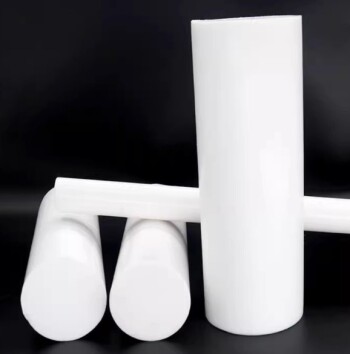
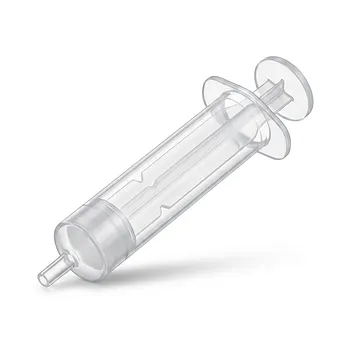
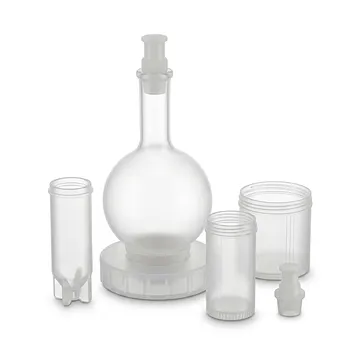
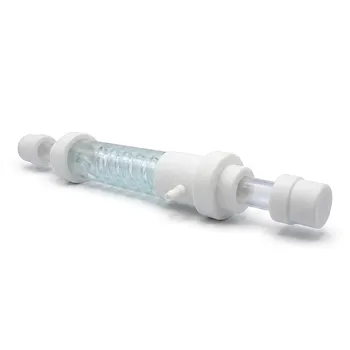
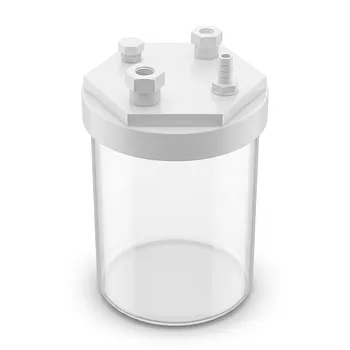
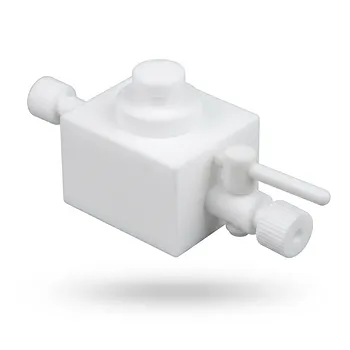
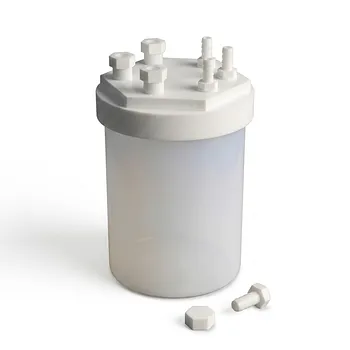
For high-wear, non-stick laboratory setups, CNC-machined PTFE or PFA components provide low friction and chemical resistance throughout the entire bulk material, not only at a thin surface layer.
This avoids several concerns associated with coatings, including wear-through, filler leaching, and particulate contamination in sensitive liquid-transfer systems.
Material selection depends on the required balance
Fully fluorinated materials such as PFA and FEP prioritize chemical inertia, thermal resistance, and flexibility. PVDF is harder and more abrasion-resistant, with reported Shore D hardness of approximately 74–80, compared with about 55–57 for PFA and FEP.
PVDF is therefore better suited to applications requiring greater structural rigidity and abrasion resistance, while PFA and FEP are stronger candidates when chemical resistance and flexibility dominate.
Understanding the Trade-offs
Hardness can come at the expense of surface behavior
A hard inorganic filler improves resistance to mechanical damage, but it does not inherently make a surface non-stick or exceptionally low-friction. Depending on the formulation and contact pair, a hard particle may also increase counterface abrasion.
The correct question is not simply “Which material is harder?” It is “Which failure mode is limiting service life?”
Unfilled fluoropolymers can wear too quickly
Unfilled PTFE and PFA are excellent where low friction and chemical compatibility dominate, but they may be unsuitable for heavily loaded or continuously sliding interfaces without reinforcement.
Using an unfilled grade in a severe wear application can produce early dimensional loss even when friction remains low.
Filled fluoropolymers are not universally optimal
Adding filler can improve wear resistance, but the result depends on filler type, morphology, loading, operating temperature, velocity, and contact pressure. A compound optimized for moderate sliding may not perform equally well under high-speed, high-load conditions.
Thermal management becomes especially important in severe applications, where graphite or bronze may outperform a purely hard but thermally insulating filler.
Coatings require attention to the failure system
A coating’s performance depends on more than filler hardness. Adhesion, thickness, substrate support, coating wear-through, and the consequences of released particles must be evaluated.
This is particularly important in sensitive laboratory fluid-transfer systems, where particulate contamination or leached constituents may be unacceptable.
Making the Right Choice for Your Goal
The best selection follows the dominant operating requirement rather than a generic ranking of materials.
- If your primary focus is scratch and abrasion resistance: Use a hard inorganic-filled coating or a harder fluoropolymer grade such as PVDF when surface durability is more important than minimum friction.
- If your primary focus is minimum friction and non-stick behavior: Use an unfilled fluoropolymer such as PTFE or PFA, provided the mechanical wear rate is acceptable.
- If your primary focus is low friction with improved service life: Specify a filled fluoropolymer compound and match the filler to the load, speed, temperature, and contact conditions.
- If your primary focus is high-load or high-speed sliding: Consider a fluoropolymer compound with thermally conductive filler, such as graphite or bronze, to manage frictional heat.
- If your primary focus is contamination control in laboratory fluid handling: Prefer solid CNC-machined PTFE or PFA components when their mechanical performance meets the application requirements, avoiding coating wear-through and filler-release concerns.
Select the material by balancing friction, wear, heat, chemical compatibility, and contamination risk against the actual operating conditions.
Summary Table:
| Material | Key Property | Best For | Limitations |
|---|---|---|---|
| Hard Inorganic Fillers | High hardness (e.g., SiC ~2600 kg/mm² Knoop) | Scratch/abrasion resistance | Not inherently low-friction; may abrade counterface |
| Unfilled Fluoropolymers (PTFE, PFA) | Low coefficient of friction | Non-stick, low-friction surfaces | High wear under sustained contact |
| Filled Fluoropolymers | Low friction + improved wear resistance | Balancing friction and durability | Performance depends on filler type/loading |
| Thermally Conductive Filled (e.g., graphite, bronze) | Heat dissipation | High-load/high-speed sliding | May have higher friction than unfilled |
| Solid CNC-machined PTFE/PFA | Bulk low-friction and chemical resistance | Contamination-sensitive lab systems | Not for extreme wear without fillers |
Struggling to balance friction, wear, and chemical resistance? At KINTEK, we specialize in high-performance fluoropolymers (PTFE, PFA, PVDF) and custom CNC machining. Whether you need standard labware, complex machined parts, or high-purity fluid handling systems, our expertise ensures optimal material selection for your application. Contact us today to get a tailored solution that enhances performance and reliability in your lab.
Related Products
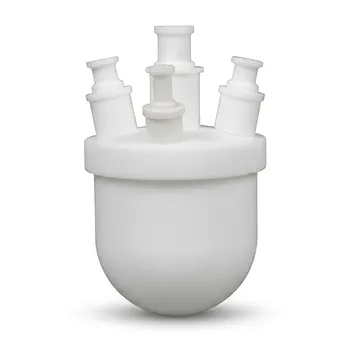
- Custom PTFE Flask 250ml High Purity Fluoropolymer Laboratory Vessel for Chemical Research
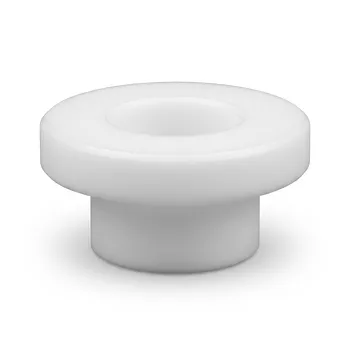
- Custom PTFE Insulating Gaskets and Corrosion Resistant Fluoropolymer Seals for Industrial Electrical Applications
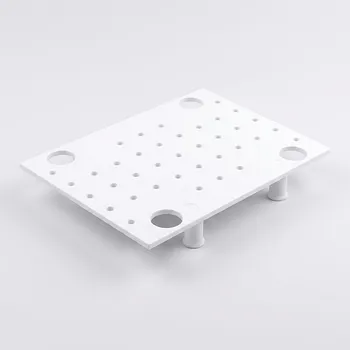
- High Temperature Resistant PTFE Thermal Insulation Board Corrosion Resistant Metal Free Fluoropolymer Stand for Ultra Clean Laboratories
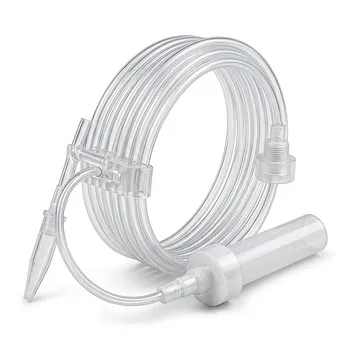
- Custom PFA Tubing 1/4 Inch High Purity Corrosion Resistant Fluoropolymer Tube with Welding and Machining Services
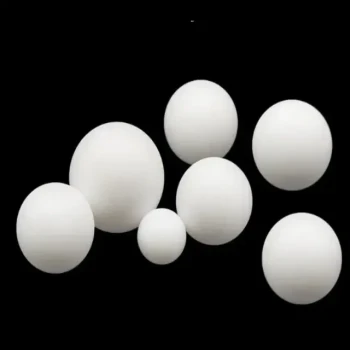
- Custom PTFE Teflon Balls for Advanced Industrial Applications
People Also Ask
- What are the key steps for structural integrity in molded PTFE lab reaction vessels? Master fine powder processing.
- What toxicological hazards and safe handling protocols must be established when PTFE fluoropolymer reaction vessels are subjected to pyrolysis temperatures? Learn essential safety measures now.
- When synthesizing TFVE monomers involving reactive organometallic reagents and aggressive polar solvents, what material performance characteristics are required? Ensure purity with PTFE/PFA.
- Why Are High-Purity Fluoropolymer Vessels and Tubing Critical for Trace Analysis? Prevent Contamination Reliably
- How does pressure management influence molar mass distribution and reaction rate in the iodine transfer emulsion polymerization of vinylidene fluoride, and how do custom fluoropolymer reaction vessels support this process?