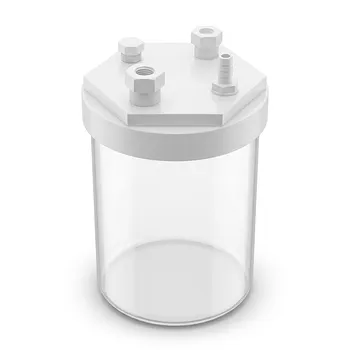
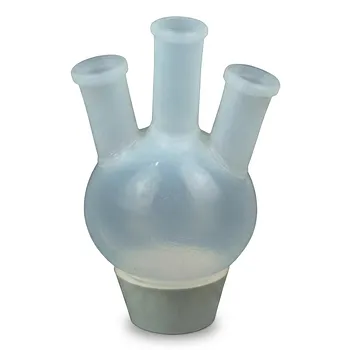
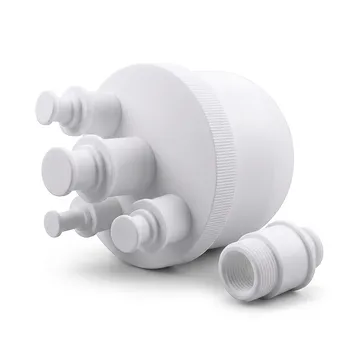
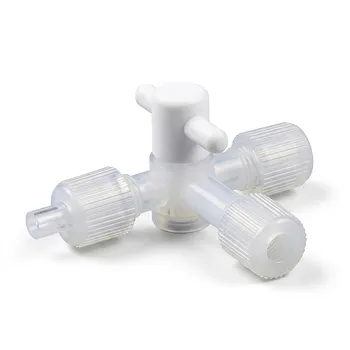
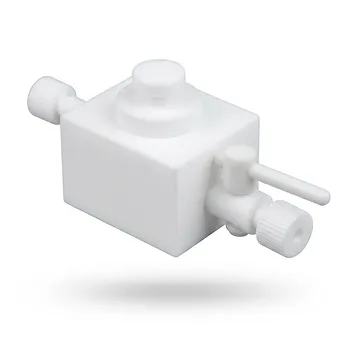
Fluoroplastics are rigid, low-friction materials for structural fluid-contact parts, while fluoroelastomers are flexible materials for sealing. PTFE and PFA provide chemical inertness, temperature resistance, low surface energy, and dimensional integrity for tubing, valves, vessels, fittings, and machined components. Fluoroelastomers such as FKM and FFKM provide rubber-like elasticity and conformability for O-rings, gaskets, diaphragms, and other leak-tight interfaces. The key selection question is whether the component must hold its shape or deform repeatedly to seal.
Choose fluoroplastics for rigid, chemically resistant fluid paths and laboratory structures; choose fluoroelastomers for flexible seals. Processing is equally important: PTFE is typically sintered or machined, PFA can be conventionally melt-processed, and conventional fluoroelastomers generally require curing.
The Fundamental Difference: Structure Versus Sealing
Fluoroplastics provide structural integrity
Fluoroplastics are generally rigid or semi-rigid polymers. Their strength, low friction, chemical resistance, and broad temperature capability make them suitable for fluid-contact structures.
Typical applications include:
- PTFE tubing, liners, vessels, valves, and machined parts
- PFA tubing, fittings, bottles, valves, and high-purity containers
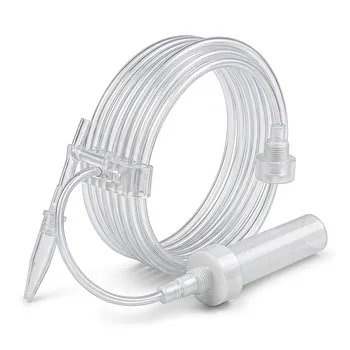
- FEP films, tubing, and transparent fluid-handling components
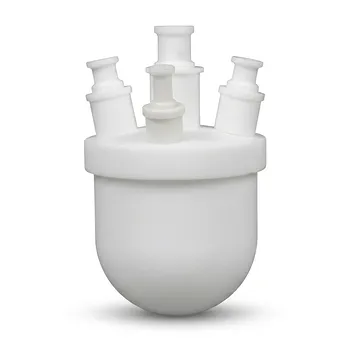
- Precision-machined reaction vessels and electrochemical cell bodies
These materials resist many aggressive chemicals while maintaining a defined shape under service conditions.
Fluoroelastomers provide elastic recovery
Fluoroelastomers are rubber-like materials designed to deform under compression and recover sufficiently to maintain contact. This makes them appropriate for O-rings, gaskets, diaphragms, valve seats, and flexible seals.
Their value is not primarily structural rigidity. It is the ability to accommodate surface irregularities, thermal expansion, vibration, and assembly tolerances while maintaining a fluid-tight interface.
The material categories are not interchangeable
A PTFE component may offer excellent chemical resistance but cannot usually provide the elastic recovery required of a conventional O-ring. Conversely, an elastomeric seal may conform effectively but lack the rigidity, low friction, or dimensional stability required for a valve body or fluid vessel.
In many systems, the best design uses both: PFA or PTFE for the fluid path and FKM or FFKM for the seal.
How Their Properties Compare
Chemical resistance
PTFE and PFA are among the most chemically inert polymer materials available. They are widely used where fluid purity and resistance to aggressive acids, bases, solvents, or oxidizing environments are important.
Fluoroelastomers also offer strong chemical resistance, but compatibility is more formulation-dependent. The elastomer’s base polymer, cure system, fillers, temperature, exposure time, and chemical concentration can all affect performance.
Do not assume that a seal and a fluoroplastic body have identical compatibility. Verify the specific elastomer grade against the actual fluid and operating conditions.
Temperature resistance
Fluoroplastics provide excellent high- and low-temperature capability, although the useful mechanical temperature range depends on the grade and load. PTFE and PFA are especially valued for demanding thermal and chemical environments.
Fluoroelastomers can also operate at elevated temperatures, particularly FFKM grades, but their practical limit depends heavily on formulation and compression conditions. A seal exposed to heat, pressure, and aggressive chemicals may age or lose elasticity even when the adjacent PTFE or PFA component remains stable.
Mechanical behavior and creep
Fluoroplastics offer rigidity, but some grades—especially unfilled PTFE—can deform slowly under sustained load. This time-dependent deformation is commonly described as creep or cold flow.
Fluoroelastomers are intentionally compliant. They tolerate deformation well, but their sealing performance depends on compression set, elastic recovery, pressure, and long-term aging.
For highly loaded PTFE parts, filled grades can improve wear, creep, compression strength, or thermal conductivity. However, fillers may reduce chemical purity or alter electrical and friction properties.
Friction and surface behavior
PTFE has extremely low surface energy and a very low coefficient of friction. Its low surface tension and hydrophobic character are useful where non-stick behavior, reduced particle retention, or easy cleaning matters.
PFA retains similar low-surface-energy behavior while offering better melt-processing capability. Fluoroelastomers generally provide more friction and are selected for sealing contact rather than sliding performance.
Permeation and purity
PFA and other high-purity fluoroplastics are frequently selected for trace-analysis and semiconductor-related fluid handling because they can provide smooth, low-contamination fluid paths.
Elastomers may exhibit greater permeability, extractables, or particulate contribution than rigid fluoroplastics. This does not make them unsuitable, but it means seal selection must consider fluid purity, exposure duration, vacuum, pressure, and analytical sensitivity.
Processing Differences That Affect Design
PTFE requires specialized forming or machining
Standard PTFE has extremely high melt viscosity and is not processed like an ordinary thermoplastic. It is typically made using compression molding and sintering, fine-powder paste extrusion, or related specialized methods.
It is also commonly supplied as stock shapes—such as rods, tubes, and sheets—for CNC machining. This makes PTFE practical for low-volume, custom, or geometrically specialized laboratory components.
The trade-off is that machining can be slower and more material-intensive than molding, particularly for high-volume production.
PFA supports conventional melt processing
PFA incorporates comonomers that increase melt flow while preserving much of the chemical and thermal performance associated with perfluorinated materials. It can therefore be extruded, injection molded, thermoformed, and welded using suitable fluoropolymer processing equipment.
This enables complex, seamless, or low-dead-volume components such as:
- High-purity tubing
- Intricate fittings
- Molded valves
- Translucent containers
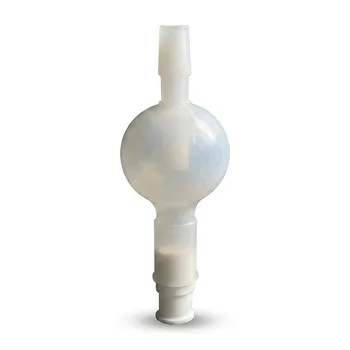
- Trace-analysis vessels
PFA is often the stronger choice when the design requires complex geometry, repeatable molding, or efficient production at moderate to high volume.
Conventional fluoroelastomers generally require curing
Many FKM and FFKM materials are chemically cross-linked through a curing or vulcanization process. Curing creates the elastic network needed for compression sealing and dimensional recovery.
This process is not reversible in the same way as thermoplastic molding. Scrap cannot simply be remelted into equivalent new parts, and cure conditions must be controlled to achieve the required seal properties.
Fluorinated thermoplastic elastomers are a separate option
Fluorinated thermoplastic elastomers, or FTPEs, use hard fluoroplastic domains to create reversible physical cross-links within a soft elastic phase. They can provide rubber-like behavior while remaining melt-processable.
FTPEs may be useful where a design needs both flexibility and thermoplastic manufacturing efficiency. However, they should not automatically be treated as interchangeable with conventional FKM or FFKM; their temperature range, chemical resistance, compression set, and long-term sealing performance must be evaluated for the specific application.
Choosing Between PTFE and PFA
Select PTFE for custom or heavily machined components
PTFE is a strong candidate when the part requires:
- Maximum chemical inertness
- Very low friction
- Custom geometry
- Low- to moderate-volume production
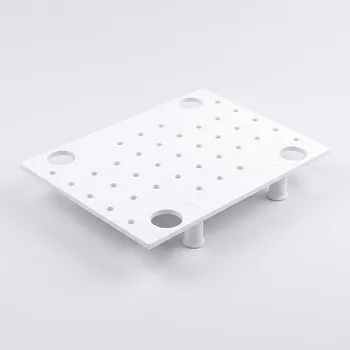
- Machined stock shapes
- High-purity contact surfaces
Examples include custom reaction vessels, microwave digestion components, valve seats, and electrochemical cell bodies.
Select PFA for molded and seamless fluid paths
PFA is generally preferable when the part requires:
- Conventional extrusion or injection molding
- Complex molded geometry
- Transparent or translucent construction
- Seamless tubing or vessels
- High-purity fluid handling
- Efficient repeatable production
PFA often provides a practical manufacturing advantage without sacrificing the central chemical and thermal benefits expected from a perfluorinated fluoroplastic.
Selecting the Appropriate Fluoroelastomer
Use FKM when broad chemical and temperature performance is sufficient
FKM is commonly used for seals exposed to many oils, fuels, solvents, and elevated temperatures. Its suitability depends on the exact formulation and fluid combination.
It is often a cost-effective option when the application does not require the extreme chemical resistance of a perfluoroelastomer.
Use FFKM for the most aggressive environments
FFKM combines elastomeric sealing behavior with very high chemical and thermal resistance. It is used for demanding seals in aggressive chemical transfer, digestion equipment, reaction apparatus, and high-temperature laboratory systems.
The major limitation is typically cost, along with the need to verify grade-specific compression set, permeability, and processing characteristics.
Evaluate the seal under actual operating conditions
A seal’s performance depends on more than nominal chemical compatibility. Check:
- Fluid composition and concentration
- Temperature and pressure
- Static or dynamic service
- Compression ratio and groove design
- Vacuum exposure
- Cycling frequency
- Required service life
- Cleanliness and extractables
A material that performs well in a static room-temperature test may behave differently under repeated thermal cycling or dynamic motion.
Understanding the Trade-offs
Chemical resistance can reduce processing flexibility
PTFE provides exceptional resistance but is difficult to melt-process. PFA offers greater manufacturing flexibility, but processing still requires equipment and controls appropriate for high-temperature fluoropolymers.
The best material is therefore not always the one with the highest nominal resistance. It is the one that meets the chemical requirement while also supporting the required geometry, volume, tolerances, and production method.
Rigidity does not eliminate creep
PTFE is rigid compared with an elastomer, but it can still creep under sustained compression or load. Designs involving bolted joints, valve seats, or pressure containment may require geometry changes, back-up rings, or filled PTFE grades.
Elastomeric flexibility introduces aging and permeation concerns
Fluoroelastomers can seal effectively but may age, take compression set, swell, shrink, or permeate certain fluids. These risks become more significant at high temperature, under vacuum, or with prolonged chemical exposure.
Fillers modify performance
Filled fluoroplastics can improve wear resistance, compression strength, creep resistance, conductivity, or thermal behavior. However, fillers can also change purity, chemical resistance, friction, color, and particle generation.
For laboratory equipment, a filled grade should be selected only when its added performance justifies the potential impact on cleanliness and compatibility.
Color is not a sufficient material specification
Fluoropolymer colors may correspond to different reinforcement packages or performance characteristics, including improved wear, conductivity, hardness, thermal resistance, or UV resistance.
Color alone is not a reliable basis for selection. Use the manufacturer’s grade designation and verify the relevant mechanical, chemical, thermal, and purity data.
Making the Right Choice for Your Goal
Use the following priorities to guide the initial selection, then confirm the specific grade against the complete operating envelope.
- If your primary focus is rigid fluid-path components: Choose PTFE for custom machined parts or PFA for complex molded and extruded geometries.
- If your primary focus is flexible leak-tight sealing: Choose a compatible FKM or FFKM grade based on chemical exposure, temperature, pressure, and compression-set requirements.
- If your primary focus is high-purity or trace-analysis equipment: Favor high-purity PTFE or PFA for wetted structures and carefully qualify elastomer seals for extractables and permeability.
- If your primary focus is production efficiency: Prefer melt-processable PFA or a suitable FTPE where its performance is adequate; use PTFE when its material advantages outweigh specialized processing costs.
- If your primary focus is extreme chemical and thermal exposure: Consider a PFA or PTFE fluid path paired with FFKM seals, subject to grade-specific compatibility verification.
- If your primary focus is wear or mechanical loading: Evaluate filled fluoroplastics, but confirm that fillers do not compromise purity, chemical resistance, or particle-control requirements.
Selecting the right fluoropolymer begins by separating the structural role from the sealing role, then matching each material to its chemistry, temperature, mechanics, and manufacturing process.
Summary Table:
| Property | Fluoroplastics (PTFE, PFA) | Fluoroelastomers (FKM, FFKM) |
|---|---|---|
| Primary Role | Structural fluid-contact parts | Flexible seals and gaskets |
| Key Properties | Rigid, low friction, chemical inert, low surface energy | Elastic, conformable, resilient |
| Chemical Resistance | Excellent, broadly inert | Good, but formulation-dependent |
| Temperature Range | Wide (PTFE up to ~260°C continuous) | High (FFKM up to ~300°C) but grade-dependent |
| Processing | PTFE: sinter/machine; PFA: melt-process | Curing (vulcanization) required for FKM/FFKM |
| Typical Applications | Tubing, valves, vessels, fittings, machined parts | O-rings, gaskets, diaphragms, valve seats |
| Creep/Deformation | Creep under sustained load (especially PTFE) | Compression set, aging under heat/chemicals |
| Friction | Very low coefficient of friction | Higher friction, designed for seal contact |
| Purity | High-purity grades available | May have extractables; verify for high-purity use |
| Selection Criteria | Structural integrity, chemical inertness, custom machining | Elastic recovery, sealing under compression |
Ready to choose the right fluoropolymer for your lab equipment? At KINTEK, we specialize in high-performance PTFE and PFA components, from custom-machined parts to high-purity fluid handling systems. Our team can help you optimize your design for chemical resistance, temperature, and purity requirements. For seals, we can guide you to compatible FKM or FFKM options. Contact us today to discuss your application and get a tailored solution. Get in touch with our experts now!
Related Products
- Custom PTFE Flask 250ml High Purity Fluoropolymer Laboratory Vessel for Chemical Research
- Custom PTFE Insulating Gaskets and Corrosion Resistant Fluoropolymer Seals for Industrial Electrical Applications
- Custom PFA Tubing 1/4 Inch High Purity Corrosion Resistant Fluoropolymer Tube with Welding and Machining Services
- High Temperature Resistant PTFE Thermal Insulation Board Corrosion Resistant Metal Free Fluoropolymer Stand for Ultra Clean Laboratories
- High Purity PFA Chromatography Column with Collection Bottle Corrosion Resistant Fluoropolymer Filtration System for Trace Analysis
People Also Ask
- What are the key steps for structural integrity in molded PTFE lab reaction vessels? Master fine powder processing.
- When synthesizing TFVE monomers involving reactive organometallic reagents and aggressive polar solvents, what material performance characteristics are required? Ensure purity with PTFE/PFA.
- Why Are High-Purity Fluoropolymer Vessels and Tubing Critical for Trace Analysis? Prevent Contamination Reliably
- Why do PTFE fluoropolymer laboratory vessels and containers exhibit superior chemical resistance against harsh solvents and corrosive acids compared to standard plastic labware? Discover the molecular secrets
- Why are fluoropolymer reaction vessels essential for SnO2/rGO synthesis? The Key to High-Performance Composites