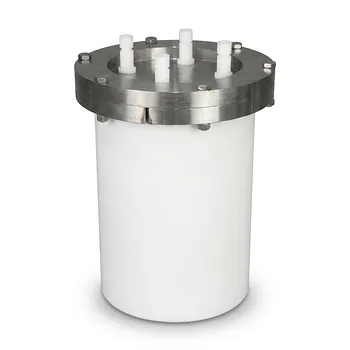
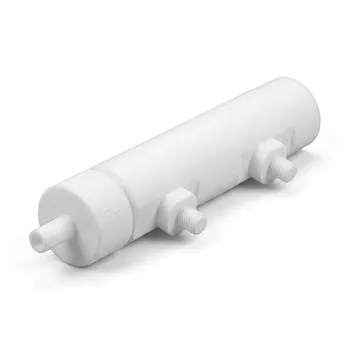
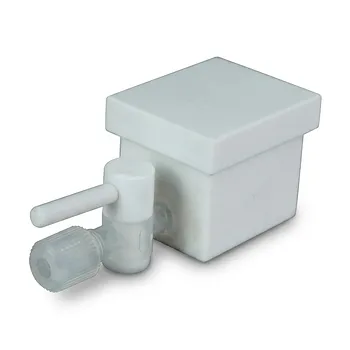
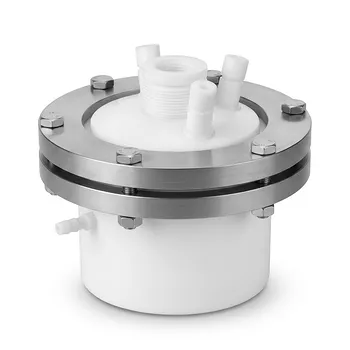
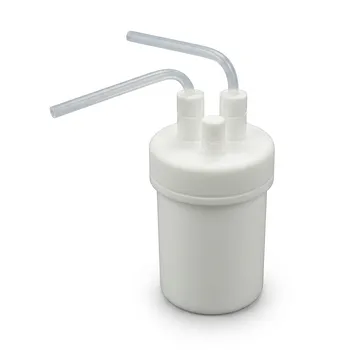
The requirement for high-grade PTFE or PFA in MAX phase etching is driven by the extreme corrosivity of fluoride-based etchants. These fluoropolymers are the only materials capable of maintaining structural integrity while preventing the introduction of trace impurities that would otherwise degrade the resulting MXene's properties.
Core Takeaway: High-grade PTFE and PFA provide the necessary chemical inertness to resist aggressive halogen ions and strong acids, ensuring the reaction vessel does not leach contaminants or fail structurally during the intense etching process.
Resistance to Aggressive Chemical Environments
Handling Highly Corrosive Fluoride Ions
The etching of MAX phases frequently employs reagents like ammonium fluoride (NH4F), lithium fluoride (LiF), and hydrochloric acid (HCl). These substances create a highly corrosive environment rich in fluoride ions that would rapidly degrade standard laboratory materials.
Superior Stability Against Hydrofluoric Acid (HF)
Whether HF is added directly or generated in situ, it is notorious for aggressively attacking glass, ceramics, and most metallic containers. PTFE (Polytetrafluoroethylene) and PFA (Perfluoroalkoxy) possess carbon-fluorine bonds that are exceptionally stable, making them immune to HF's corrosive effects.
Endurance Under Strong Acids and Bases
The preparation process often involves high-concentration strong bases and acids to remove unstable species or clear metal clusters. High-purity fluoropolymers maintain their integrity across this wide pH range, whereas other plastics might swell, soften, or dissolve.
Prevention of Product Contamination
Eliminating Trace Metal Leaching
In high-sensitivity applications, such as the creation of single-atom catalysts, even trace amounts of leached metals from a reaction vessel can contaminate active sites. High-grade fluoropolymers have ultra-low impurity leaching rates, ensuring the final MXene product remains pure.
Mitigating Solvent and Container Degradation
Long-term etching processes can cause lower-grade materials to degrade, releasing polymers or additives into the reaction mixture. PTFE and PFA prevent this solvent leaching, maintaining the structural and chemical purity of the resulting MXene nanosheets.
Low Surface Energy and Adsorption
These materials have very low surface energy, which minimizes the adsorption of highly active intermediates onto the vessel walls. This ensures that the reaction kinetics remain predictable and that yield is not lost to vessel-wall interactions.
Ensuring Structural Integrity and Safety
Mechanical Durability Under Stress
Etching often requires continuous stirring and long reaction times. High-grade fluoropolymers can withstand the mechanical wear from magnetic stir bars and the internal pressures that may develop during the selective etching of the MAX phase's atomic layers.
Safety in Harsh Conditions
A failure of the reaction vessel during etching would release hazardous, corrosive chemicals into the laboratory environment. The exceptional chemical stability of PTFE and PFA ensures experimental safety by preventing vessel thinning or catastrophic cracks during intense reactions.
Understanding the Trade-offs
Temperature Limitations
While chemically inert, PTFE and PFA have specific thermal limits. PTFE can generally be used up to 260°C, but exceeding these limits can lead to mechanical softening or the release of toxic fumes.
Mechanical Creep and Cold Flow
PTFE is susceptible to "cold flow," meaning it can deform under a constant load over time. This is why high-pressure reactors often use PTFE or PFA as a liner inside a stainless steel jacket rather than as a standalone structural component.
Material Cost
High-grade fluoropolymers are significantly more expensive than standard plastics or glassware. However, this cost is a necessary investment to prevent the loss of expensive MAX phase precursors and to ensure the reproducibility of analytical data.
How to Apply This to Your Project
Selecting the Right Material
- If your primary focus is extreme purity (e.g., electronic or catalytic applications): Use high-purity PFA vessels, as they generally offer the lowest leaching profiles and smoother surface finishes.
- If your primary focus is routine MXene synthesis at moderate temperatures: Standard high-quality PTFE liners or vessels provide the most cost-effective balance of corrosion resistance and durability.
- If your primary focus is high-pressure or high-temperature etching: Utilize a PTFE-lined stainless steel autoclave to combine chemical inertness with the structural strength of metal.
Utilizing high-grade fluoropolymers is the only reliable way to ensure that the aggressive chemistry required to transform a MAX phase into an MXene does not compromise the integrity of the material or the safety of the laboratory.
Summary Table:
| Feature | Benefit for MAX/MXene Etching |
|---|---|
| Chemical Inertness | Resists aggressive HF and halogen ions without degrading. |
| Ultra-Low Leaching | Prevents trace metal contamination in high-sensitivity catalysts. |
| Low Surface Energy | Minimizes adsorption of active intermediates for higher yields. |
| Wide pH Stability | Maintains integrity across strong acid and base environments. |
| Thermal Resistance | Operates safely up to 260°C for routine synthesis. |
| Safety | Prevents vessel failure and leakage of hazardous reagents. |
Secure Your MXene Synthesis with KINTEK’s Fluoropolymer Expertise
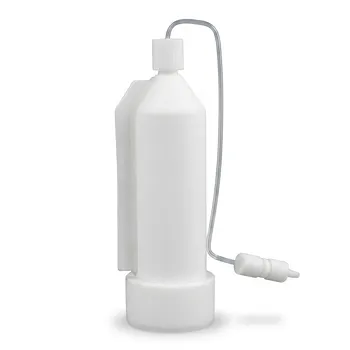
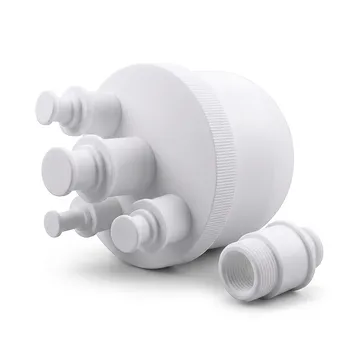
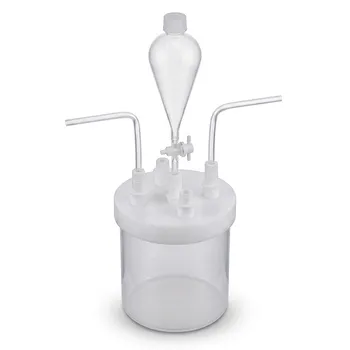
Don't let vessel degradation compromise your research or laboratory safety. KINTEK specializes in high-performance fluoropolymer solutions, offering an exhaustive range of laboratory supplies crafted from high-purity PTFE and PFA.
Whether you need everyday essentials like beakers, crucibles, and reagent bottles, or advanced reaction apparatus such as hydrothermal synthesis liners, microwave digestion vessels, and custom electrochemical cells, we provide the chemical inertness your process demands. From fluid transfer components (tubing, valves) to sample prep tools and bespoke CNC-fabricated parts, our focus on high-performance materials ensures your MXene products remain pure and your experiments reproducible.
Ready to upgrade your lab setup? Contact us today to discuss your custom requirements!
References
- Hanchen Xu, Li Song. Halogen Ion‐Mediated Hydrothermal Synthesis of Diverse MXenes with Tailored Heterostructures (Adv. Mater. 40/2025). DOI: 10.1002/adma.70713
This article is also based on technical information from Kintek Knowledge Base .
Related Products
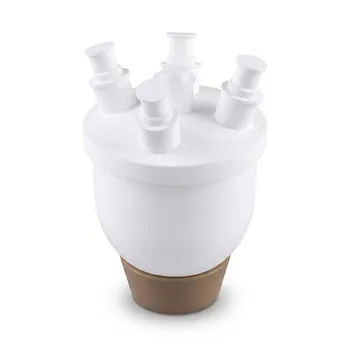
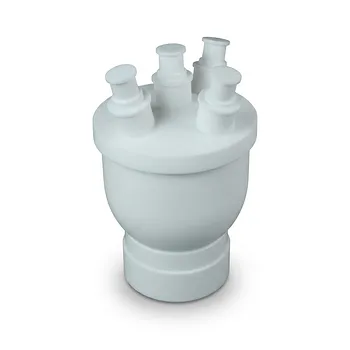
- High Performance Customizable PTFE Reaction Vessel and Corrosion Resistant Polytetrafluoroethylene Flask for Chemical Laboratory Use
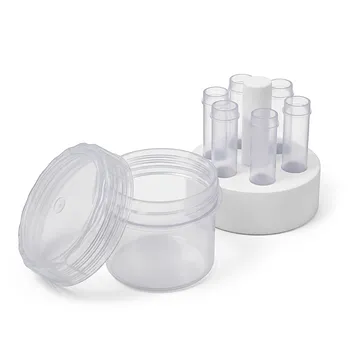
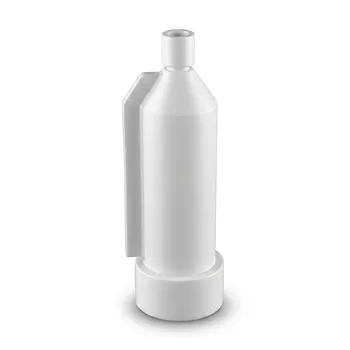
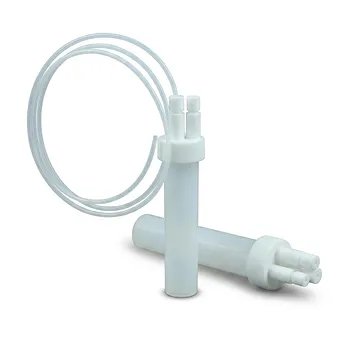
- High Purity Corrosion Resistant PFA Reaction Vessel with PTFE Holder and Integrated Sampling Tube for Trace Analysis
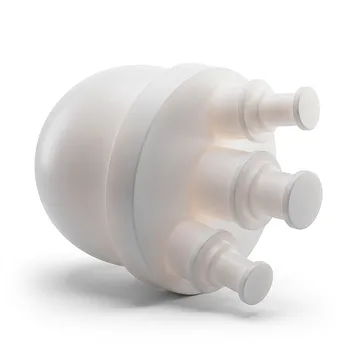
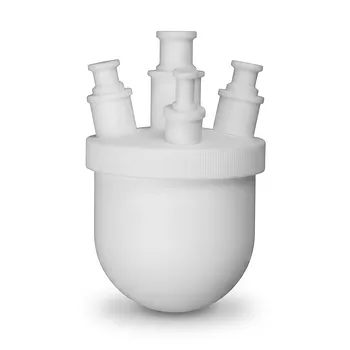
- High Purity Custom PTFE Large Volume 15L Flask Corrosion Resistant Low Trace Background Fluoropolymer Reaction Vessel
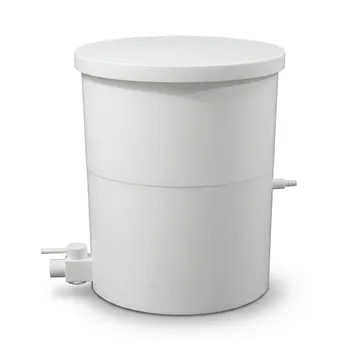
- Large Scale PTFE Double Layer Reaction Tank with Integrated Filter Plate High Purity Polytetrafluoroethylene Chemical Vessel 25L
- Customizable Polytetrafluoroethylene PTFE Reactor and Corrosion Resistant Teflon Flask
People Also Ask
- What are the key steps for structural integrity in molded PTFE lab reaction vessels? Master fine powder processing.
- Why is a PTFE reaction vessel required for Ti3C2Tx MXene synthesis? Ensure Safe HF Etching & High Purity
- Why are fluoroplastic (PTFE) reaction vessels recommended for Methylene Blue (MB) adsorption kinetic experiments?
- Ion Activation Reaction Vessel Requirements: Why PTFE is Critical for Membrane Performance
- How do perfluorinated solvent environments influence the selection of reaction vessels and fluid handling components in nonaqueous emulsion polymerizations? Choose fluoropolymer materials.