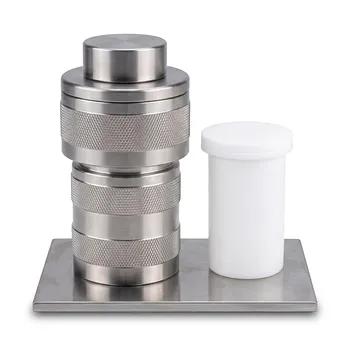
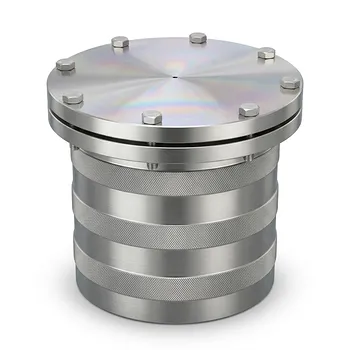
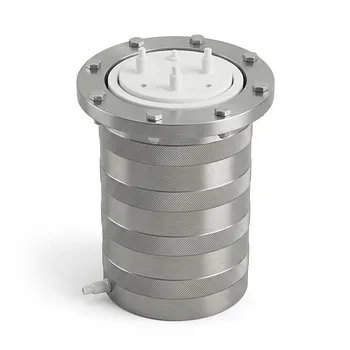
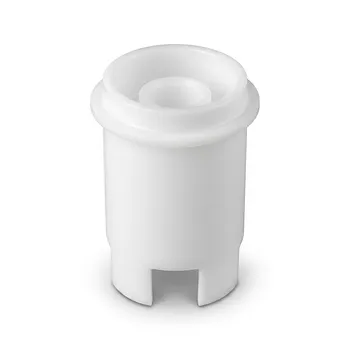
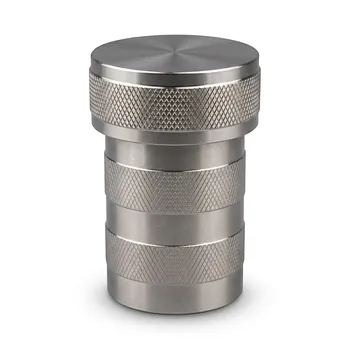
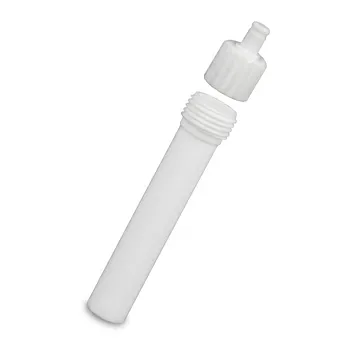
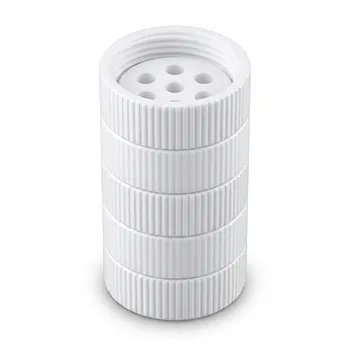
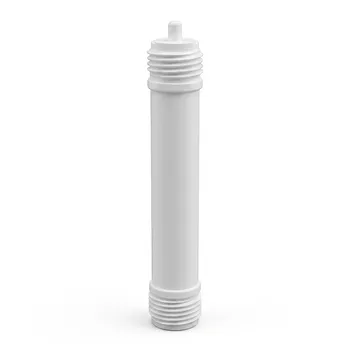
The use of a PTFE-lined high-pressure autoclave is essential for the hydrothermal synthesis of cobalt sulfide (CoS) because it provides the controlled environment required for precursor decomposition while ensuring chemical purity. Specifically, it enables thiourea to decompose into sulfur ions in an ethanol solution under high pressure and temperature. The PTFE liner simultaneously acts as a barrier, preventing corrosive solvents from attacking the autoclave walls and protecting the synthesized hexagonal phase CoS from metallic contamination.
Core Takeaway: A PTFE-lined autoclave functions as both a pressurized chemical reactor and a protective shield. It maintains the autogenous pressure necessary for chemical transformation while ensuring the resulting nanomaterials remain free from metallic impurities that would otherwise compromise their crystalline structure.
Facilitating the Reaction Environment
Achieving Precursor Decomposition
In a single-step synthesis, the thiourea precursor must decompose to release sulfur ions. This process requires a sealed environment where temperatures can be raised significantly above the boiling point of the solvent.
The autoclave maintains the necessary high-temperature and high-pressure conditions for these ions to react with cobalt ions. Without this sealed system, the precursors would not undergo the specific chemical breakdown required to form the sulfide.
Enabling Solvothermal Conditions
The synthesis often utilizes an ethanol solution, which generates significant internal pressure when heated. The autoclave utilizes autogenous pressure—pressure generated by the heating of the solvent—to drive the reaction forward.
This pressurized state facilitates the self-assembly and crystallization of the cobalt sulfide particles. It ensures that the reaction proceeds uniformly throughout the solution, leading to a more consistent product.
Protecting Chemical Purity and Structural Integrity
Corrosion Resistance Against Precursors
The chemicals involved in hydrothermal synthesis, including various acids, bases, and polar solvents, can be highly aggressive at elevated temperatures. Polytetrafluoroethylene (PTFE) is chosen for its exceptional chemical inertness and stability.
The liner prevents these corrosive substances from attacking the stainless steel walls of the autoclave body. This protection is vital for the longevity of the equipment and the safety of the laboratory environment.
Preventing Metallic Ion Contamination
If the reaction mixture were to contact the metal walls of the autoclave, metal ions could leach into the solution. These impurities can disrupt the formation of the hexagonal phase CoS, leading to undesirable secondary phases or altered electronic properties.
The PTFE liner ensures a clean reaction environment, acting as a non-reactive vessel. This allows for the collection of high-purity white precipitates or crystalline nanostructures without interference from external elements.
Understanding the Trade-offs
Thermal and Physical Limitations
While PTFE is highly non-reactive, it has a functional temperature limit, typically around 250°C. Exceeding this temperature can cause the liner to soften, deform, or release toxic vapors, potentially leading to a breach of the seal.
Heat Transfer and Cooling
PTFE is an insulator, meaning it does not conduct heat as efficiently as the outer metal casing. This results in a thermal lag between the oven temperature and the internal reaction temperature, which must be accounted for during experimental timing.
Additionally, the high thermal expansion coefficient of PTFE means the liner expands more than the steel shell. Rapid cooling can lead to stress on the liner, potentially causing cracks or leaks over multiple cycles.
How to Apply This to Your Project
Making the Right Choice for Your Goal
- If your primary focus is Phase Purity: Always use a pristine, unscratched PTFE liner to eliminate any possibility of metallic ion leaching from the autoclave body.
- If your primary focus is High-Temperature Synthesis (>250°C): Consider alternative liners, such as PPL (polyphenylene polymers), which offer higher thermal stability than standard PTFE.
- If your primary focus is Maximum Product Yield: Utilize the non-stick properties of the PTFE surface to ensure complete recovery of the synthesized precipitates during the washing phase.
By strictly maintaining the integrity of the PTFE-lined environment, you ensure that the hydrothermal process yields highly crystalline, phase-pure cobalt sulfide suitable for advanced technical applications.
Summary Table:
| Feature | Role in CoS Synthesis | Key Benefit |
|---|---|---|
| Chemical Inertness | Prevents metallic ion leaching | Ensures hexagonal phase purity |
| Corrosion Resistance | Protects walls from thiourea/ethanol | Equipment longevity & safety |
| Sealed Environment | Enables high autogenous pressure | Facilitates precursor decomposition |
| Non-stick Surface | Simplifies precipitate recovery | Maximizes final product yield |
| Thermal Stability | Operates safely up to 250°C | Ideal for hydrothermal conditions |
Elevate Your Research with KINTEK’s Fluoropolymer Expertise
Ensure absolute chemical integrity in your hydrothermal synthesis with KINTEK’s high-performance labware. We specialize in high-purity PTFE and PFA solutions designed to withstand the most aggressive reaction environments.
From everyday basic labware (beakers, crucibles, and reagent bottles) and fluid transfer components (tubing, valves) to advanced reaction apparatus like custom hydrothermal synthesis liners, microwave digestion vessels, and electrochemical cells, KINTEK provides everything you need.
Why choose KINTEK?
- Comprehensive Range: We offer everything from sample prep tools (filters, pipettes) to general consumables (O-rings, seal tapes).
- Bespoke Engineering: Backed by end-to-end custom CNC fabrication, we deliver non-standard machined parts and complex laboratory setups tailored to your project.
- Material Focus: An exclusive focus on high-performance fluoropolymers ensures your results are never compromised by metallic contamination.
Ready to optimize your lab’s efficiency? Contact KINTEK today to discuss your high-volume orders or custom fabrication needs!
References
- Nguyen Dinh Hung, Le van Khu. MORPHOLOGICAL AND PHASE EVOLUTION OF COBALT SULFIDE ON CARBON CLOTH VIA CONTROLLED HYDROTHERMAL SYNTHESIS FOR HIGH-PERFORMANCE FLEXIBLE SUPERCAPACITORS. DOI: 10.18173/2354-1059.2025-0057
This article is also based on technical information from Kintek Knowledge Base .
Related Products
- PTFE Lined High Pressure Digestion Vessel 50ml High Temperature Hydrothermal Synthesis Tank
- Custom TFM Reaction Vessel with Stainless Steel Jacket and PTFE Inner Cup for High Corrosion Resistance
- High Pressure Custom TFM Reactor Stainless Steel Outer Vessel PTFE Inner Cup for Corrosive Synthesis
- High Pressure PTFE Digestion Vessel Inner Cup Holder Custom Corrosion Resistant Low Background Teflon
- High Temperature Corrosion Resistant Hydrothermal Synthesis Reactor with TFM Inner Liner and Straight Cylinder Design
People Also Ask
- What are the benefits of using a PTFE-lined vessel for carbon-sulfur cathode treatment? Maximize Purity & Performance
- Why are PTFE-lined pressure digestion vessels required for the preparation of Ag/CeO2 catalysts? Purity & Performance
- What safety features are typically incorporated into high-pressure PTFE digestion vessel designs? Ensure Lab Safety
- What is the function of PTFE lined high-pressure vessels in g-C3N4 synthesis? Achieve High-Purity Material Growth
- Role of High-Pressure Digestion Tanks in Perovskite Synthesis: Achieve Superior Stability and Latent Heat