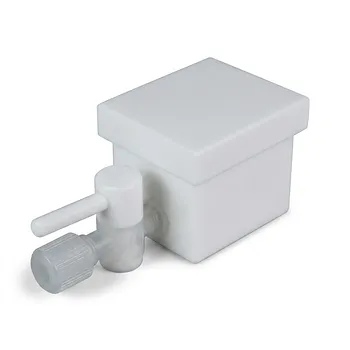
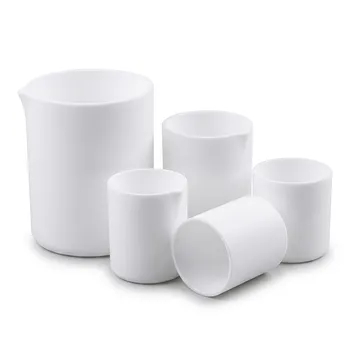
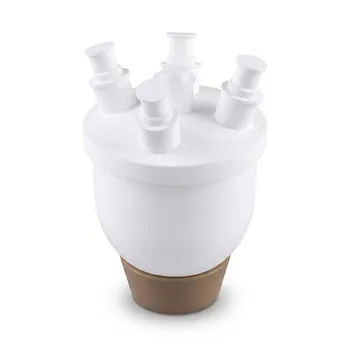
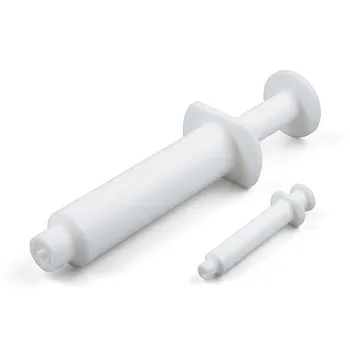
PTFE is considered ideal because it combines exceptional chemical resistance with very low contamination risk. It remains insoluble and largely non-reactive when exposed to strong acids, bases, organic solvents, and many corrosive gases, so laboratory vessels and seals are less likely to dissolve, degrade, or release impurities. Its structural stability, low extractables, smooth non-stick surface, and broad temperature capability make it particularly valuable for trace analysis and aggressive chemical processing.
PTFE protects both the sample and the containment system: it resists chemical attack while minimizing leaching, particulate buildup, and material failure.
Why PTFE Performs Well in Aggressive Chemical Environments
Strong chemical resistance
PTFE has a highly fluorinated polymer structure built around strong carbon-fluorine bonds. This gives it extraordinary resistance to most strong acids, strong bases, oxidizing agents, and organic solvents.
As a result, PTFE generally does not dissolve, swell significantly, or chemically react with the substances it contains. That is a major advantage over many metals, standard plastics, and rubber materials that can corrode or deteriorate.
Stability in corrosive gases and reactive media
PTFE can maintain its integrity in environments containing highly corrosive gases and reactive chemical compounds. This makes it suitable for specialized laboratory components, including reaction vessels, fluid-transfer parts, valves, and seals.
Its use in demanding chemical-handling applications reflects its ability to remain stable where conventional materials may rapidly corrode or lose their mechanical function.
Resistance to acids and solvents
Strong acids and organic solvents can attack ordinary polymers, elastomers, and metals through dissolution, oxidation, corrosion, or extraction. PTFE is resistant to virtually all commonly encountered laboratory chemicals, including many concentrated acids and solvents.
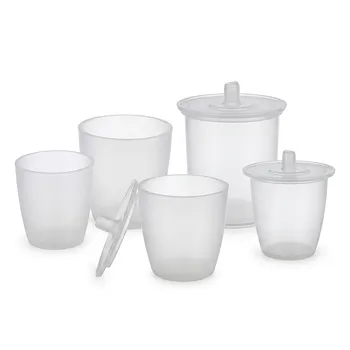
This resistance is especially important for digestion vessels, crucibles, reagent bottles, tubing, and gaskets used during aggressive sample preparation.
Why PTFE Supports High-Purity Laboratory Work
Low contamination potential
High-purity analysis can be compromised by trace amounts of material leaching from laboratory equipment. Because PTFE is chemically inert and has very low extractables when properly manufactured and cleaned, it helps reduce contamination from the apparatus itself.
This is critical when measuring metals, ions, organics, or other substances at trace concentrations. A chemically resistant container is not merely more durable; it helps preserve the accuracy of the analytical result.
Non-reactive contact surface
PTFE does not readily participate in chemical reactions with the sample. This reduces the risk that the apparatus will alter the sample composition, consume a reagent, or introduce reaction products.
The material is also non-toxic in its stable form, which supports its use in laboratory containment and fluid-handling applications where chemical purity matters.
Smooth, non-stick surface
PTFE has a low-friction, non-stick surface that discourages the buildup of residues and particulates. This is useful in laboratory systems because deposits can become a source of cross-contamination or interfere with cleaning.
The smooth surface is particularly beneficial in PTFE bellows, tubing, vessels, and transfer components that must remain clean between operations.
Why PTFE Is Effective for Seals
Protection against leakage
A seal exposed to an aggressive chemical must maintain contact and containment without being rapidly attacked by the process fluid. PTFE gaskets and seals resist chemical degradation across a very broad range of media.
This helps prevent leaks, preserve sample isolation, and protect surrounding equipment from corrosive substances.
Longer service in harsh conditions
Many elastomeric seals lose flexibility, swell, crack, or become brittle when exposed to strong acids, solvents, or elevated temperatures. PTFE is much less vulnerable to these chemical failure mechanisms.
Its stability can therefore improve reliability in laboratory apparatus and chemical-processing equipment, especially where replacing a failed seal would interrupt a sensitive procedure.
Compatibility with high-temperature work
PTFE has a broad operating range and can tolerate temperatures used in many laboratory applications, including harsh digestion and reaction processes. Its resistance to steam and many heated chemicals further extends its usefulness.
Temperature limits still matter, however. PTFE should be selected according to the actual temperature, pressure, mechanical loading, and chemical exposure of the application.
Understanding the Trade-offs
PTFE is highly resistant, not universally resistant
Claims that PTFE is resistant to every chemical are too broad. Extreme conditions, including molten alkali metals, elemental fluorine at elevated temperatures or pressures, and certain highly reactive fluorinating compounds, can attack PTFE.
A compatibility review remains necessary for unusual chemicals, high temperatures, or specialized process conditions.
Mechanical performance requires attention
PTFE is chemically stable but relatively soft compared with metals and some engineering plastics. Under sustained compressive loads, it can deform through creep or cold flow.
Seals may therefore require appropriate gland design, backup components, reinforcement, or modified PTFE grades when exposed to high pressure or repeated mechanical cycling.
Temperature and pressure must be evaluated together
A material that is chemically compatible may still be unsuitable for a particular pressure-temperature combination. Thermal expansion, deformation, and dimensional stability can affect sealing performance even when the PTFE itself is not chemically degraded.
The correct selection must consider the complete operating envelope rather than chemical compatibility alone.
Cleanliness and manufacturing quality still matter
PTFE reduces contamination risk, but it does not eliminate contamination introduced during manufacturing, machining, handling, or cleaning. High-purity applications should use appropriately specified grades and validated cleaning procedures.
Surface condition, particulate control, and storage practices are as important as the base material.
How to Apply This to Your Project
PTFE is usually a strong choice when both chemical containment and sample purity are central requirements.
- If your primary focus is trace-analysis purity: Choose high-purity PTFE components with low extractables, smooth surfaces, and controlled cleaning and handling procedures.
- If your primary focus is strong-acid compatibility: Verify PTFE against the specific acid concentration, temperature, and exposure duration rather than relying only on a general resistance claim.
- If your primary focus is reliable sealing: Evaluate creep, pressure, temperature, compression, and gland design in addition to chemical compatibility.
- If your primary focus is broad laboratory versatility: Use PTFE for vessels, tubing, valves, gaskets, and seals where resistance to acids, bases, solvents, steam, and low contamination are required.
For demanding chemical and high-purity applications, PTFE provides a rare combination of chemical inertness, cleanliness, surface stability, and containment reliability.
Summary Table:
| Feature | Benefit |
|---|---|
| Chemical resistance | Resists strong acids, bases, solvents, and corrosive gases |
| Low contamination | Minimal leaching and extractables, preserving sample purity |
| Non-stick surface | Reduces residue buildup and cross-contamination |
| Thermal stability | Withstands broad temperature ranges for various lab processes |
| Seal reliability | Maintains integrity and prevents leaks in aggressive media |
Enhance your laboratory's purity and chemical resistance with our high-performance PTFE/PFA labware and custom components. From beakers and digestion vessels to valves and seals, KINTEK offers end-to-end solutions for trace analysis and aggressive chemical handling. Contact us today for expert guidance and custom manufacturing.
Related Products
- High Purity PFA Crucible and Corrosion Resistant PTFE Beaker for Trace Analysis and Custom Laboratory Applications
- Customizable PTFE Seals Filter Holders for Versatile Applications
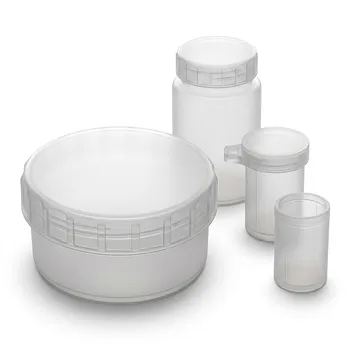
- Custom PTFE Petri Dishes Corrosion Resistant High Purity Low Background Labware
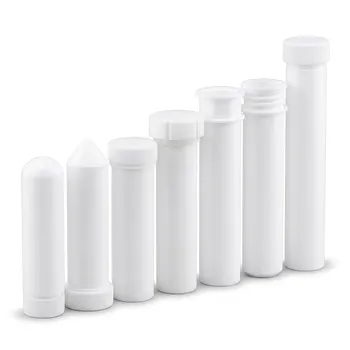
- Custom High Purity PTFE Digestion Tubes and Centrifuge Tubes for Trace Metal Analysis
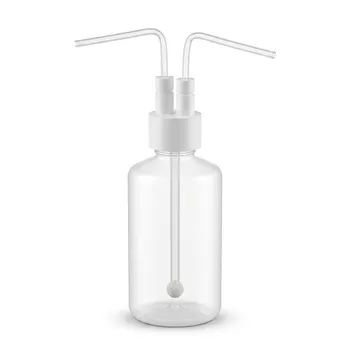
- Custom PTFE Reaction System with Hose Barb Fittings Corrosion Resistant High Sealing 2L 4L Lab Reactor with Separatory Funnel
People Also Ask
- Why are high-purity vessels critical for BiFeO3 synthesis? Ensuring Phase Purity
- Why is the use of high-purity PFA or PTFE labware critical during TiO2 nanoparticle purification? Protect Sample Purity
- Why is high-purity PFA trace analysis labware used for MXene? Ensure Superior Material Integrity in Research
- Why is high-purity PFA labware necessary for Znx@LS-2 zeolite ICP-OES analysis? Ensure Trace-Level Precision
- Why is high-purity PFA trace analysis labware used for sample processing when preparing Mo2CTx@MoS2? Ensure Material Purity